





The ten most common mistakes that block your efforts to lose weight
 Author:
 One of the most common New Year's resolutions is definitely to reduce some of the weight. We definitely approve of that, and we're rooting for everyone who set that resolution this year! And that's why we decided to write an article for you, in which we'll take a look at the most common mistakes that make people unable to lose weight. Do you happen to be doing any of these?
Inadequate calorie deficit
Therefore, in order to lose weight, we need a calorie deficit, that is, taking in fewer calories than we expend, this is nothing new under the sun. However, a calorie deficit definitely needs to be within reason and should not be too extreme! What we see most often is that people absolutely fail to estimate their body's needs and, in the framework of the common idea that "if you want to lose weight, you must eat little", they limit their calorie intake very radically, often to the limit of their basal metabolism (i.e. the body's basic energy needs). Weight loss may go like clockwork at first, but this method has its "BUTS". And it is very crucial. In addition to hunger, fatigue, frequent mood swings, lack of focus and cravings for sweets, you risk a number of serious health complications. Fortunately, there are plenty of online calculators that can calculate your calorie intake, at least in a general way. Please don't resort to too radical a restriction of calorie intake - your body needs plenty of energy, whether you're reducing fat or not. If you don't know how to adjust your intake, don't be afraid to reach out to an experienced professional.

Completely restrict selected foods from your diet
Another common mistake is to severely restrict, or completely restrict, certain foods. You've read in internet discussions that for successful reduction you need to cut out baked goods, sweets, fruits, fats, side dishes... so you apply all that and find that you're left with a few foods that you have to eat over and over again, and that gets really boring after a while. So, I'll let you in on a secret - you don't need to eliminate any foods for a successful reduction - well, except for foods that are moldy or spoiled. Of course, we can distinguish between nutritionally valuable foods and foods whose nutritional value isn't quite so fantastic. However, there is no need to completely demonize anything if it is the nutritionally valuable foods that dominate your diet.
It is not your fault that you eat rye bread with spread for dinner or that you eat two pieces of fruit during the day. Fat stores are simply the result of taking in more calories than your body needs and your body willingly stores them. That's the magic. The same goes for the demonization of macronutrients. Whether it's carbohydrates or fats, both of these macronutrients have their place in the diet and there's certainly no need to strictly eliminate them. If you're starting out with healthy eating, make sure your dietary direction gives you enough flexibility in your food choices and that you can eat pretty much anything you feel like or like, as long as it fits into your daily calorie intake.

You skip meals and organize evening raids on the fridge
It may seem like a smart strategy to skip a meal during the day - like lunch, either because you see it as a way to save calories or because you're simply working too much and can't make it, or breakfast because you'd rather sleep in the morning. We're certainly not saying that you need to eat every 2.5 hours and that's the only way to go, but purposely skipping meals to reduce your calorie intake is really not a good idea. If you're comfortable eating fewer larger meals throughout the day, that's perfectly fine, we just need to keep in mind that we should eat our required calorie intake in those meals. The moment you deliberately skip a meal and don't replenish calories in other meals, the body starves and then often you get overwhelmed with huge hunger or cravings in the evening, so you raid the fridge at home and end up eating much more than when you have a balanced lunch.

A glass of wine with dinner? Watch out for the alcohol!
Do you regularly have a glass of wine or a beer with dinner several times a week? Don't forget that alcohol has calories too, and quite a significant amount at that. If you are consuming alcohol on some regular basis, it may very well be a subtle blocker to your fat reduction efforts. With seven calories per gram, alcohol is ahead of both carbohydrates and protein in the energy intake rankings and has only two fewer calories than fat. What's more, keep in mind that the calories in alcohol lack nutrients that are beneficial for a healthy metabolism, which promotes fat storage. In addition, the liver, which processes fat, must process the calories from alcohol first, thus postponing the processing and burning of fat for energy production until later. Alcohol also loosens inhibitions and stimulates appetite. This makes it easy to reach for something we wouldn't normally have or eat too much. So - careful with the alcohol - it should definitely not be a regular part of the diet.
You neglect sleep
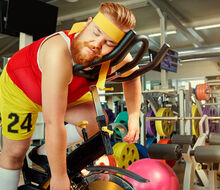
Sleep is a key component of the health puzzle, and it's no different in the fat reduction process. Sleep is the most natural form of recovery and rest. If you don't give your body enough space through sleep, or it is of insufficient quality, it will surely show sooner or later. Not only does the quality and quantity of sleep affect how much energy we have and how we feel, but sleep is absolutely crucial to overall health and its role in weight loss is greatly underestimated. In fact, sleep is where hormones are regulated, the levels of which then influence a whole range of bodily processes.
Sleep deprivation, for example, affects levels of cortisol, the stress hormone that can block our efforts to reduce fat in all sorts of ways, as well as levels of leptin and ghrelin, hormones that control satiety and hunger. If you don't get enough or good quality sleep, the levels of these important hormones will be thrown out of balance and you will then easily consume far more calories than your body needs because it is simply 'crying out for energy'. If the levels of these hormones are out of balance, it is also possible that we are often plagued by cravings for sweets, which also does not help the reduction. Fatigue also makes us less efficient, makes us lose motivation, makes us not want to move and so on. Sleep is perhaps one of the most underestimated factors, but it is very important, not only in the context of weight loss, but also in health in general.
Overtraining
Regular exercise is very important for health and also plays a very significant role in weight loss. Movement makes us burn more calories, so we can afford a higher calorie intake, even when reducing, which becomes much more enjoyable. In addition, regular physical activity has a whole range of health benefits, which we covered in a recent article. However, even in this case - everything in moderation. We should move every day, but we are certainly not encouraging you to go to the gym every day, run 15 kilometres every day or anything like that. Movement is important, but it's just as important to be able to relax and vary your activities. If you're a fitness enthusiast, treat yourself to a workout 3-5 times a week and then spend the other days doing some form of active recreation - walking, swimming, running, or maybe some nice team sport to wind down. If we overload the body unilaterally for a long time, among many other health complications, we may also have trouble burning fat effectively, and that's probably the last thing we want in a weight loss program. Overtraining also often results in unpleasant injuries that can have long-term consequences.
Sedentary lifestyle
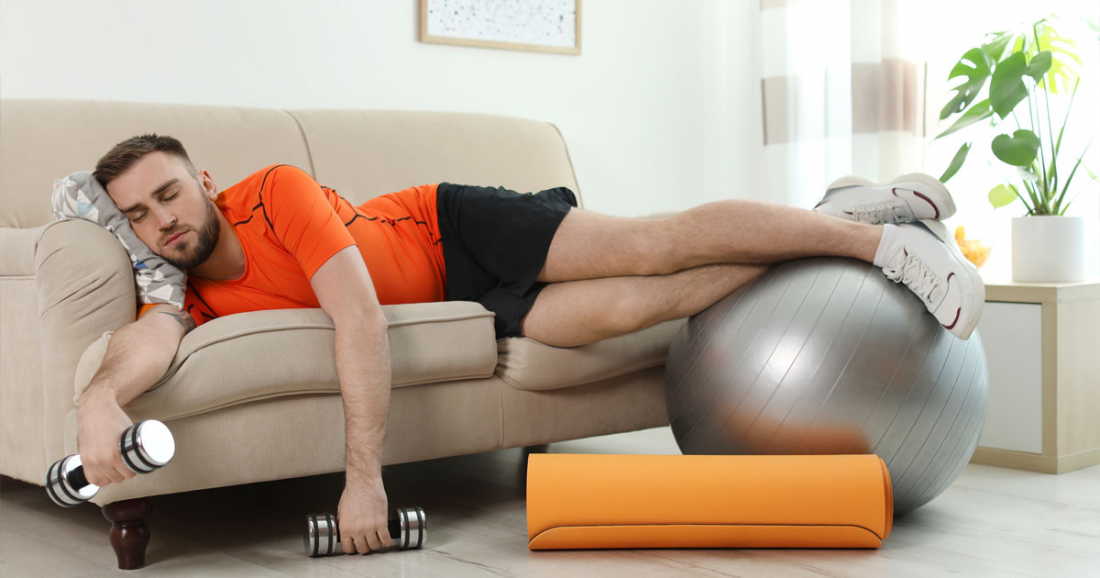
And now we have the other extreme - have you embarked on a diet change, but movement isn't quite among your top priorities? Then maybe it's time to give it some thought! Movement is a natural thing that our bodies simply need and everyone should be doing it - and doing it daily, at least in its most natural form, walking, and if you're not doing even this bare minimum, it's definitely not good for your health. Unfortunately, the demands of today's times often lead to the natural need for exercise being suppressed to a minimum. It's sad, but for a growing percentage of people, even walking is no longer natural movement. They spend most of the day behind a computer, drive to work - ideally to the front of the office, and when they get home from work they do the bare minimum and park themselves in front of the TV. Many of us have demanding jobs, but taking 20 minutes a day to take a short walk in the fresh air will help your health, your weight loss, and your brain and productivity.

8 negative consequences of a long-term sedentary lifestyle
Stress
Stress is something that affects everyone's life - for some it plays a more significant role, for others less so. To a certain extent, stress is actually beneficial, but if it becomes a chronic issue, it can have a range of negative effects on our health, physical and mental performance, and can also very effectively block our fat loss efforts. During stress, more of the hormone cortisol is released, a stress hormone that stimulates the short-term breakdown of carbohydrates and the conversion of fat into energy. Among other things, high levels of cortisol may be responsible for us seeking out higher-calorie foods and being plagued by sweet cravings. In addition, due to excessive stress, we can suffer from sleep problems, extreme fatigue, loss of motivation... and so on. Fortunately, there are a number of ways to combat stress - go for a walk, get some exercise, a sauna or massage, read an interesting book, cook a nice dinner, or make an appointment with a therapist. Stress can affect the quality of our lives in a very fundamental way and should not be taken lightly.
Don't consciously
Okay, hand on heart - what do you do when you eat? Are you scrolling through social media, chatting with friends, reading the news, watching TV or working? Thanks to the demands of today's age, where we tend to be in a constant rush, and also thanks to advances in communication and technology, where social media and TV are a big part of our lives, it's quite common to actually use the moment when you can sit down to eat in other ways. So please don't do that. Because the moment we turn our attention to other activities at mealtime, we stop noticing our body's signals that tell us we are full or hungry. Instead, we should practice mindful eating. The principle that says that when we eat, we should pay attention only to our plate - discerning colours, flavours, textures, chewing thoroughly, savouring and eating slowly. Mindful eating is not a diet, but it can still help you to reduce fat, precisely because by eating calmly and slowly you learn to understand your body's signals, enjoy your food, and because of this you can also consume fewer calories because you will feel full in time and prevent overeating or feelings of fullness, and what's more - mindful eating can also be a useful tool to fight cravings.
Recommended

Don't you get too hung up on the number on the scale?
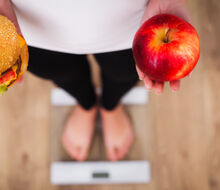
And finally... Does it scare you that you've been trying for a while, but the weight still won't come off? And did you know that the number on the scale is actually pretty irrelevant? There are so many factors that affect weight that the number isn't necessarily completely reliable. For example, physical activity, hormones, the weather, salt intake, drinking, diet in the previous days, the time of day you weigh in... If you've also started strength training, you might be gaining muscle, and that weighs something too. At the same time, it's also true that a kilo of fat weighs the same as a kilo of muscle, but it definitely looks different in volume. In short - the scale really isn't the holy grail or the best way to judge the success of a weight loss! There are many factors that can affect it and you should take into account and approach the result based on that. It is better to measure the success of a reduction by using a tape measure, photos, callipers or even clothes.
What to take away from the article?
Fat reduction is one of the most common New Year's resolutions. If you too have made it your goal to lose a few pounds this year and work on your habits, make sure you're not making any of the mistakes we've dedicated today's article to. Avoid extreme calorie deficits, cutting out foods or macronutrients, limit your alcohol intake, get enough sleep, regulate stress, move regularly - within reason, and remember that the number on the scale isn't everything!
Sources:
Soare, A., Cangemi, R., Omodei, D., Holloszy, J. O., & Fontana, L. (2011). Long-term calorie restriction, but not endurance exercise, lowers core body temperature in humans. Aging, 3(4), 374-379. https://doi.org/10.18632/aging.100280
American College of Sports Medicine, Sawka, M. N., Burke, L. M., Eichner, E. R., Maughan, R. J., Montain, S. J., & Stachenfeld, N. S. (2007). American College of Sports Medicine position stand. Exercise and fluid replacement. Medicine and science in sports and exercise, 39(2), 377-390. https://doi.org/10.1249/mss.0b013e31802ca597
Berto R. (2014). The role of nature in coping with psycho-physiological stress: a literature review on restorativeness. Behavioral sciences (Basel, Switzerland), 4(4), Knutson K. L. (2007). Impact of sleep and sleep loss on glucose homeostasis and appetite regulation. Sleep medicine clinics, 2(2), 187-197. https://doi.org/10.1016/j.jsmc.2007.03.004394-409. https://doi.org/10.3390/bs4040394
St-Onge, M. P., Mikic, A., & Pietrolungo, C. E. (2016). Effects of Diet on Sleep Quality. Advances in nutrition (Bethesda, Md.), 7(5), 938-949. https://doi.org/10.3945/an.116.012336
No posts have been made yet.








