Nine warning signs that your calorie intake is too low!
 Author:
 The fact that diet is a key aspect to successful weight loss does not need to be debated for long. However, in an effort to lose weight, people often quickly resort to overly restrictive diets that are not the right, long-term sustainable eating style. First they cut back on sweets, then flour, generally carbohydrates, and sometimes fats, and then there are not many sources left from which they can take energy. This is why people trying to lose weight often have such a low intake that they barely reach the limit of basal metabolism (the resting energy requirement of the body). At such a moment, the body triggers defence mechanisms and it may not have good consequences at all and ultimately we may not actually lose weight at all, but instead gain.
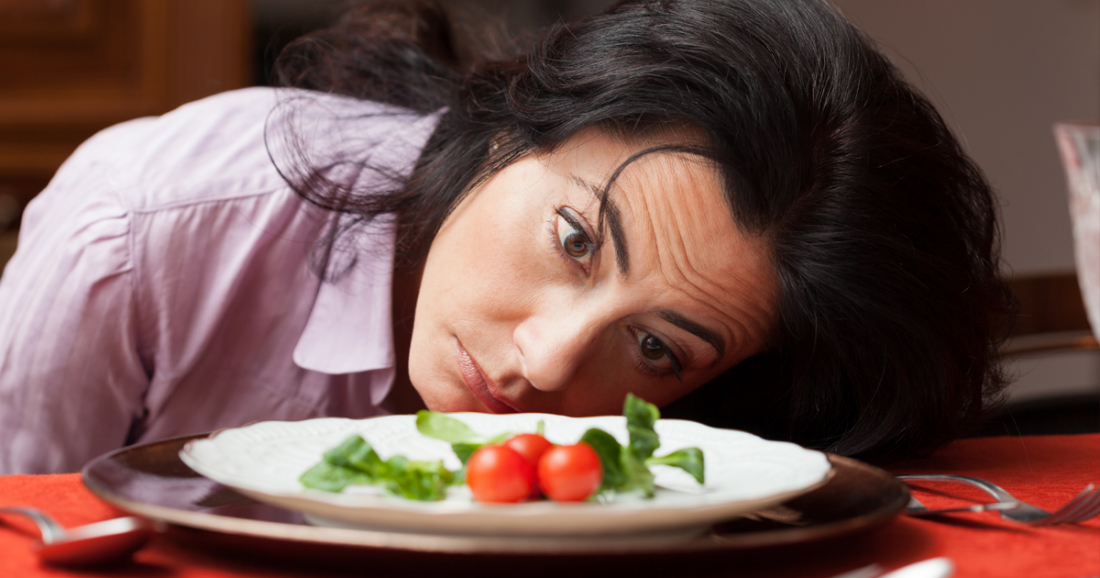
Caloric deficit (especially the excessive one) is a stress for the body. If the body is under severe stress for too long, it can have various outcomes. Poor sleep quality, irritability, digestive problems, hormone problems, headaches, and more. Let's take a look together at the warning signs that may mean something is wrong with our diet - whether it's that we're not eating enough, or in terms of its composition.
1. Permanent hunger or frequent cravings
Are you constantly hungry? Can't concentrate on work because you keep thinking about food or because your stomach is always growling? These can also be signs that your diet does not contain enough calories. Studies confirm that appetite increases with drastic calorie restriction due to changes in satiety and hunger hormone levels. In addition, low calorie intake increases the production of cortisol, a stress hormone whose high concentration can lead to hunger and higher levels of abdominal fat. Basically, if your calorie intake is too low, your body will send hunger signals to get you to eat and prevent starvation and calorie deprivation.

And not only hunger, but also sweet cravings can indicate that your intake is not at the level it should be. The body then, in an attempt to ensure it has enough energy to function, starts craving sweet or salty, calorie-dense but nutritionally less valuable foods. This is why people who eat too little are much more likely to have a problem with nightly forays to the fridge and overeating, often accompanied by feelings of guilt and failure.
2. Excessive fatigue
If you're plagued by excessive fatigue no matter what you do in a day or how well you sleep, it may be time to take a look at your diet. In fact, one of the biggest negatives of low calorie intake is permanent fatigue. The calories we take in through food are our body's main energy source. If our intake is too low, the body distributes energy where it is most needed - to provide basic life functions such as heart function, breathing, brain function and more. Logically, we then have little energy left for other activities we would like to do. Instead of working out, you'd rather park in front of the TV or fall straight into bed.

3. Difficulty concentrating, learning and brain fog
Difficulty with concentration, memory, low work performance, dullness and dullness. These are the symptoms of brain fog. Brain fog can be a sign of several health problems, but it is also one of the key symptoms of inadequate calorie intake. It's also possible that excessive calorie restriction is causing you to be overwhelmed by thoughts of food, and you're unable to think about work or schoolwork. Another negative symptom may be headaches or dizziness.
4. Moodiness
Moodiness is strongly linked to the previous point. The food we eat affects not only how we look, but also how we feel. If your calorie intake is too low, you can become obnoxious, moody, not enjoying anything, not in the mood for family or friends, and when several factors are combined, depression often develops. Studies also show that due to low glucose levels, aggression and irritability can occur. Irritability can be a very common sign that your intake is too low.
5. Poor sleep quality and poorer recovery
If your intake is too low, the quality of your sleep is not the best, despite permanent fatigue. Do you have trouble falling asleep, wake up frequently during the night, or wake up in the morning with no energy, as if you hadn't slept at all? Yes, excessive calorie restriction or improper diet composition can cause this too. Research shows that excessive calorie restriction can cause a reduction in deep sleep stages, and as a result, we wake up tired in the morning and in a worse mood.

This can be caused by a spike in blood sugar levels. This is because blood sugar levels drop overnight, and the liver has to release stored glucose (in the form of glycogen) to keep blood sugar levels stable. If you eat too little and exercise at the same time, your liver may not have adequate stores of glycogen, which the body needs to maintain stable blood sugar levels. In this case, the body must release stress hormones such as cortisol and adrenaline to promote gluconeogenesis, the process of making new glucose. If these stress hormones get to high enough levels, they can cause you to wake up more often at night.
In addition, if you're an active athlete, low calorie intake can lead to poorer recovery and associated muscle pain. Not only due to poor nutrition, which of course plays a key role in recovery, but also due to poor sleep quality, which affects health, weight loss, sports performance and recovery processes.

6. Loss of menstruation - amenorrhea
We have already come across the fact that if you take in too few calories for a long time, the energy availability of the body decreases and the body suppresses functions that are not strictly necessary for survival. The first thing the body reduces in the case of women is the function of the reproductive system and amenorrhea occurs. Amenorrhea is the scientific term for the omission of menstruation. A regular cycle is essential for a healthy female body, and if it is not functioning properly, something is wrong. Of course, there can be a number of reasons why it occurs - stress, contraception, pregnancy, but also diet.

And it is the excessive calorie restriction, and the associated low energy availability, that is the most common reason why amenorrhea occurs in the first place. Women can also experience the so-called athletic triad, which develops especially in top female athletes. Loss of menses should be a big warning exclamation point because if a woman loses this function, future conception is at risk and the moment the loss occurs, the woman should stop taking risks and gradually increase calorie intake to get the cycle going again. Ensuring a healthy and regular cycle should be one of the top priorities for women's health.
7. Poor quality hair, nails and dry skin
The health of your hair, skin and nails is also closely linked to what you eat and how much minerals, healthy fats, proteins and overall nutrients your body absorbs, so it's not surprising that if you're in too significant a calorie deficit, the quality of all of the aforementioned factors suffers. If you're plagued by excessive hair fall, brittle and fragile nails, and dry skin, it's very likely that your body is lacking some of the key nutrients to keep it healthy. A common cause of hair loss and weak nails is inadequate intake of calories, protein, biotin, iron and other nutrients. In fact, basically again, the moment you are not taking in enough calories and key nutrients, your body will prioritize supplying energy for your heart, brain and other organs essential for life, over supplying adequate nutrition to your hair and nails. Supplementation with a variety of vitamins can help with this, but a good diet based on consuming enough calories, as varied and nutrient-rich as possible, should still be the foundation.
Recommended

Nebbia NATURE-INSPIRED Squat-Proof dámské legíny 543

Nebbia Dámský top s dlouhým rukávem INTENSE Sheer 847

Nebbia Fitness bolero s dlouhým rukávem TRUE HERO 257
Citrulline Malate 500g 1+1
8. Permanent feeling of cold
If you're not taking in enough calories, you're probably not able to effectively perform thermogenesis, which is the process that helps the body generate heat. Some research suggests that people who follow an overly restrictive diet have lower body temperatures than those who eat enough and are thus more likely to be cold. So even regulating body temperature is one of the functions that the body lacks energy for if we don't give it enough of it through food. Women may also occasionally grow tiny light hairs that help the body regulate body temperature by trapping heat from outside. This phenomenon can be seen in extremely thin people or in women suffering from anorexia.
9. Digestive problems
Eating too few calories can of course have a negative effect on our digestion. Even though your diet consists of heaps of vegetables that contain fibre, which is healthy and essential for optimal digestion. As strange as it may sound, constipation can occur due to insufficient intake, as less "waste" gets trapped in the intestines. If you are having difficulty emptying regularly, again you will need to look at diet composition and adequate calorie intake. And not only constipation, but also problems with nutrient absorption and other digestive difficulties, can be directly related to excessive restriction of caloric intake.
How to address all of these factors?
Since the article is about the signals the body gives us when we are taking in too few calories, the solution will obviously be in the diet. Reducing fat and losing weight is not about eating too little, it's about eating right! Focus on ensuring that your caloric intake respects your actual energy needs while being consistent with your body goals. If you're trying to lose weight, the calorie deficit needs to be within reason! If you don't know how to set it, don't be afraid to reach out to a proven expert to help you set an adequate caloric intake.
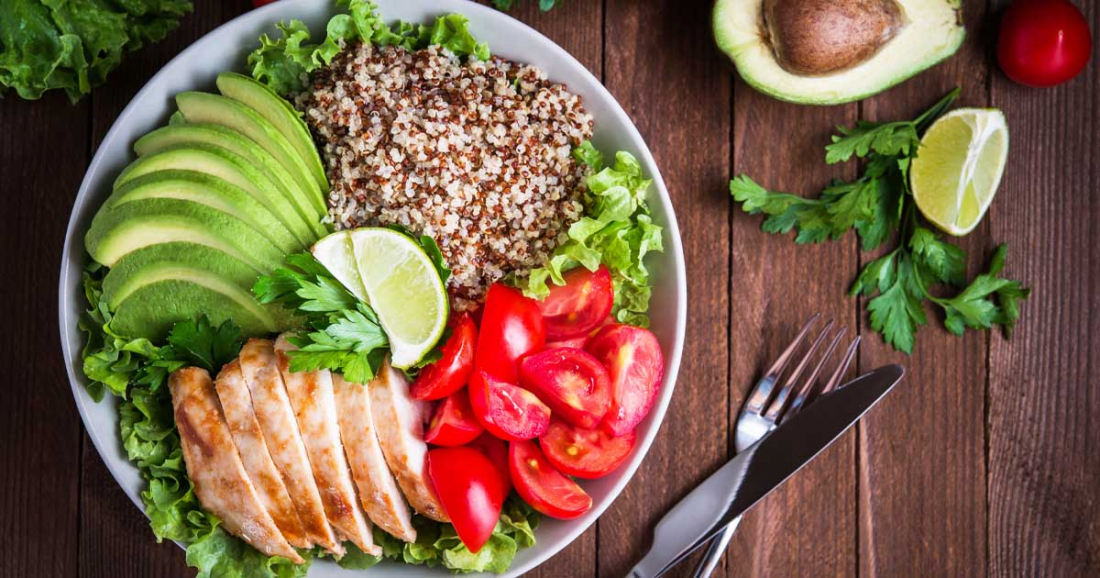
Give your body enough nutrients - make sure that your diet contains all macronutrients from a variety of sources, and that it is varied, rich and colourful enough. Eat plenty of good quality proteins such as lean meat, fish, dairy or eggs, healthy fats, especially from nuts, vegetable oils, avocados, seeds, oily fish and good quality chocolate, and don't forget adequate carbohydrate intake, ideally from complex sources such as cereals, rice, whole grains, buckwheat and more. Adequate intake of fruit and vegetables as sources of fibre and various micronutrients should not be overlooked. Last but not least, we should also ensure sufficient hydration, ideally in the form of clean water.
Pay attention not only to the quantity but also to the quality of the food you eat. Because quality is actually more important than quantity. Eat food that is real food, i.e. food in as natural a form as possible, and limit your intake of overly processed food. In conclusion, don't look for miracle diets that will make you lose weight fast. Build healthy habits, learn to listen to your body and above all, form a sustainable lifestyle that you will be able to maintain not only until you reach your dream weight, but for the rest of your life.
What to take away from the article?
Excessive calorie restriction can have many negative manifestations. Starting from lack of energy and permanent fatigue, constant hunger, poor concentration, digestive problems, loss of menstruation or even poor quality sleep. But you can lose weight without crazy restrictions and pointless limitations. Learn the basics of healthy eating and lose weight so that your body gets the energy it really needs. Don't underestimate the quality of your food, because it's actually more important than the quantity. Don't just stick to a simple diet that will help you lose weight fast, but form a sustainable eating style that will follow you not only until you reach your dream weight, but for the rest of your life.
Sources:
Ishii, S., Osaki, N., & Shimotoyodome, A. (2016). The Effects of a Hypocaloric Diet on Diet-Induced Thermogenesis and Blood Hormone Response in Healthy Male Adults: A Pilot Study. Journal of nutritional science and vitaminology, 62(1), 40-46. https://doi.org/10.3177/jnsv.62.40
DeWall, C. N., Deckman, T., Gailliot, M. T., & Bushman, B. J. (2011). sweetened blood cools hot tempers: physiological self-control and aggression. Aggressive Behavior, 37(1), 73-80. https://doi.org/10.1002/ab.20366
Smith, P. J., & Blumenthal, J. A. (2016). Dietary Factors and Cognitive Decline. The journal of prevention of Alzheimer's disease, 3(1), 53-64. https://doi.org/10.14283/jpad.2015.71
Soare, A., Cangemi, R., Omodei, D., Holloszy, J. O., & Fontana, L. (2011). Long-term calorie restriction, but not endurance exercise, lowers core body temperature in humans. Aging, 3(4), 374-379. https://doi.org/10.18632/aging.100280
Gailliot, M. T., & Baumeister, R. F. (2007). The physiology of willpower: linking blood glucose to self-control.Personality and social psychology review : an official journal of the Society for Personality and Social Psychology, Inc, 11(4), 303-327. https://doi.org/10.1177/1088868307303030
Benson, J. E., Engelbert-Fenton, K. A., & Eisenman, P. A. (1996). Nutritional aspects of amenorrhea in the female athlete triad. International journal of sport nutrition, 6(2), 134-145. https://doi.org/10.1123/ijsn.6.2.134
Williams, N. I., Leidy, H. J., Hill, B. R., Lieberman, J. L., Legro, R. S., & De Souza, M. J. (2015). Magnitude of daily energy deficit predicts frequency but not severity of menstrual disturbances associated with exercise and caloric restriction. American journal of physiology.Endocrinology and Metabolism, 308(1), E29-E39. https://doi.org/10.1152/ajpendo.00386.2013
Knutson K. L. (2007). Impact of sleep and sleep loss on glucose homeostasis and appetite regulation. Sleep medicine clinics, 2(2), 187-197. https://doi.org/10.1016/j.jsmc.2007.03.004
No posts have been made yet.