





Why might a number on the scale not reliably reflect on your fitness progression?
 Author:
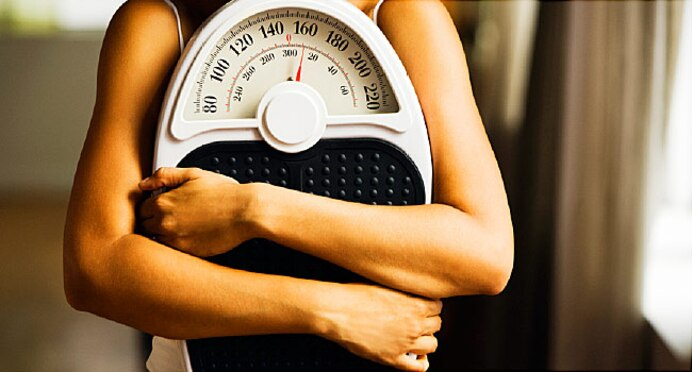
 If you are one of those who still focus primarily on the lower number on the scale to evaluate the success of a weight loss, instead of looking at the inches lost, you might want to know that weight is not always the best indicator, as there are many factors that can cause fluctuations and also that not all weight gains necessarily mean fat gain.
I'm sure you've had the experience of sticking to your diet one hundred percent, training regularly, and seeing a higher number on the scale than the one you started with. Frustrating, right? What have you been doing wrong to make your weight go up when you've been dutifully meeting all the prerequisites for weight loss? Maybe something, and maybe nothing at all. Sometimes overestimating caloric expenditure and underestimating intake at the same time is behind the weight gain , so the weight gain is really an error in caloric calculations, but we'll assume you're seasoned in diet and intake setting and your intake was actually set correctly as it should realistically be set, or your coach or nutritionist helped you set it.
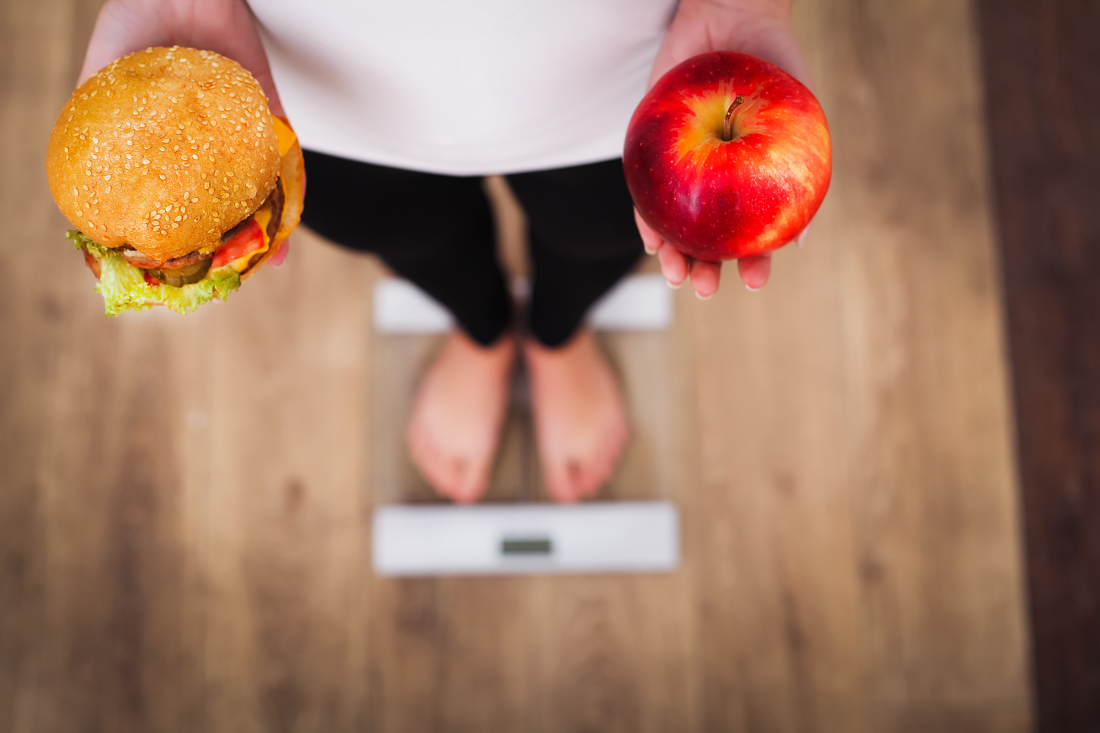
So logically, the whole process should have led to your excess pounds dropping... but it's the other way around! Rest assured, fluctuations in weight are quite common. There are indeed factors that influence our weight, and it can fluctuate by up to a few kilograms due to them , but in reality you are not gaining any fat. This is why weighing can be inaccurate in some cases and may not be completely objective. Before you start panicking that you are gaining weight, let's look at other reasons that may be behind the fluctuations in weight than just the fact that you might be gaining fat.
Article Content:
- Balance between sodium and body water
- You've had a day of higher carbohydrate intake
- Hormones, hormones and more hormones
- You're recovering from a tough workout
- Daily weigh-in time - that counts too!
Balance between sodium and body water
Sodium intake can significantly affect the amount of water in your body, and therefore your weight. Sodium draws water into your cells, so if you take in more salt (sodium) than usual, your body will temporarily retain water until the balance between fluid and sodium concentration is normalised. According to studies, higher sodium intake can cause weight gain of up to 1.5 kilograms.
But be warned - before you decide to completely eliminate sodium from your diet, remember that it has many health benefits and is essential for the body's functioning. For example, it maintains blood volume, ensures proper nerve and brain function, and enables muscle contractions. The key, therefore, is not to eliminate sodium completely, but only to monitor its total concentration in the diet. The minimum intake of sodium is between 1,500 and 2,300 milligrams per day, and if you sweat a lot during your workout, the amount can be even higher.
For example, in an hour of intense training when you sweat a lot, you can lose up to a liter of water and up to 1,000 mg of sodium. This means you need to take in 2,500 to 3,300 milligrams of sodium to replenish sufficient electrolytes. To avoid weight fluctuations as a result of taking in more sodium, keep your sodium intake at a constant level and within a healthy range. If you take in a salt-rich food, such as a fast food, feel free to avoid the scale for a few days to allow your levels to stabilize and not be alarmed by the number on the scale, which may be higher due to retained water.
You've had a day of higher carbohydrate intake
If your carbohydrate intake was slightly higher than normal one to three days before the weigh-in, it's possible that your body stored those carbohydrates as muscle glycogen. For every gram of muscle glycogen stored in skeletal muscle, your body needs an estimated extra 3 to 4 grams of water. This may seem like a very small amount, but it can add up nicely!
For example, let's say you indulged in a small refeed over the weekend and took in, say, 300g of carbs. Assuming that all 300 grams of carbohydrate is stored in muscle glycogen, you are just "richer" by 1,200 - 1,600 grams, made up of a combination of glycogen and the weight of the water it binds to, which equates to a weight gain of about 1.2 - 1.5 kilograms! All this without any increase in body fat.
In addition - we always have some glycogen stores in the body. The average person has about 250-400 g of glycogen stores (1/3 in the liver, 2/3 in the muscles). Athletes can reach glycogen stores of up to 800 g. Diet (especially diets containing just carbohydrates) has a big influence on the size of glycogen stores. So if you want the scale to give you the most accurate picture possible, plan to weigh yourself either on the morning of a high carbohydrate intake day (before any meal) or at least four days after.
Hormones, hormones and more hormones
What makes a very significant impact on body weight is hormones. For example, high levels of cortisol can increase sodium retention, which, as we discussed above, can cause higher water retention. Many other factors can lead to increased cortisol levels, including sleep deprivation, higher levels of stress, overtraining, and extreme caloric deficit.
However, cortisol is not the only hormone that affects water retention, estrogen can cause this as well. This is the very reason why women swell and retain much more in the days leading up to their menstrual cycle, ranging quietly up to 3 kilograms. In other words, if you weigh yourself a couple of days before your period, your weight may well be several kilos higher, even though you are still training and eating the same balanced diet. Don't be alarmed though, it 's the natural course of the female body, if you weigh yourself a week later, everything should be back to normal.
Estrogen levels can also fluctuate during menopause due to estrogen replacement therapy. Taking estradiol, a form of estrogen used to treat menopausal symptoms, has been shown to lead to weight gain due to water retention. In this case, again, it is better to lay off the weight altogether and focus on a balanced healthy diet with optimal calories and plenty of exercise.
You are recovering after a hard workout
Delayed Onset Muscle Soreness (DOMS) is intense muscle pain that you start experiencing 24 - 48 hours after an unusual or especially some very strenuous workout. It's usually worst 48 - 72 hours after exercise and usually this pain goes away within 3 - 5 days. DOMS is the result of microscopic structural damage to muscle fibres and can arise not only as a result of strength training, but occurs with almost any type of physical activity. Yes, DOMS also arises from yoga, soccer and other activities that you might think of as active recovery.
Swelling or minor inflammation is also one of the manifestations of this minor tissue damage . Because inflammation is characterized by fluid retention within and between muscle cells, DOMS can also be accompanied by minor weight gain. Once the swelling and pain subside, your weight will return to normal. This condition usually peaks about 3 to 4 days after training, but can last up to 10 days. So it would be sensible to wait at least a week before going to weigh yourself after a particularly brutal exercise or DOMS-inducing activity, but if you train more often in the week then this is quite unrealistic, isn't it?
Daily weigh-in time - that counts too!
It's pretty clear that if you weigh in, it should be under the same conditions each time, because if you weigh in at a different time each time, it's possible that you're post-meal and therefore there's some content in your gut, and then that's like weighing in with a backpack on your back - therefore completely counterproductive. So the ideal is always to weigh yourself in the morning on an empty stomach after you have done your business, when your bowels are as empty as possible and without clothes, of course. If you don't have regular bowel movements, it is advisable to focus on sufficient fibre intake and also on an optimal drinking regime. You can also try adding probiotics.
On the other hand,high-fat foods, dairy products (if you are lactose intolerant) and too much fibre can cause constipation if eaten in excess, so don't go completely overboard with them. Also, some painkillers, antidepressants and blood pressure medications can cause constipation. However, be careful about using laxatives, only as a last resort and after consulting your doctor.
But how to sort everything out so that the weighing is really effective?
None of the above factors need to be seriously addressed or fixed. If you understand, it is very difficult to find the "ideal moment" for weighing, because there are many factors that can influence the weight. We definitely don't advise you to stop salting, eating carbs, and only doing cardio.. ever! Rather, rise above what the scale is actually telling you and learn to take it with a grain of salt.
If you are one of those individuals who have the utmost respect for the number on the scale and take it as the biggest indicator of success, weigh yourself no more than once a week after a morning of fasting and doing what you need to do. As you may have read above, it is ideal to weigh yourself not after a day of high carb intake, but on days right after a hard workout. The day before you weigh in, also avoid higher sodium intake or not drinking enough. If your days are ahead of you, the scale may be up to a few pounds heavier and that's okay. And at the same time, directly after the workout, the weight may be lower due to dehydration.
What to take away from the article?
What does it all actually mean? Weight is not the holy grail or the best way to evaluate the success of a weight loss! There are many factors that influence weight that need to be taken into account and the results should be approached based on that. So it's much better to measure your weight loss result in a different way - ideally with a tape measure, photos, callipers, or try wearing pants (or anything else) that you weren't wearing before the diet. All of these methods will give you a more accurate result than the number that shows up on the scale. If you're worried about the scale, you really don't need to be, not to mention that if you exercise, you surely know that a kilo of fat is not the same as a kilo of muscle. On the scale, yes, but definitely not in terms of appearance!
Recommended


Czech Virus Synephrine MAX
Sources:
https://www.cambridge.org/core/journals/british-journal-of-nutrition/article/increasing-sodium-intake-from-a-previous-low-or-high-intake-affects-water-electrolyte-and-acidbase-balance-differently/3EFD00612B339DB8731C9EEBB54A40E2
https://journals.lww.com/nsca-jscr/abstract/2003/02000/treatment_and_prevention_of_delayed_onset_muscle.30.aspx
https://www.ncbi.nlm.nih.gov/pubmed/17277604
https://www.ncbi.nlm.nih.gov/pubmed/25911631
https://www.ncbi.nlm.nih.gov/pubmed/3165600
https://issuu.com/dartmouth_science/docs/dujs_10f
https://www.physiology.org/doi/full/10.1152/ajpregu.1998.274.1.R187
https://www.acsm.org/docs/default-source/files-for-resource-library/delayed-onset-muscle-soreness-(doms).pdf?sfvrsn=8f430e18_2
No posts have been made yet.








