How to protect muscle mass while trying to reduce fat?
 Author:
 If you've been doing strength training for a while, you've probably got a decent amount of muscle mass already. Maybe you've decided to slowly start some sort of weight loss regime so that your hard-built muscles can finally see the light of day and not have to hide behind a stockpile of fat pads. Well, yes, but surely you know that when you reduce, you not only lose fat stores, but to some extent, you also lose your hard-earned muscle. Today, we're going to give you some tips on how to reduce weight so that the loss of muscle mass is as minimal as possible.
The fact that weight loss is achieved by creating a calorie deficit, that is, by consuming fewer calories than we expend, probably doesn't need to be debated at length, because it is the calorie deficit connection that is staring at us from all sides these days. But it's not just about calorie deficit, you also have to understand the importance of individual nutrients in the diet and that each one has a specific place in the diet. But enough talk, let's talk together on eight very effective tricks to minimize muscle loss during weight loss.

Start the deficit at the highest possible calorie intake
The most basic way to create a caloric deficit is the classic formula of using BMR multiplied by daily activity and subtracting about 10 - 15%. However, many people tend to subtract too heavily right at the start because, after all, they want to lose weight and, more importantly, they want to lose weight fast. But be aware that if you set your intake too low right at the beginning, you will definitely lose weight, maybe even quite quickly, but what will you do when your body adapts to the intake, as you are sure it will adapt after a while, and you will have to lower your intake again? If you set a reasonable deficit right at the beginning, you can work with it very easily from then on. However, if you cut too much right from the start, there's not much room to move further.
It's always better to set a higher intake and be able to reduce it if necessary, than to set a low intake and then have "nowhere to go" and balance your intake on the edge of your basal metabolic rate, which is definitely not a sustainable state in the long term. Since body weight is a dynamic number and fluctuates throughout the week, don't reduce your calorie count too dramatically, even if your weight stays the same for several days - weeks. In addition, it's not a good idea to watch your weight too closely. Rather, try to measure yourself at regular intervals and be patient.
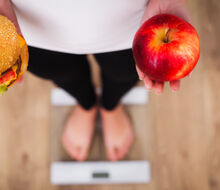
Plus, if you cut your intake too much, it's a big step towards the body burning its muscle mass as well, as it will be looking for all available energy sources. For most people, the optimal weight loss is no more than 0.5 - 1% of body weight per week. If your weight and inches don't budge for an extended period of time, slowly cut calories, but again, keep in mind that the reduction should not be too drastic.
Learn to time your carbohydrates correctly
Nutrient timing is most important when you' re in a calorie deficit and you want to keep muscle loss to a minimum. In this case, make sure you' re consuming enough carbs around your workout. The recommended amount of carbohydrates before and after training depends on your overall intake, tolerance and preferences. Daily carbohydrate intake is perhaps the most individualized nutrition issue ever. Each of us needsdifferent amounts, from different sources and at different times.For pre- and post-workout carbohydrate consumption, we should choose complex sources such as rice, buckwheat, bulgur, whole grain pasta, etc. In the period shortly after training, we can also ingest fast sugars.
Ensure sufficient (not excessive) protein intake
And we come to another, very often discussed, part of nutrition, namely protein intake. A diet based on a higher protein intake (again, I'll point out - NOT OVERSIZE) promotes satiety, improves mood and cognitive function, and supports muscle building and recovery. Protein has the greatest thermic effect of any nutrient, keeping us fuller longer while costing us more energy to process. The recommended amount of protein for athletes and active individuals is somewhere between 2.2 - 3g per kilogram of body weight.
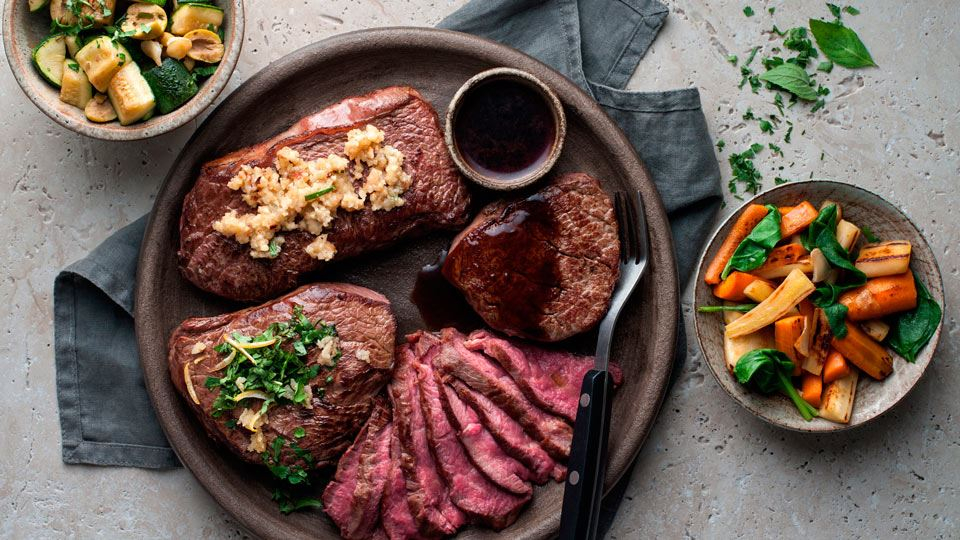
The easiest way to comfortably fill your protein intake is by consuming some source at each meal. Simply divide your total protein intake by the number of meals you plan to eat each day. Add a protein source to each of those meals and you're pretty much set. Some of the best sources include meat, eggs, fish, cottage cheese, dairy products, but also vegetable protein and last but not least protein powder, which can help you make up any deficit really easily.
Recommended
Amix Isoprime CFM
BiotechUSA 100% Pure Whey
Don't prioritise cardio over strength training
95% of people who are trying to reduce weight will do this by adding a lot of aerobic activity to their workout to burn as many calories as possible. There's nothing wrong with this at all, as adding cardiovascular exercise helps keep the fat burning pathways open and is a great way to burn extra calories. However, if you're prioritizing cardio over strength training, you might want to rethink your strategy. You'll know from our article on the afterburn effect that it doesn't only matter how many calories you burn immediately while doing the activity, but that there is also an afterburn effect that is most pronounced after strength training, HIIT training, and other high-intensity activities. Beyond that, also try increasing your daily NEAT, or thermogenesis, without exercise.
Build your training primarily on complex exercises
If you are trying to reduce fat stores, there is not the slightest reason to worry about heavy exercises, on the contrary. Concentrating only on isolated movements, high repetition counts and the "burning sensation" doesn't mean you'll burn more fat in the specific targeted area. The strategy that helped you build muscle is also the one that will best help you maintain it. Thus, next, exercises like squats, deadlifts, various variations of deadlifts,shrugs, push-ups, bench press es, and more should regularly appear in your workout. Try to keep your training volume as high as possible while your energy allows.

Your performance will of course depend on your age, physical and mental fitness, training plan, intensity, volume, but as long as your training and deficit are reasonably set, you should be able to train at the same volume until the deficit is over with ease. Often, the reduction in volume is the result of mental deficiencies rather than physical deficiencies and fatigue. To reiterate the basic idea that what helped you build muscle will most certainly help you maintain it, so there is no need to make any radical adjustments and certainly no need to restrict complex exercises.
Sleep, sleep, sleep and more sleep
Getting enough quality sleep should still be your number one priority. Sleep and stress management are extremely important for quality of life, energy and health, but during weight loss these two factors take on even more importance. You will know from several of our previous articles that lack of sleep leads to fluctuations in the levels of several hormones - leptin and ghrelin in particular, hormones that greatly affect our cravings and hunger. Similarly, high secretion of cortisol and other stress hormones are also detrimental and can inhibit weight loss by forcing the body to hold more water and also affect our cravings.
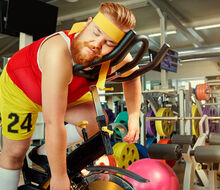
With this in mind, be sure to find time to relax, engage in parasympathetic mode and do things you enjoy that reduce stress and promote feelings of well-being and happiness - reading a book, time with friends, regularly relaxing with a favourite movie, getting a massage, drawing, etc. In addition, it's a good idea to develop regular habits - going to bed and waking up at around the same time every day to give your body the best quality sleep, ideally 7-9 hours. Practicing these habits will not only make losing weight easier, but will also have a positive effect on many other aspects of your life.

Supplement with creatine
You're thinking, what's the big deal about taking creatine in your weight loss? No big deal. Creatine is one of the most researched supplements ever, so we know a lot about it and can be really confident about its effects. In a nutshell, creatine is a natural substance that turns into creatine phosphate in the body. Creatine phosphate helps produce ATP, which is the energy our muscles need to contract. Supplementing with creatine offers athletes the benefit of increased strength and performance, among other things, things that will certainly come in handy in your weight loss training. Creatine is of course also found in many natural sources, such as meat, but we would have to consume really large amounts to feel any benefits, so reaching for a supplement is the best option if you are not already taking it regularly.
Only use Refeed when you really need it
"Refeeds" are days when you use an increase in calorie intake to replenish the energy you're lacking in a deficit. When we refeed, we often focus on increasing our carbohydrate intake, as these are the ones that can help us better adhere to our diet and replenish our energy levels. Refeed is also a good strategy for muscle maintenance because you'll give them the increased calorie intake they need at regular intervals, but not in nonsense like cheating, but in quality nutrients that are the best you can give your body at that moment. The structure of your refeeds will of course depend on where you are on your weight loss journey, what your training intensity is and a bunch of other factors.
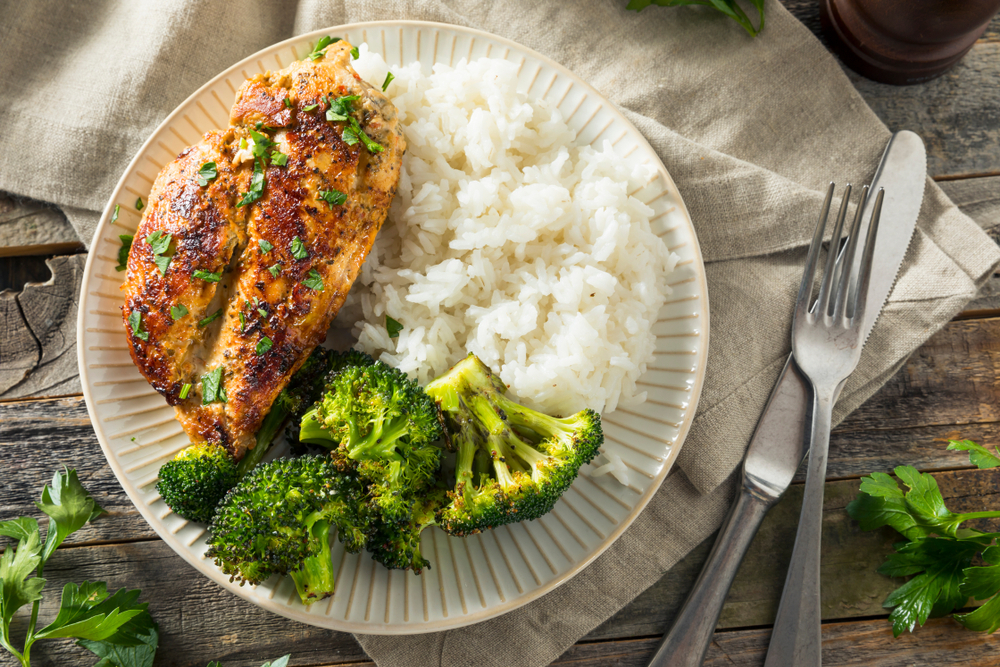
In any case, don't think of refeeds as cheat days. Refeeds are included mainly because of their psychological benefit in your diet, and the creation of an opportunity because you'll give your body more energy so you can perform better in the gym. But when to include it? That's the question. If you've been in a calorie deficit for at least 4 weeks, be sure to treat yourself to a few days (1-5) of higher carb intake. On those days, your calorie intake can be up to 1000 kcal higher, depending on many factors of course. Likewise if you're feeling too tired or lethargic. As for the specifics of the refeed, some people enjoy strictly carb refeeds, while others benefit more from adding a combination of fats and carbs.At the end of the day, what's important is that you've "taken a break" from the caloric deficit, increased your calories for 24-48 hours in a structured way, and now feel energized again and ready to continue your fat loss efforts.
What to take away from the article?
Today, we've looked at tips for how to eliminate the loss of hard-earned muscle mass as much as possible during weight loss. It's important that your reduction starts at the highest calorie intake possible and that it's free of any extremes. Timing of carbohydrates is also very important , as the bulk of them should come in around your workout. When it comes to training, don't make too many changes - the strategy that helped you build muscle will also help you maintain it, so don't be afraid of heavy exercises! Sleep and adequate rest are other pieces of the puzzle to a well-run reduction and there's much more.
Sources:
https://journals.lww.com/co-clinicalnutrition/Abstract/2008/11000/Proteins_and_satiety__implications_for_weight.12.aspx
https://jissn.biomedcentral.com/articles/10.1186/1550-2783-10-5?optIn=false
https://www.nature.com/articles/1600578
https://journals.humankinetics.com/view/journals/ijsnem/25/2/article-p163.xml
https://jissn.biomedcentral.com/articles/10.1186/1550-2783-4-6
https://www.nature.com/articles/ncomms3259?message-global=remove&cmsPreview=1
https://annals.org/aim/article-abstract/717987/brief-communication-sleep-curtailment-healthy-young-men-associated-decreased-leptin
https://annals.org/aim/article-abstract/746184/insufficient-sleep-undermines-dietary-efforts-reduce-adiposity
https://www.jci.org/articles/view/105900 xml-ph-0009@deepl.
No posts have been made yet.