Sleep as the forgotten key to health and dream figure
 Author:
 If you talk to any nutrition and healthy lifestyle "expert", nutritional therapist, trainer from your fitness center, or watch commercial shows or read commercial magazines, you will probably get advice similar to this:
"You have to eat well, that's the very basics! Training is only some 20% of success! Eat well, get some exercise and you'll be fine."
But it's not. No way!
I don't understand how it's even possible that so many people forget one of the key factors not only for a nice figure, burning fat and gaining muscle mass, but more importantly for health and overall well-being. I am writing here about a process that is well known to all of us. A process without which we would not be able to function normally. You guessed right, it is SLEEP.
Sleep and its quality is probably not a sexy topic, otherwise it would not be possible that so many doctors and authorities of the world's health care neglect it. Yet, it is becoming more and more apparent how important a role sleep plays in the transformation of the physique. In fact, in some cases it can extremely slow down or even completely stop the loss and burning of excess body fat.
In this article, I have decided to describe how important a role sleep plays in human life, what bodily processes it affects, what causes sleep deprivation, what negative effects it can have on body transformation and finally we will look at some simple and immediately graspable tips on how to immediately improve the quality of your sleep.
MY EXPERIENCE
I guess my grandmother was right at the time when she warned me to go to bed as early as possible....except I had lumps behind my ears from her great strudel, so I wasn't listening very closely.
When I was in high school, I didn't think sleep was a big deal. I'd go home late (nothing so bad about that), but then I'd watch a few more episodes of a TV show or a movie in bed and fall asleep to that. It didn't seem strange to me at the time.
I also didn't find it weird that I wake up twice a night to go to the bathroom, that I wake up the next morning feeling beat up, and that I put the alarm down a few more times. It takes me almost the entire morning to get into a proper rhythm, so I make up for it in the first hour of school, when I doze off on my desk with my head propped up by my sweatshirt.
My morning energy, to put it in numbers, was equivalent to the size of a man's privates after a bath in extra ice water.
Then during the day I had big swings in energy and especially in mood, which was mostly borne by my surroundings. It takes time to realize that it's not ideal to be mean to people you really like.
It went on like that for a long, long time....
The turning point came when I had to get a lot of work done in a morning and be really productive - I started self-educating and starting my own business.
At this point it was unthinkable for me to put off the alarm and wake up for another 2 hours. I had to function immediately! I had to improve my sleep...
I am now fascinated by the extent to which sleep can have an impact on how productive we are, how we respond to stressful situations, how much fat we lose, how much muscle we gain and how happy we actually are in life.
I sleep great and feel better than ever. How is that possible? I just started going to bed earlier? Unfortunately, in today's stressful times, it doesn't work that way.
Studying sleep has become a great passion of mine and I now know dozens of strategies to cope with different types of insomnia. I'll share some of them with you in the last part of this article.
I consider one of my greatest accomplishments to be helping to improve the sleep of my loved ones, who are still grateful to this day for their improved quality of sleep and life.
THE EFFECT OF SLEEP ON HORMONAL BALANCE

We now know that sleep is important for many reasons. However, I would still like to emphasize the effect it has on our hormones, the chemical transmitters from one cell to another.
Only when our hormones are in balance do we enjoy great health, enjoy life, take pleasure in the little things and can literally do wonders with our bodies.
I don't want to go into details here that require 3 doctoral studies to fully understand.
So let's limit ourselves to a few facts and see what happens to our hormones when we lack (and I stress: lack!!) quality sleep:
- Reduced production of GH (growth hormone).
- Decrease in TSH production (thyroid stimulating hormone = thyrotropic hormone).
- Reduction of glucose tolerance.
- Increasing insulin resistance.
- Increased production of the stress hormone cortisol, primarily in the evening.
- Decreased production of leptin ("satiety hormone").
- Increased production of ghrelin ("hunger hormone").
Translated: our thyroid function is impaired, we react less well to carbohydrate and sugar intake, we can't cope properly with stress, we are constantly hungry, we overeat, we have constant cravings for sweets, and we consume more calories than we should.
THE EFFECT OF SLEEP DEPRIVATION ON OUR HEALTH
Sleep deprivation is a big topic nowadays that almost everyone knows about but few address.
"Sleep deprivation is defined as a lack of sleep and can be an acute or chronic condition."
Hand on heart, who among you can say they get quality sleep, wake up in the morning refreshed, invigorated and can't wait to hit the ground running? Probably the fingers of one hand would be enough to count.
Most managers, entrepreneurs, and nowadays even regular employees finish work at home late into the evening. There's never really a rest if you have a family, kids and you're dealing with work obligations on top of that, it's really very difficult to get to bed early. But... Those who want to, look for solutions, those who don't, look for excuses.
How about putting off work for another day? It's really a hundred times better to switch the circadian rhythm, get up early in the morning and go to bed early at night. We will discuss how to do it in the last part of the article.
List some of the physiological manifestations of sleep deprivation:
- Muscle soreness.
- Loss of memory.
- Depression.
- Headaches.
- Increased blood pressure.
- Increased risk of diabetes.
- Increase in stress hormone.
- Obesity.
- Cancer.
- Immunity failure.
- Cognitive impairment.
The list could go on and on, hopefully you've gotten a sufficient picture from the above manifestations.
Studies have also shown that even just one night without sleep can give us the same insulin resistance that people with type 2 diabetes have. This immediately translates into faster aging (aging), reduced sex drive, and gaining more body fat, which is unacceptable, right?
SLEEP, EXERCISE AND SPORTS PERFORMANCE
Everyone who is serious about exercise should pay close attention to sleep!
The length and especially the quality of your sleep determines how our anabolic hormones behave and therefore whether you toil in vain in the gym or are rewarded with new muscle gains, personal bests on individual exercises, improved times in WOD's or improved performance in your sport, whatever it may be (football, hockey, MMA, basketball etc).
So instead of stuffing yourself with all sorts of dietary supplements to promote anabolism and recovery, let's focus on quality and sufficient sleep first and foremost!
Professional athletes, including Cristiano Ronaldo, Roger Federer, LeBron James, Venus Williams, Lindsey Vonn and others, put sleep at the top of their training regimen. And no wonder! The fastest man on the planet, Usain Bolt, even said, "Sleep is extremely important to me. I need a lot of rest and recovery so my body can take all the training."
It is an undeniable fact that sleep can play a crucial role in sport. In a study from Stanford University, it was shown that athletes (in this case, players on a basketball team) who extended their sleep time significantly improved their athletic performance. The study showed that:
- The players ran faster! During sprints, they were able to improve their times by almost a second.
- Shooting at the basket improved dramatically.
- Players felt more energetic and their reaction time also improved.
- There was a subjective improvement in mood and physical well-being during games and practices.
SLEEP AND THE EFFECT ON PHYSIQUE TRANSFORMATION
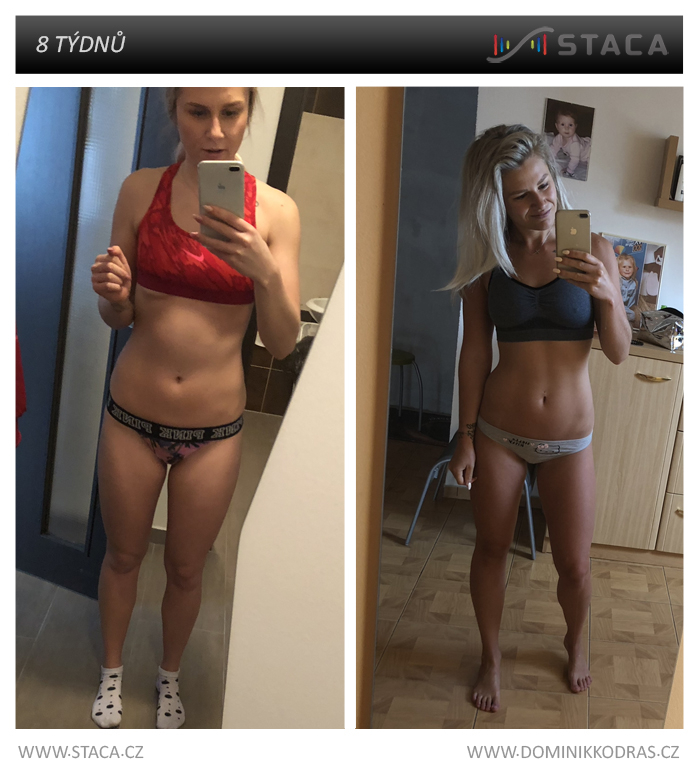
( Image - Petra Klimt's journey towards her dream physique required her to significantly improve and enhance her sleep, otherwise it would have been impossible for her to achieve the desired result. Source: www.dominikkodras.cz )
No one wants to carry excess fat, no one! Not only is it not pretty, but it is even very dangerous, as obesity is associated with a great deal of health problems.
As I mentioned earlier, we are dependent on hormonal balance.
Hormones affect us in a number of ways, which sleep most definitely falls into. Our endocrine system is responsible for producing hormones such as MELATONIN (sleep hormone) and CORTISOL (stress hormone), two essential hormones that affect the quality of sleep.
These two hormones work against each other, i.e. antagonistically. If we have a greater amount of one, the amount of the other is automatically reduced. Cortisol is attributed with a large number of negatives, which are justified, however, cortisol often plays in our favor, if we want to be awake, have enough energy, or perform at our maximum in the gym or on the field. IT'S ALL ABOUT BALANCE!
But when it comes to sleep, cortisol really is our enemy. In the evening, according to the natural circadian rhythm (biological clock), we should have its lowest levels. We don't want to stress ourselves in the evening because we lower our levels of the aforementioned melatonin (the rule of opposing the two main hormones applies here). If cortisol is elevated, we don't produce enough melatonin, we take longer to fall asleep, we are unable to fall into a really sound sleep during the night, and we wake up in the morning feeling like we've been run over by a bulldozer.
As you may notice STRESS also plays one of the major roles in the quality of sleep, but we will talk about that some other time...this topic deserves a completely solitary and extensive article.
5 SUREFIRE TIPS AND TRICKS FOR A REFRESHING SLEEP
1. Make your bedroom a bat hideout!
Darken and soundproof your room as much as possible! REM sleep (the fifth and final stage of the sleep process) is strongly influenced by noise and light from the outside environment. Once this happens, melatonin production drops sharply. It is also proven that you sleep better if the room is cool.
Solution: close blinds and curtains, turn off all lights in the bedroom, ventilate the room.
2. Avoid electromagnetic radiation at least 2 hours before going to bed!
Electrosmog can severely interfere with the length of time we fall asleep and the overall quality of our sleep.
Blue Light doesn't have to have a negative label, as it can help us to tune in better during the day and wake up the body overall - but only to a certain extent, as excess blue light also has many negative effects.
One of them is the effect on sleep, when the CIRCADIAN Rhythm and the MELATONIN SUPPRESSION (see hormones above) are disturbed.
In short: if we look at our cell phone, tablet or laptop before bed, our body thinks it's daytime.
Solution: avoid blue light (cell phones, tablets, laptops) for two hours before going to bed. Watching TV from a distance is allowed (turn on maximum power saving on the TV).
Instead of scrolling through Instagram and Facebook, read a book, it's really beneficial.
3. Cut out nervous system stimulants in the afternoon.
Coffee is the drink of choice for the vast majority of the adult population. And for good reason (read more about coffee in the article HERE) .
Coffee can also have its downsides. It is a nervous system stimulant, which can be a problem for someone who is stimulated to a greater degree. In a recent study, it was proven that ingesting coffee not only late in the day, but even 6 hours before going to bed negatively affects sleep quality! So having an evening cup is not the most brilliant idea in the world, just like having a double dose of a caffeinated kicker before your afternoon workout.
Solution: cut out coffee and other nervous system stimulants at least 6 hours before bedtime. For more sensitive individuals, I recommend not consuming coffee and stimulants after 1 pm.
4. Use the power of nature and herbs!
We often turn to nonsensical solutions such as sleeping pills and similar nonsense that will do us more harm than good in the long run.
Try making a drink before bedtime that our great-grandmothers and grandmothers used to put their offspring to sleep.
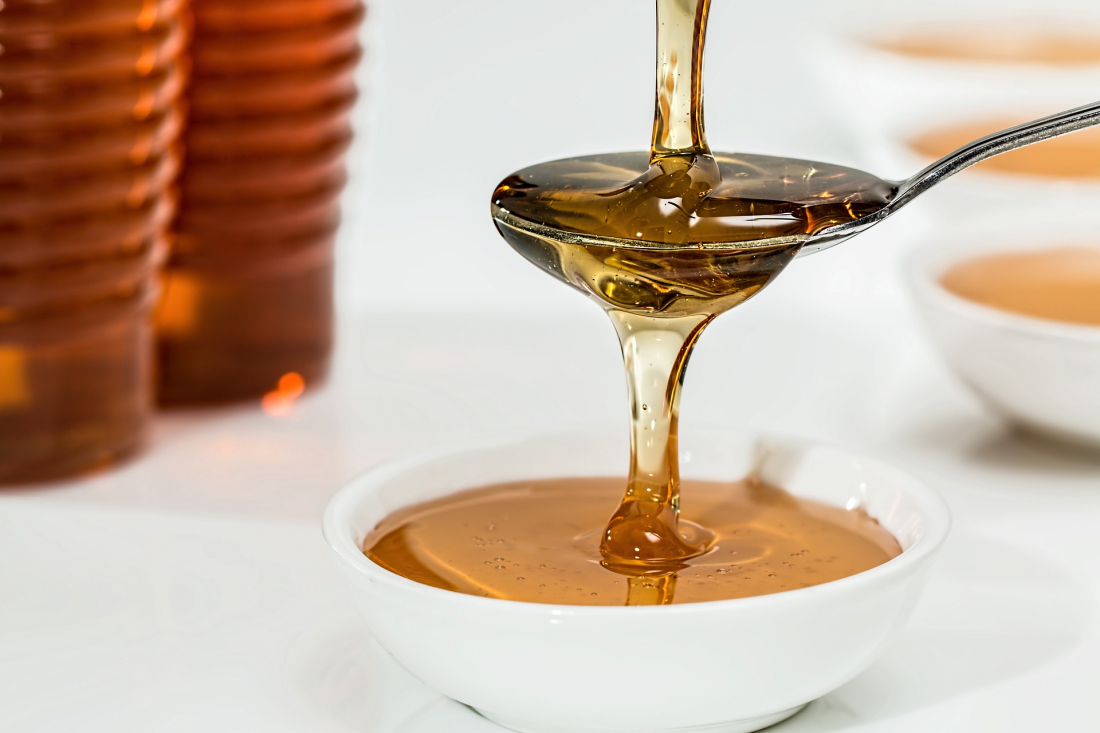
Solution: to prepare the drink we will need passionflower root, valerian root, organic milk and organic honey. Heat 200-300ml of organic milk on the stove. Infuse the passion flower and valerian root in it. Strain the liquor and add a teaspoon of organic honey after it cools down.
5. Supplement!
Food is essential. What we eat during the day strongly influences our sleep.
But...I could write a whole book on pre-sleep supplementation. I've tried an incredible number of supplements and combinations of supplements and I can tell you one thing: IT IS OUR INDIVIDUALITY and each supplement affects everyone differently. One will put one person to sleep like a baby, while another will beat 20 people to death after taking it.
I am providing a guide here that works about 70-80% of the time.
One supplement works universally, always and everywhere. It is MAGNESIUM.
Magnesium, along with L-Tryptophan and vitamin B6, is the building material for the production of SEROTONIN, which makes the sleep hormone MELATONIN (see earlier in the text).
And since most people, especially athletes, suffer from magnesium deficiency, this mineral is very often the cause of difficulties in achieving deep sleep.
Little magnesium = no deep sleep. More magnesium = deeper sleep.
Solution: include 2-3g of chelated form of magnesium before bed, for example you can buy magnesium in bisglycinate form HERE (2-3 scoops).
Another option is to give 1 scoop of a combination of magnesium bisglycinate and inhibitory amino acids 20 min before bed, which you can find in the Sleepmag product HERE.
Note: you can combine both products perfectly! And if you want to pile posts in the comments like supplementation doesn't work and that you can do without it, try incorporating the supplements in question first! Try out the tips and tricks given and email me at kodras@staca.cz to let me know what it did to your sleep!
For more tips and tricks not only on sleep, but also on food, training and supplementation, follow the Strength Training Academy (STACA) Facebook and Instagram profiles.
Dominik Kodras,
co-founder of STACA and freelance editor of bodybuilding.com
No posts have been made yet.