





What should a healthy diet contain?
 Author:
 As part of our New Year's resolutions, we most often aim to change our eating habits, lose some weight or start doing sports. In order to make the path to your goal this year as easy as possible and help you avoid unnecessary mistakes, we have decided to create a mini series of educational articles in which we will cover the essential topics in the field of nutrition, supplementation, sports, recovery, but also take a look at the undying myths that accompany these areas. In today's episode, we will look at what a healthy diet should contain.
A theoretical window, or a bit of boring but important introductory talk
Before we get into what our diet should ideally contain, what those macronutrients are and what foods we shouldn't miss at home, let's recap the most important thing. Everyone's diet should be fully tailored to our individuality. It should take into account our physical disposition, gender, age, occupation, daily activity, frequency and intensity of sports activities, but also, for example, our eating history, taste preferences, allergies and, last but not least, the feelings we have associated with eating particular foods. So there is no one-size-fits-all guide to what a diet should look like - we can give ourselves general advice and recommendations, but we always need to fine-tune a diet to perfection by individualising it. Tailor it to yourself, your needs, your preferences and your goals. So don't get swept up in the New Year madness, don't go on any extreme diets and go straight to building the foundations for a diet that you will be able to follow ideally for life.
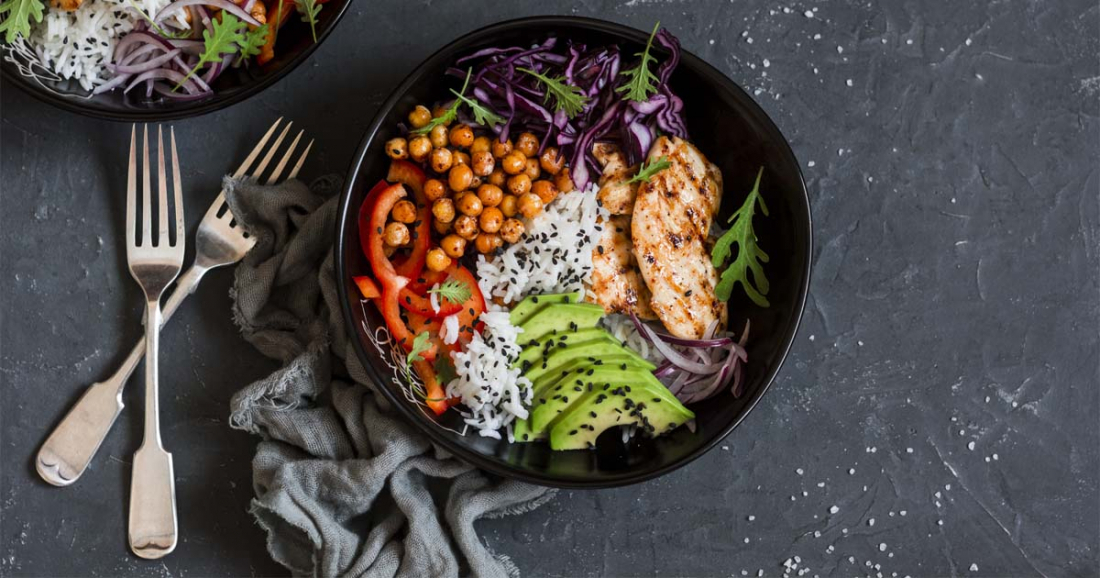
So what shouldn't be missing from our diet?
Okay, let's cut to the chase - in today's article we'll explain what the so-called macronutrients are, what role they play in the body and from which sources they should ideally be drawn.
Protein
Proteins are the basic building blocks of the body. They are made up of smaller molecules called amino acids. Amino acids can be divided into non-essential (those that the body can produce on its own) and essential (those that the body cannot produce on its own and must be ingested from diet and other sources). Protein is a very important component of our diet, as our body uses it for a number of processes that are essential for overall health. For example, they are central to the formation of muscles, tendons, tissues, organs and skin. They are equally important for the production of enzymes, hormones, neurotransmitters and various small molecules that serve important bodily functions.

In addition to all the roles mentioned above, proteins are also central to optimal immune function and we should pay due attention to their intake when we are trying to lose weight or gain muscle. Protein has the highest thermic and satiating effect of all macronutrients, which means that we stay satiated the longest after eating it, and sufficient intake can help control cravings. The energy of one gram of protein is equivalent to 4.1 Kcal.
In the case of protein, it is not only the amount you take in per day that is important, but also from what sources it comes. The quality of the protein source depends on the amino acid profile, as these are what our body primarily uses. The best protein sources contain all the essential amino acids in proportions suitable for humans. In this respect, animal proteins are logically slightly better than plant proteins. This is due to the fact that animal muscle tissues are very similar to human ones. However, we do not have to condemn plant sources entirely, and even among them we can find some that can be described as complete protein sources, which means that even some plant foods contain the ideal ratio of all the essential amino acids that our body needs.
The question of how much protein we should optimally consume per day is, as is usual in nutrition, very difficult to answer in general terms. The optimal daily protein intake depends on physical disposition, frequency and intensity of sports, other daily activities, genetic predispositions, gender, etc., so logically the number will be slightly different for each of us. However, if you want to hear a number, it is suggested that for active individuals the intake should be around 1.6 - 2.2 g per kilogram of body weight. Top athletes can have an intake of up to 3.5 g per kilogram of body weight. In addition, it is also true that the need for protein varies from day to day.

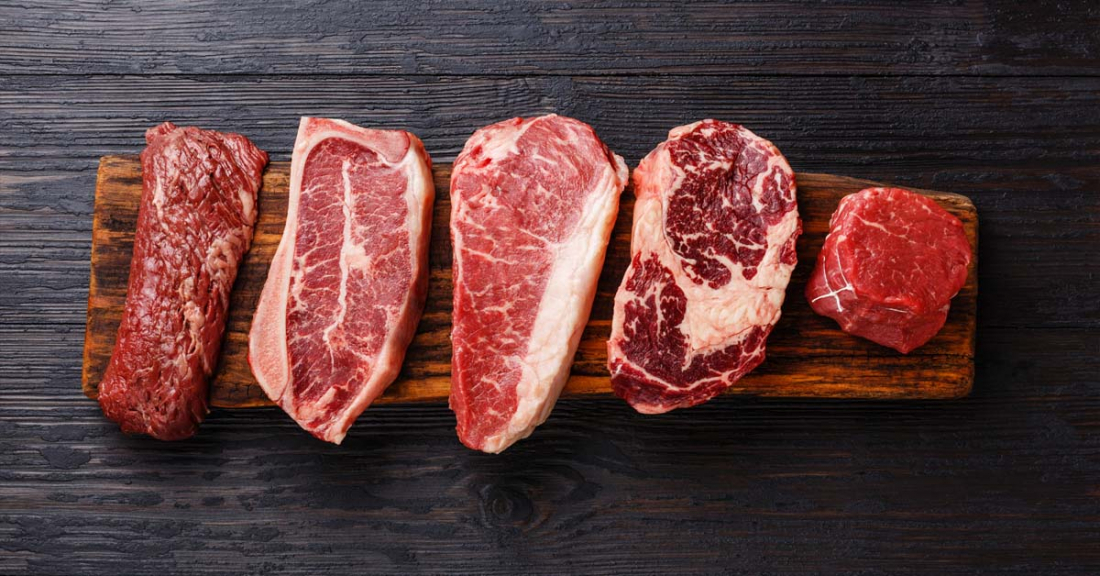
Where do I get my protein from? As already mentioned, the best sources include foods of animal origin, such as all types of meat, fish, eggs, cheese, cottage cheese or Greek yoghurt. Small amounts can also be found in carbohydrate supplements, of which quinoa or buckwheat even have a full spectrum of essential amino acids and can be considered complete sources of protein. Legumes are also rich sources of vegetable protein and contain fibre and other health-promoting nutrients. High-quality protein powder is also a useful, and nowadays quite common, aid for fulfilling the necessary protein intake. Don't forget the variety that is the basis of any healthy diet and rotate your protein sources.

Carbohydrates
The second macronutrient that has been disproportionately demonized in recent years, yet is a very important part of the diet, is carbohydrates. Their energy is equal to that of protein, but they play a completely different role in the body. Carbohydrates are the body's main and most readily available source of energy. They are also needed by our brain and can influence mood and performance quite significantly. However, it's important to remember that not all carbohydrate sources are the same, and not all carbohydrates are worth consuming in bulk. We'll get to that, though.
There are several types of carbohydrates. The basic division, based on their chemical structure, is into simple carbohydrates and complex carbohydrates. Simple carbohydrates (also called sugars) include two groups - monosaccharides and disaccharides. The most important monosaccharide is glucose, which circulates in the blood and serves as a source of energy for red blood cells and the central nervous system. In the monosaccharide group we also find fructose and galactose. Disaccharides include maltose (malt sugar), lactose (milk sugar) and sucrose (beet sugar). Contrary to popular belief, simple carbohydrates do not have to be strictly eliminated from our diet (especially those from fruit), but it is definitely advisable to keep their intake under control and they should not dominate our diet.
The second group of carbohydrates are complex carbohydrates, otherwise known as polysaccharides. Unlike simple carbohydrates, complex carbohydrates often contain fibre, which means they are released into the bloodstream more slowly and are therefore a longer-lasting source of energy. Polysaccharides also include starches and fibre, which is a very important part of the diet. It is beneficial for the health of our intestinal biome and can also slow down the digestive process so that we can stay fuller for longer by eating it.
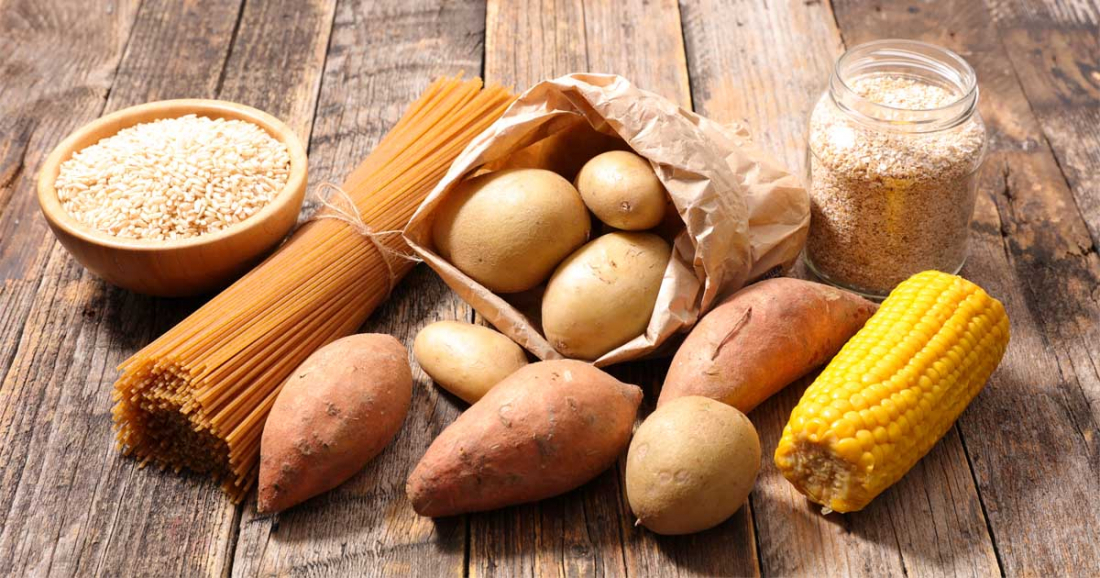
So where do we get our carbohydrates from? Complex carbohydrates should predominate in your diet - cereals, whole grain breads, flakes, potatoes, buckwheat, quinoa, and don't forget to get enough fruits and vegetables. Fruit is a source of simple sugars, but compared to sweets it also contains a variety of vitamins, minerals and fibre, so it can be considered a nutritionally valuable food that definitely has its place in the diet. Rather, try to limit your intake of refined sugars, which can be found in sodas, sweet bakery products, sweet chocolates, bars and other processed foods.

How much carbohydrate should I actually take in a day? Optimal carbohydrate intake, like other nutrient intakes, is completely individual and in fact is perhaps the most individualised part of the diet ever. Again, there are a lot of individual parameters to take into account and adjust intake based on these. According to general recommendations, carbohydrate intake should be between 30-55% of total daily intake. Of course, various diseases, such as diabetes, also play a role, where it is advisable to moderate carbohydrate intake.
Fats
The last of the trio of essential macronutrients is fat, and it should also have pride of place in the diet. Fats are very important for the absorption of certain vitamins - especially A, D, E and K and some antioxidants. They also play a vital role in the synthesis of hormones such as testosterone and oestrogen, and are crucial for the production of the much-needed vitamin D. In addition, fats affect the immune system, regulate body temperature and also protect some of our organs. When you hear the phrase "energy source", most of you probably think of carbohydrates first, but fats are also a very good source of energy. In numerical terms, a gram of fat contains more energy than the other two macronutrients combined - specifically 9 kcal. Even though fats are the "most caloric", there is no reason to fear them in your diet or even eliminate them from your diet altogether.

However, even in the case of this macronutrient, there are significant differences between species. Most fats have a beneficial effect on the cellular, cardiovascular and metabolic health of the human body, and when consumed in reasonable amounts and from optimal sources, they also promote good body composition. So how are fats distributed? Certainly don't expect us to divide them into good and bad. In fact, virtually all types of fats, except trans fats, have their own importance and cannot be described as downright bad. Rather, it depends on your total intake and the proportion of each type of fat in it. But back to the division - according to their origin we can simply divide fats into vegetable and animal fats. Fats from plant sources should predominate in the diet, at least in a 2:1 ratio.
Depending on the nature of the fats, we divide them into saturated fats, which are mainly found in animal but also in some plant sources. Fats in this group used to be considered harmful in connection with cholesterol, but we now know that, unless they are completely dominant in the diet and do not come purely from processed foods, they have an honourable place in the diet. The second group are trans fatty acids, which would either occur naturally in food (for example in fattier meats) but are more often produced during manufacturing and so their biggest source is ultra-processed foods. In this unnatural form, they should rarely be present in the diet, as their high concentration carries a variety of health risks. The last type is unsaturated fats, which should be the most abundant in the diet. This group includes omega-6 fatty acids, omega-9 fatty acids and the very important omega-3 fatty acids, which you can read more about in this article:
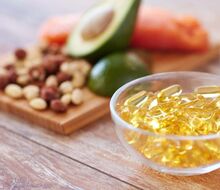
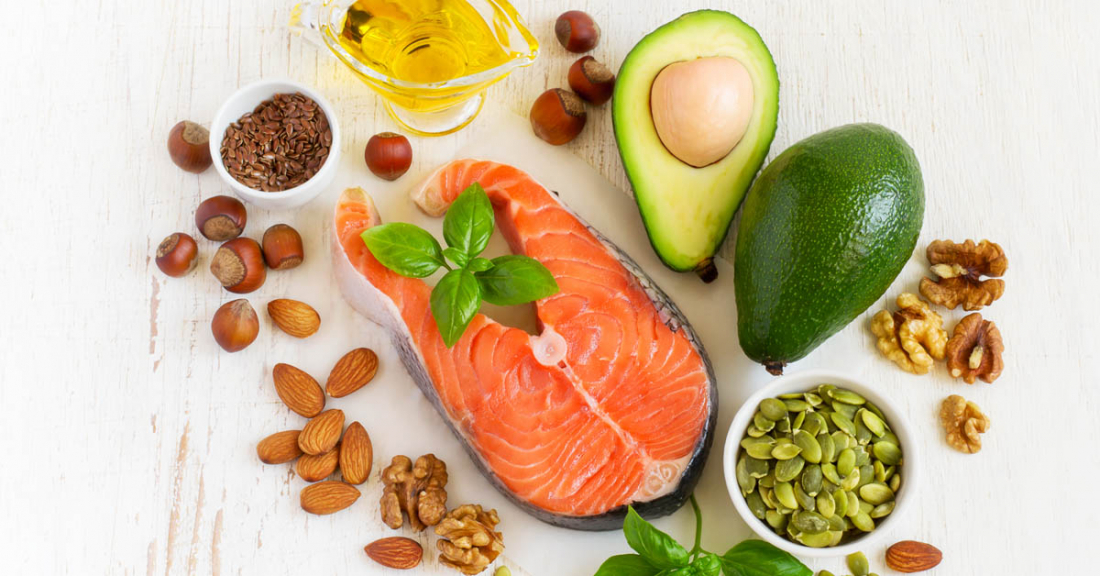
Where do you get your fats from? The best sources include oily marine fish such as salmon, sardines or mackerel, eggs, avocados and their oil, nuts, their oils and butters, seeds, vegetable oils, ghee, and good quality dark chocolate. As for their optimal intake, here too, of course, the ideal daily amount will be different for each of us. It is stated that the daily intake should be between 25-40% of the total calorie intake and it is very advisable to fill this amount with different types, as the body benefits differently from each group of fats. So even in the case of fats, it is advisable to have a wide variety of foods in the diet and vary the sources of fat.
Micronutrients
In addition to the basic macronutrients, we should not forget about micronutrients, i.e. vitamins and minerals, in the diet. Vitamins and minerals are non-energetic substances that are indispensable for life. In the vast majority of cases, vitamins cannot be produced by the body itself (with the exception of vitamins D and K), so they need to be taken in through the diet or in the form of supplements. Vitamins are divided into fat-soluble and water-soluble. Both groups of species play an equally crucial role in the body. Vitamins provide a number of vital functions - they are essential for nutrient absorption, metabolism, strong immunity and proper metabolism. Minerals are also substances essential for the optimal functioning of the body. They help us perform well in sports, ensure regenerative processes, are important for strong bones, healthy teeth, good eyesight, immunity and much more.
Recommended

Nebbia Legíny High-waist flared CLUB D’OR 630
Czech Virus Odorless Garlic 1500

Nebbia Teplákové šortky 6” MUSCLE MOMMY 624
Nebbia Fitness legíny s kapsou DISCIPLINE 708
The first cocktail that leads to fulfilling the optimal intake of vitamins and minerals is a balanced diet. The moment we provide our bodies with good quality, fresh foods, avoid nutritional extremes, enrich our diets with plenty of fruits and vegetables, and eat a varied diet, we are well on our way to providing a significant portion of the required daily intake of these important substances. Even so, it is unfortunately difficult to get adequate amounts of all micronutrients from the diet today, so it is advisable to reach for supplements - but we will get to those in the next article.
What to take away from this article?
In today's comprehensive article, we've broken down the different components that a healthy diet should contain. We've looked at what the essential macronutrients are and said that we shouldn't completely exclude any of them from our diet, as each has an important role to play in the body. Carbohydrates are a source of energy for the body and brain, proteins help us build muscle and keep us full, and fats are important for proper absorption of nutrients, affect hormone production and also serve as a source of energy. In addition to macronutrients, we should not forget about micronutrients - vitamins and minerals - in our diet. In addition to the theory, we have also discussed which foods, as sources of each nutrient, are appropriate to include in the diet. And next time we'll look at which supplements are really worth investing in at the beginning.
Sources:
Virtanen, H., Voutilainen, S., Koskinen, T. T., Mursu, J., Tuomainen, T. P., & Virtanen, J. K. (2018). Intake of Different Dietary Proteins and Risk of Heart Failure in Men: the Kuopio Ischaemic Heart Disease Risk Factor Study. Circulation. Heart Failure, 11(6), e004531. https://doi.org/10.1161/CIRCHEARTFAILURE.117.004531
Phillips, S. M., & Van Loon, L. J. (2011). Dietary protein for athletes: from requirements to optimal adaptation. Journal of sports sciences, 29 Suppl 1, S29-S38. https://doi.org/10.1080/02640414.2011.619204
Reidy, P. T., & Rasmussen, B. B. (2016). Role of Ingested Amino Acids and Protein in the Promotion of Resistance Exercise-Induced Muscle Protein Anabolism. The Journal of nutrition, 146(2), 155-183. https://doi.org/10.3945/jn.114.203208
Witard, O. C., Jackman, S. R., Kies, A. K., Jeukendrup, A. E., & Tipton, K. D. (2011). Effect of increased dietary protein on tolerance to intensified training. Medicine and science in sports and exercise, 43(4), 598-607. https://doi.org/10.1249/MSS.0b013e3181f684c9
Lattimer, J. M., & Haub, M. D. (2010). Effects of dietary fiber and its components on metabolic health. Nutrients, 2(12), 1266-1289. https://doi.org/10.3390/nu2121266
Aune, D., Keum, N., Giovannucci, E., Fadnes, L. T., Boffetta, P., Greenwood, D. C., Tonstad, S., Vatten, L. J., Riboli, E., & Norat, T. (2016). Whole grain consumption and risk of cardiovascular disease, cancer, and all cause and cause specific mortality: a systematic review and dose-response meta-analysis of prospective studies. BMJ (Clinical research ed.), 353, i2716. https://doi.org/10.1136/bmj.i2716
Wanders, A. J., van den Borne, J. J., de Graaf, C., Hulshof, T., Jonathan, M. C., Kristensen, M., Mars, M., Schols, H. A., & Feskens, E. J. (2011). Effects of dietary fibre on subjective appetite, energy intake and body weight: a systematic review of randomized controlled trials. Obesity reviews : an official journal of the International Association for the Study of Obesity, 12(9), 724-739. https://doi.org/10.1111/j.1467-789X.2011.00895.x
Liu, A. G., Ford, N. A., Hu, F. B., Zelman, K. M., Mozaffarian, D., & Kris-Etherton, P. M. (2017). A healthy approach to dietary fats: understanding the science and taking action to reduce consumer confusion. Nutrition journal, 16(1), 53. https://doi.org/10.1186/s12937-017-0271-4
Kris-Etherton, P. M., Innis, S., American Dietetic Assocition, & Dietitians of Canada (2007). Position of the American Dietetic Association and Dietitians of Canada: dietary fatty acids. Journal of the American Dietetic Association, 107(9), 1599-1611.
No posts have been made yet.








