Creatine is not just a dietary supplement!
 Author: Šárka Randáčková
 There are at least three traditional bodybuilding drugs or supplements that could be routinely used in a clinical setting to treat a variety of ailments:
The first substance is of course an anabolic steroid. In an intelligent world, such a substance, along with other steroids, would be used to combat muscle loss in serious diseases such as cancer, AIDS, celiac disease, congestive heart failure, multiple sclerosis, and others.
Nandrolone should also be strongly considered as an adjunct to testosterone in hormone therapy because it has beneficial effects on joints and much less adverse effects on hair loss and prostate enlargement than the various testosterone esters.
The second substance, growth hormone, should be routinely used to speed up the recovery of muscle, tendon and bone after fractures. Athletes undergoing ulnar collateral ligament reconstruction, for example, would be back in action in half the time.
Ordinary people could return to work after common orthopedic injuries twice as fast. Growth hormone could also help burn patients to recover faster.
And the last substance, creatine, should be used, or at least considered, for a range of problems from spinal cord damage to cardiopulmonary disease.
The first two substances have a daunting task ahead of them. Huge stigma and a lot of misinformation. Creatine doesn't get as much critical attention, so it could start to be used to treat a variety of problems.
This is the intent of a team of researchers at the University of Central Florida who reviewed a wealth of literature dealing with the potential use of this supplement in treating muscle loss due to disability, injury, neurodegenerative disease, cardiopulmonary disease, and other muscle disorders.
Creatine? Like the stuff that's in my Weight gainer 12000?
Scientists argue that a number of maladies affecting humanity stem from some sort of physical dysfunction, poor muscle use, or even immobilization, all of which can lead to muscle loss.
The same problems occur in cardiovascular disease, neurodegenerative disorders, or even myopathies. Such poor muscle use can lead to muscle loss and eventually to premature death, especially in the elderly.
However, researchers say creatine can "effectively reduce the need for rehabilitation and improve its course" thanks to its support for endurance and strength.
So this was the researchers' premise, but it needed to be confirmed by a thorough review of studies on creatine conducted during rehabilitation, immobilization, muscle disuse, atrophy, neurodegenerative disorders, cardiopulmonary and mitochondrial diseases.
The results were mixed. Creatine has indeed proven to be a useful tool for rehabilitation for many problems and diseases, while it has completely failed for some where one would consider it a sure bet.
Here is a brief summary of all the researchers' findings.
Category 1: Creatine probably helps with the following
Post-workout recovery
Researchers found 16 studies describing the effects of creatine on indicators of muscle damage after weight training.
Essentially all of the studies confirmed that creatine reduces muscle damage after training, reduces inflammation, oxidative stress, accelerates strength recovery, and reduces the onset of muscle soreness.

Spinal cord injury
It goes without saying that people or animals suffering from spinal cord injuries will lose a significant amount of muscle and strength. There aren't many studies on the use of creatine in this situation, but the ones we do have are promising.
A group of patients (after a spinal cord injury) given 20g of creatine per day developed greater upper body strength and a greater cross section of muscle fibers.
The mice showed the same results and improved locomotor capacity compared to the control group.
Arthritis
A blinded study on women with osteoarthritis of the knee found that creatine supplementation (20g for 7 days and 5g daily for 11 weeks) resulted in improved physical function and increased net leg muscle mass.
Another study, this time of rheumatoid arthritis, found that creatine supplementation improved muscle strength, despite the fact that the patients did not exercise.
Muscular dystrophies
Boys with Duchenne muscular dystrophy and Becker muscular dystrophy were studied. Creatine supplementation resulted in a significant increase in strength and prolonged time before reaching exhaustion. Another study found that 4 months of supplementation led to significant improvements in grip strength and increases in net muscle mass.
In adults, creatine did not help as much, i.e. not in any objectively measurable way. However, patients did experience subjective improvement. They described improvements in daily activities.
Category 2: Creatine can help with the following
Disability and atrophy caused by disuse
Immobility is the worst thing for muscle atrophy (for example, a limb in a cast). However, seven studies have shown that creatine helps reduce muscle loss in such situations. The same was true in studies on mice with immobilized legs.
However, there are also studies that found no beneficial effects of creatine in this context. However, they did find positive changes in protein metabolism and a slight inhibition of muscle loss. However, it was not sufficient to prevent atrophy and loss of strength.
The preponderance of evidence, however, speaks for the use of creatine in these situations.
Acute injuries
Muscle and nerve injuries impair functionality, mobility and activity, inevitably leading to atrophy. There aren't many studies on the use of creatine in this situation, but the ones we do have are promising.
Scientists severed the spinal cords of mice and waited for the onset of atrophy. Then they operated on some of them and started giving them creatine. The control group, of course, didn't.
In both operated and non-operated mice, creatine greatly improved recovery. Gait, grip strength, limb girth, and thumb contraction were analyzed.
Such studies are not done on humans (for obvious reasons), but it is not foolish to think that the results would be similar.
Cardiopulmonary diseases
If you have a weak heart or circulatory system, you are likely to be in the same position with atrophy as people with an injury or neurological disorder.
Scientists point out that creatine plays a role in cardiovascular function and health, but its exact effects have many variables and little evidence.
At least two studies show positive effects of creatine even in cardiac patients, even without training. One study found no positives.
Either way, it is clear that creatine has a positive effect on endurance and strength in atrophy, whatever caused the atrophy.
Recommended
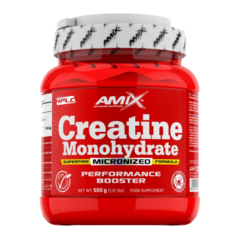
Amix Creatine Monohydrate
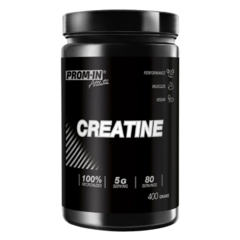
Prom-in Creatine HPLC
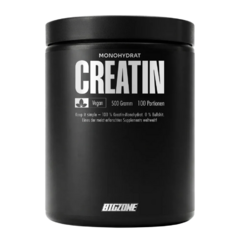
Big Zone Creatin
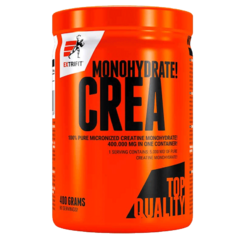
Extrifit Crea Monohydrate
Mitochondrial diseases
These are rare genetic disorders of the electron transport chain (which negatively affects ATP production).
One study showed that affected patients had an 11% increase in dorsiflexion strength and a 19% increase in grip strength. They also gained 0.6kg of net muscle mass. However, this is not a statistically significant result.
The other two studies showed a net zero.
The verdict? I would only speculate here, but theory and mechanisms of action say that creatine should help in these situations.
Category 3: Creatine does nothing with the following
Five studies compared creatine and placebo in patients suffering from Parkinson's disease. Two studies examined its effect on the progression of multiple sclerosis. Three studies looked at amyotrophic lateral sclerosis. None of them showed measurable positive effects of creatine on the progression of these neurodegenerative disorders.
It is not entirely clear why this is the case. From the biochemical nature of these diseases, creatine should help them, even if only to a limited extent.
Conclusion
I will quote the authors of the study:
Based on the findings on its role in recovery from training, rehabilitation from disability or injury, and therapeutic effects in various chronic conditions, creatine monohydrateshows promising results as a supplement for rehabilitation.
If you read a certain amount of studies on any drug or supplement, you will find that direct recommendations of the substance in question, at least ones that are not desperately vague, are quite rare.
Our study, of course, ends with the obligatory statement that more research is needed.
Of course, our scientists have not discovered anything definitive. Even so, I personally would strongly recommend creatine supplementation if anyone I care about suffered from any of the problems described in points 1 and 2 above.
It can hardly hurt them, but it could make their lives a lot easier.
Source: www.t-nation.com - Creatine is Medicine
Author.
Author: Šárka Randáčková No posts have been made yet.