





Learn how to regenerate properly in 3 steps!
 Author:
 By Mike Robertson
I'll give you advice on what to do during and immediately after your workout to come back stronger the next day.
When I started working out in the 90s, the post-workout window was something of a scripture. We all knew that if we didn't get in a drink with an exact 1:4 ratio of protein to carbs within 15 minutes after a workout, we would lose all the gains. Okay, maybe not all, but most. There's been a lot of sewing into this concept of a post-workout anabolic window in recent years, but there are still things you should be doing post-workout for maximum improvement.
Why is the post-workout period so crucial?
At my gym, we compose workouts based on 7 principles.
It looks something like this:
- Release: rolling on the roller
- Reset: optimizing breathing and mobility
- Readiness: warm-up
- Reactive strength: strength and explosive training
- Resistance: strength training
- Resistance: cardio
- Recovery
I tell my charges, and often other coaches, that the last point might even be the most crucial of all seven:
Scenario 1: You had a pre-workout drink on the way to the gym, the workout was brutal, your heart rate is at an all-time high, endorphins are everywhere, and you feel great. Then you go and carry on with your normal day.
Scenario 2: Same as scenario 1, but before you leave the gym, you lay down, lift your legs and breathe deeply for 3-5 minutes.
In which example will you recover faster? I don't have the research on this, but I think starting your recovery from scenario 2 will give you faster results.
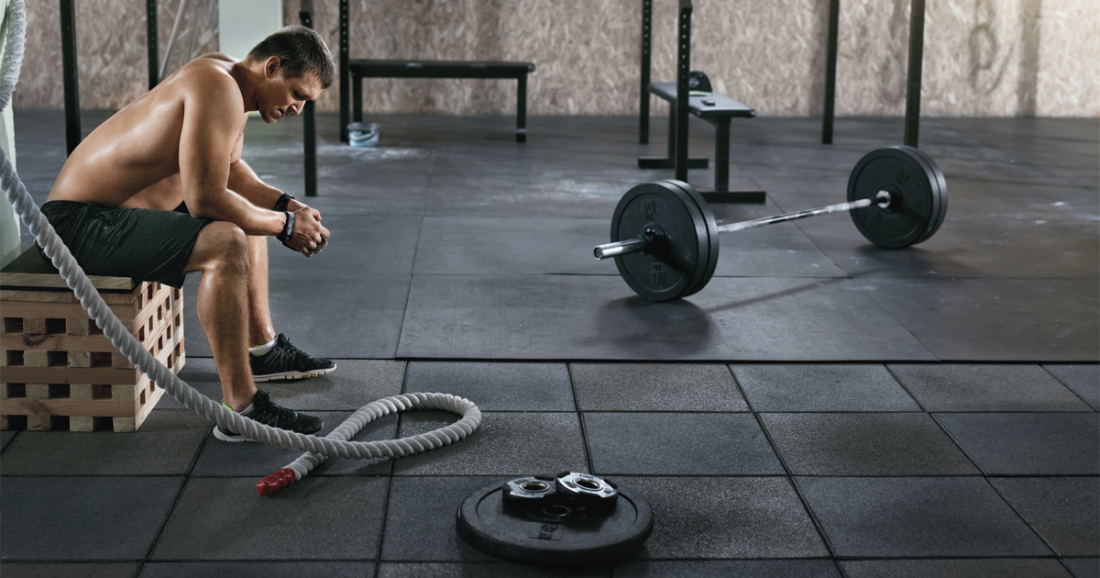
And I'm taking it one step further. I don't think that window lasts 3-10 minutes after a workout. I think it starts at the end of the workout and ends when you go to train again. When you start thinking about recovery in this global way, you'll find that everything you do between workouts has an impact on your training success.
3 Ways to Improve Recovery
1. The nervous system
I'm an advocate that recovery should be determined by the nervous system, not the muscles. You need to set a clear barrier between fight mode and rest mode. It's okay to train in fight mode. That way you can get a proper workout. But after training, you have to be able to switch off and start with calm.
How to do that?
There are a ton of options, but my favorite is 10 deep breaths. It doesn't have to be anything extravagant. Just lie on your back and do this:
- Breathe in through your nose for 3-5 seconds.
- Exhale through your mouth twice as long.
- Hold your breath for 3-5 seconds before taking the next breath.
Recommended
Nebbia Dámský sportovní overal INTENSE Focus 823

Nebbia Crop mikina GYM SPIRIT 483
Nebbia Cyklistické šortky s vysokým pasem ELITE 467

Nebbia 3/4 podprsenka s vysokou podporou TIMELESS 474
Try to make each successive breath longer than the previous one. After a hard workout, the first few breaths will be shallow and fast, but gradually your heart rate will slow down and breathing like this will become easier. The resting mode you start with this will have a decent effect on your recovery.
2. Post-workout nutrition
This comes second in recovery. If you want to take advantage of post-workout nutrition, you need to be calm first. Here we can think of the magic window of opportunity after training. In my opinion, it is more important to maintain a good quality protein intake throughout the day, not just after training. I have a study on this that compared the protein intake spread out over the day for one group and another group that ate 2/3 of their protein intake at dinner. The energy intake was the same for both groups. Proteosynthesis measured 24 hours later was 25% higher in the balanced group.
The results were confirmed by another study:
"Based on the available results, our conclusion is that maximal anabolism occurs when protein intake is 0.4 g/kg/meal in at least 4 meals per day and when total daily intake is at least 1.6 g/kg/day. The maximum intake reported in the literature of 2.2 g/kg/day would be 0.55 g/kg/meal in 4 meals/day."
So, our post-workout window may not be the complete holy grail, but even in that window we need to focus on quality protein intake as we ideally do throughout the rest of the day.
3. Sleep
Many people don't include it in the post-workout equation. I think sleep is the most important part of it. Chances are pretty good that you will sleep at least once, if not twice, between workouts. When you sleep, protein synthesis increases, growth hormone is flushed out, and the body recovers for the next workout. If you don't get enough quality sleep, these essential processes will be disrupted.

You may have to change your thinking. Don't think that your workout ends when you leave the gym. You're done when you've had a good night's sleep. You'll be amazed how strong you'll be when you start focusing on sleep as much as you do on your workout at the gym.
The complete recovery process
The idea of a post-workout anabolic window may be dead, but that doesn't mean the post-workout period isn't important. (And if you're drinking protein straight after your workout, that's only good for you.)
Think of recovery as a holistic process where the individual parts play a vital role. Focus on using calming breathing, on eating well and sleeping well, and improvement in the gym will almost inevitably come.
Resources
Mamerow, M. M.; Mettler, J. A.; English, K. L.; Casperson, S. L.; Arentson-Lantz, E.; Sheffield-Moore, M.; Layman, D. K.; and Paddon-Jones, D. (2014). Dietary Protein Distribution Positively Influences 24-h Muscle Protein Synthesis in Healthy Adults. The Journal of Nutrition. 144(6), 876-880.
Schoenfeld, B. J., and Aragon, A. A. (2018). How much protein can the body use in a single meal for muscle-building? Implications for daily protein distribution. Journal of the International Society of Sports Nutrition. 15(1).
No posts have been made yet.








