Why should fibre be part of every meal and where to look for it?
 Author:
 You've probably heard that you should eat a lot of fibre-rich foods because it benefits our health. But what you may not know is how fibre actually works in the body, what it does and why it is so important for our health and the proper functioning of our bodies. Fibre positively supports health in many amazing ways, it is especially beneficial then for the health and proper functioning of our gut biome. It can support digestion, prevent blood sugar fluctuations and is also important for feeling satiated, which we can appreciate not only in fat reduction. Today, let's introduce fibre a little more closely and of course add some tips on foods that are really rich in it.
Article content:
- What is dietary fiber and how does it work?
- The benefits of consuming enough fibre
- How much fibre should I actually take?
- How much soluble fibre should you consume?
- What about supplements?
- What to take away from the article?
What is dietary fiber and how does it work?
Okay, to give it some context - fiber is a plant carbohydrate that cannot be broken down into sugar molecules. Fiber is therefore found exclusively in plant foods. Based on water solubility, there are two basic types - logically soluble fibre and insoluble fibre. However, it is much more convenient to distinguish whether the fibre is usable by our gut bacteria, which is why we often see the terms fermentable and non-fermentable fibre. Fermentable fibre has the ability to ferment and is therefore useful to our intestinal cells, whereas the latter is not.

Most foods that contain fibre provide both soluble and insoluble fibre in some proportion. At the same time, it should also be mentioned that insoluble fibre is not always unusable by the body - some types of insoluble fibre can be used in the gut by beneficial bacteria that need fibre to live and function properly. Consuming fibre slows down the rate of absorption through the digestive tract (we'll get to this in more detail later) and acts as a "brush" that gently cleanses our intestines. This function, combined with its ability to slow down the digestion of nutrients, leads to a whole host of health benefits, and we'll look at a few of the most important ones now.
Benefits of consuming enough fibre
Helps increase satiety
Since fibre has the ability to slow down the rate of digestion, it also plays an important role in signalling satiety. When we consume foods that do not contain fiber, the body processes and absorbs them very quickly. This can result in us being constantly hungry, having the urge to snack all the time, being plagued by constant thoughts of food and an almost constantly growling stomach. In contrast, when the food we eat has sufficient fibre, it is naturally processed and absorbed much more slowly. This makes us feel full and energised for longer. By deliberately including fibre in all our daily meals, we can slow down absorption and promote satiety. This is always beneficial, and is especially helpful when our goal is fat reduction.

Supports stable blood sugar levels
When consuming fiber, the rate of digestion slows down. This can further slow the rate of sugar absorption in the bloodstream and create a means of stabilizing blood sugar. This is especially beneficial because when ingested sugar is absorbed too quickly, we can experience significant spikes and subsequent drops, which can result in fatigue, drowsiness, attention disorders, and can also contribute to other health complications that are better prevented. Consuming fiber-rich foods such as vegetables, fruits and whole grains will prevent these significant spikes in blood sugar levels from forming.
Maintains a healthy gut
It won't be a big surprise to say that the biggest part of our immune system, lies in our gut. Therefore, it is extremely important that we look after their health in the best possible way by nourishing the beneficial bacteria living in our gut (known as probiotics) with fibre-rich foods, i.e. prebiotics. Prebiotics essentially act as food for the probiotics (or the healthy bacteria, if you will). They are therefore crucial for the proper function and health of our gut and help our gut biome to thrive.
Helps the body eliminate waste and undigested food residues
In the opening paragraphs we likened fibre to a 'broom' that helps cleanse our bodies. Fibre, especially insoluble fibre, acts like a little broom and helps to clean our bowels, making a significant contribution to their proper functioning. Fiber also plays a role in gastrointestinal (GI) motility. This is because it tends to increase the contents of our intestines and can promote water absorption, which speeds up the movement of food through the intestines and helps us with bowel movements. This process helps us to maintain regular bowel movements and prevent constipation. Beware, the moment we take in too much fibre, it can result in severe bloating or a laxative effect. Similarly, the moment we take in too little fibre, we may be constipated.
Protects your heart health
But fibre is not only important for our biome and digestion, it even benefits our cardiovascular health. In short, when you digest food, it requires the release of bile acids, which are mostly made up of cholesterol. The liver pulls cholesterol out of the bloodstream and produces bile acids, which can reduce the amount of LDL cholesterol in the body. LDL is the cholesterol that is significantly associated with an increased risk of cardiovascular disease, so it is important to ensure that these LDL levels do not climb too high, and again, sufficient fibre intake can be beneficial for this.
How much fibre to actually take in?
We have come across several times that in larger amounts, fibre can be laxative or severely bloating. So - what is actually the optimal amount in which we should take it? A good question that, as is usual in nutrition, doesn't have a completely straightforward answer. Recommendations often vary in this regard, but the most common guideline recommendation is 25 g for women and up to 38 g for men. However, it should be noted that there is no adequately substantiated evidence to confirm that this is indeed the only correct amount and will suit everyone in the world. When setting your daily fibre intake, remember to take into account your individual needs - some individuals function well on higher fibre intakes, while others need lower amounts.
Again, the saying "more is not necessarily better" applies. Aside from the side effects of bloating, high fiber intake also blocks the absorption of certain nutrients and minerals such as magnesium, sodium, calcium and potassium. But most people these days have quite the opposite problem - they consume fiber woefully inadequately. So let's give you some tips on what foods to add to your diet to reap the many benefits that a sufficient fibre intake offers.
Recommended
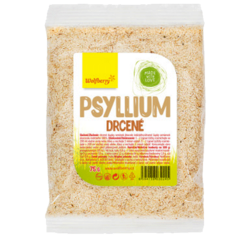
Wolfberry Psyllium drcené
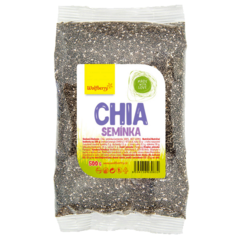
Wolfberry Chia semínka
Soluble fibre
We'll tackle soluble fibre first. Soluble fiber dissolves in water - as it moves through the digestive system, it is fermented by bacteria. This type of fiber absorbs water and becomes a gel as it passes through the digestive tract. A great example of a food that is rich in soluble fiber is chia seeds - have you ever tried soaking them for a few minutes - hours? They form a thick gel - just because of the soluble fibre content. How is soluble fibre beneficial? It helps lower cholesterol, regulate blood sugars and can improve overall digestive and immune health.
Great sources of soluble fiber include:
- beans
- most vegetables
- avocados
- sweet potatoes
- oatmeal
- dried figs
- flaxseed
- Chia seeds
- pears
- apricots
- psyllium

Insoluble fibre
Second, we have insoluble fibre, which, in contrast to the first type, does not dissolve in water. It therefore does not change its structure as it passes through the digestive tract. This means that it does not absorb water like soluble fibre and does not become gelatinous. Insoluble fibre promotes regular bowel movements, speeds up the elimination of waste substances through the large intestine and maintains a stable intestinal pH. Many whole grain foods that contain insoluble fibre also have soluble fibre.
Great sources of insoluble fiber include:
- bran cereals
- beans
- Lentils
- most whole grain cereals
- corn
What about accessories?
Okay, now that you know why fibre is important for your health, you may be wondering if taking it in supplement form is the best way to go. That's the way to go too, of course, but beware. The best way to get fiber is through a varied diet rich in a variety of vegetables, whole grains, seeds and nuts. These foods also provide the body with other health benefits. Choose a fibre supplement if you cannot eat vegetables or have other food allergies or digestive disorders. But be sure to consult your doctor first - again, more is not better, and most people really only need a balanced and varied diet rich in fresh, high-quality foods to meet their intake requirements.
What to take away from this article?
Fibre is an essential component of our diet. It is important for the health and proper functioning of our digestive system, increases satiety, helps regulate blood sugar levels and is also beneficial for the health of the cardiovascular system. In today's article, we've covered the two basic types, explained their function, and also listed the sources where each type can be sourced. The ideal amount of fibre we should take in a day is, as in most things in nutrition, very individually determined. A low intake can result in constipation and digestive problems, while an excess can lead to bloating, a feeling of heaviness and diarrhoea.
Sources:
Thursby, E., & Juge, N. (2017). Introduction to the human gut microbiota. The Biochemical journal, 474(11), 1823-1836. https://doi.org/10.1042/BCJ20160510
Wanders, A. J., van den Borne, J. J., de Graaf, C., Hulshof, T., Jonathan, M. C., Kristensen, M., Mars, M., Schols, H. A., & Feskens, E. J. (2011). Effects of dietary fibre on subjective appetite, energy intake and body weight: a systematic review of randomized controlled trials. Obesity reviews : an official journal of the International Association for the Study of Obesity, 12(9), 724-739. https://doi.org/10.1111/j.1467-789X.2011.00895.x
Lattimer, J. M., & Haub, M. D. (2010). Effects of dietary fiber and its components on metabolic health. Nutrients, 2(12), 1266-1289. https://doi.org/10.3390/nu2121266
D'Mello, C., Ronaghan, N., Zaheer, R., Dicay, M., Le, T., MacNaughton, W. K., Surrette, M. G., & Swain, M. G. (2015). Probiotics Improve Inflammation-Associated Sickness Behavior by Altering Communication between the Peripheral Immune System and the Brain. The Journal of neuroscience : the official journal of the Society for Neuroscience, 35(30), 10821-10830. https://doi.org/10.1523/JNEUROSCI.0575-15.2015
Macfarlane, S., Macfarlane, G.. T., & Cummings, J. H. (2006). review article: prebiotics in the gastrointestinal tract. Alimentary pharmacology & therapeutics, 24(5), 701-714. https://doi.org/10.1111/j.1365-2036.2006.03042.x
McRae M. P. (2017). Dietary Fiber Is Beneficial for the Prevention of Cardiovascular Disease: An Umbrella Review of Meta-analyses. Journal of chiropractic medicine, 16(4), 289-299. https://doi.org/10.1016/j.jcm.2017.05.005
Howarth, N. C., Saltzman, E., & Roberts, S. B. (2001). Dietary fiber and weight regulation. Nutrition Reviews, 59(5), 129-139. https://doi.org/10.1111/j.1753-4887.2001.tb07001.x
Quagliani, D., & Felt-Gunderson, P. (2016). Closing America's Fiber Intake Gap: Communication Strategies From a Food and Fiber Summit. American journal of lifestyle medicine, 11(1), 80-85. https://doi.org/10.1177/1559827615588079
No posts have been made yet.