Oatmeal: Superfood for health and energy
 Author:
 Are you part of the population that is unable to exist without a morning bowl of porridge? Well, we have good news for you - oatmeal is an incredibly healthy and useful food that definitely deserves a place in a healthy diet - both for building muscle or fitness and for fat reduction. We dare to say that oatmeal is one of the foods that every fitness and healthy lifestyle enthusiast always has on hand - because it is a cheap source of complex carbohydrates with a high proportion of fibre and protein, which also provides a number of interesting benefits.
So today, let's take a look together at what such oatmeal actually has to offer, and we're sure that if you haven't come across it before today, we'll convince you that it definitely deserves a chance.
Article content:
- Oatmeal - a nutritional treasure
- What's up with the gluten?
- How to use oatmeal?
- What to take away from the article?
Oatmeal - a nutritional treasure
Oats are a whole grain food, scientifically known as Avena sativa. Oatmeal has an absolutely fantastic nutritional profile - it contains complex carbohydrates which are a great source of gradually releasing energy for the body, it also has a really good amount of fibre in the form of beta-glucans which have a lot of health benefits, but we'll get to that later.
For a plant, oats also provide quite a high protein content (on average between 11-15g per 100g). Furthermore, oat protein is considered to be very digestible - it is reported to have a buildability of up to around 90% and a biological value of around 80, which is really quite high for a plant source.
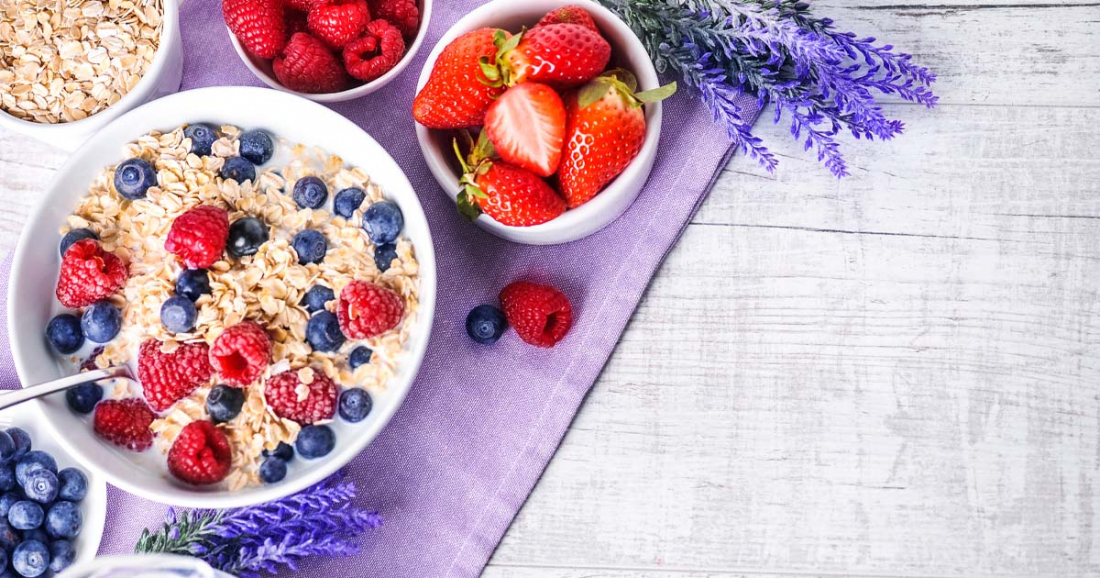
The list of nutritional benefits certainly doesn't end there - there are also a huge number of micronutrients in oatmeal. Oatmeal is generally a good source of B vitamins and also contains manganese, fortification, zinc, iron and magnesium. Oatmeal is also high in antioxidants and beneficial plant compounds called polyphenols. Most notable is a unique group of antioxidants called avenanthramides, which are found almost exclusively in oats.
And you know what's best? This nutritional treasure can be used in countless different ways! Not just oatmeal for breakfast, but oatmeal can be used at any time of the day, both sweet and savoury. Oatmeal can be toasted and added to yoghurt, it can be incorporated into desserts, but it can also be used to thicken soups or sauces, or as an unusual side dish.
What about the gluten?
Well, here's a little curiosity. Few people know that oats are naturally gluten-free, containing only the protein avenin, which most allergy sufferers tolerate very well. Gluten enters oats through so-called cross-contamination, which occurs when oats are grown, harvested, processed or carelessly stored together with gluten grains (most often wheat). If you want to be sure that your oatmeal is truly gluten-free, look for oatmeal that says 'gluten-free' on the packaging. Such a product should guarantee that the oatmeal has not been in contact with gluten-containing foods, nor does it contain gluten caused by cross-contamination.
Oatmeal as a source of essential fibre
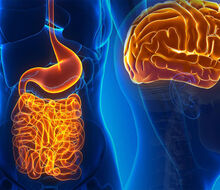
Wholegrain foods contain a really high proportion of fibre, minerals and vitamins. We already know that fibre is divided into soluble and insoluble. Soluble fibre is present in the outer coating, which is called bran.
The fibre in oatmeal is distributed in roughly the following proportions: 55 per cent soluble fibre and 45 per cent insoluble fibre. Both types definitely have their place in the diet. Not only is fibre important for the proper functioning of our digestive system, but it also has a very good satiating effect, thanks to the fact that it absorbs large amounts of water. Fibre-rich foods, although often low in calories, can therefore be very filling.
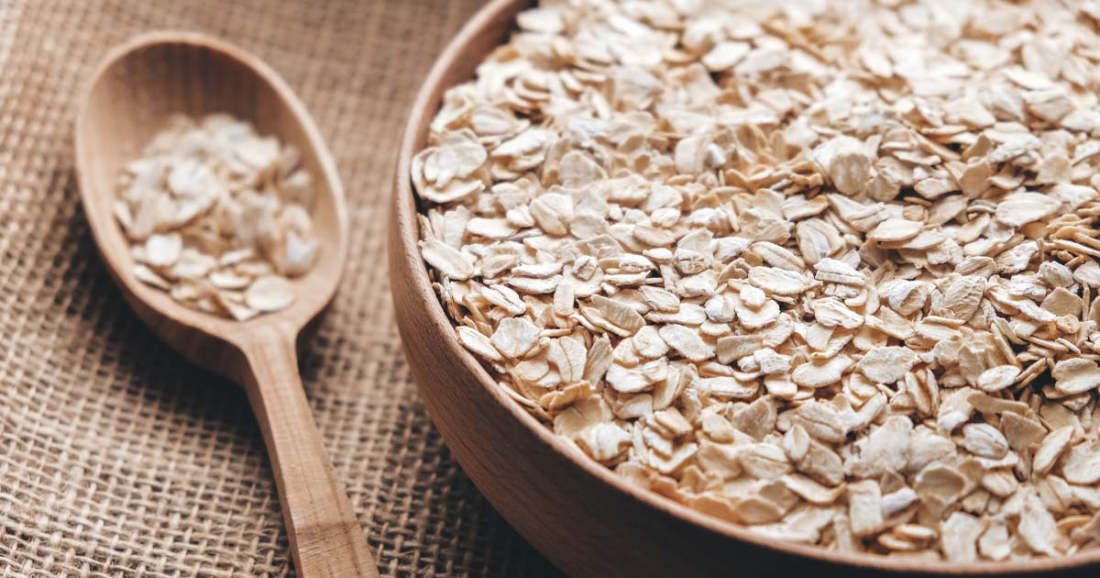
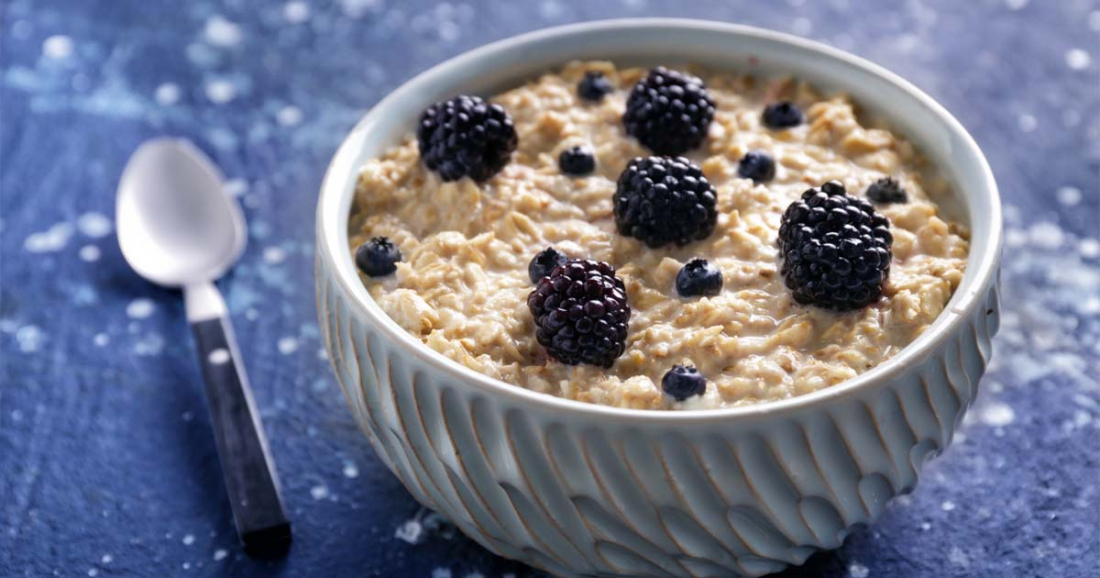
Oatmeal can therefore be a beneficial food even on weight loss diets - it is not quite as low-calorie, but thanks to its fibre content it is filling and the 100% contained in it provides energy gradually, so three cheers to breakfast porridge! However, don't forget to top up your porridge with a protein source - yoghurt, protein or maybe an egg - and a small amount of fat, like peanut butter or dark chocolate. Such a meal will give your body a really full, balanced and certainly tasty breakfast, which will provide you with quality energy for the whole morning and you will manage all your duties without feeling hungry.
Support for the immune system
The ancient Greeks knew that health begins in the gut. So, of course, the support of the immune system is also strongly linked to the above points, because a key part of it is located in our gut. Beta-glucans are well known to boost immune function by fighting bacterial infection and reducing inflammation.
They do this by activating certain immune responses, particularly white blood cells called macrophages, which fight fungi, bacteria and toxins. Consuming foods rich in beta-glucans has even been linked to the ability to naturally fight cancer cells. Beta-glucans have been shown to have anti-carcinogenic abilities and can potentially help limit the growth of cancerous tumors.
Oatmeal as a rich source of trace minerals
Roughly half a cup of oatmeal provides about 73 percent of your daily intake of manganese and 16 percent of your daily phosphorus needs. Manganese is important for maintaining healthy bone structure because it plays a role in the production of essential enzymes for bone building. It also supports proper metabolic function, helping to optimize energy levels, brain and hormone balance. Phosphorus is, in addition to protecting teeth and gums, another key nutrient for bone health. Foods rich in phosphorus can contribute to healthy growth and development, and foods high in phosphorus regulate nutrient digestion and support bone/bone, kidney, muscle, heart and nerve function.
Oatmeal is also a good source of selenium, magnesium, iron, copper and B vitamins. Foods containing these nutrients prevent deficiencies that can cause problems such as slow metabolism, anaemia, fatigue, 'brain fog', mood changes, depression and pain of various kinds.
Oatmeal = energy for the morning and stable blood sugar levels
Oatmeal also has a low glycaemic index, which means it releases energy gradually, so we are not at risk of the rapid spikes in blood sugar that are associated with a sharp rise and fall in energy. Like other whole grain products, oatmeal can improve insulin sensitivity. This is one of the reasons they are recommended as part of the diet to prevent the development of diabetes and other diseases. There are even studies that confirm that oatmeal can be beneficial in the treatment of diabetes itself.

How to use the flakes?
As mentioned in the introduction, oatmeal is incredibly versatile. As well as being able to conjure up a different divine porridge for breakfast every day, you can also grind them up and use them in place of flour - they make great pancakes, crepes, or any kind of cake. You can also use oatmeal to make homemade granola, add it to smoothies, or use it to make mugcakes. And they're not lost in savoury cuisine either!
In addition to being great for thickening soups or sauces, you can also use them to make a great oatmeal salty porridge, add them to various vegetable pancakes, meatballs, or make an unusual side dish. Oatmeal will never get lost in your kitchen and with its nutritional profile, it can be considered a true superfood. As a bonus, oatmeal is usually really cheap, so it doesn't take away from its beauty in this respect either.
What to take away from the article?
Oatmeal is without exaggeration one of the most nutritionally valuable foods we can find in a healthy diet. They are an inexpensive source of complex carbohydrates, a decent amount of beneficial fibre, a good dose of micronutrients and they also contain more protein than some other cereals.
What's more, oatmeal is totally versatile and can be used in countless ways in the kitchen - from classic porridge, to all sorts of sweet treats, to thickening soups, or oatmeal saltines. As a nice bonus, they are a very financially friendly food. In short, oatmeal really deserves a place of honor in our diet!
Recommended
Sources:
Othman, R. A., Moghadasian, M. H., & Jones, P. J. (2011). Cholesterol-lowering effects of oat β-glucan.Nutrition reviews, 69(6), 299-309. https://doi.org/10.1111/j.1753-4887.2011.00401.x
Eggum, B.O., Gullord, M. The nutritional quality of some oat varieties cultivated in Norway. Plant Food Hum Nutr 32, 67-73 (1983). https://doi.org/10.1007/BF01093931
Keenan, J. M., Pins, J. J., Frazel, C., Moran, A., & Turnquist, L. (2002). Oat ingestion reduces systolic and diastolic blood pressure in patients with mild or borderline hypertension: a pilot trial. The Journal of family practice, 51(4), 369.
Li, X., Cai, X., Ma, X., Jing, L., Gu, J., Bao, L., Li, J., Xu, M., Zhang, Z., & Li, Y. (2016). Short- and Long-Term Effects of Wholegrain Oat Intake on Weight Management and Glucolipid Metabolism in Overweight Type-2 Diabetics: A Randomized Control Trial. Nutrients, 8(9), 549. https://doi.org/10.3390/nu8090549
Lambeau, K. V., & McRorie, J. W., Jr (2017). Fiber supplements and clinically proven health benefits: How to recognize and recommend an effective fiber therapy. Journal of the American Association of Nurse Practitioners, 29(4), 216-223. https://doi.org/10.1002/2327-6924.12447
Akramiene, D., Kondrotas, A., Didziapetriene, J., & Kevelaitis, E. (2007). Effects of beta-glucans on the immune system. Medicina (Kaunas, Lithuania), 43(8), 597-606.
Hallfrisch, J., Scholfield, D.. J., & Behall, K. M. (1995). Diets containing soluble oat extracts improve glucose and insulin responses of moderately hypercholesterolemic men and women. The American journal of clinical nutrition, 61(2), 379-384. https://doi.org/10.1093/ajcn/61.2.379
Delgado, G., Kleber, M. E., Krämer, B. K., Morcos, M., Humpert, P. M., Wiegand, K., Mauldin, A., Kusterer, K., Enghöfer, M., März, W., Segiet, T., & Lammert, A. (2019). Dietary Intervention with Oatmeal in Patients with uncontrolled Type 2 Diabetes Mellitus - A Crossover Study. Experimental and clinical endocrinology & diabetes : official journal, German Society of Endocrinology [and] German Diabetes Association, 127(9), 623-629. https://doi.org/10.1055/a-0677-6068
Avila, D. S., Puntel, R. L., & Aschner, M. (2013). Manganese in health and disease. Metal ions in life sciences, 13, 199-227. https://doi.org/10.1007/978-94-007-7500-8_7
Calvo, M. S., Moshfegh, A. J., & Tucker, K. L. (2014). Assessing the health impact of phosphorus in the food supply: issues and considerations. Advances in nutrition (Bethesda, Md.), 5(1), 104-113. https://doi.org/10.3945/an.113.004861
No posts have been made yet.