





Gluten, the most feared demon of a healthy diet.
 Author:
 Don't let the title fool you. Gluten is nowadays considered the "main creator" of fat stores, is blamed for the development of cancer and is generally a very common and controversial topic. Many people omit it from their diet thinking they will lose weight and actually have no other reason to restrict it. Today, let's find out if gluten is really behind fat bellies and is really the demon it is presented to be.
A bit of clever words to start with.. or, what is gluten anyway?
Gluten belongs to the glycoprotein group, which as the name implies, means it is a protein. Gluten is primarily found in wheat and other grains such as barley, rye and others. In the case of wheat, the gluten content is up to 80% of its total protein content. Basically, there is no gluten in the grain or flour itself, only through processing, contamination of the mentioned proteins with water, oxygen and kneading is gluten "formed" and its unique properties are manifested. From the Latin translation, "gluten" means "glue", so gluten actually functions as a kind of "protein glue" that makes most foods hold their shape, and is also often used as a thickener due to this property.
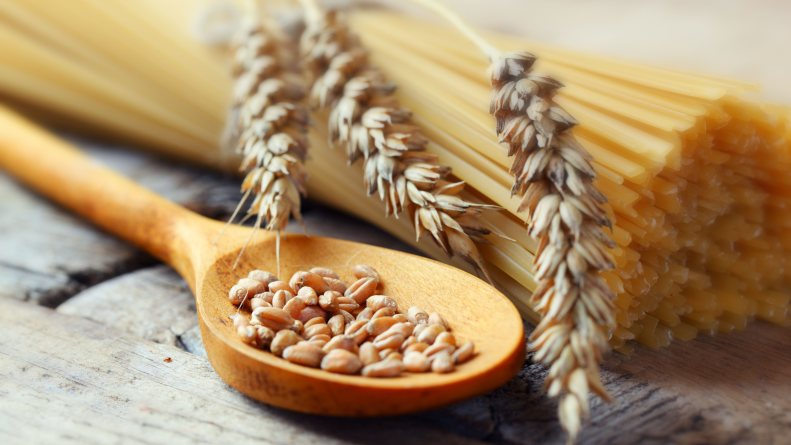
Another way that gluten gets into our diets is through what is called CROSS-CONTAMINATION. This means that we can find gluten in foods that do not naturally contain it. How is this possible? It is due to processing and storage in the same plants that process wheat and other gluten grains. A good example of such a food is oats. Oats themselves do not contain gluten - they contain a protein called avenin, which is why oats are often quite well tolerated even by people who really have a problem with gluten. Have you ever noticed a label on a food that says "may contain traces of gluten/eggs/nuts...? These are exactly the cases where a plant stores or processes multiple ingredients and they MAY (or MAY not) come into contact and thus cannot rule out cross-contamination.
People with celiac disease or intolerance then have plenty of options today to choose foods that are truly gluten-free. However, as mentioned in the introduction, many people skip gluten without actually knowing whether it is really as bad as it is presented today and whether it really is to blame for their fat pads. The number of people who truly have celiac disease and gluten is therefore a real threat to them is somewhere around 3% of the world's population. Then the next type is people with intolerance, which is usually associated with the development of irritable bowel syndrome or other gastrointestinal problems.
First of all... gluten is a component of most cereals, which, among other things, also contain various vitamins and minerals and whose removal from the diet increases (slightly, but still) the risk of developing some nutritional deficiencies. In fact, gluten-free foods are often not even as healthy as we think. In fact, many gluten-free foods are high in saturated fat, contain soy or other unsuitable flours, or contain only empty calories that provide no nutritional benefit to the body. Quite often, gluten-free products also contain much higher calorie content because gluten is substituted with more sugar or fat to give the products a better taste and texture. Despite this, according to US research, up to a third of people will buy a gluten-free product rather than a product made from regular flour, even wholemeal flour, because they believe that these products are healthier, will help them lose weight and improve their overall health.
Recommended
Nebbia Intense Legíny GOLD Mesh 829
Czech Virus Joint MAX Ultimate Blend

Nebbia Deni x NEBBIA Sportovní tank top 309

Nebbia Bezešvé push-up legíny s vysokým pasem 303
Can gluten be responsible for weight gain?
There has been no study to prove that eating gluten alone increases body fat. Skipping gluten usually leads to weight loss, but there has been no direct link to gluten playing a major role. Skipping baked goods and side dishes (containing gluten) usually results in a dietary recovery, a reduction in caloric intake because many people don't know how to substitute grains so they don't eat them at all, and this leads to weight loss rather than the mere fact that you skipped gluten. So when you sum it up, it's not the gluten itself that causes the excess weight and fat stores, it's the overall excess calories and lack of physical activity. Because it's never just a certain type of food that's to blame. So if one excludes gluten from their diet thinking that it is a necessity for a slim figure, then that may be true, but in 90% of cases it may not be the case either.
So skipping gluten is definitely not the key to your efforts to lose some extra pounds. Rather than the consumption of gluten foods themselves, it is the overall composition of our diets, which is often based on the overconsumption of aggressive wheat and caloric excess, that is to blame for the increase in fat cells.
Does gluten really cause cancer?
Well, honestly.. what doesn't cause it nowadays, does it. It's a bit ironic, however, it's almost unbelievable how many foods today, according to various sources, cause cancer, civilization diseases, or clog blood vessels. Currently, the only research that links a gluten-free diet to a reduced risk of cancer is in individuals with celiac disease. Yes, there are studies that have found a link between removing gluten from the diet and a reduced risk of cancer, but conversely there is no research that supports the idea that eating gluten alone increases the likelihood of cancer. So you can rest easy, gluten really doesn't cause cancer in healthy people, or certainly not more than other foods.
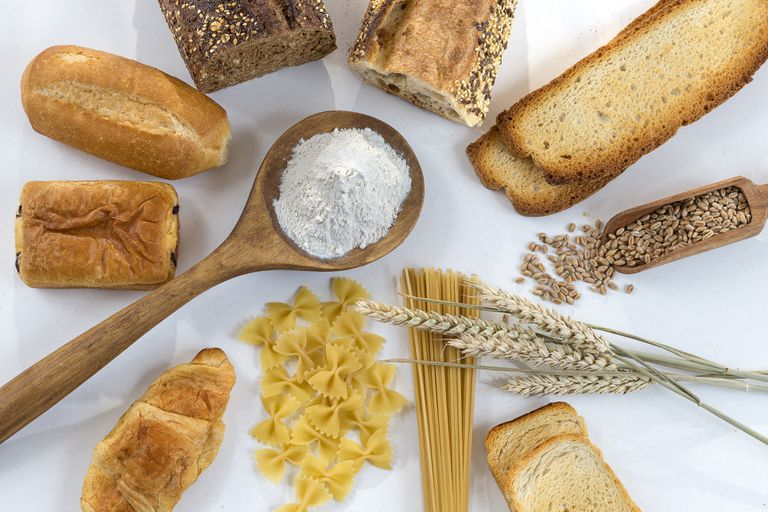
To eat or not to eat gluten? That's what this is all about.
The choice of whether or not to eat gluten is entirely up to you, but as mentioned in the previous paragraphs, eating gluten is unnecessarily demonized, and if foods containing it don't cause you health problems, then you don't necessarily have to skip them either.The problem is not eating gluten, the problem is when we consume only wheat foods and forget to diversify our diet with other grains and carbohydrate sources. Similarly, gluten has not been shown to be linked to the growth of fat stores, so if this is the only reason to eliminate gluten from your diet, it is also not necessary. Look for suitable alternatives to baked goods, such as those made from rye or barley flour, whose gluten is not as aggressive as that in wheat.
What to take away from the article?
We live in a time when gluten is such a big bogeyman that you can almost rob a bank with a bagel in your hand. There is no such thing as an unhealthy food, only an unhealthy amount, and this is no different for baked goods, side dishes and other foods containing gluten. If you love baked goods and side dishes but have cut them out because "Marus posted on fb that I can't lose weight because of gluten", it's not about gluten at all, it's about overall caloric intake and diet composition. Choose a variety of foods so that your diet is varied enough and if you don't suffer from intolerances or allergies, you don't have to worry about gluten in the slightest,
Sources:
https://www.consumerreports.org/cro/magazine/2015/01/will-a-gluten-free-diet-really-make-you-healthier/index.htm
Soares, F. L. P., de Oliveira Matoso, R., Teixeira, L. G., Menezes, Z., Pereira, S. S., Alves, A. C., et al. (2013). Gluten-free diet reduces adiposity, inflammation and insulin resistance associated with the induction of PPAR-alpha and PPAR-gamma expression. The Journal of Nutritional Biochemistry, 24(6), 1105-1111.
https://www.ncbi.nlm.nih.gov/pubmed/22649266
https://www.ncbi.nlm.nih.gov/pubmed/29216605
https://www.ncbi.nlm.nih.gov/pubmed/29216767
https://www.ncbi.nlm.nih.gov/pubmed/29143803
No posts have been made yet.








