Quinoa- an unusual side dish that is both a variety and a source of important nutrients!
 Author:
 Quinoa is rightly considered one of the healthiest foods in the world and definitely deserves its moment of glory here in our country. This pseudo cereal offers a very interesting nutritional profile - for a cereal it contains a lot of protein, a lot of vitamins, minerals and antioxidants, and as a bonus it is gluten-free. It has a slightly nutty taste and besides being nutritionally very rich, it also tastes great and is a great addition to your everyday diet. Let's take a closer look at this South American superfood today.
Article content:
Theoretical window - what is quinoa?
Quinoa is native to South America and is considered a pseudo-cereal because it is closer to a seed than a cereal. Quinoa was cultivated by the ancient Incas, which is why it is also known as the gold of the Incas. Quinoa literally translates as 'mother of grains' and has become a superfood thanks to its high biological value and its ability to fill. Most of us will have come across quinoa - the more common variant we may encounter is white quinoa. However, there are actually about 120 different varieties. There are three types that we can most commonly see in the shops - the white variety, the black variety and the red quinoa.
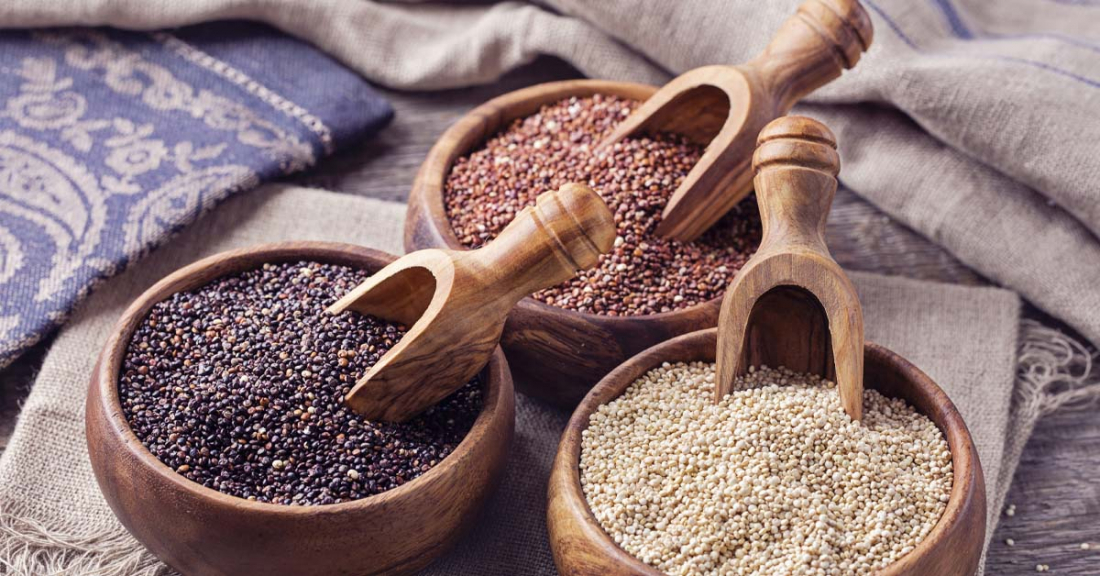
White quinoa is the most common, has a mild flavour, is the quickest to cook and is quite easy to cook. Red and black are crispier when cooked, hold their shape better, are more flavourful and are great in salads and bowls. However, all colour variants have basically the same nutritional values. They are great as a side dish with meat, instead of rice in mixtures ala risotto, in salads, you can make porridge, meatballs, in short, anything you can think of. As a bonus, it's very quick to cook, absorbs most of the water when cooked and should be fluffy. If prepared correctly, it should have a mild nutty flavour and a nice crunchy texture. Quinoa really does have a very versatile use - you can take inspiration from our recipe for salad with peanut dressing, for example.
You can also find quinoa in shops in the form of flakes, as puffed grains, as part of instant porridge and pancake mixes, and sometimes added to cereal mixes, crispbreads and other foods. As already mentioned, quinoa is gluten-free and is a popular side dish for individuals eating a plant-based diet. In fact, quinoa is one of the few plant sources that has the full spectrum of essential amino acids that our bodies need. But eating quinoa offers other benefits as well, and we're going to take a look at them together.
Eight benefits of eating quinoa
It is literally packed with nutrients
One of the key benefits of eating quinoa is its truly rich nutritional profile. Quinoa is one of the few plant sources that can be considered a complete source of protein - meaning that it contains all the essential amino acids that our bodies cannot make on their own, but that we absolutely need. Although not every food we eat needs to be a complete source of protein, it is actually quite rare for a plant food to have a full profile of all 20 amino acids, including all nine essential amino acids.
But that's not all, in addition to a decent amount of protein with high nutritional value (on average, quinoa provides 8 g of protein per 100 g), qiunoa also functions as a source of complex carbohydrates, serving as a source of gradually releasing energy. It also contains a significant amount of beneficial fibre, which we will get to in the next sections. It also contains vitamins and minerals, especially B vitamins, but also vitamins C and E, as well as calcium, magnesium, iron, manganese, phosphorus, folic acid, zinc and a range of antioxidants.

It is suitable for all types of diets
Another advantage of quinoa is that it is naturally gluten-free, which makes it suitable for people suffering from gluten allergy or celiac disease. Quinoa can be beneficial for people following a gluten-free diet by helping them to replenish important nutrients that they may be lacking after eliminating traditional grains from their diet. In addition, it is a very pleasant addition to the diet, which is also true for individuals who can consume gluten. It is also suitable for individuals suffering from diabetes because it has a low glycaemic index and does not cause significant fluctuations in blood sugar levels. Thanks to its amino acid profile, quinoa is also a great source of plant protein for vegetarians and vegans.
It contains antioxidants that fight the effects of free radicals
Quinoa contains large amounts of specific antioxidants called flavonoids. This group of antioxidants sparked interest in the mid-1990s for their disease-preventing benefits. Research suggests that one particular class of flavonoids, polyphenols, may play a role in preventing heart disease, cancer, osteoporosis and diabetes. Quinoa is also high in other antioxidants (such as vitamin A and E) that may reduce inflammation and protect against the development of chronic disease. There is even speculation that quinoa may help protect our bodies from developing various types of cancer due to its nutritional content.
Benefits healthy digestion
Quinoa has also been evaluated in research as a prebiotic food. Prebiotics are a form of fiber that acts as "fuel" for beneficial bacteria called probiotics, which live in our digestive tract and are crucial for us. Scientists have found that this amazing pseudo-cereal has potential as a prebiotic food and can help improve gastrointestinal health by aiding the growth and activity of beneficial gut bacteria. Due to its fiber content, quinoa is beneficial for the overall proper function of the digestive system, including the regulation of bowel movements. The fibre found in quinoa can also help the beneficial bacteria in the gut produce butyrate, a type of short-chain fatty acid that is known for its positive effects on the health and proper function of our gut. Butyrate, among other things, helps regulate overgrown immune cells that serve as a source of inflammation.
May help reduce the risk of developing diabetes
Quinoa is a rich source of several micronutrients that may play a role in preventing the development of diabetes - manganese, for example. Eating foods rich in manganese can be one important step in maintaining healthy blood sugar levels and therefore reducing the risk of developing diabetes. Quinoa also offers a hearty dose of fiber, which can slow the absorption of sugar in the bloodstream and help balance blood sugar levels. Other research shows that adequate magnesium intake is also associated with a lower risk of developing type 2 diabetes, and one cup of quinoa can provide about one-third of the daily recommended amount of magnesium. Quinoa also has a very low glycemic index, which is very beneficial in general and for diabetics in particular.
Promotes bone health
Because of its manganese, magnesium and phosphorus content, quinoa is very beneficial for the health and strength of our bones, and there is even research that suggests it may even help prevent osteoporosis. Quinoa is also a rich source of the omega-3 fatty acid alpha-linolenic acid (ALA,) which has been shown in animal studies to also promote bone health and strength.
Recommended
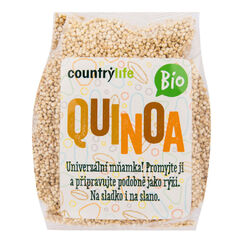
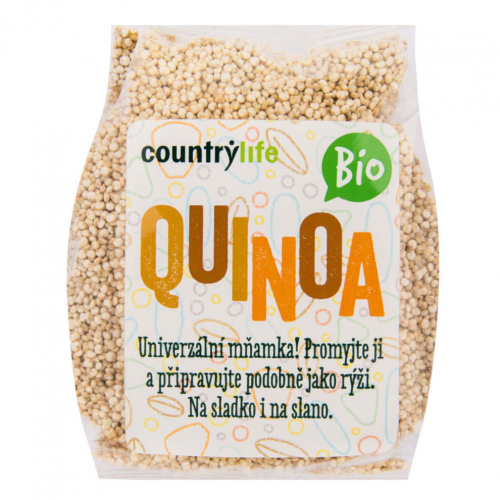
Country Life Quinoa BIO
It is beneficial for the health of the cardiovascular system
Thanks to the anti-inflammatory nutrients it contains, quinoa is also a great food for the health of our cardiovascular system. It is particularly high in healthy fats such as oleic acid (a healthy monounsaturated fat) and alpha-linolenic acid (ALA). Some research suggests that increasing ALA intake may be associated with a reduced risk of heart disease. Monounsaturated fats, such as oleic acid, are also associated with heart health benefits and may help regulate cholesterol levels. Quinoa is also a great source of potassium and magnesium, nutrients that play an important role in preventing the development of heart disease and are also beneficial for the proper functioning of our cardiovascular system. Quinoa also helps to lower triglyceride levels, which also contributes to cardiovascular health.
May be beneficial in fat reduction
Quinoa contains high amounts of protein and fiber, two dietary components that promote satiety, which can be very beneficial in fat reduction. Research also suggests that quinoa may affect the action of hormones that play a role in appetite, such as ghrelin, peptide YY and insulin. Quinoa also contains relatively few calories, which, combined with its interesting nutritional profile, makes it a literal superfood that you really need in your diet, whether you're reducing fat, maintaining weight or just trying to eat healthy.
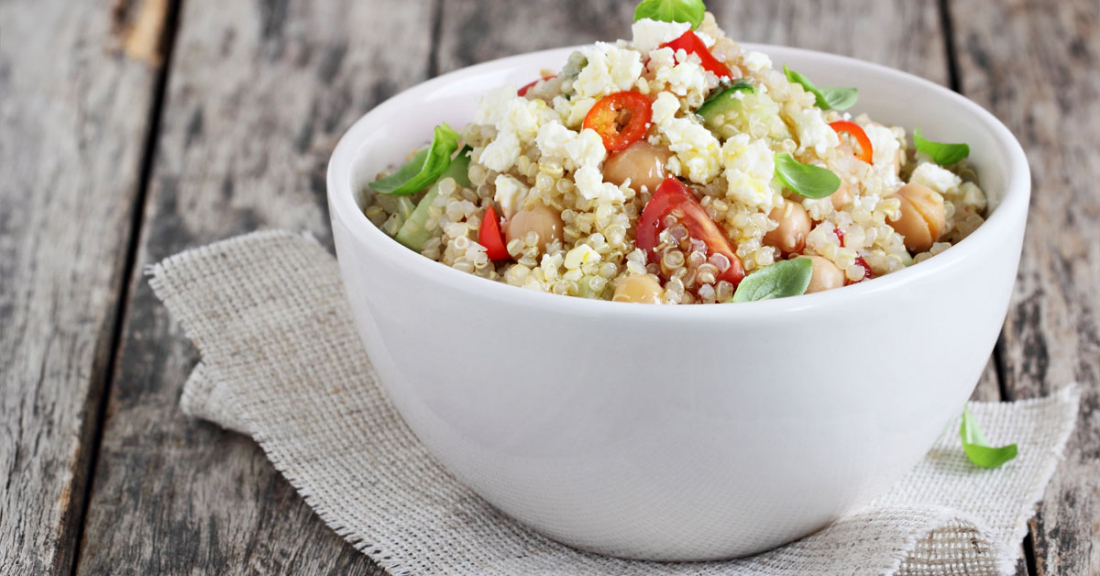
What to take away from the article?
Quinoa, or Chinese hake, is a pseudo-grain that deserves really significant attention. Its nutritional profile offers a range of interesting nutrients and is definitely worth including in your diet. Quinoa is naturally gluten-free, contains a significant proportion of protein and is a complete source, which means that it is one of the few plant foods to contain the full spectrum of essential amino acids.
It is also a source of complex carbohydrates, which serve as a source of gradually releasing energy. It also contains a good proportion of fibre, vitamins and minerals. It is beneficial to health in many ways - from digestion, to strengthening bones, to supporting a healthy cardiovascular system. In addition, quinoa has very versatile uses. It is easy to prepare, has a pleasant, slightly nutty flavour and has very versatile uses. If you haven't had the pleasure, we recommend giving quinoa a try!
Sources:
Jonnalagadda, S. S., Harnack, L., Liu, R. H., McKeown, N., Seal, C., Liu, S., & Fahey, G. C. (2011). Putting the whole grain puzzle together: health benefits associated with whole grains--summary of American Society for Nutrition 2010 Satellite Symposium. The Journal of nutrition, 141(5), 1011S-22S. https://doi.org/10.3945/jn.110.132944
Berti, C., Riso, P., Brusamolino, A., & Porrini, M. (2005). Effect on appetite control of minor cereal and pseudocereal products. The British journal of nutrition, 94(5), 850-858. https://doi.org/10.1079/bjn20051563
Lee, A. R., Ng, D. L., Dave, E., Ciaccio, E. J., & Green, P. H. (2009). The effect of substituting alternative grains in the diet on the nutritional profile of the gluten-free diet. Journal of human nutrition and dietetics : the official journal of the British Dietetic Association, 22(4), 359-363. https://doi.org/10.1111/j.1365-277X.2009.00970.x
Pham-Huy, L. A., He, H., & Pham-Huy, C. (2008). Free radicals, antioxidants in disease and health. International journal of biomedical science : IJBS, 4(2), 89-96.
Tian, X., Tang, H., Lin, H., Cheng, G., Wang, S., & Zhang, X. (2013). Saponins: the potential chemotherapeutic agents in pursuit of new anti-glioblastoma drugs. Mini reviews in medicinal chemistry, 13(12), 1709-1724. https://doi.org/10.2174/13895575113136660083
Fleming, J. A., & Kris-Etherton, P. M. (2014). The evidence for α-linolenic acid and cardiovascular disease benefits: Comparisons with eicosapentaenoic acid and docosahexaenoic acid. Advances in nutrition (Bethesda, Md.), 5(6), 863S-76S. https://doi.org/10.3945/an.114.005850
Scalbert, A., Johnson, I. T., & Saltmarsh, M. (2005). Polyphenols: antioxidants and beyond. The American journal of clinical nutrition, 81(1 Suppl), 215S-217S. https://doi.org/10.1093/ajcn/81.1.215S
Gullón, B., Gullón, P., Tavaria, F. K., & Yáñez, R. (2016). Assessment of the prebiotic effect of quinoa and amaranth in the human intestinal ecosystem. Food & function, 7(9), 3782-3788. https://doi.org/10.1039/c6fo00924g
Palacios C. (2006). The role of nutrients in bone health, from A to Z. Critical reviews in food science and nutrition, 46(8), 621-628. https://doi.org/10.1080/10408390500466174
Kim, Y., & Ilich, J. Z. (2011). Implications of dietary α-linolenic acid in bone health. Nutrition (Burbank, Los Angeles County, Calif.), 27(11-12), 1101-1107. https://doi.org/10.1016/j.nut.2011.05.012
No posts have been made yet.