





How does the hunger hormone ghrelin complicate fat reduction?
 Author:
 Two hormones are often mentioned in connection with fat reduction - leptin and ghrelin. These hormones are also called satiety and hunger hormones. Ghrelin, or the "hunger hormone," sends signals to the brain that the body is hungry and needs to eat. From this information alone, it should be clear how important it is (not only) to keep ghrelin levels at an acceptable level during weight loss. This is because if you are in a reduction, the amount of ghrelin in your blood rises, and this leads to an increase in the feeling of hunger, which can make easy weight loss quite a challenge. Still, there is a relatively simple way to keep your ghrelin levels at a healthy level - but we'll get to that later. Let's introduce this hormone a little more today, and we'll also give you some tips that will make it a non-issue in your weight loss.
Theoretical window - what is ghrelin anyway?
Ghrelin is an appetite-enhancing hormone, it is produced by the cells of the digestive tract and its levels depend on food intake - so its levels before and after meals fluctuate. It is usually produced when our stomach is empty. Once formed, ghrelin travels through the bloodstream to the brain with a signal that triggers a feeling of hunger. Ghrelin is considered an appetite-stimulating hormone, is one of the main tastemakers, and can also influence overeating. Besides, it also promotes fat storage in the abdominal area, the one that is associated with the development of metabolic syndrome and diabetes. Ghrelin also affects the sleep/wake cycle, taste perception, gastrointestinal motility and carbohydrate metabolism. Logically, the higher the level of ghrelin in the blood, the more hungry we are. Conversely, the less ghrelin circulating in the blood, the fuller we feel.

What is the difference between leptin and ghrelin?
Leptin and ghrelin work closely together to maintain energy balance and weight management. Leptin is a hormone made by fat cells that reduces appetite compared to ghrelin - so it does the complete opposite of what ghrelin does. Both hormones play a very important role in weight loss or weight maintenance. Leptin receptors are located in the same area of the brain as ghrelin receptors. Because the body produces leptin based on body fat percentage, an increase in blood leptin levels is tied to weight gain. And the reverse is true as well - that is, weight loss will result in lower leptin levels (and often more hunger).
Unfortunately, it can also be argued that overweight and obese individuals are 'resistant' to the effects of leptin, leading to further weight gain and difficulty losing weight because they simply need more food to feel 'full'. The good news is that both leptin and ghrelin are hormones that we can control very comfortably by how we eat, how we sleep, the amount of stress we are under and the amount of exercise we get on a regular basis. Thus, we can say that a rational diet based on eating enough calories in the form of food in its most natural form, combined with a proper training regimen, enough sleep and mental well-being, are in short the basis not only for health per se, but also for comfortably reducing and manipulating leptin and ghrelin hormone levels.

6 tips to regulate your ghrelin levels and lose weight comfortably
So, let's do a summary of how to actually make ghrelin, the hunger hormone, work in our favour.
Avoid too much calorie restriction
As mentioned above - ghrelin levels rise when the stomach is empty - so if we are not eating enough, which is a very common problem with weight loss diets - ghrelin levels rise. On the other hand, overeating does cause ghrelin levels to drop, but even that shouldn't be the goal (unless you are currently trying to gain weight). Okay, but then how do we set a calorie deficit so that we can lose weight in a reduction and not still be hungry? Simple - because fat reduction is not about eating little, it's about eating right. Choose nutritionally valuable foods, take in plenty of fibre, which has the ability to bind water and can keep us full for quite a long time. Don't forget to get enough protein, which has the greatest satiating effect of the three basic macronutrients. However, don't take away the fact that you should only eat vegetables and protein - we highly recommend eating a balanced diet, i.e. taking in all three macronutrients in reasonable proportions and quantities.
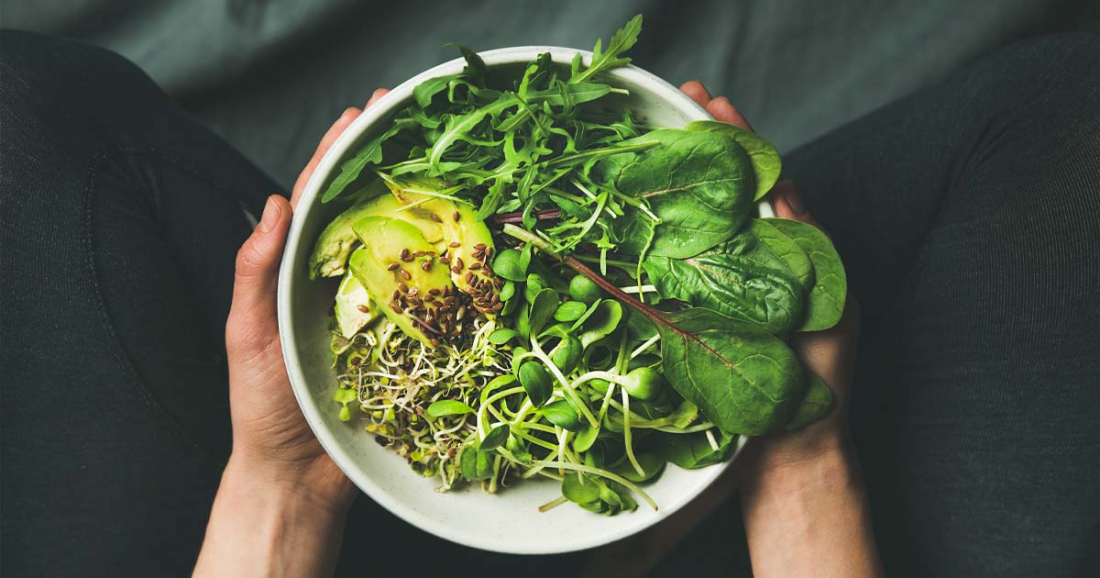
Your ghrelin levels should drop significantly after a meal and stay at a minimum for about two to three hours, possibly even longer, before you start to feel hungry again. If you notice that you get hungry very soon after you eat, or feel the need to snack all day, consider whether you are really getting enough calories overall. Eating enough healthy food is essential for health, optimal performance, mental well-being and of course, reducing or building muscle. So please, let's keep that in mind and not go on crazy diets with too radical calorie restriction or absolute restriction of any of the macronutrients.

Limit your intake of overly processed foods
Following on from the first point, there is one more thing to mention, and that is regulating the intake of over-processed foods. Apart from the fact that these foods undergo multiple technological processes to make them taste really good, they are often very calorific and certainly do not fit into the category of 'suitable for healthy eating'. Very often, their addictive taste also makes us lose control of how much of these foods we actually eat, and this leads to a really significant excess of calorie intake, and hence weight gain, if this goes on for a long time or on a regular basis.
Normally, when we eat "conventional" food, chemical/hormonal messages are sent from our digestive tract to our brain and various other parts of our body to tell us that we've had enough and to stop eating. However, research suggests that when we have the opportunity to eat highly processed, calorie-dense foods, this feedback system doesn't work quite as well and we tend to eat a lot more or overeat. Examples of such foods include sweets, bakery products, sugary drinks, fast food, salty snacks such as cold cuts, chips and various highly salted treats and fried foods.

The moment you consume foods high in added sugar, inappropriate sources of fat and synthetic additives, it is very easy to eat your entire caloric intake fairly quickly and still feel hungry. Aside from the meager satiating effect, these foods are not very health-friendly either, especially when tempting attributes like excessive sugar, trans fats and more are combined together. On the other hand, a diet based on eating real foods, those that have not undergone this excessive processing, is the best way to naturally control appetite, as these foods are usually more filling, higher in fibre, lower in calories and many times more nutritious. All of this is beneficial to not only regulating hunger and satiety hormone levels, but also health in general. Make sure your diet includes complex carbohydrates in the form of whole grains, plenty of vegetables and fruits, a variety of protein sources (eggs, lean meats, fish, protein, dairy) and of course healthy fats like avocados, vegetable oils, or nuts.
Eat plenty of protein
We've already touched on this topic above, but let's expand on protein's key role in regulating ghrelin levels a bit more. Even when we're trying to reduce fat and have some sort of calorie deficit, we can ensure that we don't suffer from hunger through optimal protein intake. Protein is well known to have the highest satiating effect of the three macronutrients, which is very positive for regulating ghrelin levels. This phenomenon has also been confirmed by multiple studies. Adequate protein intake is also key in protecting and building muscle mass, which is also very important in regulating ghrelin.
Recommended
Czech Virus Melatonin
Reflex Albion Magnesium
Prom-in 100% Magnesium Bisglycinate
Take regular exercise
When it comes to fat reduction, low-frequency, long-duration cardio has long been recommended as the most effective way to reduce fat. But in recent years, short intervals of very high intensity - known as HIIT training- have been shown to be much more effective. Studies also suggest that the use of HIIT is a very suitable strategy for fat reduction as well as manipulating ghrelin and leptin levels, which further increases the chances of successful reduction. At the same time, there is also evidence that people with a higher proportion of muscle mass are less likely to have difficulty regulating ghrelin levels. Thus, even strength training can be considered a very appropriate activity, as studies suggest that if we have a higher percentage of non-fat mass in the body, the less ghrelin is formed. However, it must be said that every movement counts, so if the gym doesn't take you, don't despair.
Give your body enough sleep
Not only are an appropriate diet and regular sport essential factors in regulating leptin and ghrelin hormone levels, but of course getting enough sleep is also important. If you read our website regularly, you will have noticed our recent article on sleep, in which ghrelin was also mentioned. In fact, studies show that when individuals who suffer from long-term sleep deprivation have problems with higher levels of ghrelin, it very often leads to them needing to eat more calories during the day, seeking out nutritionally less valuable foods, and very often having cravings for sweets. Getting enough sleep (between 7 - 9 hours per day is the general recommendation for adults) is a very powerful factor that affects overall health, performance, ability to regulate weight and of course levels of various hormones including ghrelin.

Sleep is central to a wide range of bodily processes and should definitely not be neglected. Although the optimal time will be different for each of us, we should not sleep for long periods of time below 6 hours. It is also very advisable to go to bed and get up at around the same time every day, including weekends. If you're having trouble sleeping, you could try melatonin supplementation, establish a sleep ritual of sipping soluble magnesium, or try the magic of CBD drops.

Don't forget about your mental health and stress management
In addition to the above, we must also not forget to mention stress and mental health as such. When we are stressed, the body produces more cortisol and can also stimulate the production of ghrelin. Chronic stress is very likely to increase appetite and cravings - especially for 'nutritionally inferior foods', and contribute to other unhealthy habits such as overeating, eating in a hurry, overeating, not having enough time to cook at home, drinking alcohol, skipping sleep and living a more sedentary lifestyle. So let's not forget that the same attention we pay to our physical side must also be paid to our mental side. We are all under permanent stress due to the demands of our time, and if we cannot regulate it in appropriate ways, it can have fatal consequences.
Find at least a few minutes each day to devote to yourself. Go for a walk in nature, read a few chapters of your favourite book, watch a movie, get a massage or even try yoga. There are, of course, a huge number of ways to regulate stress, and we've devoted an entire article to this topic fairly recently.

What to take away from the article?
Today we have introduced ghrelin, a hunger hormone that plays an important role (not only) in fat reduction. We explained that its levels are linked to food consumption and described the whole principle of how higher concentrations of ghrelin trigger hunger in the brain. We also explained that ghrelin levels can be influenced - for example, by eating a diet with sufficient caloric intake that contains food in its most natural form, regular exercise, getting enough sleep and, of course, by regulating stress.
Sources:
Klok, M. D., Jakobsdottir, S., & Drent, M. L. (2007). The role of leptin and ghrelin in the regulation of food intake and body weight in humans: a review. Obesity reviews : an official journal of the International Association for the Study of Obesity, 8(1), 21-34. https://doi.org/10.1111/j.1467-789X.2006.00270.x
Ahluwalia, A., Li, A., Cheng, G., Deng, X., & Tarnawski, A. S. (2009). Reduced ghrelin in endothelial cells plays an important mechanistic role in aging-related impairment of angiogenesis. Journal of physiology and pharmacology : an official journal of the Polish Physiological Society, 60(2), 29-34.
Myers, M. G., Jr, Leibel, R. L., Seeley, R. J., & Schwartz, M. W. (2010). Obesity and leptin resistance: distinguishing cause from effect. Trends in endocrinology and metabolism: TEM, 21(11), 643-651. https://doi.org/10.1016/j.tem.2010.08.002
Blom, W. A., Lluch, A., Stafleu, A., Vinoy, S., Holst, J. J., Schaafsma, G., & Hendriks, H. F. (2006). Effect of a high-protein breakfast on the postprandial ghrelin response. The American journal of clinical nutrition, 83(2), 211-220. https://doi.org/10.1093/ajcn/83.2.211
Pesta, D. H., & Samuel, V. T. (2014). A high-protein diet for reducing body fat: mechanisms and possible caveats. Nutrition & Metabolism, 11(1), 53. https://doi.org/10.1186/1743-7075-11-53
Stokes, K. A., Sykes, D., Gilbert, K. L., Chen, J. W., & Frystyk, J. (2010). Brief, high intensity exercise alters serum ghrelin and growth hormone concentrations but not IGF-I, IGF-II or IGF-I bioactivity. Growth hormone & IGF research : official journal of the Growth Hormone Research Society and the International IGF Research Society, 20(4), 289-294. https://doi.org/10.1016/j.ghir.2010.03.004
Spiegel, K., Tasali, E., Penev, P., & Van Cauter, E. (2004). Brief communication: Sleep curtailment in healthy young men is associated with decreased leptin levels, elevated ghrelin levels, and increased hunger and appetite. Annals of internal medicine, 141(11), 846-850. https://doi.org/10.7326/0003-4819-141-11-200412070-00008
Adams, C. E., Greenway, F. L., & Brantley, P. J. (2011). Lifestyle factors and ghrelin: critical review and implications for weight loss maintenance. Obesity reviews : an official journal of the International Association for the Study of Obesity, 12(5), e211-e218. https://doi.org/10.1111/j.1467-789X.2010.00776.x
No posts have been made yet.








