Magnesium absorption: Which form is best?
 Author:
 Magnesium - you've probably heard of it in relation to muscle cramps, energy or better recovery. This mineral is absolutely crucial for our bodies, and especially for the athlete's body. It is involved in over 300 biochemical reactions, from cellular energy production (ATP) to protein synthesis and proper nervous system function.
But when you decide to supplement magnesium, you run into a seemingly trivial problem: the shelves and e-stores are full of different types of magnesium. Oxide, citrate, malate, bisglycinate... Is there any difference at all? What difference does it make! The difference is absolutely crucial and lies in one word: absorption. It is this that determines how much of the pill you swallow your body actually uses and how much it unnecessarily eliminates. Let's take a look at how to choose the right path to better results from this magnesium jungle, based on scientific studies.
Article Content:
- Key Issue: There's no magnesium like magnesium
- The inorganic bogeyman: Magnesium oxide
- Champions of absorption: Organic forms in the lead role
Key Issue: There is no magnesium like magnesium
The basic division we need to understand is into inorganic and organic forms. Think of it simply: inorganic forms are basically magnesium bound to a simple inorganic salt. Organic forms have magnesium bound to an organic acid or amino acid, which acts as an effective "transporter" into the cells. And as science shows, this "transporter" is the alpha and omega of success.
A systematic review of studies on the bioavailability of magnesium makes this abundantly clear: inorganic forms are generally much less absorbable than organic ones.1
The inorganic bogeyman: magnesium oxide
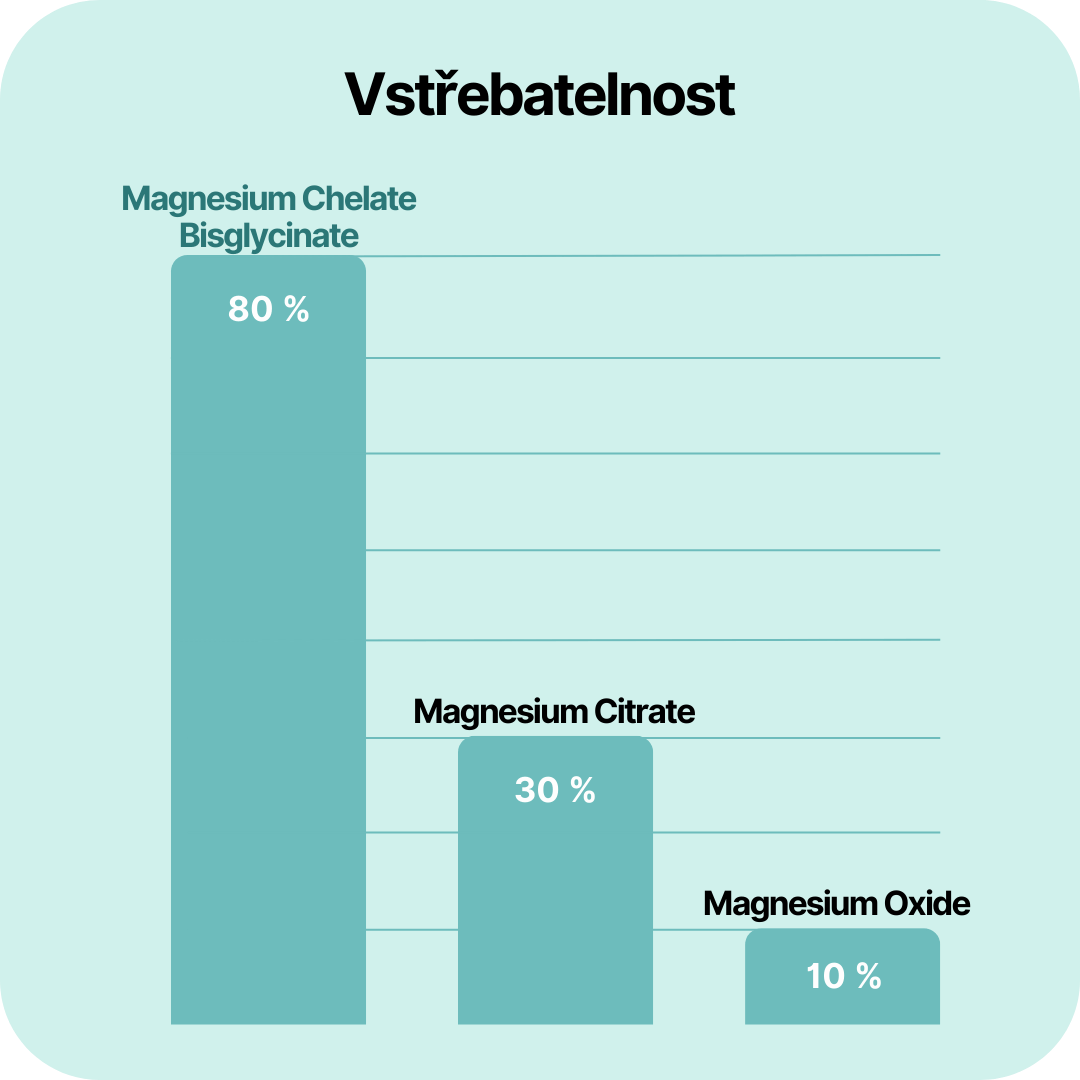
The most common and cheapest form you'll come across in supplements is magnesium oxide. While it contains a high percentage of elemental magnesium, it has one big catch - it is very poorly soluble in water and therefore in the digestive tract. Your body will take only the bare minimum of it, according to some studies only 4%.
A classic study comparing the bioavailability of magnesium oxide and magnesium citrate showed that citrate led to a significantly higher increase in magnesium levels in the body.2 The remaining unused magnesium oxide binds water to itself in the colon, often leading to an undesirable laxative effect. So unless you want to spend money on a supplement that for the most part just passes through your digestive system, you'd better avoid the oxide.
The champions of absorption.
On the other side of the spectrum are the organic, so-called chelated forms. In these, magnesium is tightly bound to an organic molecule (e.g. citric acid or the amino acid glycine). The body knows these organic "carriers" well and can absorb them efficiently. Thus, magnesium is carried on their backs directly into the bloodstream and then into the cells where you need it.
So which ones are the best? Let's take a look at the winners of each test.
.png)
1. Magnesium Bisglycinate: Maximum absorption and gentleness
Magnesium bisglycinate is a chelated form where magnesium is bound to two molecules of the amino acid glycine. It is the absolute top in absorbability because the body uses transport pathways for amino acids that are highly efficient. The great advantage of bisglycinate is its extreme gentleness to the digestive tract. Unlike other forms, it causes virtually no digestive discomfort even in higher doses. It is therefore an ideal choice for individuals with a sensitive stomach and for those who want the absolute maximum of absorption. General studies predicting and testing bioavailability confirm that chelated forms such as bisglycinate are the most effective way to supplement.1
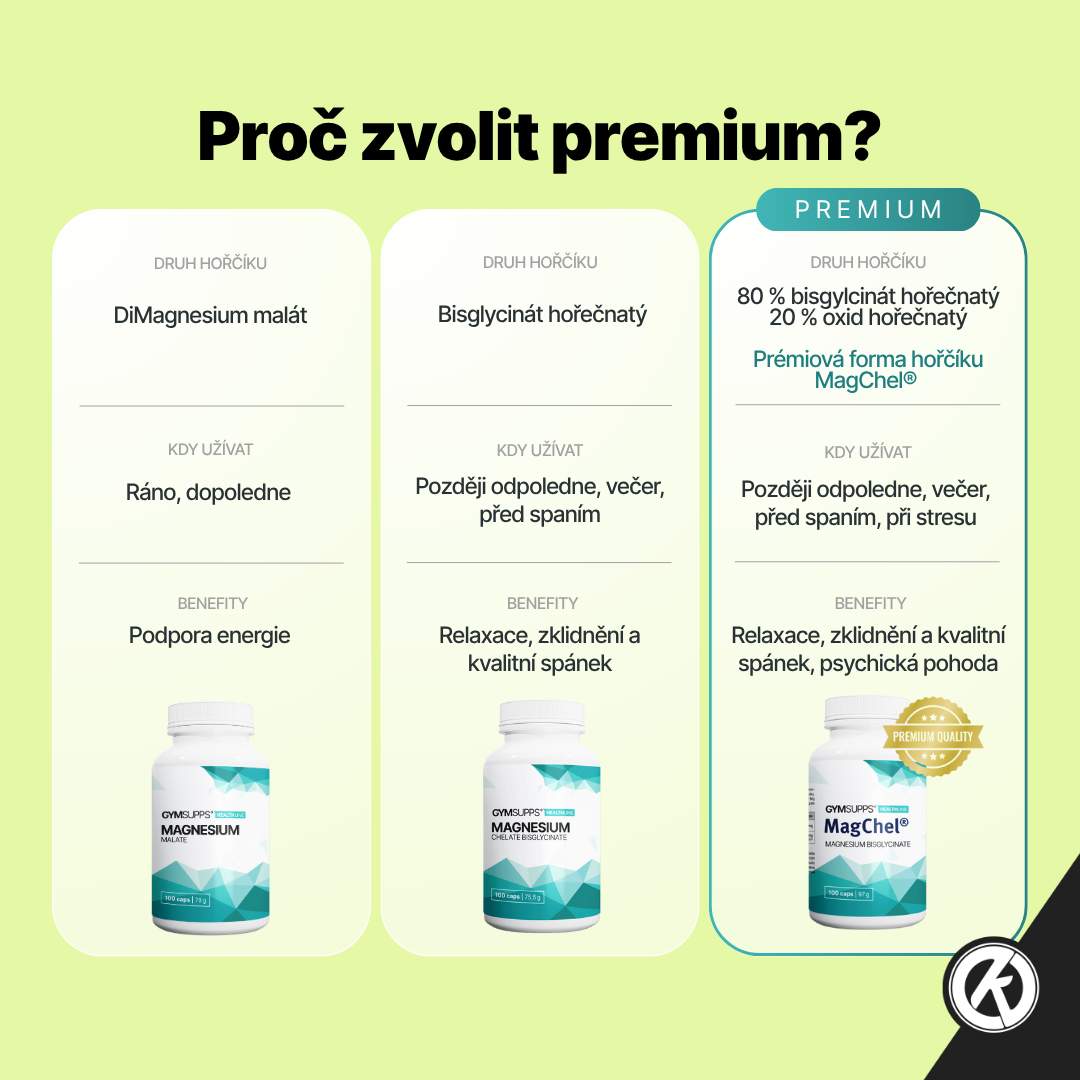
You may have come across the term "buffered bisglycinate" in connection with this form . What is it? It is a mixture of pure bisglycinate with another form of magnesium (often an oxide) to achieve a higher total elemental magnesium content per capsule. And what about its absorption? Science yields an interesting finding: buffered bisglycinate showed absorption that was statistically similar to pure bisglycinate. Although the numerical values may have differed slightly, the difference was not statistically significant. This suggests that even though some of the magnesium is in the form of a less absorbable oxide, the bisglycinate in the mixture helps to keep the overall bioavailability at a very high level. For the user, this means that in absolute amounts, the body can absorb even slightly more magnesium from the buffered form, which is relevant to the total daily intake of the mineral.
2. Magnesium malate.
Magnesium malate is the form where magnesium is combined with malic acid. And this is a very interesting combination for athletes. Malic acid is directly involved in the Krebs cycle - a key process for cellular energy (ATP) production. A study comparing five different forms of magnesium found that malate was among the forms with the absolute highest bioavailability.3 This makes malate a great choice for those who want to support not only muscle function, but also fight fatigue and boost energy metabolism.
Recommended

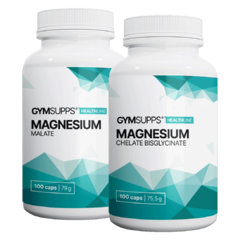
GymSupps Magnesium Malate
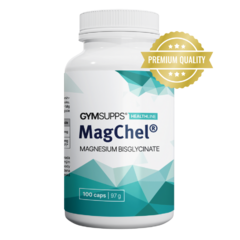
3. Magnesium Citrate: the gold standard of reliability
Magnesium citrate is magnesium bound to citric acid. It is one of the best-studied forms with excellent solubility and proven absorption.2 For most people, it is a great and reliable choice for effective magnesium supplementation without compromise. It is the ideal choice for anyone who simply wants high quality, functional magnesium.
4. Acetyl Magnesium Taurate.
A lesser-known but all the more interesting form is magnesium acetyl taurate. The aforementioned study comparing five magnesium compounds showed that this form also has excellent bioavailability, comparable to malate.3 However, its unique property is its ability to effectively cross the blood-brain barrier into the brain. As a result, this form is being investigated for its potential to support cognitive function, reduce anxiety, and contribute to overall calming of the nervous system. For athletes, this is an interesting benefit in terms of mental well-being and recovery.
Conclusion: how to choose?
There is no one "best" form for all. The best form is the one that suits your goals and your body. But we can make clear recommendations based on scientific data:
- To avoid making a mistake: Avoid cheap and ineffective magnesium oxide.
- For reliable and versatile supplementation: choose magnesium citrate.
- For an energy boost and maximum utilization: reach for magnesium malate.
- For highest absorption and maximum digestive friendliness: magnesium bisglycinate is the obvious choice.
- For mental support and nervous system recovery: consider acetyl taurate.
So the next time you buy supplements, don't just look at the "MAGNESIUM" label and the number of milligrams on the package. Flip the product over and look for the exact form in the ingredients. This small change in attitude will determine whether you invest your money in better performance and recovery or literally flush it down the toilet.
Recommended
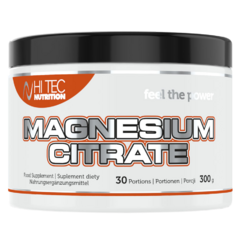
HiTec Magnesium Citrate
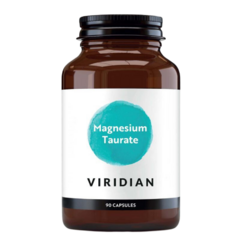
Viridian Magnesium Taurate
Sources:
- [1] Blancquaert, L., Vervaet, C., & Derave, W. (2019). Predicting and Testing Bioavailability of Magnesium Supplements. Nutrients, 11(7), 1663.
- [2] Lindberg, J. S., Zobitz, M. M., Poindexter, J. R., & Pak, C. Y. (1990). Magnesium bioavailability from magnesium citrate and magnesium oxide. Journal of the American College of Nutrition, 9(1), 48-55.
- [3] Uysal, N., Kizildag, S., Yuce, Z., Guvendi, G., Kandis, S., Koc, B., Karakilic, A., Camsari, U. M., & Ates, M. (2019). Timeline (Bioavailability) of Magnesium Compounds in Hours: Which Magnesium Compound Works Best? Biological trace element research, 187(1), 128-136.
- [4] Hartle, J. W., Morgan, S., & Poulsen, T. (2016). Development of a Model for In-Vitro Comparative Absorption of Magnesium from Five Magnesium Sources Commonly Used as Dietary Supplements. (This study is often referenced in connection with results presented at conferences or as part of internal materials of companies using these forms of magnesium).
No posts have been made yet.