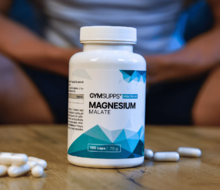
GymSupps MagChel® Magnesium Bisglycinate: What do the studies say about its absorbability?
 Author:
 Oh, the magnesium! You hear about it from all sides that it's important, but do you really know why? And most importantly, how do you choose the right one when there are so many on the market? Let's take a look at it in order. In this article, we will focus on GymSupps MagChel® Magnesium Bisglycinate and explore what the most important scientific studies say about its effectiveness.
Article Content:
- Magnesium: Your Body's Secret Hero
- Why does the "form" of magnesium matter more than you think?
- Magnesium Bisglycinate: The Scientifically Proven Absorption Champion
- What do scientists say? The studies speak clearly!
- How does all this relate to GymSupps MagChel® Magnesium Bisglycinate?
Magnesium: your body's secret hero
Imagine magnesium as this sort of invisible but super important manager, in charge of a huge number of tasks in your body. We're not exaggerating - magnesium is involved in over 300 enzymatic reactions! What does it manage?
- Your muscles and nerves: If you're plagued by cramps, twitches or simply feel like your muscles aren't working as they should, magnesium is often to blame. It helps your muscles contract and relax properly. It's also crucial for transmitting signals between nerve cells, which is essential for everything from thinking to movement.
- Energy production: do you feel tired even when you've slept? Magnesium is essential for converting food (carbohydrates, fats) into energy in the form of ATP, the main energy currency of our cells. Without it, your body is like a car without fuel, even if you have a full tank.
- Bones and teeth: forget just calcium! Magnesium is just as important for bone strength and dental health. It plays a key role in the regulation of calcium and vitamin D, the building blocks of strong bones.
- Mood and sleep: stress, anxiety, trouble falling asleep? Magnesium also plays a role in the regulation of neurotransmitters, which are those "messengers" in the brain that affect our mood, relaxation and ability to fall asleep. Getting enough magnesium can help calm the mind and improve the quality of sleep.
- Blood pressure and sugar regulation: magnesium is involved in these important processes as well, contributing to overall cardiovascular health and metabolic balance.
See? It's seriously a multi-functional dude. The problem is, we often don't get enough of it. A modern diet full of processed foods, intense sports activity, chronic stress, as well as certain medications or alcohol can lead to magnesium deficiency. That's why we reach for supplements. But now the most important question: How to choose one that really works and the body will actually use it?
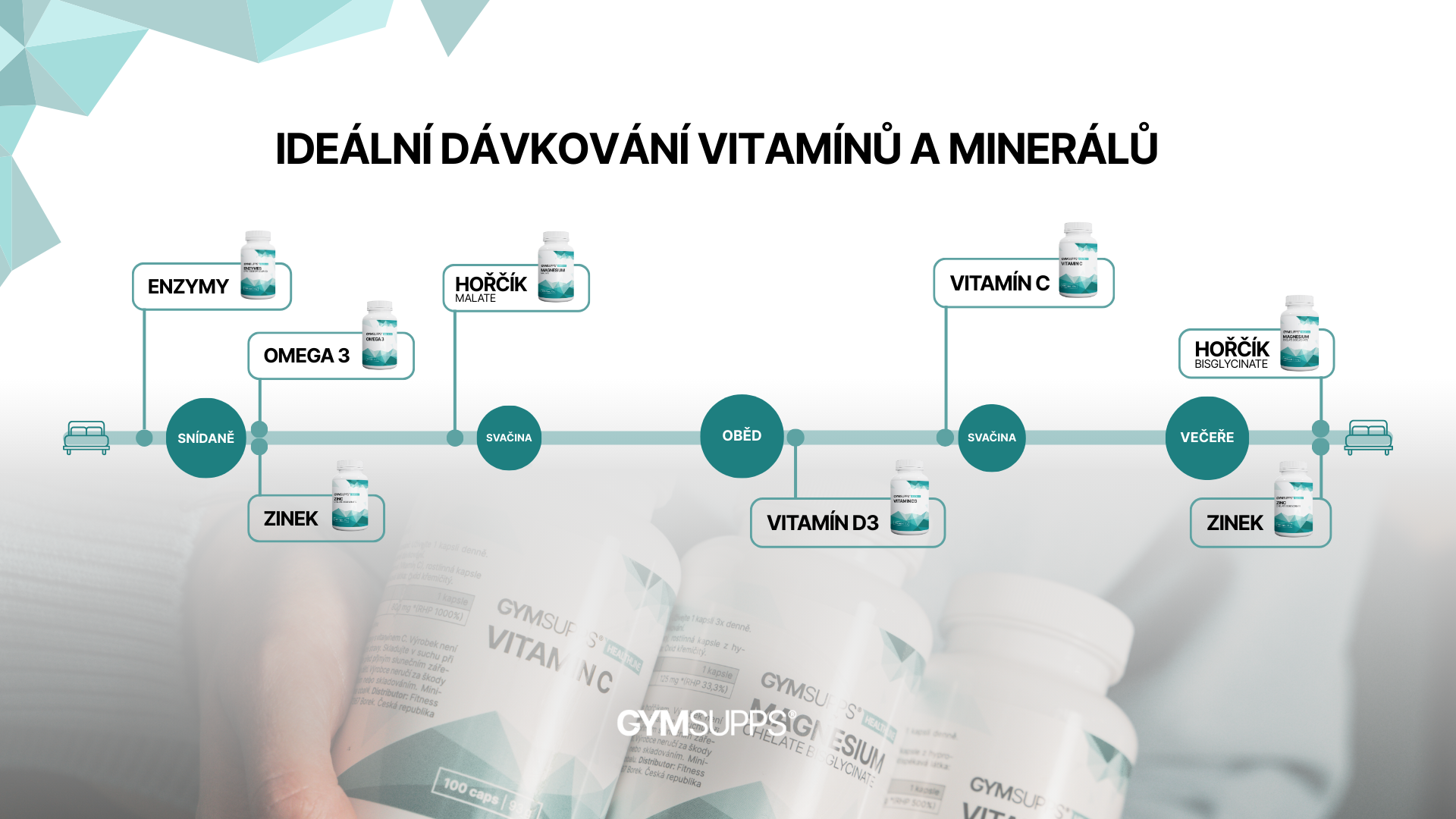
Why does the "form" of magnesium matter more than you think?
When magnesium is said, many people think of a powder or a pill. But magnesium is not just "magnesium." It comes in many different forms (e.g., oxide, citrate, malate, bisglycinate) and each behaves a little differently in our bodies. And here's the rub: the key word is absorption (or bioavailability).
Think of it this way: You buy expensive tickets to a concert, but when you arrive at the venue, you find you can't get in. Money spent, no experience. Similarly with magnesium. You can eat all the supplement you want, but if the magnesium from it is not absorbed into the bloodstream and on into the cells, it's useless. It just passes out through the body, and you'll at most "enjoy" annoyances like diarrhea or other digestive problems.

Some of the cheaper forms of magnesium, such as magnesium oxide, are inexpensive and contain a lot of elemental magnesium, but are only minimally absorbed. It's as if you paid for a ticket to the concert, but they only let you into the lobby. In addition, magnesium oxide, which dissolves poorly in the digestive tract, often causes unpleasant laxative effects, which, while sometimes desirable (as a laxative), is highly counterproductive for magnesium supplementation. It is therefore a good idea to choose forms that promise high absorption while being gentle on digestion. That's where magnesium bisglycinate comes in, specifically in products like GymSupps MagChel® Magnesium Bisglycinate.
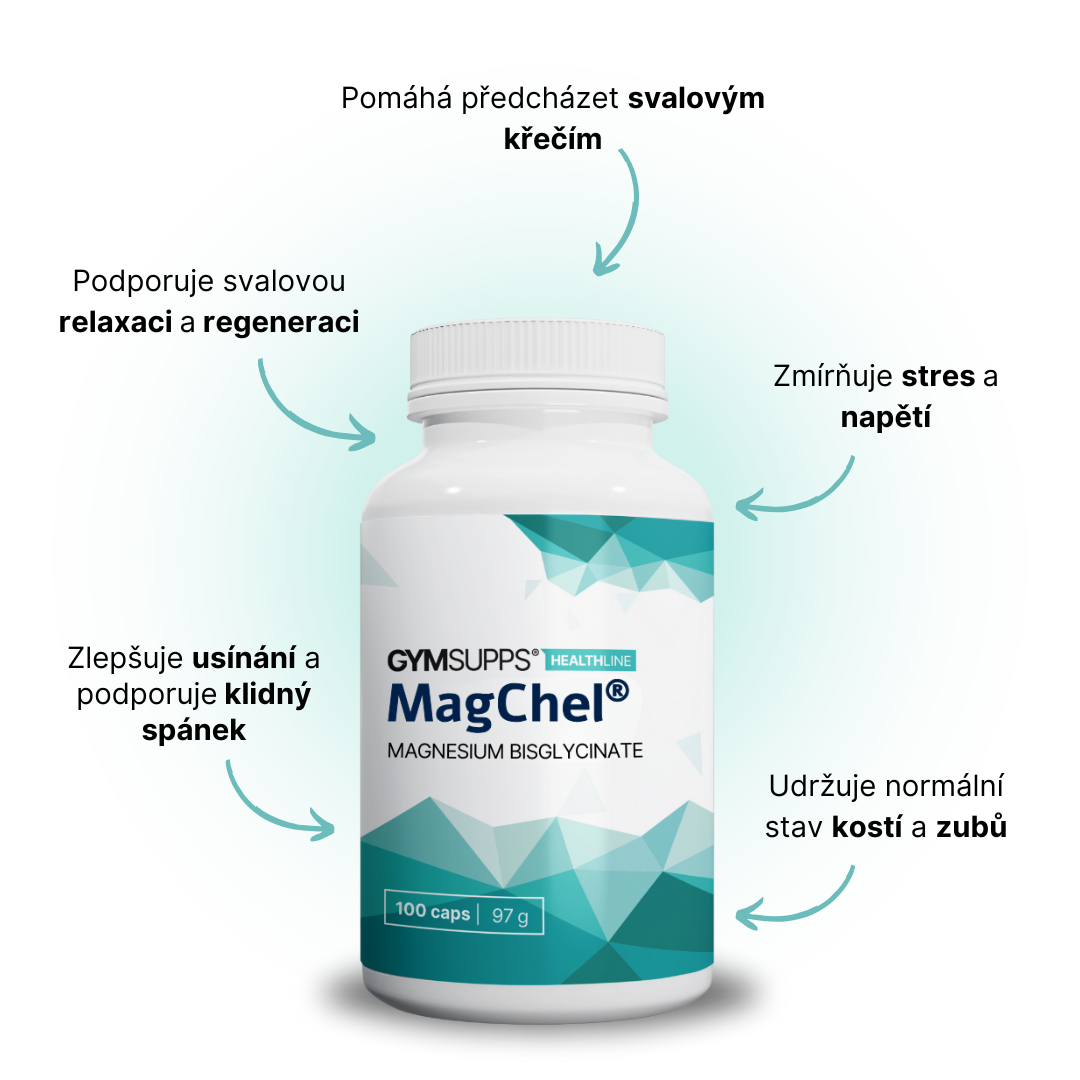
Magnesium Bisglycinate: The scientifically proven champion in absorption
Magnesium bisglycinate is a form where magnesium is "bonded" to two molecules of the amino acid glycine. Think of it as magnesium that is protected by two "protectors" (glycines). This chelate bond is ingenious because:
- It protects magnesium: when you eat magnesium, there are various substances lurking in your stomach and intestines (like acids, fiber, or other minerals like calcium) that could "grab" it and prevent it from being absorbed. Glycine acts as a shield so that magnesium reaches the gut intact and in a form that is easier for the body to recognise and use.
- It uses a special pathway: instead of magnesium trying to pass through the intestinal wall on its own (which is sometimes difficult and inefficient, especially for inorganic forms), the chelate bond allows it to "pass through" special channels for amino acids. It's like having a VIP ticket to a concert - you get there faster and without the hassle of waiting in line with other ions.
This makes magnesium bisglycinate much better absorbed and more gentle on digestion. No nasty surprises in the form of diarrhea unless you overdo it with dosage, making it an ideal choice for long-term magnesium supplementation, especially for individuals with sensitive digestion.
What do the scientists say? The studies speak clearly!
Now the most important part - what does the science say? It's not just hearsay, it's research!
Study 1: A look inside the absorption lab
In 2016, researchers Jennifer W. Hartle, Shane Morgan, and Tanoya Poulsen decided to test how different forms of magnesium behave in a lab environment. They created a special model that mimics our gut (using cells called Caco-2). These cells are widely recognised and used in laboratories to simulate nutrient absorption from the small intestine. They then "dropped" five different forms of magnesium commonly used in dietary supplements onto this model and monitored how much magnesium got through this cell wall.
Forms of magnesium tested:
- Magnesium bisglycinate (MgBG): often considered the premium form for absorbability.
- Magnesium bisglycinate buffered with magnesium oxide (MgBuf): A combination of bisglycinate and magnesium oxide, buffered for better stability.
- Di-magnesium malate (DMM): Magnesium bound to malic acid, popular for its potential effect on energy.
- Magnesium oxide (MgO): One of the most common and cheapest, but less easily absorbed forms.
- Magnesium Citrate (MgCit): Popular form, known for its laxative effect at higher doses.
Study results provided clear evidence of differences in absorption:
- Magnesium bisglycinate (MgBG) emerged as the absolute winner in absorption. It passed through the intestinal barrier model in the largest amounts, confirming its reputation as one of the most bioavailable forms of magnesium.
- Buffered magnesium bisglycinate (MgBuf) showed absorption that was statistically similar to pure magnesium bisglycinate. This is an important finding because some manufacturers use buffered forms to achieve higher magnesium content while maintaining good absorption. Although numerically (numerically) the absorption may have differed slightly, statistically the differences were not significant. Interestingly, the study suggested that in absolute weight terms, the body could absorb more magnesium with the buffered form of bisglycinate, which could be relevant to the overall intake of the mineral.
- Di-magnesium malate (DMM) performed better than citrate and oxide, but its absorption was statistically comparable to bisglycinate, although numerically it lagged behind.
- Magnesium oxide (MgO) and magnesium citrate (MgCit) confirmed their lower efficiency. They were absorbed least efficiently in the intestinal absorption model, again highlighting why these forms often lead to digestive upset and lower utilization in the body.
It is important to note that this study was in vitro - meaningit was conducted in a controlled laboratory environment, not directly in a living organism. While Caco-2 cell models are a great tool for quickly and efficiently comparing the absorption properties of substances, they cannot fully replicate the complexity of the entire human digestive system, which includes factors such as pH in different parts of the gut, the presence of other nutrients, or individual differences in metabolism. Nevertheless, the results provide a strong indicator and support the thesis of the superiority of chelated forms, particularly bisglycinate. These are important building blocks for understanding how minerals behave.

Study 2: Magnesium bioavailability overview
Another important paper was contributed in 2019 by Laura Blancquaert, Chris Vervaet, and Wim Derave in the journal Nutrients with a comprehensive paper entitled "Predicting and Testing Bioavailability of Magnesium Supplements. "2 This study is not primarily experimental, but rather a comprehensive review of current knowledge on magnesium bioavailability, its prediction, and testing.
Blancquaert and colleagues emphasize that magnesium bioavailability is a complex issue, influenced by many factors. Among the most important are:
- Solubility of the magnesium compound: the more soluble the magnesium form is in the stomach and small intestine, the better it is theoretically available for absorption. This is logical - what does not dissolve cannot be absorbed.
- Chelated bonds vs. inorganic salts: A review confirms that organic and chelated forms of magnesium (such as bisglycinate) generally have higher bioavailability compared to inorganic salts (e.g. magnesium oxide, magnesium sulfate). This is precisely due to the protection of magnesium from reactions in the digestive tract and the use of specific transport pathways, which reduces the risk of losses.
- Effect of pH: pH in the stomach and intestine plays a role in the solubility and ionisation of magnesium, which affects its availability for absorption. Chelated forms are often less dependent on pH changes than inorganic salts, giving them a stability advantage.
- Individual factors: The authors point out that absorption is also affected by individual differences between people, their health status (e.g. gut disease, which can reduce absorption), the presence of other nutrients (e.g. fibre, calcium, zinc, which can compete with magnesium for absorption) or the use of medications.
- Testing methods: the review discusses different methods of testing bioavailability, from in vitro models (such as that used by Hartle et al.) to animal tests to in vivo studies in humans. Each method has its strengths and weaknesses, and a combination of approaches is ideal for a comprehensive view.
Although Blancquaert and colleagues did not directly test specific products, their review supports the conclusions of the Hartle et al. (2016) study by highlighting the general advantage of chelated and organic forms of magnesium in terms of their bioavailability and minimization of gastrointestinal side effects. They suggest that magnesium bisglycinate is one of the forms with high potential for effective supplementation, making it an attractive choice for dietary supplements.

How does all this relate to GymSupps MagChel® Magnesium Bisglycinate?
When we look at products like GymSupps MagChel® Magnesium Bisglycinate, we see that all of this information comes together into one clear whole. GymSupps has opted for a form of magnesium that is backed by scientific research as one of the most absorbable. What's more, it relies on certified quality from MAGNESIA with the MagChel® trademark , which ensures you're getting a product from a reputable manufacturer with years of experience and proven quality ingredients.
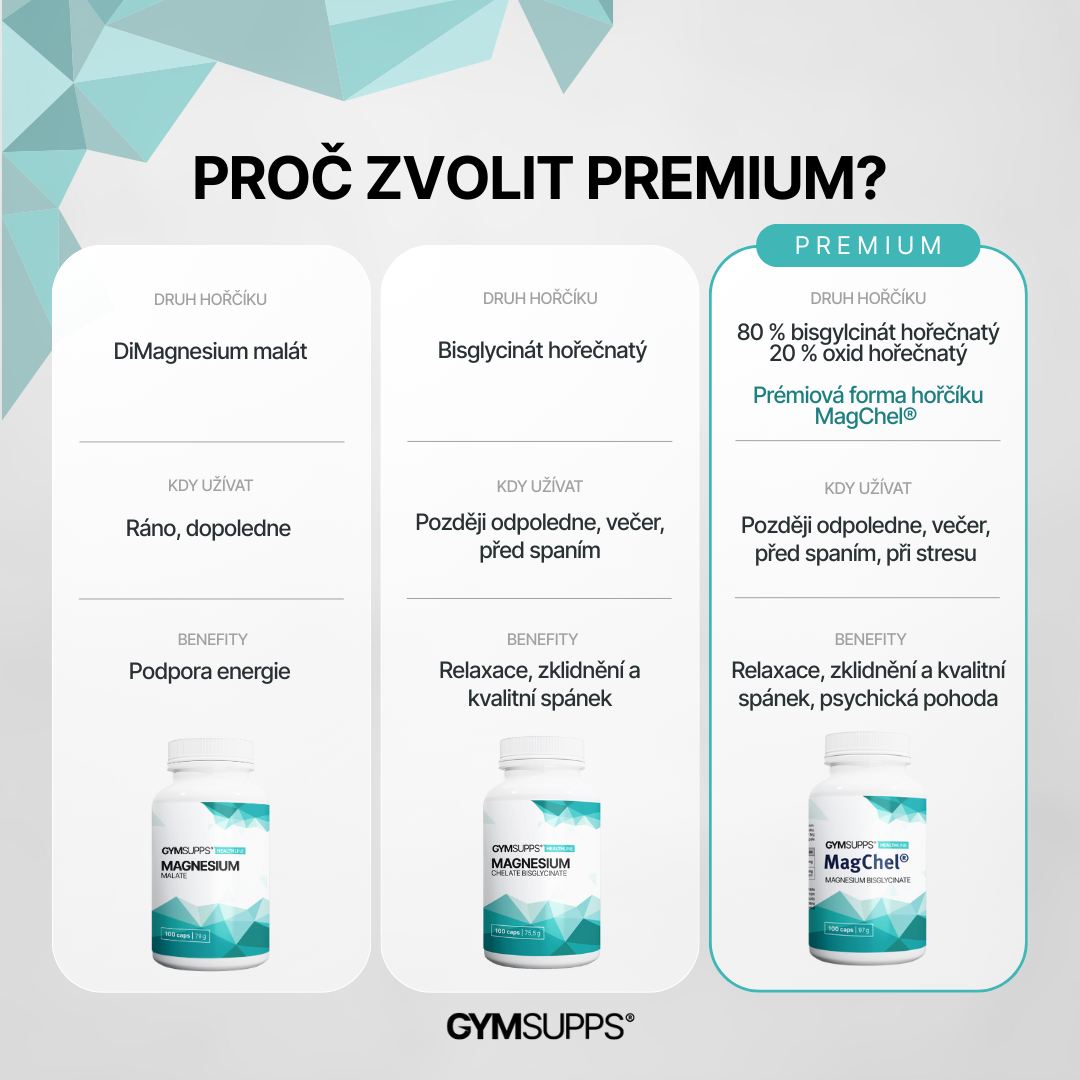
Specifically, it contains 80% magnesium bisglycinate and 20% magnesium oxide, making it a buffered magnesium bisglycinate. This formulation is intentional and based on scientific findings, as shown in a study by Hartle, Morgan, Poulsen (2016), although the buffered form also contains magnesium oxide, its absorption is virtually the same (statistically similar) to that of pure bisglycinate. Moreover, in terms of the absolute weight of magnesium that the body can absorb, the buffered form may even lead to a higher total intake of the mineral. This combination achieves an optimal combination of high bioavailability and dosing efficiency.
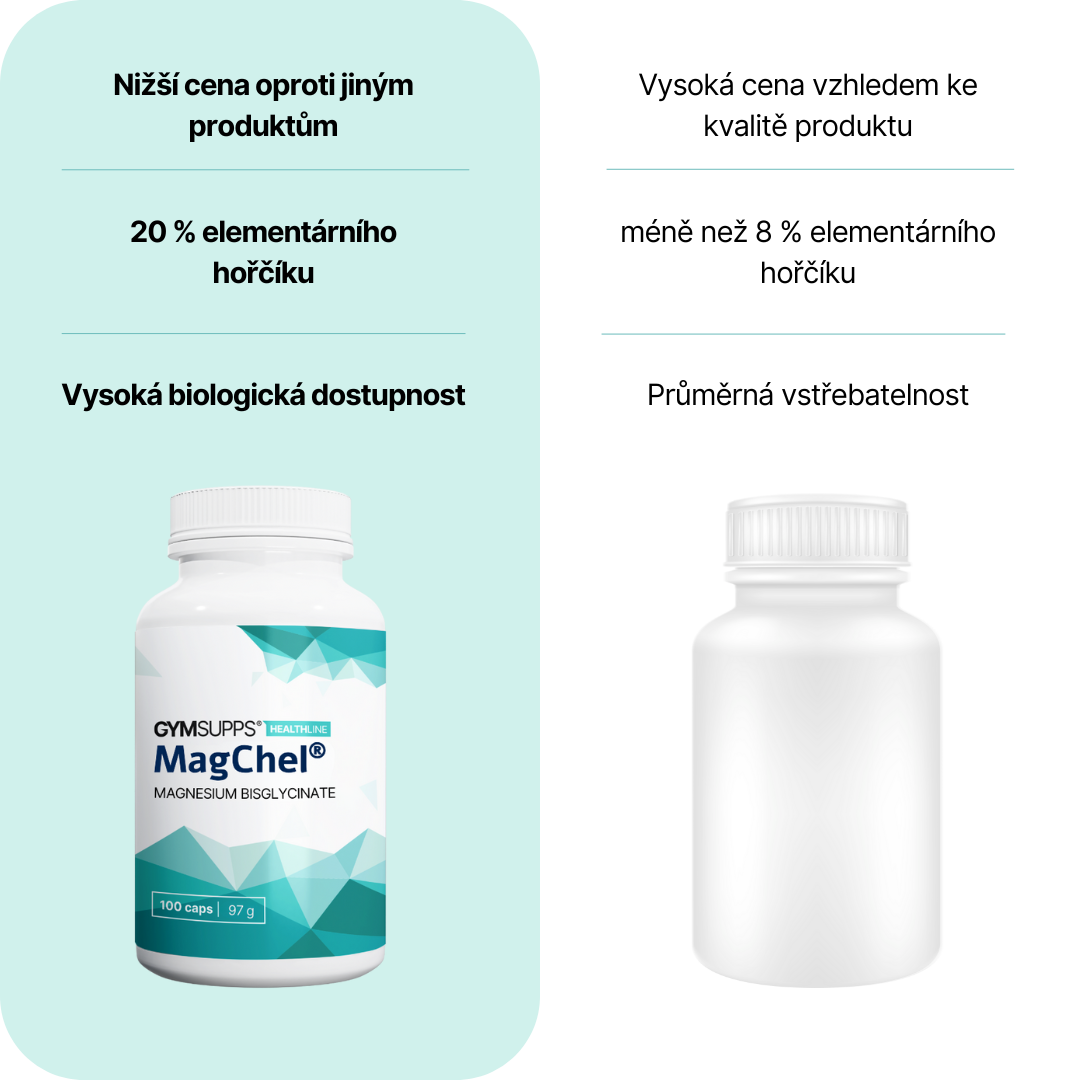
What this means for you is that when you reach for GymSupps MagChel® Magnesium Bisglycinate, you are investing in a supplement that:
- Is scientifically backed as one of the most absorbable forms of magnesium, minimizing the risk of magnesium passing through your body unnecessarily.
- It has a low risk of digestive upset, a common problem with less absorbable forms, allowing you to take magnesium regularly without unpleasant side effects.
- It offers maximum use of magnesium in your body, which is key to achieving all its benefits - whether you're an athlete who needs to support muscle recovery and reduce fatigue, or simply someone looking for stress relief, improved sleep and overall well-being.
Ensuring optimal magnesium intake is an investment in your health and performance. And choosing GymSupps MagChel® Magnesium Bisglycinate, backed by scientific evidence of its superior absorption, is a smart choice for anyone who takes their health seriously and doesn't want to rely on promises alone.
Recommended

Sources:
- [1] Hartle, J. W., Morgan, S., & Poulsen, T. (2016). Development of a Model for In-Vitro Comparative Absorption of Magnesium from Five Magnesium Sources Commonly Used as Dietary Supplements. (This study is often referenced in connection with results presented at conferences or as part of internal materials of companies using these forms of magnesium).
- [2] Blancquaert, L., Vervaet, C., & Derave, W. (2019). Predicting and Testing Bioavailability of Magnesium Supplements. Nutrients, 11(7), 1663.
No posts have been made yet.