Magnesium overdose and its symptoms
 Author:
 Every athlete, whether professional or enthusiastic amateur, knows magnesium. It's almost a magic word, synonymous with fighting cramps, promoting recovery and proper muscle function. The shelves in pharmacies and sports nutrition stores sag under dozens of different forms of this mineral.
In the pursuit of better performance and faster recovery, it's easy to succumb to the "the more the merrier" mentality. But scientific studies and clinical practice show that even this indispensable helper can become a dangerous adversary. Magnesium overdose, known professionally as hypermagnesaemia, is a rare but all the more insidious condition that can have fatal consequences. So in this article, we will look at where the limits of safe use lie and what symptoms should never be ignored, based on the literature.
Article content:
- An indispensable engine for the body
- Hypermagnesaemia: When the kidneys can't keep up
- Clinical manifestations: from nausea to cardiac arrest
- Treatment and prevention: respect and awareness are key
An indispensable engine for the body
Before we delve into the darker side of magnesium, it's fair to highlight its crucial role. Magnesium (Magnesium, Mg) is the fourth most abundant cation in our body and is involved in more than 300 enzymatic reactions. For athletes, its most important functions are in:
- Muscle contraction and relaxation: a proper balance between calcium and magnesium is crucial for smooth muscle movement. While calcium stimulates contraction, magnesium acts as its natural counterpart and allows the muscle to relax. Its deficiency leads to the infamous cramps.
- Energy production: magnesium is essential for the production and use of the cell's basic energy unit, adenosine triphosphate (ATP). Without it, our muscles simply would not have "fuel".
- Nervous system: It stabilizes nerve cells and regulates the transmission of nerve impulses. This contributes to mental well-being and a reduction in fatigue and exhaustion.
- Bone health and protein synthesis: It plays a role in calcium metabolism and is essential for building new proteins, which is the basis for repair and growth of muscle tissue after training.
No wonder magnesium supplementation is so popular. The problem arises when the natural reverence for this element is replaced by mindless consumption.
Hypermagnesaemia: When the kidneys can't keep up
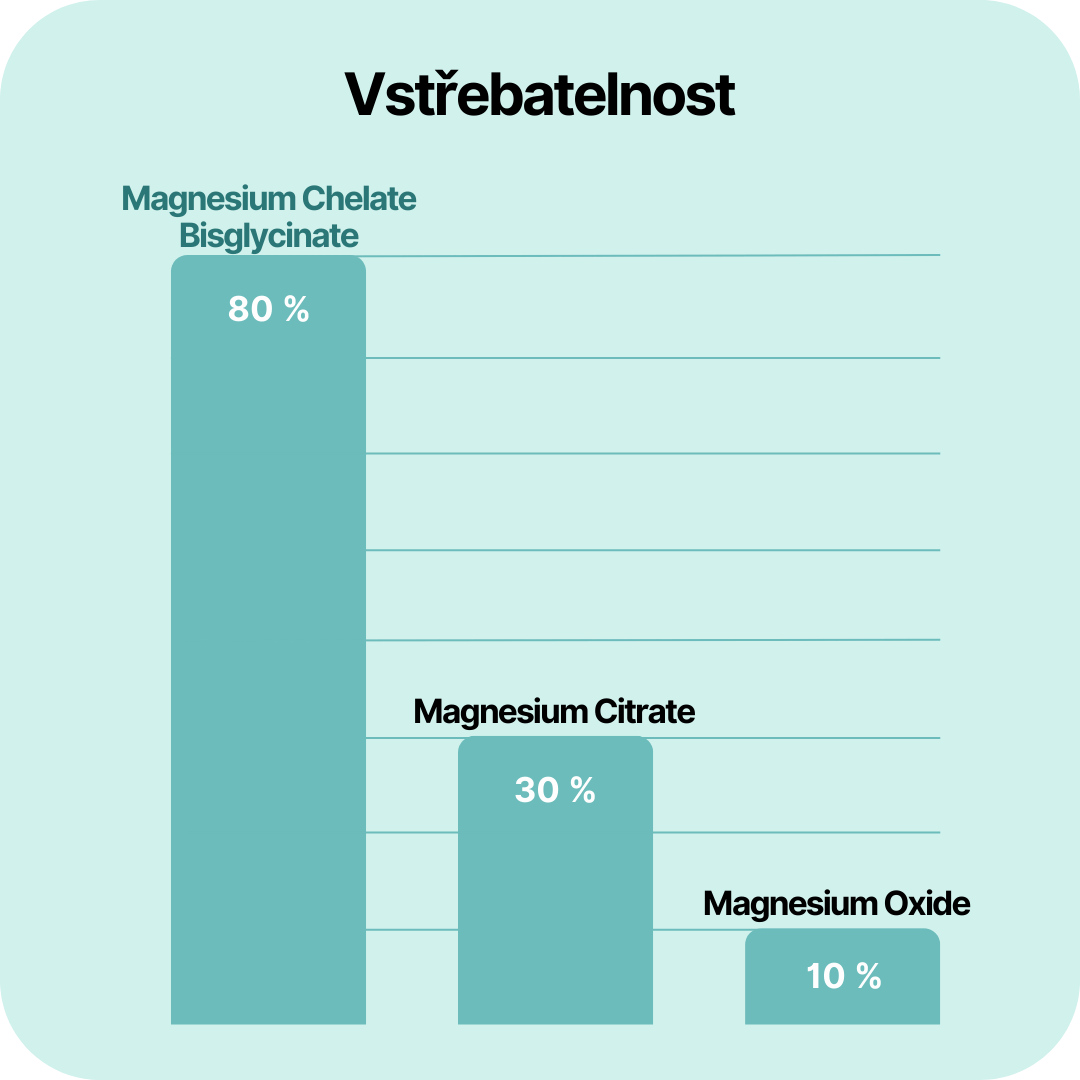
Fortunately, our bodies have a very effective mechanism to deal with excess magnesium - healthy kidneys. They can efficiently filter out excess magnesium and excrete it from the body in the urine. This is why an overdose from a normal diet is virtually impossible in a healthy person. The risk rises dramatically in people with impaired kidney function because their ability to regulate mineral levels is limited.
However, even a person with healthy kidneys can break through this line of defence, especially through the massive and indiscriminate use of dietary supplements, often in combination with magnesium-containing drugs (e.g. some laxatives and antacids for heartburn).
.png)
Clinical signs of magnesium excess: From nausea to cardiac arrest
The symptoms of magnesium overdose do not develop in leaps and bounds, but gradually, and their intensity is directly related to how much magnesium is in excess in the body. This condition, known as hypermagnesaemia, starts subtly but can quickly escalate to a critical situation that requires immediate medical attention. That's why it's crucial to recognize the warning signs early. With a slight excess of magnesium, the body sends out the first signals that can easily be mistaken for normal nausea.
These include mainly gastrointestinal discomforts such as vomiting, diarrhea and a feeling of being sick. A feeling of heat, facial flushing and general malaise may be added If, however, the concentration continues to rise, more serious symptoms of excess magnesium appear. Its depressant effect on the nervous system will cause marked muscular weakness, diminution or disappearance of reflexes, lethargy, confusion and a dangerous fall in blood pressure. In critical cases, when there is too much magnesium in the body, basic life functions fail. There is paralysis of the respiratory muscles, severe heart rhythm disturbances, coma and ultimately fatal cardiac arrest.
1. Mild overdose (level of about 2.0-3.0 mmol/l):
The first warning signs are often gastrointestinal distress such as nausea and vomiting. Facial flushing, hot flushes, headache and general weakness may also occur. At this stage, many people mistakenly attribute the symptoms to a virus or fatigue.
2. Moderate overdose (level of about 3.0-5.0 mmol/l):
Here more serious, mainly neurological complications are already occurring as a result of the depressant effect of magnesium on the nervous system. A narrative review study published in The Neurohospitalist highlights that the main manifestation is marked muscle weakness and a reduction to disappearance of tendon reflexes (hyporeflexia/areflexia).1 For athletes, this means an inability to perform, a feeling of heaviness and malaise. Lethargy, drowsiness and confusion appear. The dampening effect is also felt in the heart, where there is a slowing of the heart rate (bradycardia) and a drop in blood pressure (hypotension).
3. Severe, life-threatening overdose (level > 5.0 mmol/l):
At such high concentrations, magnesium becomes a silent killer. Its depressant effect completely paralyses key vital functions.
- Respiratory failure: Paralysis of the respiratory muscles, including the diaphragm, occurs. The patient stops breathing, leading to suffocation and, without immediate artificial lung ventilation, death.1
- Severe heart rhythm disturbances and cardiac arrest: Extremely high levels of magnesium block electrical impulses in the heart, leading to fatal arrhythmias and eventually to cardiac arrest (asystole). This is the scenario described in a case report from the Journal of the Royal Society of Medicine, where two patients accidentally received a tenfold dose of magnesium sulfate intravenously. Both experienced immediate cardiac arrest.2
- Coma: Complete depression of the central nervous system leading to profound unconsciousness.1

Treatment and prevention: respect and awareness are key
Treatment of acute magnesium overdose belongs exclusively in the intensive care unit. The first step is to stop the magnesium supply immediately. As a specific antidote (antidote), calcium is given in intravenous form. Calcium acts as a direct antagonist of magnesium and can quickly reverse its depressant effects on the heart and muscles. Furthermore, the excretion of magnesium from the body is promoted by diuretics and in the most severe cases or in renal failure, dialysis ('artificial kidney') is necessary.
For us athletes, however, prevention is the most important thing. So how to approach magnesium responsibly?
- Know your needs: the recommended daily dose of magnesium for an adult male is around 400-420 mg, for a woman 310-320 mg. Athletes may have a need 10-20% higher.
- Read the ingredients: watch out for the accumulation of magnesium from multiple sources. You may be unknowingly ingesting it in a multivitamin, for example.
- Do not exceed the recommended dosage: Follow the manufacturer's instructions. Doses above 350 mg of elemental magnesium from supplements per day should be consulted with a specialist.
- Listen to your body: If you observe nausea, diarrhea (the most common mild side effect) or any of the symptoms described above after supplementation, stop taking the supplement immediately and seek medical attention.
Magnesium is and will remain one of the most important minerals for health and athletic performance. It is a great servant that helps our bodies function at full capacity. However, this article shows that if we lose respect for its power and start taking it indiscriminately, it can turn into a bad master very quickly. The key, as with everything else in sport and life, is balance and awareness.
Recommended
GymSupps Magnesium Malate

Sources:
- [1] R. G. Graber, "Neurological manifestations of hypermagnesemia," The Neurohospitalist, vol. 3, no. 1, pp. 41-44, Jan. 2013.
- [2] K. M. L. Leong, N. G. R. Bee, and L. K. T. Ng, "Iatrogenic magnesium overdose: two case reports," Journal of the Royal Society of Medicine, vol. 93, no. 3, pp. 136-137, Mar. 2000.
No posts have been made yet.