





Seven daily habits to boost mental health
 Author:
 Unfortunately, due to the hectic times we are currently living in and the associated pressure put on us by our surroundings and ourselves, the number of people suffering from depression, anxiety and other negative mental health conditions is continuously increasing. The recent pandemic and other events happening in the world have also had a major impact. Yet mental health plays a very important role in everyone's life and needs to be given the same attention as physical health. In addition to feeling happy, mental well-being is also important for our appearance, productivity, sporting performance and overall quality of life. So let's give you some tips that you can practice every day and that can help you "stay cool".
Get enough quality sleep
Quality sleep in sufficient quantity is an absolute necessity for physical health, and it is no different for mental health. Multiple studies show that people who don't get enough sleep - whether in quality, quantity, or both - are more likely to suffer from mental health problems such as depression, anxiety, brain fog, moodiness, difficulty concentrating, and other negative conditions. Of course, physical health issues, lack of energy, loss of motivation to train, and more are also linked to this.

Sleep is therefore an absolutely unquestionably important factor for overall health. The optimal amount of time we should devote to it each day is, as is often the case in many aspects of a healthy lifestyle, highly individual. Some people need 7 hours, others need nine hours. The important thing is to try out what suits your body and respect this need as much as possible.
Try to go to bed at around the same time every day, use your bedroom only for sleep and intimate pleasures, ventilate it well and try to maintain a comfortable temperature (it should be 18-20 degrees for sleep) and limit the use of electronic devices at least an hour before you go to bed. Try to establish a sleep routine that will make it clear to your body that it's time to go to sleep and make it easier to fall asleep. You can also use various supplements - for example, magnesium in the form of bisglycyanate, melatonin or herbs.

Nourish your body in the best plural way
You really can't do it without quality fuel in the form of food. We know very well that everything in the body is connected to everything else, and diet really has a very significant impact on our overall health and mental well-being. A balanced diet based on eating fresh, maximum quality food in quantities that reflect our needs should therefore be one of our key priorities when it comes to health. It is important to remember that our body needs energy and it needs it at all times. When we lose weight, when we gain weight, when we play sports, when we have a day off and when we are sick. In short, we need to keep in mind that adequate calorie intake is an absolutely crucial factor for overall health and mental well-being.
It is no surprise that when we do not give our body enough nutrients, we deprive it of fast food or perhaps we are in an extreme calorie deficit, it will affect us in many ways and possibly most of all on our psyche. We also already know that there are foods that are very beneficial to our mental health and foods that contain substances that can promote good mood. Some of these include salmon, avocados, nuts and bananas. Adequate fluid intake - ideally pure water - is equally important. Even dehydration is an unnecessary stress on the body that we don't need to put it through.

Move regularly
Movement is a great way to do something for your overall health - not only is it good for our physical well-being, our muscles and bones, a healthy weight, better sleep, but it also makes us feel happier and is a great help in reducing stress. Movement doesn't necessarily mean just lifting weights in the gym. Movement should first and foremost be fun and something you enjoy doing, not a necessity and an ordeal. Therefore, choose absolutely any activity that will accomplish this. Run, cycle, play football, volleyball or tennis, go for walks, go skating, in short, do anything that fills you with happiness, makes you feel good and brings you joy. According to research, the activity doesn't even have to last extremely long - just half an hour a day and your body and mind will be happy!
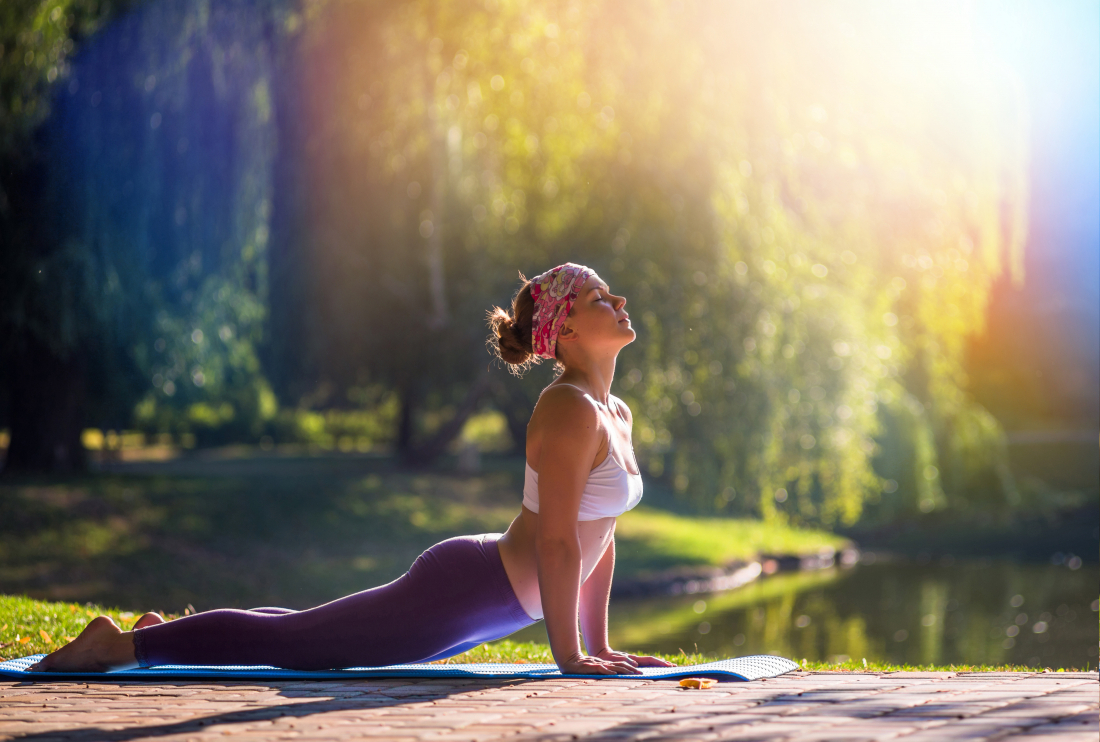
Vary the activity - at least you'll be challenging your body from different angles and giving it different stimuli to develop. What's more, this will ensure that exercise doesn't become a boring routine and that you still enjoy it. If you choose an outdoor activity, you'll kill two, or maybe even three, birds with one stone. As well as doing something for your body, burning some calories and working out your muscles, you'll also get fresh air in your lungs, relieve stress, recharge your endorphins and get that all-important vitamin D from the sun. And that's just a good deal!
Get some fresh air
The sun is a great source of vitamin D and it's no secret that being outdoors can improve our mood, boost productivity and can help us feel better physically and mentally. And you don't even need to spend God knows how much time outside - just a few minutes a day. The problem is that, due to today's hectic times, most of us spend the majority of our day in the office at a computer or other job and don't get outdoors as often. And that's a pity. Make a short walk a part of your daily routine - park your car further away than the office entrance in the morning or get off the tram a few stops early and walk to work, take your lunch to the park if you can, listen to your phone meeting on your headphones and go for a walk or sit on a bench, and go out for sport after work - bike, skate or run? There are plenty of options.
Being outdoors - especially over the summer when the sun is stronger - is the most natural way to get that all-important vitamin D, which plays a role in a wide range of bodily processes and a lack of which has fatal consequences. Yet to get the optimum amount, you only need a little there - 20 minutes in the sun a day. In addition to vitamin D, you'll recharge your energy in the sun and feel better in every way. And as a bonus, you'll also get a little tan, which adds to your attractiveness.

Learn to relax
The definition of rest will look a little different for each of us. For someone it will be a walk in nature, for someone a massage, for another a sport, reading, a warm bath, watching a movie, sitting with friends, meditation, or anything else. But one thing they all have in common. They always relax us, turn our minds off and help us feel better. Whatever your relaxation activity is, make time for it and do it as often as you need to. Yoga or meditation are great in this regard - they're the perfect way to connect body and mind and get both in the right frame of mind.
Due to the pressure we are under today and every day, we often forget the most important thing - that we need to spend time not only on work, family and responsibilities, but also on ourselves. So let's do more of that, let's do things outside of work that fill us with happiness, that relax us and make us feel good. It may sound a bit sunny, but it's important - for our mental health, but also for greater productivity, motivation and an overall happier life. So don't doubt that it's worth it!
Recommended

Nebbia Legínové šortky s vysokým pasem 5” HAMMIES 615

Nebbia Cyklistické šortky s vysokým pasem ELITE 467

Czech Virus Beast Virus V2.0
HMS Elektrický běžecký pás BE1862
Limit time spent on social media
Social networking is a phenomenon of our time and it is very important to take it with a grain of salt. It's true that anyone who is not on Instagram or Facebook nowadays, it's as if they don't live at all. But on the other hand - permanently consuming information about other people's lives can lead us to compare ourselves more, to evaluate more, and this can cause a decrease in our self-esteem or, in a worse phase, lead to depression or anxiety.
If you're experiencing something like this, or feel that you're spending more time than is healthy on social media, put a limit on the amount of time you spend on social media in a day and try to enjoy the beauty of life offline more. Instead of scrolling through socks, go for a walk, read a bit of an interesting book, cook yourself some good food, go for a sport, go to a cafe with friends or simply find a hobby that will help occupy your mind and fill the time you would normally spend browsing your social profile feed. If none of the above helps, remove social networking apps from your phone altogether.

Surround yourself with the right people
Socialization also plays an important role in people's lives. The people we associate with can be a source of inspiration, energy and good humour, but the opposite can also be true. No matter how much we like certain people, when they are a stressor for us, it is a good idea to avoid their company or not seek them out too often. On the other hand, keep the other group of people, those who make us feel good, close to us - call them on your lunch break, invite them to breakfast or a good coffee, plan a regular sporting activity together, or go to the cinema. Good friends are needed in life, and sometimes it's great for your mental well-being not to be alone for everything.

What to take away from this article?
As a result of the hectic times we live in and the ever-increasing demands placed on us by society and ourselves, the number of people suffering from depression, anxiety and other negative mental health conditions is rising steeply. Yet mental health plays a very important role in the quality of life of each of us and needs to be given the same attention as physical health. Today, we have given some tips that you can practice every day and which are very important for mental health. These include things like getting enough sleep, adequate nutrition and drinking, regular exercise, good friends, the art of relaxation and more.
Sources:
Blackwelder, A., Hoskins, M., & Huber, L. (2021). Effect of Inadequate Sleep on Frequent Mental Distress. Preventing chronic disease, 18, E61. https://doi.org/10.5888/pcd18.200573
Mead M. N. (2008). Benefits of sunlight: a bright spot for human health. Environmental health perspectives, 116(4), A160-A167. https://doi.org/10.1289/ehp.116-a160
Firth, J., Gangwisch, J. E., Borisini, A., Wootton, R. E., & Mayer, E. A. (2020). food and mood: how do diet and nutrition affect mental wellbeing. BMJ (Clinical research ed.), 369, m2382. https://doi.org/10.1136/bmj.m2382
No posts have been made yet.








