We reveal the secrets of the manufacturers and the truth behind "Grass-fed" proteins!
 Author:
 In today's market, there is a wide range of protein manufacturers who are constantly trying to outperform their competitors. Whether it's the composition of their products, the prices they charge or the taste they offer their customers. As consumers who strive for a healthy lifestyle, we only want the best for ourselves. That is why we take due care in our choices, which can, however, leave us a little confused in the sea of options the market has to offer.
However, if you've been shopping for supplements for a while, you've probably come across the label "Grass-fed". This term, which literally means "grass-fed," is often associated with higher quality and priced proteins. Many people feel that by buying a protein labeled this way, they are doing something good for their bodies, but also for the environment. After all, who wouldn't want to support cows grazing on free range instead of being confined to a cow shed? Furthermore, a protein labelled in this way can give us the impression that it should contain more nutrients. After all, animals that are fed a more natural diet should provide healthier and more nutritious products than those that are fed feed. The idea that our protein might be richer in nutrients is certainly appealing.
As it happens, things are not always as simple as they seem. That's why it's important to do your own research and look at scientific studies that address this issue. Is the protein from grass-fed cows really better quality and more nutritious? And is this way of farming really as good for the environment as it seems? Let's take a look at these questions together and find out what the "grass-fed" label really means.
What do we mean by "Grass-fed" protein?
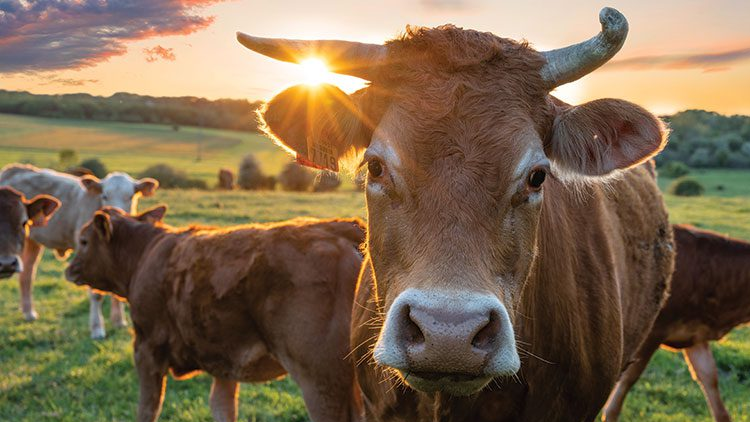
It's completely understandable to be confused about all the labels you see. Some products with this label may claim that the cows they came from had a better, higher quality life. However, the truth is that the "grass-fed" label only refers to the cows' diet, not how the cows were treated during their lifetime. What does that mean, you might ask? Simply put, the label ensures that the cows were fed primarily on grass, not grain, which is often used in factory farming. However, it is important to note that this does not guarantee anything about the quality of life of these animals. Despite popular belief and what dairy advertising would have people believe, even grass-fed dairy cows do not spend all their time on pasture. The exact grazing time in the EU is unknown. Available estimates suggest a wide variation in access to grass; from 98% for cows in Ireland that have access to grass seasonally, to 10% in Greece, to almost no access to grass for cows on Bulgarian dairy farms. For the rest of the year, cows live either in stalls or in boxes. The cows you see grazing outside are usually beef cows or young dairy cows before their first calving.
The U.S. Department of Agriculture (USDA) defines the term "grass-fed" to mean that most of the nutrients cows take in during their lifetime come from grass, forage and legumes. But again, this regulation does not guarantee that the animals have lived their entire lives free-ranging. It just confirms that their diet was made up of mostly grass, not grain. As a result, there is little alleged difference in nutrients. Although the grass-fed label must meet USDA standards, there are a number of products and companies that use the label anyway in product descriptions. However, there is no standardized type of grass that cows are fed and the amount of grass they eat. This can have a big impact and change the nutritional profiles of the product.
So the next time you are shopping and you see 'grass-fed' on the packaging, consider what it really means. Sure, it's a step in the right direction to provide a better diet for our livestock, but it doesn't necessarily guarantee that the animals were raised in ideal conditions. And that is something that should be important to all of us as animal lovers and responsible consumers.
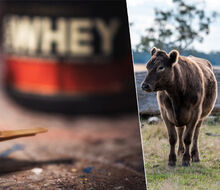
How dograss-fed proteins differ fromwheyproteins?
The nutritional properties of proteins labeled as such are completely identical to regular whey proteins. In other words, in terms of nutritional value, any differences between the two types of protein are minimal, if they exist at all. However, when looking at other products such as milk or beef, we can come across some significant advantages. These advantages are mainly related to the content of some of the specific nutrients we have already mentioned. For example, some evidence suggests that products from grass-fed cows may contain higher levels of omega-3 fatty acids, antioxidants, iron, or conjugated linoleic acid (CLA ) than their traditional counterparts. It is also important to point out that the term "grass-fed" is not standardized. In fact, different types of grass can provide different amounts of nutrients, where some of these nutrients may be lost in the processing. However, in the case of grass-fed whey protein powder, no specific research or study has been carried out. This does not mean that we should dismiss these proteins.
However, when choosing a protein, its price should also be taken into account. In fact, conventional protein is significantly cheaper and you will definitely pay more for a protein with the "grass-fed" label. The difference in price can be several hundred crowns. So if you go on a quest to find the benefits of grass-fed proteins, you will come across the fact that there are still no current studies confirming their significant nutritional benefits compared to standard whey protein powder. Plus, you can gain muscle even with the use of conventional protein without having to spend more money on it.
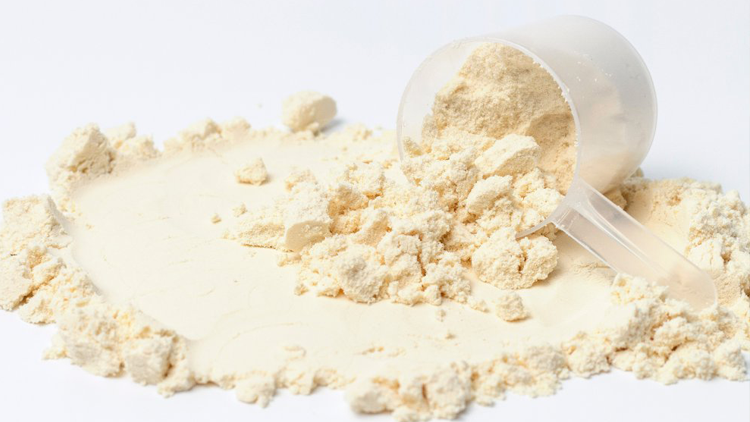
What do you take from this?
Dietary supplement manufacturers often lure consumers with buzzwords on their labels without having to back up their claims with scientific evidence. In the case of products labelled 'grass-fed', no scientific research has yet been conducted to confirm that they contain more nutrients. However, if ethical animal husbandry is important to you, there is unfortunately no guarantee that grass-fed products come from cows that have been reared under better conditions. The only thing that is certain is that the cows were grass-fed. You will often pay extra for products with this label and it is up to you to decide if the benefits are worth the price.
For us, using this label for grass-fed proteins is purely a marketing ploy and deliberately misleading. We would like to point out that this practice is highly criticized by us and we do not agree with it. It is something we consider unacceptable and completely unprofessional. In our business we always try to be as fair as possible to our customers. We respect them and approach them with transparency and honesty. We believe that our customers deserve the best and highest quality and want to be informed about what they are actually buying.
It pains us to see that some companies abuse customer trust through dishonest marketing ploys. Simply put, you won't see such products from us. We do not agree with this way of doing business and will not be drawn into such low practices.
If there is no real evidence that these proteins contain any extra nutrients, why should we fall for it? Why should we be part of this misleading and unethical behavior? This is something we absolutely reject and believe our customers deserve much better. This stance is an expression of our commitment to ethical trading and our deep respect for our customers. We are angry at those who seek to use our lack of information and customer trust to their own advantage. But we are also determined to fight back and ensure that our customers get what they deserve.
Recommended
Extrifit CFM Instant Whey 80
Prom-in CFM Pure Performance

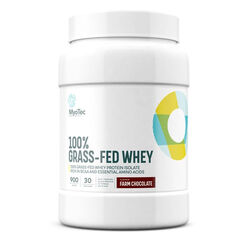
MyoTec 100% Grass Fed Whey
Reference:
- USDA Certified Organic: Understanding the Basics. U.S. Department of Agriculture. https://www.ams.usda.gov/services/organic-certification/organic-basics
- Krusinski, L., Sergin, S., Jambunathan, V., Rowntree, J., & Fenton, J.I. (2022). Attention to the Details: How Variations in U.S. Grass-Fed Cattle Supplementation and Finishing Date Influence Human Health. Frontiers in Sustainable Food Systems.
- Hoffman JR, Falvo MJ. Protein - Which is Best? J Sports Sci Med. 2004 Sep 1;3(3):118-30
- Daley CA, Abbott A, Doyle PS, Nader GA, Larson S. A review of fatty acid profiles and antioxidant content in grass-fed and grain-fed beef. Nutr J. 2010 Mar 10;9:10.
- Alothman M, Hogan SA, Hennessy D, Dillon P, Kilcawley KN, O'Donovan M, Tobin J, Fenelon MA, O'Callaghan TF. The "Grass-Fed" Milk Story: Understanding the Impact of Pasture Feeding on the Composition and Quality of Bovine Milk. Foods. 2019 Aug 17;8(8):350.
- Średnicka-Tober D, Barański M, Seal CJ, Sanderson R, Benbrook C, Steinshamn H, Gromadzka-Ostrowska J, Rembiałkowska E, Skwarło-Sońta K, Eyre M, Cozzi G, Larsen MK, Jordon T, Niggli U, Sakowski T, Calder PC, Burdge GC, Sotiraki S, Stefanakis A, Stergiadis S, Yolcu H, Chatzidimitriou E, Butler G, Stewart G, Leifert C. Higher PUFA and n-3 PUFA, conjugated linoleic acid, α-tocopherol and iron, but lower iodine and selenium concentrations in organic milk: a systematic literature review and meta- and redundancy analyses. Br J Nutr. 2016 Mar 28;115(6):1043-60.
No posts have been made yet.