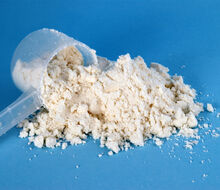
Whey protein: what is it, how does it work and when to include it?
 Author:
 Protein is one of the most used supplements ever. Many fitness beginners see it as the golden grail, something they absolutely must have at home and ideally use in every meal. Of course, this is absolutely not necessary. Even your grandmother probably knows about protein powder by now, yet if you're new to exercise, it can be a challenge to navigate which kind to choose, when and what to use it for, and what benefits protein supplementation can actually provide. And that ' s exactly why we're here to help you find the answers to all of these questions - today we're focusing on whey protein. The more experienced will forgive us, as today's article will be dedicated to beginners.
Article content:
- What is whey protein?
- What is whey protein?
- Types of whey protein processing
- Differences between the different types of whey protein
- What whey protein to choose?
- What are the health benefits of whey protein?
What is whey protein?
Whey protein, referred to on packaging as WHEY PROTEIN, is made from milk, which contains two types of protein - casein, which makes up to 80% of the total protein content of milk, and whey, which makes up the remaining 20%. When the milk is used to make cheese, the whey is 'precipitated' out of the milk and it is in the liquid produced by this process that the whey can be found between the lumps of cheese. It is then dried, goes through several other process steps and becomes a powder that is then used to make the proteins we know from the shops. Of course, other substances are added to it to make it more nutritionally rich and also more appealing in taste. And then we have protein powder itself, protein bars and a whole bunch of other products and foods to which protein powder is added to increase the protein content.

What else does whey protein contain?
- Alpha-lactoglobulin
- Beta-lactoglobulin
- Albumin
- Immunoglobulins (IgG1, IgG2, IgA and IgM)
- And other micro nutrients such as calcium, phosphorus, biotin, sodium, vitamins A, B1, B2, B3, B5, B12 and C.
Whey is made up of many smaller protein subfractions such as beta-lactoglobulin, alpha-lactalbumin and immunoglobulins (IgG). Each of these subfractions has its own unique biological properties. Protein subfractions are made up of amino acids. Like all proteins - chicken, turkey, beef, eggs, soy, rice, etc. - whey is composed of amino acids that the body can use to grow muscle and repair tissues during the regenerative process. However, it is whey's high concentration of branched-chain amino acids(BCAAs), especially leucine, that sets this protein apart from the rest.
How does protein actually work in the body?
First things first, whey protein is a complete source of protein, meaning it contains all 9 essential fatty acids that are necessary for protein synthesis. The essential acids are in fact ones that the body cannot create on its own, and therefore must be taken in through diet.
The protein powder is also very rich in three essential acids known as BCAAs - leucine, valine and isoleucine. These three essential acids are key players in building muscle mass and protecting it, and in addition, they also serve as an energy reservoir during long and intense workouts. The high BCAA content stimulates insulin secretion, even without the assistance of carbohydrates.
Leucine is considered to be the amino acid that has the greatest ever influence on the rate of protein synthesis, the process that makes your muscles bigger and stronger. On average, one scoop of protein contains around 3g of leucine, which is just about the optimal amount for maximizing protein synthesis. In comparison, casein protein , for example , contains 2.3g of leucine per scoop, and soy protein only 1.5g. Protein synthesis works best at around 2.5g , so we can logically deduce that whey protein offers a virtually ideal representation in this regard.
Whey protein is generally a very fast absorbing protein that, when consumed, increases the amount of amino acids in the blood in about 40-60 minutes. Whey generally has a bioavailability of 96%+, which represents what percentage of the content will actually be digested.
Types of whey protein processing
You may have been puzzled when choosing a protein by something on the packaging like WPI, CFM, WPC, ultrafiltrate or hydrolysate. All of these words and abbreviations refer to the manufacturing processes by which whey is extracted or processed. And the way whey is processed is what affects its usability and the overall quality of the final product. There are three common types of processing:
1. Ion exchange
In this method of production, the proteins are extracted from the original raw material by virtue of their electrical charge. In order for this process to take place, the presence of substances such as sodium hydroxide or hydrochloric acid is required . Compared to the CFM production process, this method offers the advantage of a cheaper final product. However, the lower price is due to the fact that the use of chemicals radically reduces the content of biologically beneficial substances in the final product.
2. Whey drying
Whey drying is the first, and therefore the oldest, method of production. Today, this method is rather outdated and is no longer practically used. In this processing method, protein powder is obtained by drying the starting material and then removing lactose and other substances from the dried product. The disadvantage of this method is that it is carried out at very high temperatures, which denatures the protein and thus prevents it from being fully utilised. The second disadvantage is the removal of the beneficial substances of the original product.
3. CFM method
CFM or cross flow microfiltration is a natural non-chemical process. Production by cross flow microfiltration is probably the most widely used method for protein production at present. It involves the separation of proteins using ceramic cross-flow filters. The permeability of the membrane (pore size) determines the quality of the protein. Compared to the other two methods, no chemicals or high temperatures are used, which makes this method the most qualitatively advantageous - the resulting product retains all the biological advantages and the mineral content is also preserved - in particular , the high calcium content stands out . The resulting product is an almost undenatured protein with the highest content of bioactive substances.

Differences between the different types of whey protein
You will have noticed when looking for a suitable product that there is no such thing as whey. Even the classic "whey" protein has several variants - hydrolysate, isolate, concentrate. Who is supposed to know?
Whey protein concentrate (WPC)
Concentrates are the most commonly available proteins. Such protein contains between 50-80% protein, is low in lactose and fat (which, however, is not the lowest of all types). And because of the fat content, many people think that an isolate is a better choice than a concentrate. But the truth is different - a quality concentrate is a better choice for most people, but of course it depends on your goals. The other aspect of why people are more likely to reach for isolate is the fact that concentrate contains less protein, but compared to isolate, itcontains more of the other beneficial substances and minerals that milk contains and are not damaged in any way due to the way it is produced.
Good quality concentratescontain a fair amount of growth hormones, phospholipids and lipids such as conjugated linoleic acid, known as CLA. Concentrates also contain more immunoglobulin and lactoferrin. Concentrate also contains slightly more carbohydrate than the other varieties and is therefore very palatable. The price is usually equally favourable.
Whey protein isolate (WPI)
Isolates are proteins that have almost zero lactose and fat content, making the protein concentration in such a protein around 90-95%. For people who have a problem with milk or are intolerant to milk, then an isolate is a good choice and often they are able to tolerate it. Isolate has a mild taste but is often inferior to WPC. The disadvantage is also the higher price due to the production method.
Whey hydrolysate
Hydrolyzed protein is basically classifiable as "pre-digested" because it has undergone partial digestion. This reduces the digestion time compared to the two previous types . However, there is virtually no evidence to suggest that hydrolysate is better than concentrate. So even if we were to assume that hydrolyzed whey has an unrealistic 100% bioavailability, it would still be 4% better than the base whey protein. Hydro is actually a further processing of the isolate, where the long chains of whey protein are enzymatically cleaved, making them even better and faster for our bodies to absorb. However, there are differences here too, namely in the degree of hydrolysis. The greater the hydrolysis, the smaller the particles of protein we are left with (i.e. thesmaller the particles, the more absorbable they are).
Hydrolysate is most effective when trying to maximize body composition change. In fact, the insulin spike will be highest just after using hydrolysate. The downside, however, is that the hydrolysis process will disrupt the original structure, thus reducing the ability of the native product to exert its natural anabolic action. In addition, hydrolyzed whey also has a very unpleasant bitter taste that is usually masked by a heavy dose of sweeteners and sugar. So the protein is high quality, but taste-wise it may not be a hit parade. Hydrolysate is particularly suitable for the final stages of preparation, when stimulation of insulin secretion without the involvement of carbohydrates is desirable.
So which whey protein to choose?
This is one of the most common and perhaps quite complex questions that circulates among novice fitness enthusiasts, as well as more experienced bodybuilders. It may seem that isolate and hydrolysate are clearly of higher quality, and therefore better than the classic concentrate. However, the truth is that there is no study to prove this, so feel free to choose a type of protein that is in line with your goals and especially your budget. If you care about taste and don't want to spend too much on protein, reach for whey protein concentrate, which is a suitable choice for all recreational exercisers. The carbohydrates and fat in the concentrate provide a creamy taste reminiscent of milk. On the other hand, if you're on a strict diet or going to a race, you'll be better off reaching for an isolate or hydrolysate. An isolate is also preferable if you're lactose intolerant or intolerant to cow's protein.

What are the health benefits of whey protein?
Support for strength training
Whey protein has been shown to have much greater effects on muscle building and strength development when combined with strength training than strength training alone. A study published in the International Journal of Sport Nutrition and Exercise Metabolism concluded that those who supplemented with whey protein after training showed nearly a 5 percent greater increase in net muscle tissue compared to those who did not use protein. If we focus on building strength and muscle mass, compared to other types of protein such as casein or soy protein, then whey protein also performed the best.
Significant support for fat reduction
Protein is known for its ability to support healthy weight loss, and is the most powerful macronutrient in this regard compared to fat and carbohydrates. A diet richer in protein can also help increase metabolic rate, resulting in weight loss (assuming a calorie deficit is created, of course). Increasing protein intake with whey protein is an easy way to increase protein intake, and this, combined with an adequate caloric deficit and appropriately set training, is a very beneficial strategy for fat reduction.

However, this of course does not mean that you can just take the protein and go out for any activity in peace. Supplementing with whey protein can only help you increase the effectiveness of your workouts and gain more muscle mass at the expense of fat mass. In addition, a higher protein intake means a reduced feeling of hunger, thanks to the fact that protein has a greater thermic effect and higher satiety than carbohydrates.
Other benefits of whey protein
- Whey protein is a complete source of protein, i.e. it contains all essential fatty acids.
- The proteins contained in whey protein have a high biological value and are very well utilised.
- Leucine is an essential amino acid for protein synthesis and muscle building.
- A rich source of glutamine.
- A fast absorbing source of protein.
- A fast-acting, high protein source of protein that supports the immune system.
When to reach for whey protein?
Before and after training as a supplement
Fast-absorbing whey protein is usually taken in doses of 25-30 grams, either 1-2 hours before training as a light snack or breakfast that won't overload the stomach before training, or immediately after training. Well, immediately... actually, you don't have to shake your shaker immediately after your workout to be able to take in the protein in the 30-45 minute "anabolic window" and reap the benefits that whey protein offers. Anytime between 30 minutes - 1.5 hours after your workout, it's probably okay to ingest protein. If drinking protein is a post-workout ritual for you, stick to it!
Anytime during the day as a source of protein
Whey protein is a versatile source of protein and can be used outside of training periods, even on days off. It's a great way to increase your protein intake in a tasty way and even cut down on calories from another sweetener, for example by adding protein to yoghurt, porridge or incorporating it into a healthy dessert.
How much protein and how often to take it?
That's the question. The answer will depend on many aspects, such as your physical disposition, the amount of protein you take in per day, etc. If you want to avoid unpleasant digestive problems (you know what I'm talking about), calculate your first optimal protein intake for your own needs and, on this basis, calculate how much protein you will be missing if you eat all your meals containing protein from your diet. If you manage to meet your daily protein intake without protein, taking it is not strictly necessary.
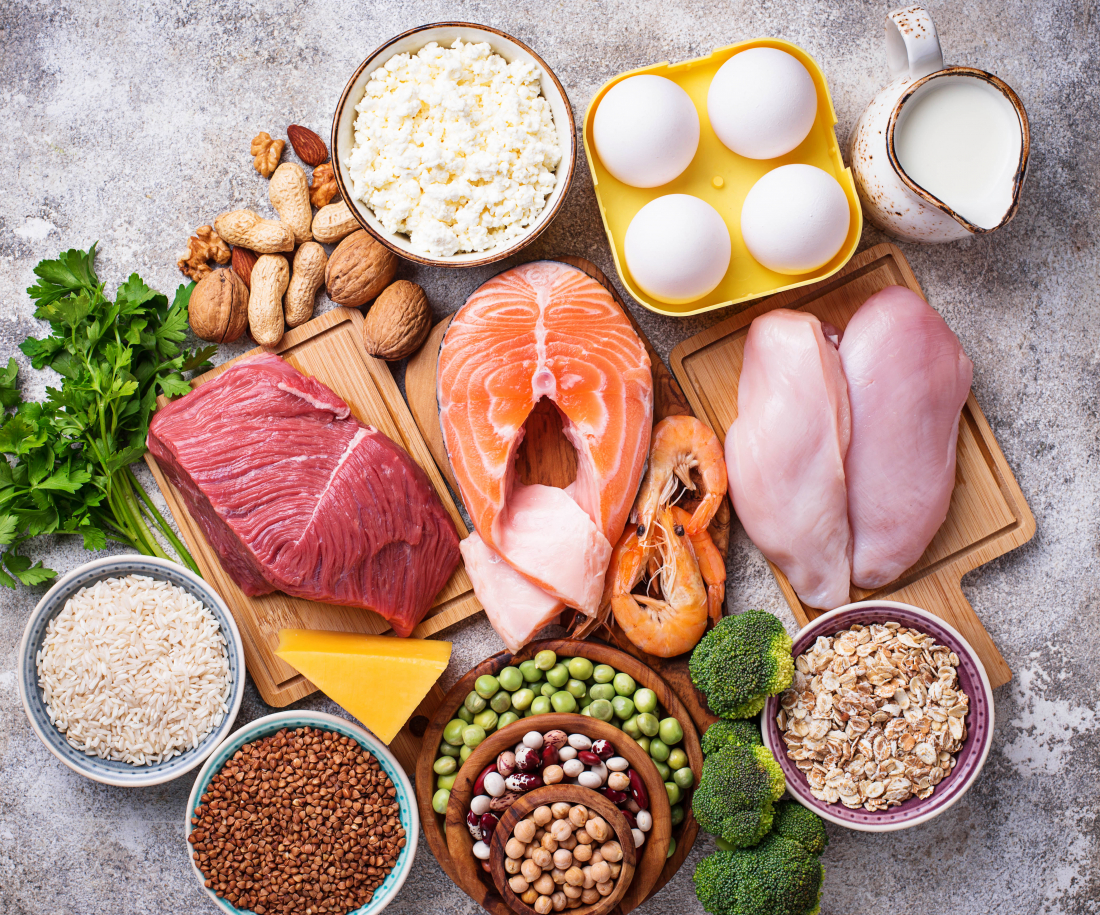
In addition to taking in enough whey protein and other sources of protein from your diet, also make sure that you have enough healthy fats and complex carbohydrates in your diet to give you enough energy for training, muscle growth and recovery. As we've already nibbled on - high protein intake can lead to digestive problems in some cases, but there is no relevant study to support the idea that higher protein intake is harmful to the kidneys - but you can read more about the myths surrounding protein intake in this article. Protein powder may well be an everyday part of your diet, but the reverse is equally true - if you can meet your daily protein intake, you may not need to use it at all.
What to take away from the article?
Protein powder is nowadays a very common part of the diet. It doesn't matter whether your goal is to build muscle, improve your fitness, lose some pounds or simply struggle to meet your protein intake - whey protein can help you in any case and make it easier to achieve your goals. Provided, of course, that you have the right workouts and an adequate diet tailored to your goals. For most recreational athletes, it's perfectly fine to reach for WPC protein, i.e. a concentrate, ideally made using the CFM method. Such an option is the most palatable and affordable.
Recommended
Extrifit Iso 90 CFM Instant Whey
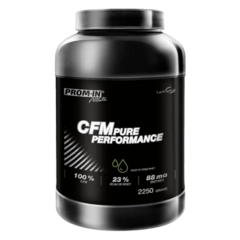
Prom-in CFM Pure Performance

Sources:
Wolfe, R. 2000. Protein supplements and exercise. American Journal of Clinical Nutrition 72: 551S-557S. 2. Parise, G., et al. 2000.
Mero, A. 1999. Leucine supplementation and intensive training. Sports Medicine 27: 347-358.
Bounous, G., Batist, G., and P. Gold. 1991. Whey proteins in cancer prevention. Cancer Letter 57: 91-94.
Ha, E., et al. 2003. Functional properties of whey, whey components, and essential amino acids: mechanisms underlying health benefits for active people. Journal of Nutritional Biochemistry 14: 251-258.
Devries, M. C., & Phillips, S. M. (2015). Supplemental protein in support of muscle mass and health: advantage whey. Journal of Food Science, 80(S1).
Candow, D. G., Burke, N. C., Smith-Palmer, T., & Burke, D. G. (2006). Effect of whey and soy protein supplementation combined with resistance training in young adults. International Journal of Sport Nutrition and Exercise Metabolism, 16(3), 233-244.
Cribb, P. J., Williams, A. D., Carey, M. F., & Hayes, A. (2006). The effect of whey isolate and resistance training on strength, body composition, and plasma glutamine. International Journal of Sport Nutrition and Exercise Metabolism, 16(5), 494-509.
Paddon-Jones, D., Westman, E., Mattes, R. D., Wolfe, R. R., Astrup, A., & Westerterp-Plantenga, M. (2008). Protein, weight management, and satiety. The American Journal of Clinical Nutrition, 87(5), 1558S-1561S.
Frestedt, J. L., Zenk, J. L., Kuskowski, M. A., Ward, L. S., & Bastian, E. D. (2008). A whey-protein supplement increases fat loss and spares lean muscle in obese subjects: a randomized human clinical trial. Nutrition and Metabolism, 5(1), 8.
Veldhorst, M. A., Nieuwenhuizen, A. G., Hochstenbach-Waelen, A., van Vught, A. J., Westerterp, K. R., Engelen, M. P., ... & Westerterp-Plantenga, M. S. (2009). Dose-dependent satiating effect of whey relative to casein or soy. Physiology and Behavior, 96(4), 675-682.
Fouillet, H., Mariotti, F., Gaudichon, C., Bos, C., & Tomé, D. (2002). Peripheral and splanchnic metabolism of dietary nitrogen are differentially affected by the protein source in humans as assessed by compartmental modeling. The Journal of Nutrition, 132(1), 125-133.
Boirie, Y., Dangin, M., Gachon, P., Vasson, M. P., Maubois, J. L., & Beaufrère, B. (1997). Slow and fast dietary proteins differently modulate postprandial protein accretion. Proceedings of the National Academy of Sciences, 94(26), 14930-14935.
Kerstetter, J. E., Kenny, A. M., & Insogna, K. L. (2011). Dietary protein and skeletal health: a review of recent human research. Current Opinion in Lipidology, 22(1), 16.
No posts have been made yet.