





You don't have to believe everything they say in the gyno! An overview of common protein myths!
 Author:
 Every macronutrient has its "mysterious side" full of question marks and myths. With carbohydrates, for example, their consumption is responsible for fat stores, while with fats, for example, there is speculation about their effects on health. Andproteins are certainly not exempt from myths either . Protein has perhaps the most myths, half-truths and nonsensical statements around it that have no scientific basis and are therefore completely irrelevant to follow. When your goal is to build muscle, develop strength and improve body composition, protein is of particular importance. So why are proteins surrounded by so many myths and misinformation?
If you've tried to do some research on protein, you may have picked up one of the following catchphrases on an internet discussion, social media, or from the mouth of a self-proclaimed expert:
"You need no more than 1 gram of protein per kilogram of body weight."
"Your body can only process a maximum of 30g of protein at a time."
"To maximize muscle gains, you need to ingest protein every two to three hours."
"Higher protein intake has a negative effect on the liver and kidneys."
"The best sources of protein are animal sources."
And more...
And even though some of these are very common and you can read them from multiple sources, it doesn't necessarily mean they are true and you should follow them! So let's take a look at the most common myths that circulate around the world when it comes to protein.
How much protein should I eat?
How many grams of protein per day your body needs is a STRONGLY SUBJECTIVE matter, just like with other macronutrients. Not only does it depend on your physical disposition, your daily activities, your athletic load, but the amount of protein also goes hand in hand with your goals - i.e. whether you are in a caloric deficit and trying to reduce fat stores, or on the contrary, in a caloric surplus in order to build muscle.
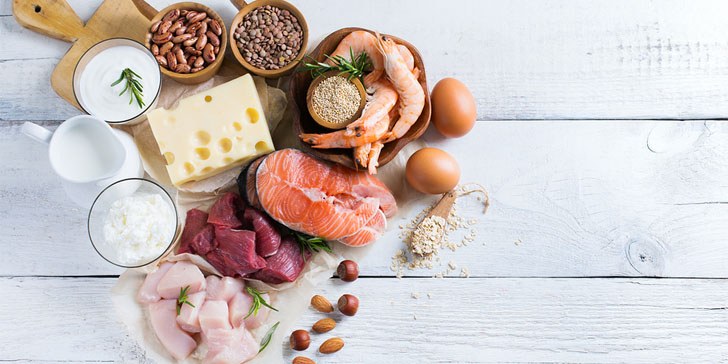
It would seem that it's pretty clear that protein intake should be lower when you're in a caloric deficit and higher when you're building muscle. However, this is not entirely correct. If you are in a deficit, you need to supply your body with enough protein to minimize the loss of your hard-built muscle mass while ensuring that you feel fuller for longer. Therefore, optimal protein intake can range from 1g per kg of body weight, which will be valid for inactive individuals, to as low as 3g in the case of active athletes. (You can read more about protein intake in this article - link
As mentioned, many factors go into the amount of protein you need in a day, such as age, gender, type and intensity of sporting activity, physical disposition, metabolic status and more. For example, as you get older, your body needs a LARGER amount of protein. In short, there is no universally applicable amount of protein that is optimal for everyone, so it is utter nonsense to say that you can consume a maximum of 1g of protein per kilogram of body weight, as this amount is completely inadequate for the bulk of the population.
You can only take in a maximum of 20-30g of protein per meal, otherwise you will not be able to process it.
The idea that the human body can only process a limited amount of protein in one meal was based on the results of one of the whey and egg protein studies. This is because the body is able to absorb these two specific forms of protein very quickly, so consuming 20 grams of protein from these sources in one meal causes maximum muscle protein stimulation.

The results of this research led to the conclusion that because muscle protein was maximally stimulated by consuming 20 grams of protein from an egg or whey, it was not advisable to consume more than this amount and 20 grams represented a ceiling on the body's ability to process the protein ingested. We know that 20 grams of whey or egg protein resulted in maximum muscle stimulation because whey and egg proteins are rich in the amino acid leucine. Leucine is a proteinogenic essential amino acid that is mainly found in muscle where it mediates hydrophobic interactions due to its hydrophobic nature.
So you correctly understand that it matters much more than how much protein you take in a single serving how much leucine you take in, although in the case of a recreational athlete it is probably not necessarily necessary to ask exactly how much leucine you take in. 20g of egg or whey protein is equivalent to about 1.8g of leucine. That's about 113g of beef, for example , which is equivalent to 30g of protein. So is 30g of protein the magic threshold that the body can process? You guessed right, it's not.
In fact, if we dig into the biology and digestion process, we could say that protein absorption is virtually unlimited, which is not to say that it is necessary or beneficial to consume huge amounts of protein. When you take in more protein than that "magic" 30 gram limit, the rest doesn't just go away, the whole portion goes through the metabolism process and is processed in some way, it just takes the body longer to process a larger single intake and so we feel full longer after a protein packed meal. But we're certainly not encouraging you to eat some ridiculously large amount of protein.
The best kind of protein is..
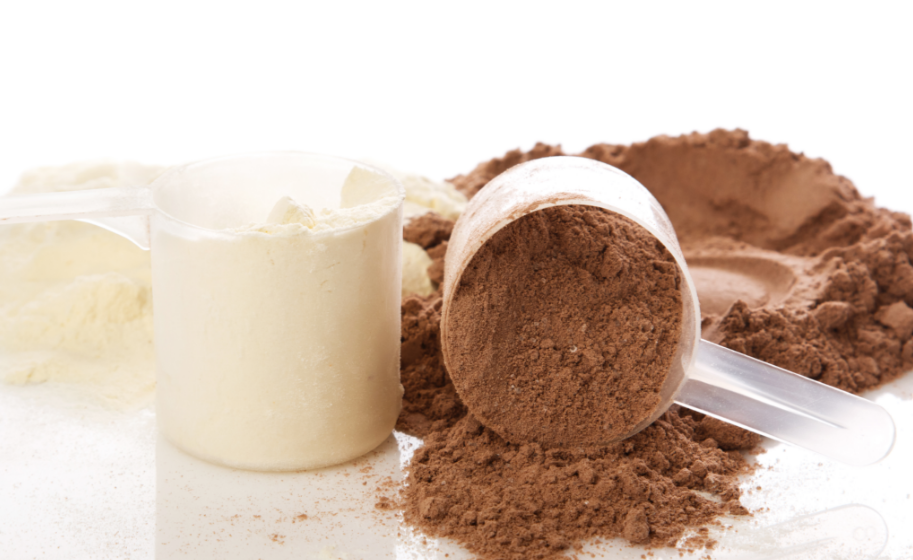
Whey! Eggs! Animal! Vegetable! Now, which one to choose. When it comes to the quality of the protein, it's again about the amount of leucine that the protein source contains. A lot of research has only looked at comparing equal absolute doses of each species. For example, whey protein compared to brown rice protein fared significantly better because it contained more leucine in 20 grams of whey versus 20 grams of brown rice protein, but that doesn't necessarily make it a winner.
If we look at the results of studies that looked at the amount of leucine instead of the amount of protein we find that the activation of muscle building signals was the same between the different types of protein once the 1.8 - 2 grams of leucine level was reached. So if we want to reach this leucine threshold we need to take in 20g of whey protein, 45g of rice protein or 25 grams of pea protein.
But animal protein is better than plant protein, isn't it...?
I'm sure you've also heard that plant proteins are not as usable as animal ones. Proteins are broken down into amino acids in the body, and it is the spectrum of amino acids they contain that sets the different types of protein sources apart. You will already know that there are 20 types of amino acids, and you will also know that we divide them into two groups - the first are the essential ones, i.e. those that the body cannot produce itself and must take them in through the diet, and the second group are the non-essential ones, i.e. those that the body produces itself.
Animal proteins usually contain a fairly balanced ratio of essential amino acids, those that the body cannot synthesise and must take in from food. Unlike plant sources, which have fewer of some essential amino acids. But it is not only the amino acids available from each source that can be compared, but also the other nutrients in the diet. Animal diets contain important vitamins such as iron or vitamin B12, or omega 3 fatty acids, but plant-based diets are not to be dismissed either! For example, demonized soy contains a large amount of arginine, while rice and peas have a fairly balanced amino spectrum. And certainly both groups offer other benefits as well.
It is certainly not possible to state unequivocally that one or the other protein source is better. In the case of a plant-based diet, the sources must be combined to ensure that the full spectrum of amino acids is met. On the other hand, there is certainly no need to condemn plant sources! On the contrary, the diet, and therefore the sources from which we get our protein, should be as varied as possible, and it is highly advisable to combine both plant and animal types of protein.
If you are interested in this topic, check out this article
Do we need to consume protein every 2-3 hours?
You've probably also heard that we should consume protein-containing foods at regular intervals of about two to three hours, especially when we're trying to build muscle. The main effect that this strategy should lead to is called the "muscle full effect" and the originator of this theory is P.J. Atherthon. (We won't go into the details, so we'll explain very briefly and if anyone is interested in the study in more detail here is a link to read it). The creation of this hypothesis led to another one of the quite strange researches, when scientists looked at the activation of muscle building signals in response to protein ingestion. In this research, they administered protein to subjects and concluded that their muscle growth stimulation signals returned to baseline approximately 180 minutes after the subjects consumed the protein.
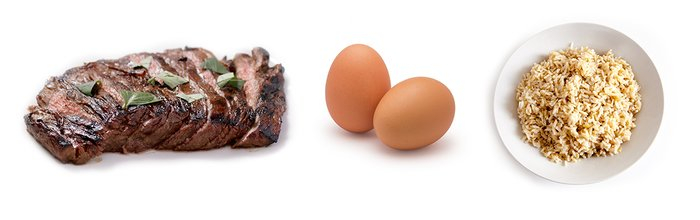
However, there aren't many other studies to confirm this hypothesis. In bodybuilding, eating 6-8 times a day may be a well-established style, but there is no evidence that this strategy leads to demonstrably better muscle-building results or that it somehow significantly increases protein availability in the body. The body does not fundamentally depend on how many meals and when it gets the required caloric (protein) intake, what matters is that it gets it. And it can adapt to the immediate situation. We have already discussed meal frequency in more detail in this article - link.
What about the negative effect on the liver and kidneys?
The myth that higher protein intake is bad for the liver, kidneys and God knows what else will probably never go away. However, a higher protein intake, as long as it is within reasonable limits, i.e. in the range of 1.5g to 3g per kilogram of body weight in the case of top athletes, is not harmful to a person who has both of these organs in order. Yes indeed. In healthy individuals, a high-protein diet has absolutely no negative effect on the kidneys, and the same is true in the case of the liver.
Higher protein intake may indeed slightly increase kidney function, but compared to the work your kidneys normally do every day, this increase is completely negligible. Even research in which subjects were given 3.3 g of protein per kilogram of body weight did not support the hypothesis that increased protein intake would lead to kidney or liver damage. However, such a high protein intake does not confer any benefits and is therefore completely unnecessary for the average athlete. Ideally, we should be in the range of 1.5 - 2.5g per kilogram of body weight.
Recommended

Nebbia Lounge šortky CLUB D’OR 643
Nebbia Crop top tričko GAME ON 610

Nebbia Bezešvá lift-up sportovní podprsenka FLOW SEAMLESS 495
What to take away from the article?
Protein is a topic that is full of myths, half-truths and nonsensical claims, and very often more are added. Yes, we could go on about the effects of meat on the cardiovascular system, osteoporosis, or whether excessive protein consumption leads to weight gain, but that would be a really long article and I dare say it would get boring after a while. Protein is a very important macronutrient, not only when you're trying to build muscle, but also in weight loss and overall healthy eating.
Today we explained some of the statements that are often made around eating them, and hopefully you now know that you don't have to eat just meat but can try plant sources, that your meals can contain more than 30g of protein in a single serving, and that there is no need to be overly worried about eating higher amounts of protein because of the negative effects on your liver and kidneys.
For more articles on protein, click here
Sources:
https://www.ncbi.nlm.nih.gov/pubmed/22150425
https://www.ncbi.nlm.nih.gov/pubmed/23107527
https://www.ncbi.nlm.nih.gov/pubmed/20844073
https://www.ncbi.nlm.nih.gov/pmc/articles/PMC3381813/
https://www.ncbi.nlm.nih.gov/pubmed/26764320
https://jissn.biomedcentral.com/articles/10.1186/s12970-017-0177-8
https://www.ncbi.nlm.nih.gov/pubmed/19056590
https://www.ncbi.nlm.nih.gov/pmc/articles/PMC3197704/
https://www.ncbi.nlm.nih.gov/pubmed/20798660
https://jissn.biomedcentral.com/articles/10.1186/s12970-014-0064-5
http://www.nutritiontactics.com/measure-muscle-protein-synthesis/
https://www.ncbi.nlm.nih.gov/pubmed/20844073
No posts have been made yet.








