The biggest myths that accompany healthy eating, exercise and fat reduction!
 Author:
 In the world of fitness and healthy eating, there are perhaps the most myths we can encounter, which is why it can be confusing for beginners to know what to believe and what advice to follow when starting out. This is compounded by the amount of conflicting information we can find. A list of all the myths we can come across today would be really long, but let's take a look at the most common ones around diet, exercise and healthy lifestyle in general and get a clear picture of what's actually going on!
"You can only eat until 6pm"
This one is my favourite. I guess I'll never understand what this statement is based on - what exactly should happen to the food we ingest after 6pm? Like, a meal that had 650 kcal at 5:30pm would suddenly have 12,000 kcal after 6pm and all the calories would just get stored straight into fat stores? I still don't see how that could happen. Our body is indeed an intelligent "machine", but it really can't perform such miracles. What gets stored in fat stores is what we eat over and above our caloric balance in some longer term, i.e. when we are in caloric surplus, i.e. when our intake EXCEEDS our expenditure.
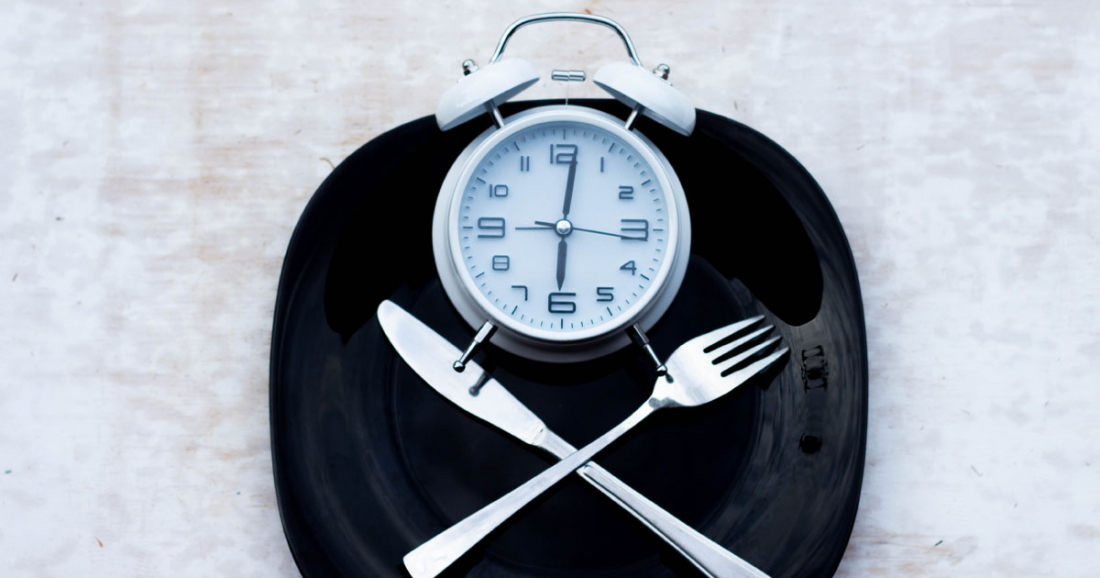
A plate of sweet potatoes and meat will have the same number of calories at lunch, on Tuesday, in the spring, and even after 6pm. Seriously. Whether or not we "can" eat after 6:00pm is jealous of how well we manage to meet our body's energy needs during the day, not what time it is. Unless you go to bed at 8, or follow some form of IF (intermittent fasting) I don't see eating before 6 as a very good idea, even though eating your last meal before bed will be very individual with respect to "sleep comfort". We should not fall asleep too full, but neither with a growling stomach. In conclusion, in short, you really don't need to eat your last meal before six, it is the total daily intake that is the envy, not whether you eat at 6:30pm or 5:55pm.
"If you want to lose weight, you have to eat little"
That in order to lose weight you need to eat little is one of those myths that are simply immortal. And more importantly, it is not based on truth at all. Losing weight is not about eating little, it's about eating right. Yes, a reasonable caloric deficit is necessary for successful weight loss, but it should never be too significant that it makes our bodies starve, as this is not sustainable in the long term and can cause many health negatives. If you want to reduce fat and you are active, you need to give your body enough energy. Starving yourself is not a good way to reduce - in fact, your body will start to build up stores of even the little you take in to ensure it has enough energy to provide basic life functions. Fat reduction starts with adjusting your diet and getting your calorie deficit right.
"The keto diet is the best way to reduce"
Trying to lose weight and looking for the best diet? It's better to eat keto, paleo or low-fat. Various forms of low-carbohydrate eating are now very popular and are often presented as "the best". Carbohydrates are wrongly considered to be a nutritional evil and are attributed all sorts of negatives, both health and appearance related. And that's why many people think the keto diet is the best way to lose weight.
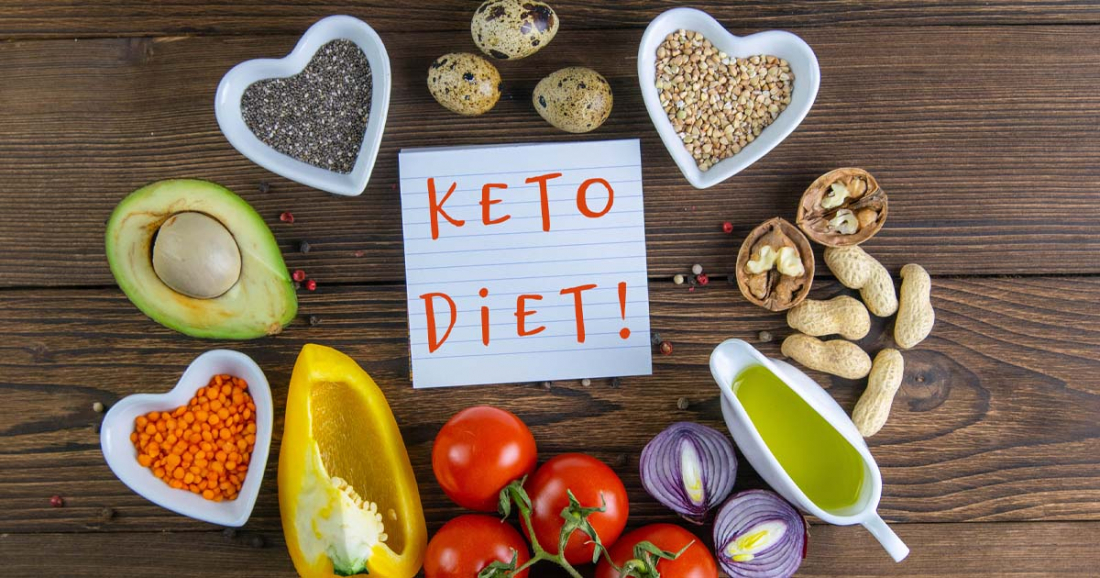
But in reality, it is not. Carbs are not a nutrition demon and can be part of a healthy diet, even when reducing. No diet in the world is the best, well actually it is, and one that will suit you in the long run and give you the results you want. When it comes to reducing, all diets in the world work on the same principle, which is calorie deficit, that is, taking in fewer calories than we expend. Again, I will not forgive myself for commenting that the calorie deficit should be within reasonable limits. Any diet is functional if it meets this principle, and no dietary direction can be described as universally best.
"You must omit salt"
Another common recommendation, not just for weight loss, is to limit or even completely eliminate salt intake. However, sodium is an essential mineral, and an essential mineral at that, which means that the body needs it for vital functions, but at the same time it is not able to produce it on its own, so it must be taken from the diet. Sodium is crucial for the transmission of nerve impulses, proper muscle function, helps regulate blood pressure and also provides better transport of nutrients, so its role in the body is really quite significant.
So the problem is not salt intake per se, the problem only arises when we consume too much salt or not enough. Both extremes, deficiency and excess, cause health problems. But there we go - extremes, not reasonable amounts. For healthy people, salt restriction in the diet makes little sense, indeed it is rather detrimental, precisely because the body cannot produce sodium on its own. Beware, however, of ultra-processed foods, which often contain such doses of salt that it is almost unbelievable.
"If you exercise, you can eat anything and still lose weight"
Another myth that circulates among people is that even a bad diet can be overtrained. But the truth is that if our goal is to lose weight, diet is the most important thing and goes hand in hand with adequate training. The key to a successful reduction is not just exercise, the key is to create a calorie deficit, which we have already discussed in the article. Movement will indeed increase our calorie expenditure, but when our diet is based on two donuts for breakfast, pizza for lunch and a fast food meal for dinner, movement alone will not be enough to reduce our calorie intake.
The assumption that we can just overdo a bad diet is simply wrong. Instead, diet should be the first thing we adjust when trying to reduce fat. Focus on eating real food in the freshest possible and least processed form. Adjust your intake so that your body receives all the important macronutrients, but at the same time the principle of caloric deficit is maintained. Eat enough of all macronutrients and micronutrients, drink plenty, and of course support your fat reduction efforts with appropriate training! But it is definitely not true that training is enough to reduce.
"You need to detoxify"
Detox, that's just classic. Want to lose weight? Detox. You want to firm up your body? Detox. Want to sleep better? Detox! Detox, detox, detox. Sometimes it seems like a detox (especially with a really expensive product) can really work wonders. But you know what? If you own a healthy liver, kidneys, intestines and other organs of the excretory system, I can heartily congratulate you because you are detoxing 24/7 and for free. Yes, really. No miracle teas, pills, juices or God knows what. Plus, if you don't do drugs, aren't an alcoholic, and eat nothing but fast food, then you really don't need any targeted detox.
The best detox is a healthy diet, adequate sleep (both quality and quantity), regular exercise, fresh air, mental well-being and plenty of water. Products designed for detoxification may actually do more harm than good. The significant restriction of caloric intake that often accompanies detox is stressful for the body (careful not to confuse this with targeted and premeditated fasts, please) and although you may lose weight at first glance through a detox programme, it is really just water off the body and once you start eating again you will gain it right back (and maybe a little extra). If you invest in a detox product, then you will get detoxification, but in a different place than you might want, namely your wallet.
Recommended
"You have to eat every two hours or your metabolism will slow down"
Another very common statement is that if you eat more often in a day, you force your metabolism to keep working, ensuring that it runs faster and you burn more calories per day as a result. The body actually releases a certain amount of calories during digestion, which is referred to as the thermic effect of food (TEF). On average, about 10% of your total calorie intake is burned as TEF and it will be the same whether you eat 3 times a day or 6 times a day. Studies suggest that frequency of eating does not have as significant an effect on metabolism as originally hypothesized. So if you're sick of eating every two hours, or your job, daily routine, or whatever else simply doesn't allow it, you don't have to worry about a slowed metabolism.

Eating frequency is a less important factor for most people, and one that they don't have to worry too much about. Yes, high frequency eating offers benefits in stimulating muscle growth, but even so, there's no need to break it over your knee. In short, if you're comfortable eating 3 times a day larger meals and you do it regularly, it's just as fine as eating 6 smaller meals. Each of us will suit something a little different, so there simply isn't a universally valid ideal number of meals per day.
"If you want to lose weight, you have to do a bunch of cardio"
This myth is especially prevalent among women who spend often up to hours doing boring cardio in a consistent load, such as walking on a treadmill, orbitrack or stationary bike. I am not at all denigrating these activities, on the contrary, doing them is a very effective support for the cardiovascular system and overall physical fitness. However, when it comes to weight reduction, we could definitely find more suitable activities. The problem with long cardio in a consistent load is that the body adapts very quickly to a unilateral load, and if you still want to observe the effects, you will have no choice but to extend the time you perform the movement.
But that's not very convenient, and it doesn't go on indefinitely. Instead, try some more intense activities that you don't have to spend as much time on, but are still as effective as possible. Strength training, tabata or HIIT. These are high frequency activities that will give you a good workout and have a high afterburn effect, which means that they will boost your metabolism for a long time after you finish them, which cardio does not do in a consistent load. The key to getting a higher burn effect even after you've finished training is simple - train at a high enough intensity. The afterburn effect after traditional cardio for long periods of time at a consistent load is very small compared to what such HIIT, sprints, or strength training can do. In general, the more intense the exercise, the greater the afterburn effect will be after the activity is over. However, the length of time our burn will be higher and the amount of calories we burn over and above the workout due to the afterburn effect is highly individual - it will depend on gender, weight, proportion of muscle and fat tissue, stress, diet, length, form and intensity of the workout and so on.

"If nothing hurts after a workout, you're exercising wrong"
No, that's not true either. You may have coined the slogan "no pain, no gain" or "what hurts, grows" when you were starting out, but pain has nothing to do with muscle growth. During physical exercise, microscopic tears occur in the muscle fibers, which are then rebuilt, causing the muscles to grow and become bigger and stronger. And it is this recovery that allows them to handle further workouts more easily. This process also involves the development of minor inflammation. Muscle pain arises precisely as a result of microscopic tears in the muscles that form during movement and is not an indicator of muscle growth. If we are new to exercise, we are unlikely to avoid this pain, we are simply not used to exercise yet.

However, when our muscles ache after every workout, even if we have been exercising for a long time, we may want to think about whether we are giving our bodies enough rest. Muscle pain is caused by lactic acid build-up in the muscles. The lactic acid molecules break down in the blood and produce hydrogen ions, which lower the pH of the blood - which in turn causes something called metabolic acidosis, which leads to the pain you feel during exercise and subsequently in DOMS (delay onset muscle soreness), which occurs 24 - 48 hours after training. So the key is not to be sore all over your body after every workout. The goal is to load the body regularly from a variety of angles so that the muscles have a stimulus to grow.
"If you work out, your fat will turn into muscle"
Yeah, that statement is a pretty decent hit piece too. It used to even be said that if you wanted to build muscle, you had to first gain fat so that muscle would have something to form from. So what would this transformation look like specifically? No, really. You can't just turn fat into muscle, because we're talking about two completely different tissues and one doesn't build from the other. The human body (unfortunately) really can't perform such miracles. With an optimally set diet and training plan, fat tissue is burned and the amount of it in the body is reduced. On the other hand, if we work out properly, our muscles grow, get stronger and thus the appearance of the figure changes. However, muscles are definitely not formed from body fat. By exercising regularly, we build muscles that need more energy to exist and increase our body's resting energy requirement. A kilo of muscle and a kilo of extra fat weigh the same, but they look completely different, and we can probably agree that a higher proportion of muscle looks better than fat.
What to take away from the article?
There are a lot of fitness myths, and what's worse - year after year, they keep coming back. The truth is that the internet is so overloaded with information that it is sometimes difficult to know what is really useful and what is just "fitness mumbo jumbo". But we try to make it easier for you to navigate and simplify your efforts to lose weight or get fit. Today, we've taken a look together at a cross-section of some of the most popular myths and trite phrases, but to list them all might take an entire book... But feel free to write to us about other myths you've encountered on your journey, or write about what's still unclear to you.
Sources:
Du, M., Yin, J., & Zhu, M. J. (2010). Cellular signaling pathways regulating the initial stage of adipogenesis and marbling of skeletal muscle. Meat science, 86(1), 103-109. https://doi.org/10.1016/j.meatsci.2010.04.027
Frayn K. N. (2010). Fat as a fuel: emerging understanding of the adipose tissue-skeletal muscle axis. Acta physiologica (Oxford, England), 199(4), 509-518. https://doi.org/10.1111/j.1748-1716.2010.02128.x
GOLDNER F., Jr (1957). A review of the transamination reaction and its relationship to acute myocardial infarction. American practitioner and digest of treatment, 8(7), 1041-1045.
Kraschnewski, J. L., Boan, J., Esposito, J., Sherwood, N. E., Lehman, E.. B., Kephart, D. K., & Sciamanna, C. N. (2010). long-term weight loss maintenance in the United States. International journal of obesity (2005), 34(11), 1644-1654. https://doi.org/10.1038/ijo.2010.94
Sedlock, D. A., Lee, M. G., Flynn, M. G., Park, K. S., & Kamimori, G. H. (2010). Excess postexercise oxygen consumption after aerobic exercise training. International journal of sport nutrition and exercise metabolism, 20(4), 336-349. https://doi.org/10.1123/ijsnem.20.4.336
Smeets, A. J., & Westerterp-Plantenga, M. S. (2008). Acute effects on metabolism and appetite profile of one meal difference in the lower range of meal frequency. The British journal of nutrition, 99(6), 1316-1321 https://doi.org/10.1017/S0007114507877646
Speakman, J. R., & Selman, C. (2003). Physical activity and resting metabolic rate. The Proceedings of the Nutrition Society, 62(3), 621-634. https://doi.org/10.1079/PNS2003282
No posts have been made yet.