





Are you on a diet? Great! We've answered 17 of the most common fat loss questions!
 Author:
 Just because we are in the fitness world, we are often asked a lot of questions about weight loss. In today's article we have decided to answer the most common questions about fat reduction. It is clear that there are a lot of questions, but in the vast majority of cases people ask the same questions... We believe that both our regular and future readers will find the answer to their question through this article.
And what questions will we focus on today?
- How do I lose belly weight?
- Shouldn't we detox?
- Without attachments? Can I eat without carbs?
- Cheatday/Passover? Refeed?
- Is HIIT functional?
- Alcohol and partying - is it a problem?
- Fruit after exercise?
- Can I exercise before bed?
- Is sleep important?
- Can I eat dairy products?
- Can I exercise on an empty stomach?
- How long does the diet last?
- We started eating healthy and instead of losing weight I'm gaining weight, why?
- Is gluten evil or not?
- What is the difference between good and bad fats?
- How much water should I drink a day?
- How do I eat if I can't keep up with my diet?
How do I lose weight on my stomach?
First of all, we should realize that exercising the abdomen does not make us lose belly weight! We lose fat on the belly the same way we lose fat on any other part... And how to lose weight healthily? Through diet - or rather through energy intake and output. If our goal is to lose weight, it is clear that our energy intake (food/drink) must be less than our energy output (exercise). However, this is not the whole story. If we set the right daily intake and still decide to exercise only the abdomen, we are making a mistake. The abdominal muscles are the same muscles as, for example, the biceps. Therefore, if we overload this muscle, it will be rather counterproductive - we will overload the abdomen and weaken the other muscles.
It is best to practice more articulated exercises - squats, deadlifts, lunges, push-ups, etc. where we engage more muscle parts. We should remember that our body loses weight "globally" and not just in certain places.
Shouldn't I be detoxing?
First, we should realize that our bodies are cleansing themselves constantly - through our detox organs. If someone thinks they have been living a certain way of life for 40 years, then one day decides to change their life and through miracle detox drinks their body, as if with a wave of a magic wand, changes, their expectations will very soon fail. If we were to talk about a "detox" that is close to us, we would see it through a LONG term healthy lifestyle. If we want to improve our lives and also help our bodies, let's focus on healthy eating, exercise, sleep and relaxation.
Should I eat side dishes?
Yes! Our daily intake must be based on carbohydrates, fats and protein. Therefore, eliminating any ingredient from our meals is not the way to go. It's not about cutting out a side dish, but having an amount that fits into our caloric intake (if we are on a diet).
Cheatday/Refeed?
Cheatday can also be a bit lazily called "piggy". It's a day when we break all our diets and eat whatever we can think of. Generally this day is frowned upon and is more for the weaker individuals. If we want to "sin" it is much better than an all-day cheatday, a so-called cheatmeal, which is one meal in any form.
Quote from our article:
"Refeed can be defined as a relatively short-term period in which we increase our caloric intake in a planned manner. But here's the bottom line - we are only increasing a macronutrient or macronutrients. If we are in a deficit for an extended period of time, we are tired, or our reduction has stalled, let's include a refeed day! But beware, even refeed has its rules."
So there is a really big difference between these terms cheatday, cheatmeal and refeed..
Is HIIT functional?
If we do a certain type of exercise, say for example running, every day at the same time, intensity, running the same distance over the same terrain, our body will get used to this type of load and will need less and less energy (calories) to perform this process. If I incorporate different distances and intensities into my training our body will be constantly shocked and not get used to it as quickly.
A great advantage is just a gym or some kind of gym where we can create countless different types of exercises with different weights and intensities with the equipment. We can help ourselves with a simple "trick" which is interval training - known as HIIT (High-Intensity Interval Training)
So yes, HIIT-style workouts do work.
Alcohol and partying - is it a problem?
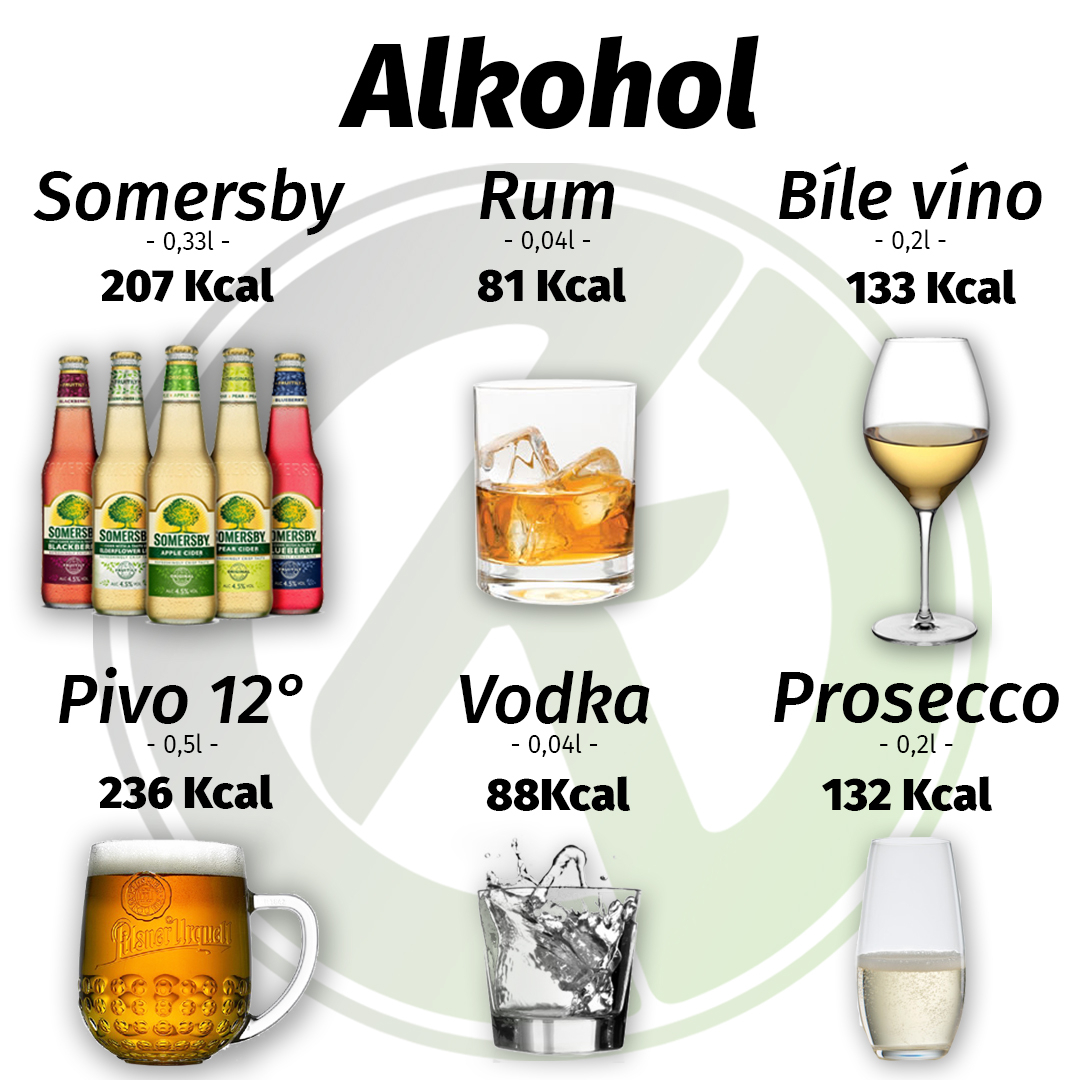
Even though everyone subconsciously suspects the answer, some often try and ask us if alcohol is okay... Distilled spirits should stay behind the store counter during weight loss, but also during a healthy lifestyle. We know that sometimes alcohol cannot be avoided (celebration), so let's remember one thing - the smaller the amount, the better. If we want to compare calories/type of alcohol, we are definitely better off with pure spirits, because we don't drink as much of them as we do with, for example, classic beers.
Fruit after exercise
If we are focused on fat reduction, we should mainly pay attention to protein intake, which is much more important after a workout than carbohydrates. Also important is the fact of an unclogged digestive system after exercise, which is a clear signal not to overdo it with solid food after training.
Can I exercise before bed?
This is a difficult question to answer because it depends on many factors.
1. we are all different, so if it suits one person to train for example in the evening before bed it doesn't mean it has to suit someone else. There are exactly two reasons why we should not exercise before bed - Our central nervous system (CNS) should not be stressed before sleep, you are interfering with recovery during sleep (REM). Our body is "open" to nutrients after exercise, it's good to take advantage of this and replenish them.
What is very important if you decide to exercise before bed - avoid any stimulants (coffee, pre-workout supplements).
Is sleep important?
YES! Here we can immediately say that sleep is really important. It is proven that in susceptible people there is a reduction in active mass (muscle) and an increase in adipose tissue in the case of lack of sleep. And this is even if the other prerequisites for reduction are met! Sleep therefore rapidly affects our results. We recommend sleeping at least 7 - 8,5h a day.
Too much sleep can be just as bad as not enough.

Are dairy products okay?
We often hear that people are trying to eliminate almost every food from their diet. However, dairy products contain excellent nutritional richness that there is no need to run away from. They are highly satiating, contain a lot of protein and taste great. Plus, dairy products are very accessible and affordable.
It's not that dairy makes us fat, we'll repeat ourselves again - it's just that it's about a set daily calorie intake that needs to be lower than your output if fat reduction is our goal.
Can I work out fasted?
Our article shows that it is more about subjective feelings. Some people may be comfortable exercising on an empty stomach, others may not. Obviously, if I eat breakfast and then go for a hard workout, it will do me more harm than good - I might throw up... In general, the rule is that you shouldn't eat before training. Blood from the stomach moves to the muscles during training, which need more of it and so the body has a harder time digesting it.
How long does the diet last?
We should remember that if we have been eating and living a certain type of life for X years, we can't expect anything to change in a few weeks. It's a long run... Usually it's very important to get everything straight in our heads, because if the diet works and we go back to our original way of life, the diet was completely useless. Therefore, it is much better to realize that by dieting we have not only started a new eating phase, but also a lifestyle that can change a lot for us.
We started eating healthy and instead of losing weight we are gaining weight, why?
This undesirable phenomenon is quite common. You could say that it is an indicator of how much in bad shape our body is. Definitely don't hang your head, this condition is not infinite. What we would advise you - persevere and rather than watching the numbers on the scale, check your batch measurements with measurements. What is also very important - let's observe ourselves, let's take a photo in front of it, because it is the best for comparison. It may be muscle gain and not fat gain!
Lepek is evil, isn't it?
If you are not a gluten intolerant or allergic person, you don't have to worry. Gluten is currently the most demonized ingredient in all of dietetics. Above all, we should watch the overall properties, composition and production of the food. The problem with gluten that we would like to point out is not gluten itself, but the fact that it appears in the vast majority of foods that are commonly consumed. And as the saying goes, too much is too much. Therefore, rather than eliminating gluten from the diet, we recommend reading the ingredients of products correctly and carefully so that we know what we are consuming.
What is the difference between good and bad fats?
The most basic division of fats according to their nature is into saturated fats, trans fats and unsaturated fats. Virtually all types of fat, except trans fats, have their own importance and cannot be described as downright bad. In fact, it is always the overall fat profile that matters rather than claiming that this or that food contains "good" or "bad" fat.
Trans fats, the only fats that are not really beneficial, are commonly found in fried foods, fast foods, sweets and other foods prepared with overcooked fat.
How much water should I drink a day?
Although it may seem like a trivial matter, we should remember that our body is made up of 55-60% water! Therefore, we should definitely follow a drinking regime! At least 40ml/kg of active mass. However, this figure is for MINIMUM intake, so if we know we are planning some physical activity, our intake should definitely increase. At least to 65ml/kg!
How do I eat if I can't keep up with my diet?
There is a simple answer to this. Those who are prepared are not surprised! Therefore, if we say we didn't eat anything all day because we didn't expect to have access to food, it's just a silly excuse from us. A healthy lifestyle, fitness life, and even weight loss is mostly associated with boxes. It means preparing your food for the whole next day. We know that this can be very time consuming for some people, but we should remember that we are doing it for ourselves and not for someone else... If we know that we are really going to be somewhere where we won't be able to eat even the food from the box - work meetings, meetings, theatre, cinema,... We would recommend protein biscuits, for example, which could help us in moments of hunger.
However, we should be careful about what kind of protein biscuit we buy . Just because the packaging says "Protein Bar" doesn't mean there's anything healthy inside.
Recommended
Extrifit Carni Liquid 120000mg
Nutrend Carnitine 100000
No posts have been made yet.








