





What is the "after-burn" effect? Or - training is not the end of calorie burning!
 Author:
 The after-burn effect, simply put, is the effect of burning calories after the activity is over, so it basically represents the calories you burn not during the workout, but just after it is over. A lot of people pay attention to the amount of calories they burn while running, cycling, swimming or lifting weights in the gym, in short, during a workout, but the most important thing happens essentially after the activity is over.
This is due to the fact that our bodies use more energy (calories) after certain activities to help us recover faster, cool down and deal with the hormonal changes that the type of exercise caused. The scientific name for this afterburn effect is excessive post-exercise oxygen consumption (EPOC) EPOC, or post-exercise oxygen consumption, is the process by which the body compensates for the deficit (lack) of oxygen and the disruption of homeostasis (stable resting state) of the human body caused by training.
Article content:
- Theoretical window, or what is the after-burn effect?
- Take advantage of the afterburn effect to burn more!
- The three best ways to increase training intensity
- What to take away from the article?

A theoretical window, or what is the after-burn effect?
The key to achieving the afterburn effect of higher burning even after you've finished training is basically simple - train at a high enough intensity. The afterburn effect after traditional cardio for a long time at a consistent load is very small compared to what such HIIT, sprints or strength training can do. If your goal is to reduce fat stores, build muscle mass, improve your cardiovascular health and at the same time you don't want to spend hours doing boring cardio, then you have surely already discovered the magic of high intensity interval training ideally combined with something strength based.The benefit of high intensity interval training - HIIT, is increased strength, speed, endurance and better fat burning, all in a way that cardio during low frequency cardio can never really produce.
In general, the more intense the exercise, the greater the afterburn effect will be after the activity is over.This means that a workout that lasts 20 minutes and includes some form of high and low intensity intervals, such as sprinting for 30 seconds and 90 second intervals as well as lower intensity intervals for 10 rounds, will have a greater afterburn effect compared to steady state exercise such as a regular run for 30 minutes. Then strength training offers an even more pronounced effect, especially for some people.
How many more calories can you actually burn due to the afterburn effect? It's really hard to just shoot off a number from the hip, because every person is an individual and everyone responds to high intensity exercise in a different way and everyone performs it at a different intensity. Factors such as age, weight, gender, muscle to fat mass ratio, length and intensity of training and potentially frequency of training need to be taken into account . Almost all aspects of training - from the number of reps and sets completed, rest periods between sets, intensity, speed, length of training, types of movements performed and a person's heart rate - can influence how pronounced the afterburn effect will subsequently be.
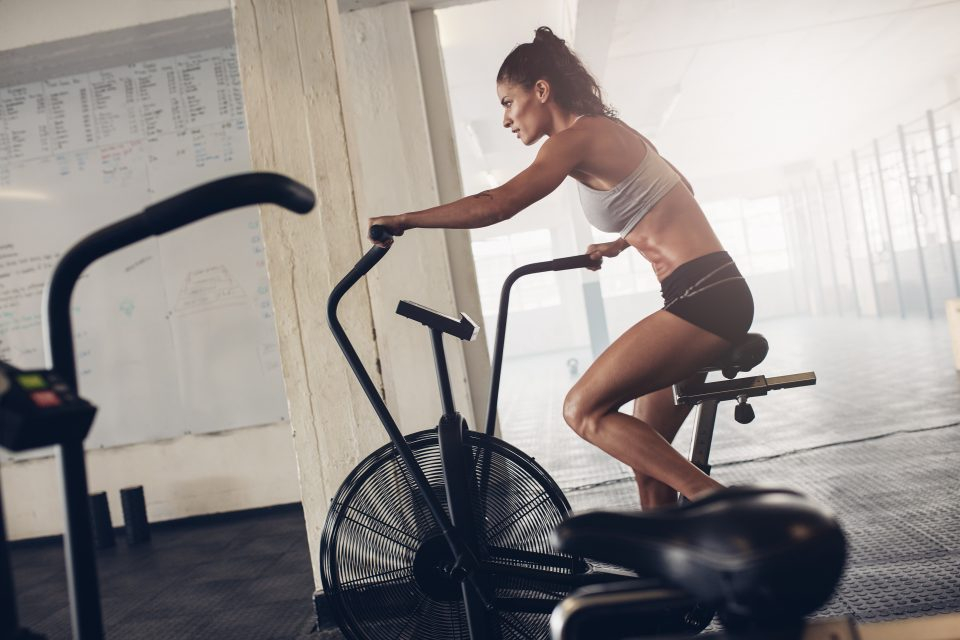
That being said, a study published in the Journal of Exercise Science showed that the afterburn effect is associated with an increase in metabolism due to the thermic effect of activity, regardless of your current fitness level - and some experts believe this may mean that the afterburn effect can occur after as little as 20 minutes of high-intensity exercise. According to the study , you can burn up to 10-15% more calories per day. In other words, if you normally burn 2,000 Kcal, you could end up burning up to 2,200-2,300 Kcal thanks to the afterburn effect. It is believed that well-trained individuals have a faster return of metabolism to resting levels after exercise.
High-intensity exercise, such as HIIT or strength training, increases your metabolism - in other words, they increase your total energy expenditure, which is the amount of calories your body needs to create energy. You can think of energy expenditure as both the amount of energy a person uses throughout the day doing all the normal activities, whether it's walking, showering, or even sitting in front of the TV. But we all use energy in the form of calories to carry out normal bodily functions as well, including breathing, sitting, sleeping, digesting food, and energy is also used by our heart when it pumps blood - so most of our energy expenditure takes place without us noticing or making any extra effort.
Finally, there's exercise, which will also significantly affect our expenditure. In the case of exercise, we are obviously aware of our energy expenditure and make a significant effort that will increase the amount of calories burned. But training is not usually the end of the energy expenditure. The burning continues even after the training is over, and in a way that we may not even be aware of it. Of course, it depends on the form of exercise you engage in - or not all activities have the same afterburn effect. After intense strength or interval training , the body has to expend more energy to replenish oxygen stores and ensure optimal recovery processes than is the case with consistent types of cardio.

Technically, afterburn, the amount of calories burned after exercise, is just that, "excess post-exercise oxygen consumption" or EPOC. Evidence suggests an exponential relationship between exercise intensity and the magnitude of EPOC. The term EPOC actually describes the fact that at higher exercise intensities, oxygen uptake is not proportional to heat expenditure. In other words, EPOC results in a so-called oxygen debt because this is how the body recovers after strenuous exercise and brings the organs, heart and hormones back to a resting state.
Oxygen debt is part of the afterburn effect because in order for all of these processes to take place, the body must expend energy. In fact, the process of normalizing metabolism and establishing homeostasis can take up to 3 days after an intense workout. However, the length of this process depends significantly on the intensity, intensity, duration of the workout and the training adaptation of the individual. It reaches a peak within one hour of training and then decreases.
However, oxygen consumption is far from the only thing that affects the final afterburn effect. The processes related to lactate production, the hypertrophy process or building muscle mass also play a role . Simply put - if we train intensively, there is a load. Lactate is subsequently formed in the muscles, which is responsible for their pain. Through training , microscopic tears occur that need to be regenerated. In the process, the body breaks down amino acids (proteins) in the muscles and then rebuilds them - this process also requires energy. Regular intense exercise also naturally increases testosterone levels, which can potentially lead to higher muscle gains. Breaking down and rebuilding muscle protein to strengthen and grow muscle is then another process that increases energy expenditure.
Take advantage of the afterburn effect to burn more!
The days when long cardio at a consistent load was considered the best way to burn fat, and therefore the best path to better body composition, are probably over. In recent years, the exact opposite strategy has been winning out. New research suggests that high-intensity activities are a much better option for burning fat, but there's no need to condemn the classic methods either. The ideal is to have a workout that is sufficiently variable - i.e. choose a combination of strength training, HIIT and endurance activities.

In aerobic exercise , muscles primarily use glucose (sugar) for energy production. However, due to the more strenuous exercise, over the longer period of time required for optimal recovery described above, the body also makes significant use of fatty acids in addition to glucose. This means that at the same time you are burning more fat, you are also building more muscle mass. This is a very valuable phenomenon, because you know that muscle mass at rest uses much more energy than the fat part at rest. How often to train to get the most out of the afterburn effect? That depends primarily on. How intense your workouts are.
The three best ways to increase the intensity of your workouts
1.Rowing, static bike, stepper in the form of hiit
Instead of performing long boring cardio at a constant pace for say an hour, cut the time in half and increase the intensity with intervals (HIIT). High-intensity interval training combines short, intense stretches of maximum-load exercise with slow phases designed for recovery.These intervals are repeated during one short session for an ideal time frame of 15 to 20 minutes maximum. The intense stretches are performed at a maximum heart rate of 85 to 100 percent, not 50 to 70 percent as is roughly the average level for performing consistent activity. Start on longer rest periods and shorten them - the shorter the rest period after the intense portion, the more challenging your workout will be. However, bear in mind that you need to adjust the time to suit this and a maximum of 15 - 20 minutes is really enough.
2. Strength training
Strength training has a very significant afterburn effect if it is intense enough. So if you want to intensify your strength training a bit more, throw in some circuits or a superset. A superseries is a training method where you do a series of one exercise on a specific area and without pause do a series of another exercise, either on the same area again or on a different area. An example might be pulley tents fortriceps + biceps lifts. The ideal is to use opposing parts, so while one is "having a day off" the other is working and vice versa. As mentioned, the after-burn effect after strength training is quite pronounced, so strength training can be (somewhat surprisingly to many) a very good way to burn fat.
3. Sprints
Sprints are probably the most popular way to practice HIIT and achieve high afterburn effects. We're working from the same theory as with rowing and the static bike. During the intense part, you should be really hard on yourself and literally run for your life! Try to start sprinting for a total of 10-15 minutes, applying 90 second intervals. This means that you will sprint intensely for 30 seconds and then trot lightly for one minute. Repeat the cycles until you reach the 15 minute mark or until you feel too tired. You can run sprints outside or at the gym, where you are simply more comfortable.

If you're going to do HIIT for the first time, choose a shorter workout, perhaps 10 minutes, and use an activity you enjoy, such as running (either outdoors or on a treadmill) or perhaps cycling. No matter how fit you are, HIIT should never be done every day as it can increase the risk of injury and overtraining. It has the best effect when you include it with strength training about 2-3 times a week.
What to take away from the article?
Today we talked about the fact that training is far from the end of calorie burning! If you choose the right activities, you can take advantage of the so-called afterburn effect and increase the amount of calories burned by up to 10-15% per day, which is definitely not a negligible amount. The afterburn effect occurs in response to intense exercise, which is ideally strength training, HIIT, or a combination of the two. The EPOC value is important in this respect, as it is most influenced by the duration, type and intensity of physical activity. It is highly advisable to combine activities in different ways to achieve optimal use of the afterburn effect.
Recommended
Nutrend Carnitine 100000
Amix Isoprime CFM
Amix ThermoCore 2.0
Extrifit Carnifresh
Sources:
Boutcher SH. High-intensity intermittent exercise and fat loss. J Obes. 2011;2011:868305. doi:10.1155/2011/868305
https://www.ncbi.nlm.nih.gov/pubmed/25459232
https://www.ncbi.nlm.nih.gov/pubmed/20739722
https://www.ncbi.nlm.nih.gov/pubmed/17101527
https://www.ncbi.nlm.nih.gov/pubmed/14692598
https://www.ncbi.nlm.nih.gov/pubmed/17879880
https://www.ncbi.nlm.nih.gov/pubmed/30534084
https://www.ncbi.nlm.nih.gov/pubmed/7934767
https://www.sciencedirect.com/science/article/pii/S0305417917304527
https://www.ncbi.nlm.nih.gov/pubmed/23511288
https://www.precor.com/en/resources/coaching-centre/afterburn-effect-understanding-science-epoc
No posts have been made yet.








