





Be Unstoppable: 5 Training Methods for Resilience
 Author: Šárka Randáčková
 Get stronger, bigger and more injury-resistant with these five training strategies!
Training Strategies for an Injury Resistant Body
Committing to training requires you to be able to overcome exhaustion, pain, and lack of motivation. Only then will your work bear fruit. It also takes an extreme amount of determination. Otherwise, you won't be able to stick with the training long enough to see any reasonable results.
Commitment to training is not for everyone. But if you are, you wouldn't change. Dedication is also a grueling process that needs to be optimized. It will prevent injuries.
Here are 5 ways to desensitize your body and make your workouts significantly more effective.
1. Add deload weeks
Many people toil endlessly. This leads to long periods of stagnation, constant illness, or even dropping out of training. The smart exerciser incorporates deload every 6-12 weeks.
Even a slight reduction in work volume can help dramatically. Often even you can leave the intensity high. You'll be amazed at how much you improve in the week after deload.
2. Isolated exercises for resistance
These exercises improve tissue health and resilience. Exercisers usually focus on exercises that make them bigger and stronger, such as squats, benches, and deadlifts. What's the problem? Not enough work for the supporting muscles and tendons.
Sometimes it's about working on mobility, but mostly it's about loading tendons and tissues. A good example is rotator cuff strengthening and shoulder mobility exercises. This is essential for those who do heavy bench presses.
3. Include exercises on one leg
It's hard to load up on these, which is why they're not exactly popular with ego maniacs.

Many people think that exercises on one leg will not bring noticeable strength or growth. They are wrong. Working on one leg is joint-friendly and develops the strength and balance you'll need for larger, bilateral exercises. A few exercises added to your workout can bring athletic longevity as well as improved performance. Try this:
4. Train at different angles
Most classical exercises take place in the sagittal plane, which divides the body into right and left sides. Our exercises then usually take place directly behind the nose, or vice versa.
This can be a problem because our joints, muscles and support structures are designed to function in different planes and directions. We are creatures of many directions.
Therefore, incorporating exercises that work in multiple planes is a good idea if you care about connective tissue support and injury prevention. Training in different planes will also improve your strength for exercises in the most important plane, the sagittal plane. Try this:
5. Include a touch of plyometrics
A lot of people don't see themselves as jumpers, so they dismiss plyometrics. Why do I like to include a bit of explosive work? It can improve power, strength, and explosiveness, which translates to better performance in basic exercises.
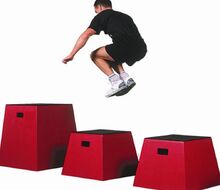
It's also a good way to prepare for heavy weights and will help prevent tears and strains in the quadriceps, hamstrings or pectoral muscles that can occur during heavy training.
The overload that plyometrics bring to the muscles, tendons and supporting structures will be essential for your next attempt at max. If you don't have much experience with plyometrics, start with this:
Recommended


Czech Virus Super Greens Pro V2.0

Nebbia Sportovní podprsenka se střední oporou ICONIC 230

Nebbia Deni x NEBBIA Fitness tracktop na zip 314
Source: www.t-nation.com - Be Unstoppable: 5 Workout Strategies for Resilience
Author: Dr Tim DiFrancesco
Translated by Jaromír Uhlíř
Author: Šárka Randáčková No posts have been made yet.








