





Anatomy of the Human Body - Posterior thigh muscles (hamstrings)
 Author:
 Often we see that an article mentions a muscle, but not every reader knows what muscle it is. Based on this, we have decided to create a series of articles in which we will discuss the basic anatomy of the human body and introduce the muscles in more detail. Among other things, we will also show you which exercises to use to exercise a given muscle part correctly and, conversely, which exercises to avoid.
The first two parts we decided to devote to perhaps the most famous muscles of all - triceps and biceps. Then followed the front pectoralis anterior, large pectoral,deltoid, trapezius, rectus abdominis,large gluteus maximus, small + medium gluteus maximus, and in this article we will focus on the back thigh muscles (biceps femoris, hamstrings, and semi-gluteus)!
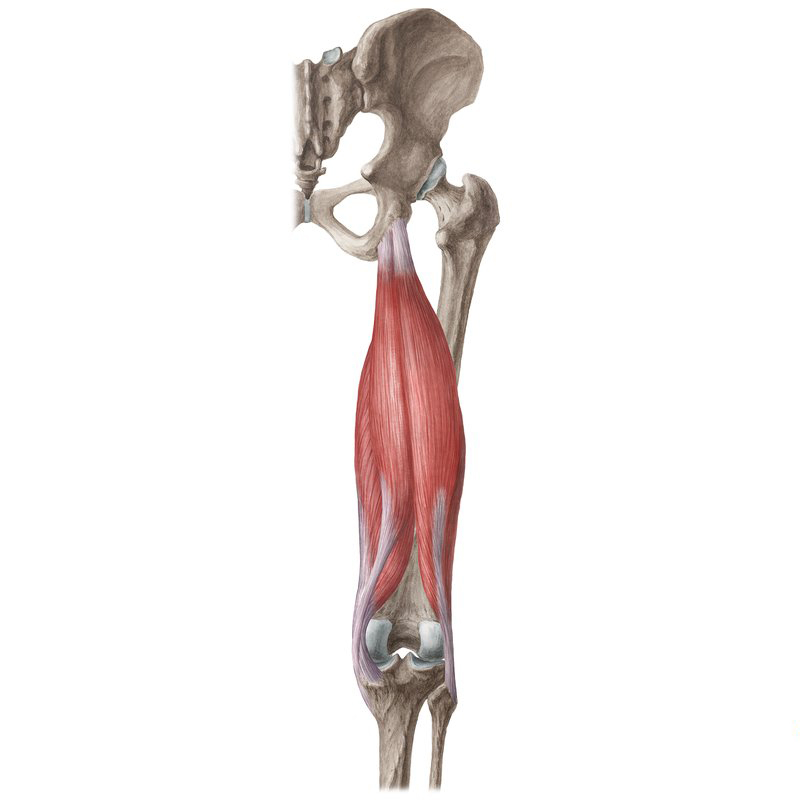
Hamstrings / posterior thigh muscles
Although many people know the muscles of the back of the thigh as hamstrings, their English name is completely different. This muscle group that forms the back of the thigh includes: the hamstrings, the hamstrings and the hamstrings. The flexion of the tibia at the knee joint is the main function that these muscles have. Their secondary function is then extension at the hip joint, which they perform in cooperation with the gluteus maximus.
- The biceps femoris has two heads - the long head starts at the ischial tuberosity of the pelvis and the short head at the lower half of the femoral body. The two muscles join and attach to the head of the fibula.
- The semilunar muscle begins on the ischial tuberosity of the pelvic bone and attaches with a long tendon to the inner surface of the upper body of the tibia.
- The semilunar muscle also begins on the ischial tuberosity of the pelvis and attaches mainly to the medial condyle of the tibia.
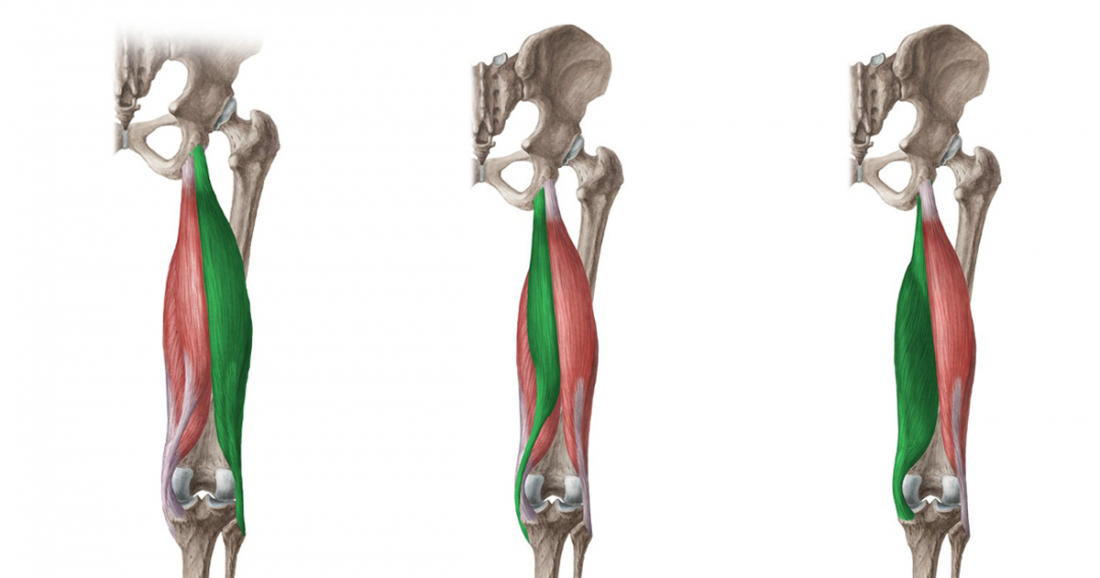
The biceps femoris, the semi-tendinous muscle and the semi-femoral muscle
"All three flexors of the tibia begin at the ischial tuberosity. When we sit on the edge of a chair, we can feel the chair pressing into these muscles just in front of the sit bones. They are responsible for tightness in the back of the lower limbs, which makes it difficult for many people to sit on the floor with their lower limbs extended in front of them, or to touch their toes. All three muscles cross the back of the knee joint and attach to the bones of the tibia - two to the tibia and one to the fibula. You can feel the two tendons that attach to the tibia on the back inside of the knee, and you can feel the tendon that attaches to the fibula on the back outside of the knee." -quotes from Anatomy of the Body and Motion (Theodore Dimon, Jr.)
What to avoid when exercising the posterior thigh muscles:
We asked Robert Humpal of Supertrener.cz again
If the back thigh muscles are lagging, I would train them at the beginning of the leg workout, or separate them from the quadriceps workout. Care should be taken to properly execute and engage the hamstrings. In addition to RDL, I would use RP (rest pauses) for exercises like stumbling.
Basic exercises to strengthen the back thigh muscles:
Romanian deadlift
Burying
You can find more exercises to develop your hamstrings in our section - Exercise Database.
Sources: image - Kenhub.com, Anatomy of the Body and Movement (Theodore Dimon, Jr.)
No posts have been made yet.








