Which foods contain the most healthy fats?
 Author:
 Fats used to be the bane of a healthy diet and their intake was radically restricted. It was claimed that a low-carbohydrate diet was the key to getting the slim dream figure and that eating fat led to fat storage. Fortunately, thanks to modern research, ample evidence has emerged against this claim and the irreplaceable role of adequate fat intake in the diet has been confirmed.
Fats are involved in a number of bodily processes and are important for the absorption of certain vitamins, for example. Not so long ago, fats were dethroned from their position as the biggest demon of the diet by carbohydrates, and various forms of diet based on the consumption of a higher proportion of fats have become very popular. Today, let's look at fats a little more closely and introduce the sources that are considered the most beneficial ever and should be part of everyone's diet!
Article content:
- Theoretical window - what are fats and what is their role?
- Good and bad, or just fats?
- How much fat a day should we take in and what forms are best?
- What to take away from the article
Theoretical window - what are fats and what is their role?
Fats are an integral part of a healthy diet and provide the body with an important source of energy. Fats are necessary for the body to absorb certain vitamins (A,D,E,K), form the basis of cell membranes, are essential for proper brain function, increase satiety, regulate body temperature and are involved in many other processes. Fats, in short, along with the other two macronutrients, are essential for overall health. Some fats (especially omega-3 fatty acids) also have anti-inflammatory properties. However, not all types are equally beneficial and excessive consumption of certain types of fat can lead to weight gain to obesity, raise LDL cholesterol levels and contribute to the development of heart disease.
Good and bad, or just fats?
Very often, you may come across the idea that there are some good and bad fats. But this is not entirely true. Of course, there is no fat like fat, and even in the case of this macronutrient there are suitable and less suitable variants. Almost all types of fat have their place in the body (except trans fats) and cannot be described as downright unhealthy. Moreover - it is not for nothing that it is said that the difference between medicine and poison is always only in the quantity. And this is also true for food, because even the healthiest food can be unhealthy if we simply consume too much of it. This is also true of fat, even the healthiest fat can be "bad" if we consume too much of it. It always depends on the amount and the overall fat profile.
The simplest division of fats is into vegetable and animal fats. Vegetable fats should dominate the diet, at least in a 2:1 ratio. We can further divide fats according to their nature into saturated fats, trans fats and unsaturated fats, which are further divided into monounsaturated and polyunsaturated fats, among which we can also find essential fatty acids, which have been very much in the news lately. We won't go into detail, but if you are interested in the different groups of fats, you can read the article in the link below.
In general, fats found naturally in various foods are much more beneficial to health than those found in ultra-processed foods, which are often supplemented with refined sugars and other substances that add to their negative health effects. We should limit refined vegetable oils, processed meats, convenience foods, instant foods, fast foods, sweets and various bakery products in our diets. Conversely, the key to ensuring adequate intake of the right fats that are beneficial to health is to consume a balanced, varied, and high-quality diet. Our diet should include plenty of fresh, minimally processed foods.
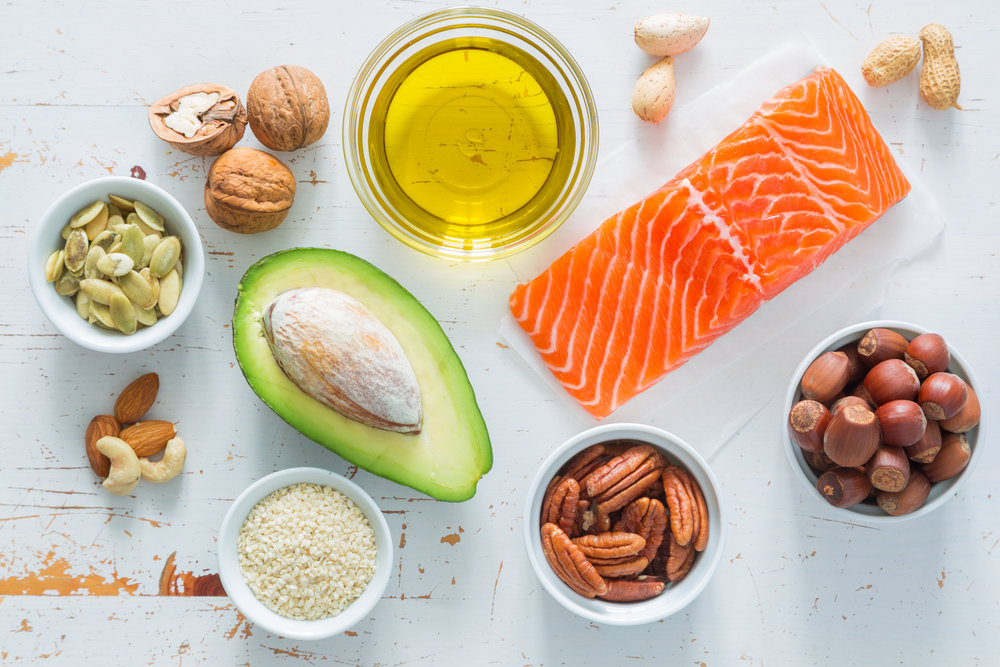
Let's take a look together at 7 foods that are rich in healthy fats and should not be missing from our diet. However, it should be noted right from the start that although the foods listed below are healthy, they are very calorie dense and therefore it does not mean that we can eat unlimited amounts of them. At the same time, I would like to add that the mentioned foods are not the only ones that contain healthy fats, but to list them all would make a thick book.
1. Avocados
Avocado is a fruit that is very rich in fats and its fats are among the most beneficial ever. Avocados contain monounsaturated fats, which can have a positive effect on raising good cholesterol levels while helping to lower bad cholesterol levels. Avocados are also a rich source of vitamin E, which acts as a powerful antioxidant and is very effective in fighting free radicals. It also helps to strengthen the immune system and helps the skin maintain a youthful appearance.
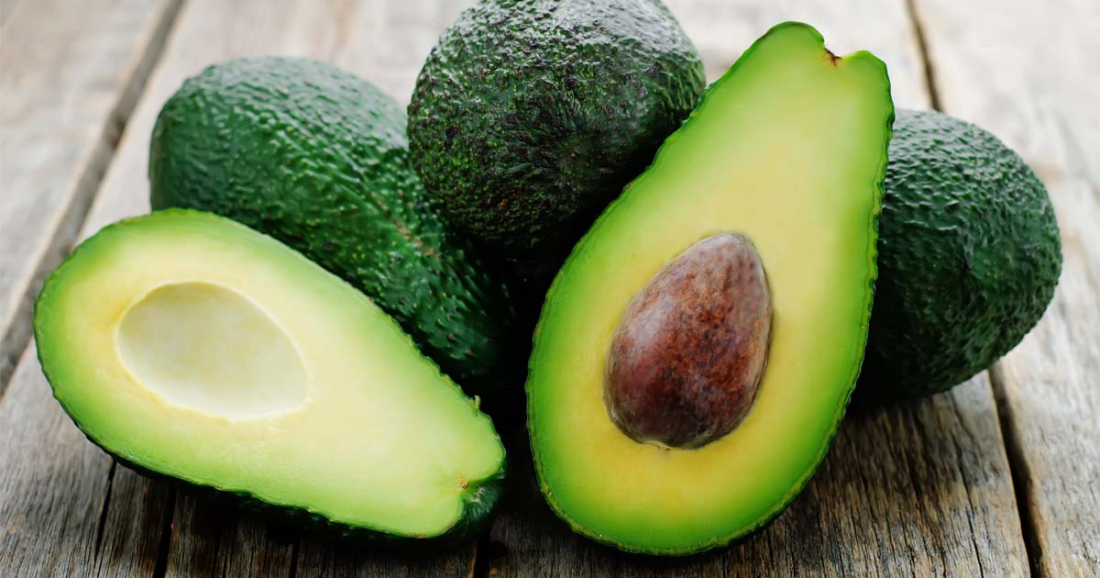
To make matters worse, for being a fruit, avocados also contain a fair amount of protein. Avocados are a superfood for pregnant women because they are rich in folate (folic acid), a very important nutrient that affects the proper development of the fetus and sufficient intake is important as a prevention against birth defects. Although it is a very caloric food, avocados are beneficial even when reducing weight (in reasonable amounts, of course).
Avocado has a creamy, specific and not very distinctive taste. It is widely used in the kitchen. It can be used to make such delicacies as pasta sauce, pesto, baked with an egg, simply chopped into a salad or made into a good spread. If you don't like the taste, don't despair - you can also use avocado oil, which is considered one of the best fats for cooking because it has a high smoke point. However, you can also use it in cold cooking because it remains liquid at room temperature.
2. Fatty fish
Fatty fish such as salmon, sardines, mackerel or anchovies are rich sources of omega-3 fatty acids, which are very beneficial for health. We dedicated a very comprehensive article to these beneficial fats quite recently, so you probably already know a lot about them. Omega-3s are considered essential fatty acids because the body cannot make them on its own, which means we need to ensure we get enough of them through diet or supplements. There are three different types of omega-3 fatty acids: ALA (alpha-linolenic acid), DHA (docosahexaenoic acid) and EPA (eicosapentaenoic acid). However, EPA and DHA are of the greatest importance to the body and are found in large quantities in animal sources. Salmon, anchovies and sardines are among the best sources of these beneficial fats.
If oily fish is not a regular part of your diet, definitely consider including fish oil, krill oil, cod liver oil or a vegetarian alternative (algae oil) in your supplementation. These supplements can help provide the body with omega-3 fatty acids, which are essential for good health.
3. Eggs
Eggs used to be considered unhealthy - especially the yolk part. The cholesterol that eggs contain was thought to be harmful to health. But modern research has brought light to this area as well and we now know that eggs are not unhealthy, but instead are considered a superfood. In fact, eating eggs can even lower LDL cholesterol levels while promoting heart health. The choline found in eggs also helps keep our brains in tip-top shape. Eggs have a high biological value and are rich in protein and fat.

So it is no longer true that only egg whites can be consumed, but yolks should also have a place in our diet. Egg yolks are full of nutrients (for example, they contain a good amount of vitamin D) and healthy fats. To reap the full benefits of eggs, you should consume them whole. In addition, eating eggs regularly can reduce the risk of developing metabolic syndrome and can help lower blood sugar levels. Ideally, choose free-range eggs, which have been shown to contain a higher proportion of healthy fats and have more omega-3 fatty acids.
4. Nuts and seeds
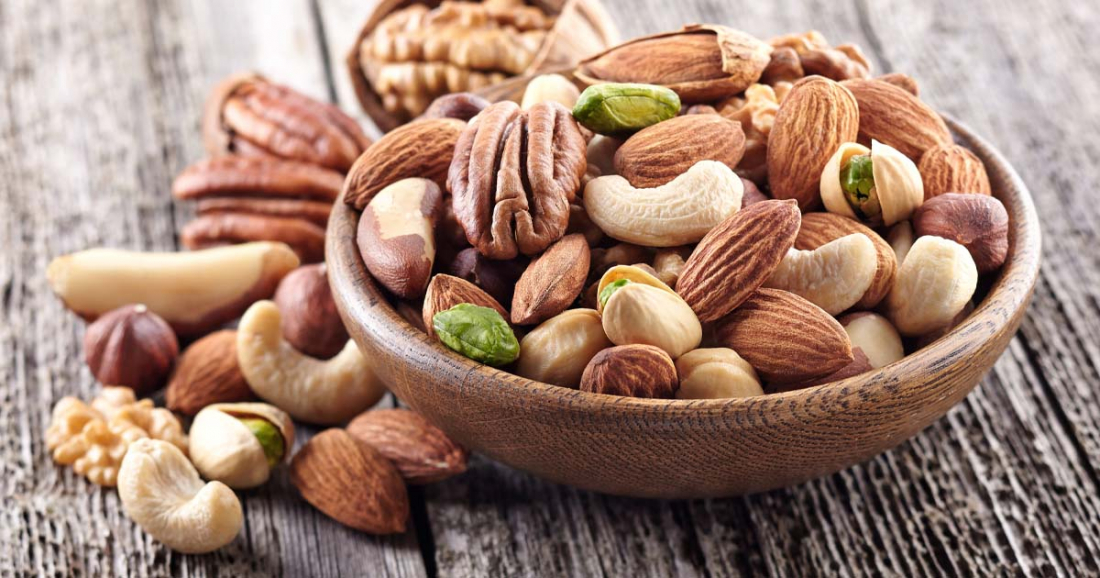
Nuts and seeds are other sources of fat that are very popular! As well as being a great source of healthy fats, nuts and seeds offer a number of other benefits for our bodies. Depending on the type, they also contain a lot of micronutrients and fibre. Eating them regularly can help to lower LDL (bad) cholesterol and keep arteries and veins in good condition, which helps to boost heart health. Like other omega-3 rich foods, nuts and seeds are also considered brain-boosting foods and some species have even been shown to have a positive effect in treating depression and anxiety conditions.
Each species contains slightly different substances and a different ratio of fats, so it pays to have different types of nuts in your diet. Walnuts, for example, are rich in omega-3 fatty acids, almonds are high in vitamin E, and steam will provide a good dose of selenium. As well as eating the nuts themselves, you can also reach for the popular nut butters, which are available in really solid quantities on the market. However, be careful that it only contains nuts, or good quality dark chocolate or other natural ingredients, as many of the creams available contain extra solidified fats, sugar and a bunch of other ballast that will totally destroy any potential benefits that eating nuts may offer.
As for seeds, chia seeds and flax seeds seem to be the healthiest. Both are high in fiber and fat but low in carbohydrates. Add the seeds to yogurt or sprinkle them on top of your smoothie, or mix them into a salad.
5. Olive oil
Believe it or not, olive oil is one of the most beneficial fats ever. Extra virgin olive oil is very beneficial for heart health. Studies suggest that it may play a role in lowering high blood pressure, can help lower LDL cholesterol and has an effect on blood vessel health. Extra virgin olive oil is also rich in antioxidants, so it helps protect the body from the negative effects of free radicals. In addition, it also has anti-inflammatory effects, can strengthen memory and improve cognitive function.
However, there is no such thing as olive oil. It's important when buying to look to see if the product you are holding in your hand contains extra virgin olive oil, which means no chemicals are used in the refining process. Unfortunately, many brands do not meet this assumption, so you need to be careful when buying and study how the oil is processed. Olive oil is great for cold cooking as it has a low smoke point. So it is an ideal choice for salad dressings or for flavouring already cooked dishes.
6. Dark chocolate
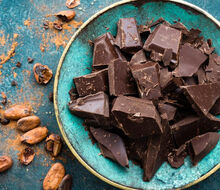
If you are a dark chocolate lover, you can rejoice! High-quality chocolate with a high cocoa content (at least 85%) is really good for your health. Of course, there's no such thing as chocolate, and the various sugar mixtures with lentils and God knows what that have only seen cocoa from a truck have no health benefits whatsoever. In fact, dark chocolate not only tastes great, but is also considered a superfood. It is high in fat and rich in antioxidants, which help protect our bodies from disease-causing free radicals. The flavanols in dark chocolate also improve heart health thanks to their ability to lower blood pressure. In addition, good quality chocolate can boost concentration, cognitive function and even has a beneficial effect on the gut biome.
7. Coconut and coconut oil
Coconuts and coconut oil are rich sources of saturated fat. Up to 90% of the fat in coconut oil is the saturated form, which is often considered not-so-good. However, peoples who consume large amounts of coconuts and oil enjoy good health and have no greater incidence of heart disease, which is associated with saturated fat consumption. Of course, it is important to note that this is an overall dietary concept. The fats in coconut differ from most other saturated fats in that they consist mainly of medium-chain fatty acids. These fatty acids are metabolized differently and go directly to the liver where they can become ketone bodies. Studies show that medium-chain fats suppress appetite, help people eat fewer calories, and can boost metabolism. While coconut oil is not the demon it was thought to be a few years back, there's no need to completely overdo it with its consumption.
How much fat per day should we take in and what forms are best?
This is traditionally a very difficult question to answer in general terms. Fat intake should be in the range of 20-30% of total daily calorie intake for a rational diet . However, in many currently popular diets, daily intakes can be as high as 40-75%. The majority of daily fat intake should come from unsaturated fats such as fish, nuts, seeds, avocados and olive oil. Current recommendations on saturated fat consumption say that we should aim for no more than 10% of our daily intake. For saturated fats, choose natural sources such as grass-fed beef, coconut oil, MCT oils and limit consumption of fried foods and convenience foods. The only fats that have no place in the diet, certainly not on a daily basis, are trans-saturated fats. However, even healthy fats are very calorie-dense.
Recommended
GymSupps Balíček pro krásu
Prom-in BCAA Synergy

Nebbia FIT Activewear funkční tričko s krátkým rukávem 440

Nebbia Deni x NEBBIA Fitness tracktop na zip 314
What to take away from the article?
Fats are an integral part of a healthy diet and are key to a variety of bodily processes. For example, they are essential for the absorption of certain vitamins, for hormone production and for proper brain function. Of course, there is no such thing as fat, and even in the case of this macronutrient there are suitable and less suitable variants. The daily intake of fat should consist mainly of unsaturated fats, saturated forms should contribute no more than 10% of the intake and trans fats should ideally not be present in the diet at all. The diet should favour natural sources from good quality foods, and on the other hand reduce fried and over-processed foods that contain refined oils, which are not beneficial to health. We also looked at a few foods that are considered the best sources of fat ever!
Sources:
Nettleton, J. A., Brouwer, I. A., Geleijnse, J. M., & Hornstra, G. (2017). Saturated Fat Consumption and Risk of Coronary Heart Disease and Ischemic Stroke: A Science Update. Annals of nutrition & metabolism, 70(1), 26-33. https://doi.org/10.1159/000455681
Liu, A. G., Ford, N. A., Hu, F. B., Zelman, K. M., Mozaffarian, D., & Kris-Etherton, P. M. (2017). A healthy approach to dietary fats: understanding the science and taking action to reduce consumer confusion. Nutrition journal, 16(1), 53. https://doi.org/10.1186/s12937-017-0271-4
Rizvi, S., Raza, S. T., Ahmed, F., Ahmad, A., Abbas, S., & Mahdi, F. (2014). The role of vitamin e in human health and some diseases. Sultan Qaboos University medical journal, 14(2), e157-e165.
Martínez-Lapiscina, E. H., Clavero, P., Toledo, E., San Julián, B., Sanchez-Tainta, A., Corella, D., Lamuela-Raventós, R. M., Martínez, J. A., & Martínez-Gonzalez, M. Á. (2013). Virgin olive oil supplementation and long-term cognition: the PREDIMED-NAVARRA randomized, trial. The journal of nutrition, health & aging, 17(6), 544-552. https://doi.org/10.1007/s12603-013-0027-6
Schwingshackl, L., & Hoffmann, G. (2012). Monounsaturated fatty acids and risk of cardiovascular disease: a synopsis of the evidence available from systematic reviews and meta-analyses. Nutrients, 4(12), 1989-2007. https://doi.org/10.3390/nu4121989
Simopoulos A. P. (2002). Omega-3 fatty acids in inflammation and autoimmune diseases. Journal of the American College of Nutrition, 21(6), 495-505. https://doi.org/10.1080/07315724.2002.10719248
Pribis P. (2016). Effects of Walnut Consumption on Mood in Young Adults-A Randomized Controlled Trial. Nutrients, 8(11), 668. https://doi.org/10.3390/nu8110668
Zeisel S. H. (2004). Nutritional importance of choline for brain development. Journal of the American College of Nutrition, 23(6 Suppl), 621S-626S. https://doi.org/10.1080/07315724.2004.10719433
Heiss, C., Keen, C. L., & Kelm, M. (2010). Flavanols and cardiovascular disease prevention. European heart journal, 31(21), 2583-2592. https://doi.org/10.1093/eurheartj/ehq332
Anderson K. E. (2011). Comparison of fatty acid, cholesterol, and vitamin A and E composition in eggs from hens housed in conventional cage and range production facilities. Poultry science, 90(7), 1600-1608. https://doi.org/10.3382/ps.2010-01289
Heiss, C., Keen, C. L., & Kelm, M. (2010). Flavanols and cardiovascular disease prevention. European heart journal, 31(21), 2583-2592. https://doi.org/10.1093/eurheartj/ehq332
No posts have been made yet.