Dietary fats - what do we need them for and does it make sense to divide them into "good" and "bad"?
 Author:
 We have already talked about carbohydrates and proteins several times. That leaves us with one last macronutrient that we haven't looked at yet, but it is just as important as the other two. You guessed right, today we're going to talk about fats - we're going to look at their importance in the diet and what sources are good to get them from.
Not so long ago, the first advice for those trying to lose weight was to limit fat intake as much as possible. The dry, boring, tasteless meals have come to an end and fat is making a comeback in our diets even in times of reduction. However, thanks to advances in nutrition, we now know that fat has a rightful place in our diets and can provide us with a host of benefits, both for health and performance in sport. Of course, there is no such thing as fat, and even in the case of this macronutrient there are suitable and less suitable variants. To the contrary, diets based on a high fat intake are very fashionable today - but we won't go into whether this is a good strategy for both health and weight loss in the long run, we'll just talk a bit about which types of fat are appropriate to include in your diet.
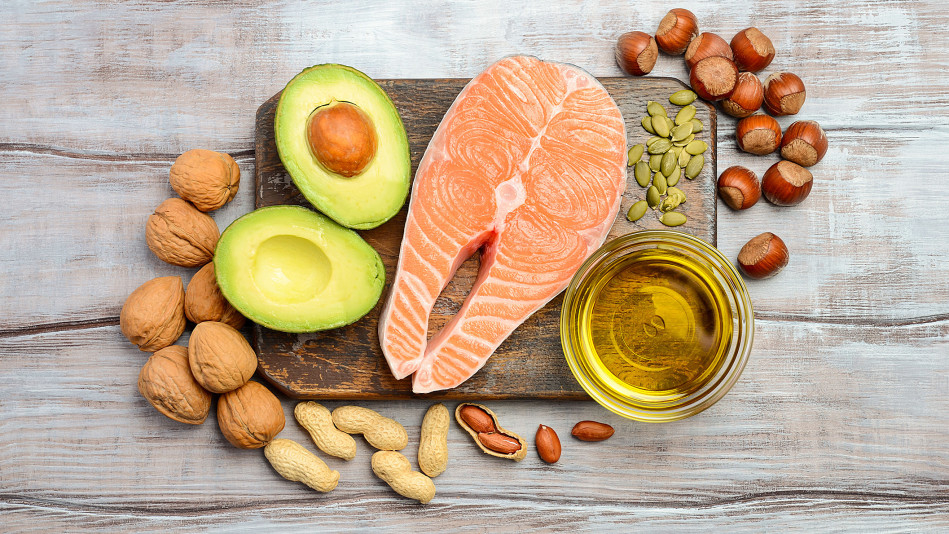
Most fats have a beneficial effect on the cellular, cardiovascular and metabolic health of the human body, and when fat is consumed in reasonable amounts and from optimal sources, it also promotes proper body composition. Of course, there are also fats that do virtually nothing good for health, but we will mainly focus on those that are beneficial for health and athletic performance.
Article content:
- A little theory - why do we need fat?
- The division of fats
- A little helper for everyone
- What to take away from the article?
A little theory - why do we need fat?
Not only proteins and carbohydrates are important in the diet! Fats are also important and should definitely not go completely unnoticed. Let's start by talking about why it's actually good to consume fat. When you hear the phrase "energy source", most of you think of carbohydrates first, but fats are also a very good source of energy. In numerical terms, a gram of fat contains even more calories than the other two macronutrients combined - protein and carbohydrates have the same 4 kcal per gram, and fats have 9 kcal per gram. In addition to their function as a source of energy, fats also play a role in many physiological processes in the body, and for this reason alone it is not a good idea to exclude them from the diet completely.
Fats are also very important for theabsorption of certain vitamins - in particular vitamins A, D, E and K and certain antioxidants. They also play an important role in the synthesis of hormones such as testosterone and estrogen, and are also important for the production of vitamin D. Fat also affects our immune system and regulates body temperature. To make matters worse, fat also protects some of our organs, and in women, for example, too low a percentage of body fat can lead to reproductive organ failure. Last but not least, we must mention our grandmothers' adage - 'fat is the carrier of taste' - and it is true - it is fat that gives our food the right taste and flavour.
The division of fats
There are quite a few types of fats. But if you're expecting some sort of division between "good" and "bad" fats, you're in for a disappointment. In fact, virtually all types of fat, except probably trans fats, have their own meaning and cannot be labelled as downright bad, because it is always the overall fat profile that matters rather than saying that one food or another contains "good" or "bad" fat. We can easily divide fat sources into plant and animal sources. It is better for health if fats from plant sources predominate, at least in a 2:1 ratio. The most basic division of fats according to their nature is into saturated fats, trans fats and unsaturated fats, which are further divided into monounsaturated and polyunsaturated fats, among which we can also find essential fatty acids.
Unsaturated fats
A little about the theory and composition. In terms of structure, this group of fats is composed of at least one double bond. Based on where the first double bond is located (from the methyl end - labeled omega), unsaturated fatty acids are divided into omega-3, -6 and -9 groups . However, there is a further subdivision for this group. Unsaturated fats can be further distinguished by how many double bonds they have. The group with one double bond is called monounsaturated (MUFA) and in the case of a higher number of double bonds we call polyunsaturated fatty acids (PUFA).
In general, fats from this group have the ability to harmonize cholesterol levels, thus having a positive effect on the cardiovascular system. And this is probably why in most countries that favour a Mediterranean diet, which is rich in unsaturated fats (that is, most coastal countries), studies report a longer life expectancy. Unsaturated fats are also relatively stable at higher temperatures, making them suitable for cooking and baking.
Where to look for them?
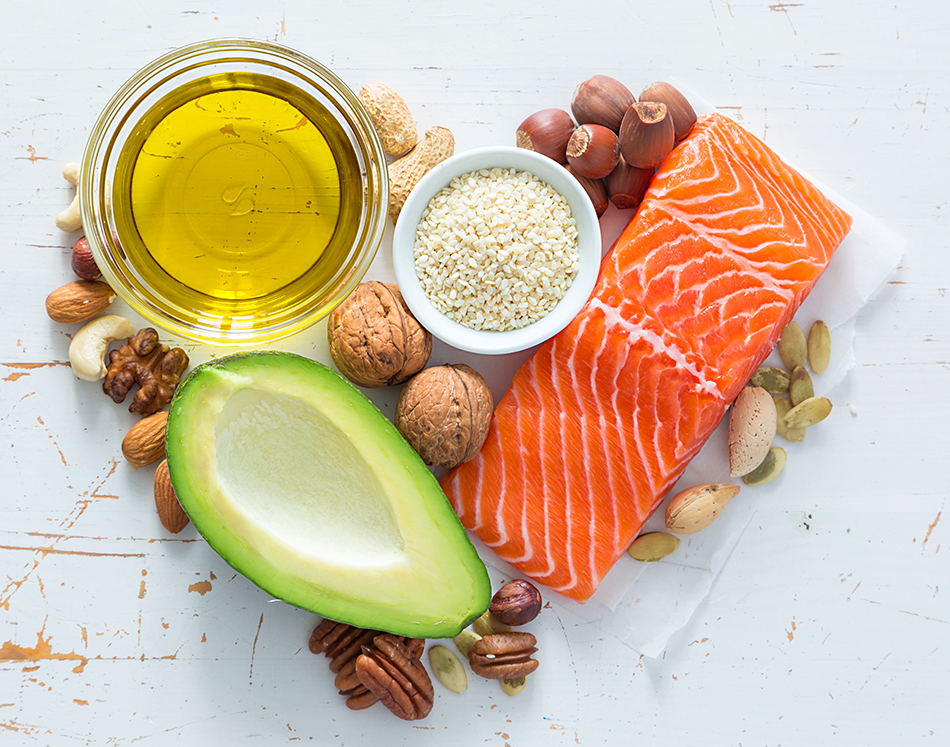
- Monounsaturated fats (MUFAs) are found in foods such as olive and rapeseed oil, and of course in other vegetable oils, as well as peanuts and most other nuts, and avocados and olives.
- And polyunsaturated ones (PUFAs) are found in oily fish, in avocado, sesame and olive oil, in avocados in general and in nuts and seeds.
Essential fatty acids
There are three essential omega-3 fatty acids - EPA, DHA and ALA, the latter of which is of plant origin and a precursor to the other two and therefore needs to be converted to the other two to be active. Since we have already discussed fatty acids in this article, you will know that both omega-3 and omega-6 fatty acids are essential for life. The body needs both in some proportion, however, most people have a significantly higher proportion of omega-6 in their diet due to a diet rich in sausages and other animal fats, which can ultimately have a negative effect on health.
Omega-3 fatty acids have countless benefits for health and athletic performance. For example, they can help with the recovery process after strenuous workouts, which every bodybuilder will appreciate. Omega-3s can also influence how the body works with glucose. Research suggests that if you reduce your omega-6 intake and instead add more omega-3 fatty acids to your diet, insulin sensitivity may increase. When insulin sensitivity is at optimal levels, unused glucose is much less likely to be stored in fat stores. So, omega-3s can be an aid in fat reduction, Omega-3s also dilate blood vessels, thereby reducing blood pressure, and higher consumption of omega-3 fatty acids at the expense of omega-6s also leads to a reduced risk of myocardial infarction, according to studies.
Where to get omega-3s?
The omega-3 fatty acids EPA and DHA are found mainly in oily marine fish. If you don't eat fish, you can include a plant source that contains alpha-linolenic acid (ALA), such as walnuts, flax or hemp seeds. Just be warned, as mentioned, it needs to be transformed into EPA or DHA to be active, and that's not exactly a simple process.
It depends on many factors such as genetics, age, health, the amount of other fats consumed, etc. See the article on omega-3s themselves for more information. To ensure optimal intake, reach for a supplement containing them to be on the safe side.
Saturated fats
For a long time, the public has been told that saturated fats have a negative effect on health, as they raise levels of both cholesterol and LDL (the "bad" one) in particular, which supposedly increases the risk of developing cardiovascular disease. However, recent research shows that when both cholesterol levels are raised, the effect on cardiovascular health is not as drastic as originally thought.
Moreover, some of the saturated fats may even be beneficial. Examples include coconut oil, or fats rich in medium-chain triglycerides, called MCT fats, which really deserve some attention. The uniqueness of these fats comes from the fact that they are not processed by the liver, but enter the bloodstream immediately. This makes them a very good and readily available source of energy, and scientists believe that there is less likelihood that the unused portion will be stored as body fat, as is the case with other sources. A diet rich in MCT fats helps to induce a longer feeling of satiety, and thus may be beneficial when trying to reduce weight. In addition, the intake of MCT oils has actually been shown to affect our body's ability to process fat into energy by increasing this ability - in other words, you can increase fat burning by consuming this type of fat. Yes indeed, this type of fat aids the use of body fat and you can burn more because of it.
But that's not all! Now all the gentlemen will be alert - according to the results of various studies, saturated fats also play a significant role in testosterone production. If your testosterone levels are too low, you may experience decreased performance and muscle loss, which of course no one wants. By adding a few extra grams of saturated fat to your diet , you can boost testosterone production quite easily. Indeed, this phenomenon, that higher saturated and monounsaturated fat consumption leads to higher testosterone levels, has even been confirmed by various studies. Fats in this group should make up about one-third of your total daily fat intake.
Trans fatty acids
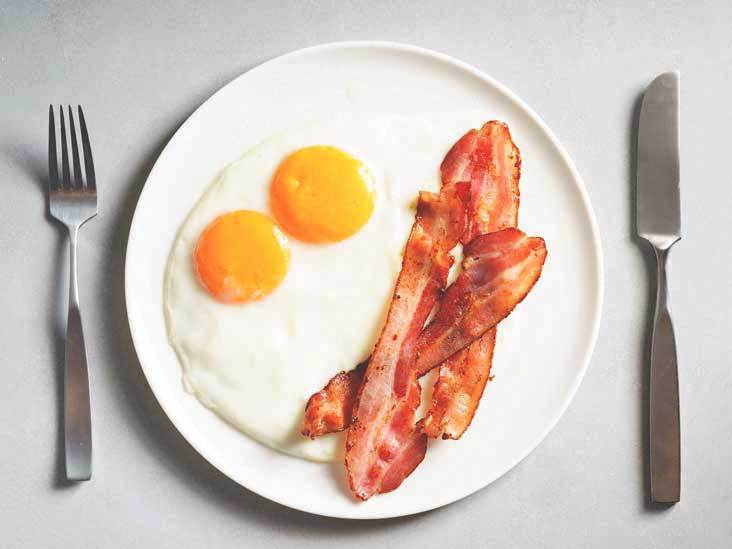
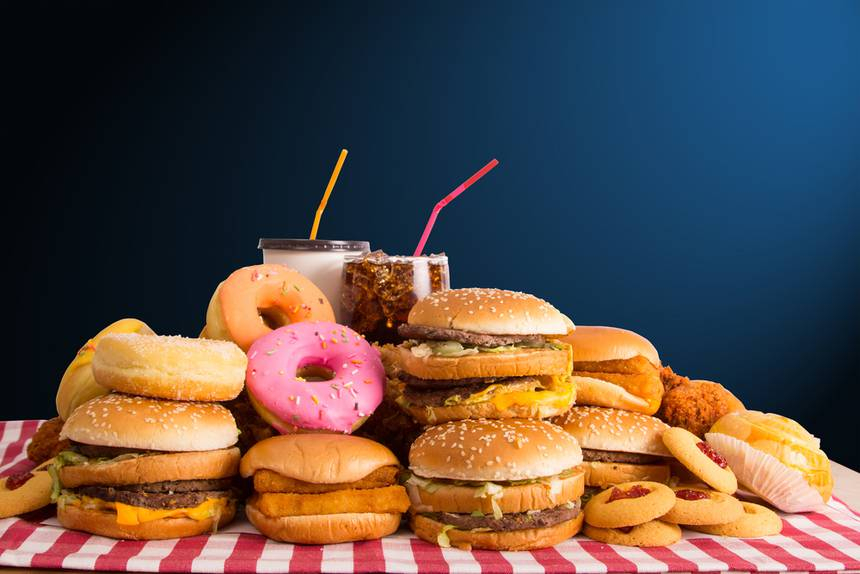
The last group I'm in is trans fats - the only fats that really aren't beneficial in any way. These fats are commonly found in fried foods, fast foods, sweets and other foods prepared with overcooked fat. This type of fat raises LDL, or "bad" cholesterol, at the expense of the HLD "good" cholesterol. In addition to the negative effect on the cardiovascular system, these fats also have a detrimental effect on glucose handling, which in turn increases the likelihood of insulin resistance, increases the amount of stored fat and increases the risk of developing obesity. So, in the case of these fats, you better think carefully about whether you want them to be part of your diet.
A little helper for everyone
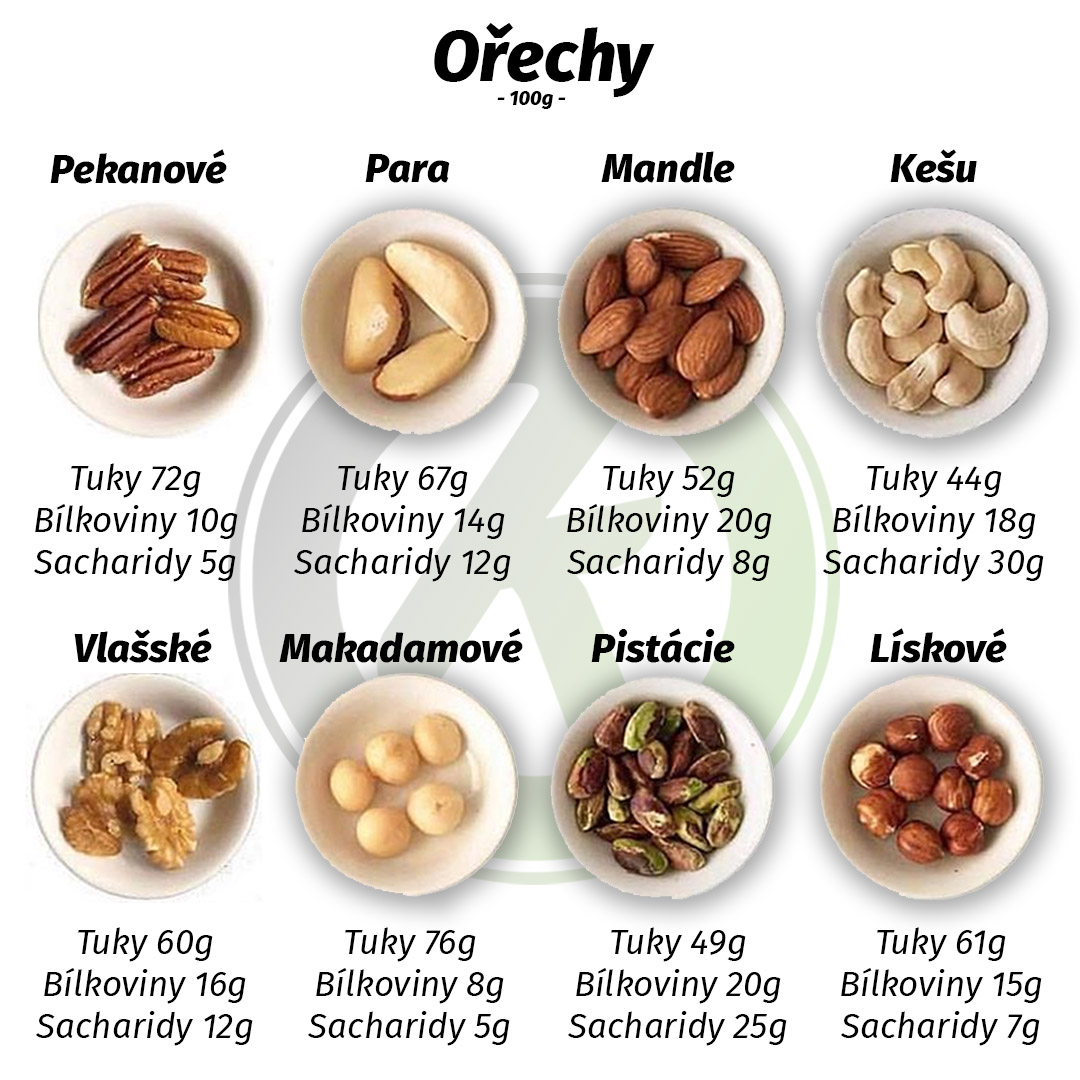
We've created a picture to show you the values of different nuts per 100g. You can download the picture to your mobile phone and when you are confused about which nuts to choose, just look at our picture and you will know what to reach for right away! We have taken the values from the calorie tables.
What can you take away from the article?
Fats are an integral part of our diets and there's no need to worry about eating them. Hopefully, we've made it a little clearer today which fats should dominate your diet and which ones you should avoid. As with other macronutrients, it is very important to combine the sources to create an intake of all types in the optimal ratio for you, while ensuring a variety of foods in your diet.
If you were expecting some precise recommendation on how much fat to take in, you probably won't get it. As with other macronutrients, fat needs are very subjective. Daily intake should be between 25-40% of total calorie intake and should consist of a variety of sources, excluding trans fats.
Recommended
Sources:
https://www.ncbi.nlm.nih.gov/pubmed/16140878
https://www.bmj.com/content/349/bmj.g6674
https://www.ncbi.nlm.nih.gov/pubmed/12442909
https://www.ncbi.nlm.nih.gov/pubmed/15297079
https://www.ncbi.nlm.nih.gov/pubmed/16531187
https://www.ncbi.nlm.nih.gov/pubmed/24923568
https://www.ncbi.nlm.nih.gov/pmc/articles/PMC4013121/
https://www.ncbi.nlm.nih.gov/pubmed/17936958
https://academic.oup.com/nutritionreviews/article-abstract/64/5/257/1910665
https://www.ncbi.nlm.nih.gov/pubmed/8453329
https://www.ncbi.nlm.nih.gov/pubmed/9626114
https://www.ncbi.nlm.nih.gov/pubmed/9029197
https://www.ncbi.nlm.nih.gov/pubmed/17636085
No posts have been made yet.