





What exactly does it mean to "eat the rainbow" and why we shouldn't look down on this concept
 Author:
 To emphasise that we should eat a varied and colourful diet, we often see the recommendation that we should "eat the rainbow". No, don't worry, this won't be an article about unicorns. As silly as it may sound, "eating the rainbow" in the sense of eating different coloured foods is actually one of the essentials for health, because by eating different coloured foods you are providing your body with all sorts of nutrients. In today's article, we will discuss why we should practice this concept and what foods of different colours can offer us.
The "eat the rainbow"concept
We've been hearing since we were little that we should eat as colourfully as possible, that we should enjoy fresh fruits, vegetables and other foods in a variety of colours, but few people know why we should actually do this. Because different coloured foods hide all sorts of substances - vitamins, minerals, antioxidants and phytonutrients. Phytonutrients basically help us prevent disease and can be useful even when a disease has already developed. As the name implies, "phyto" means that these nutrients are found mainly in plant foods.
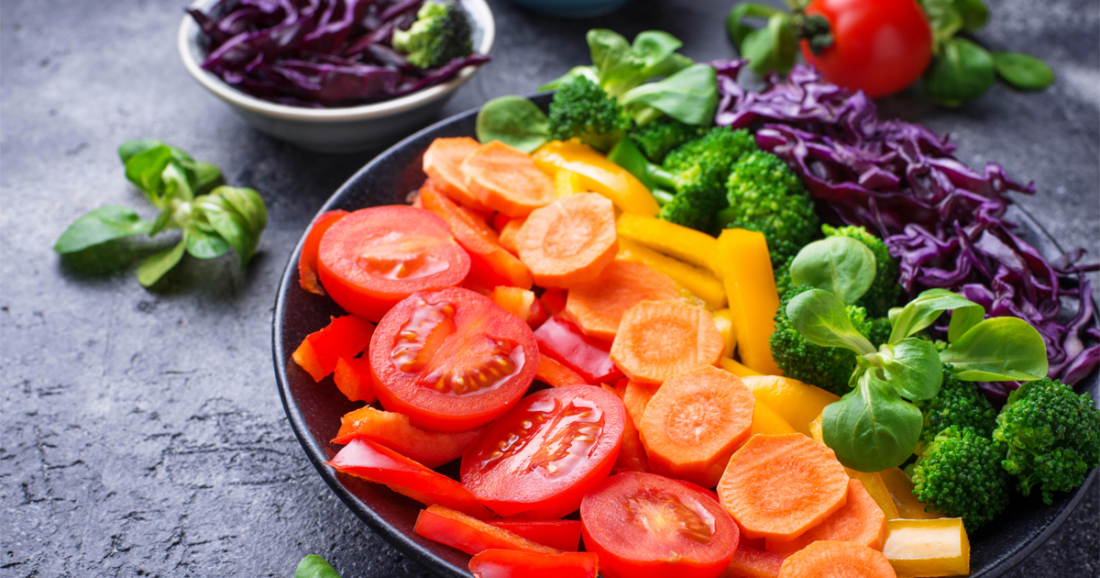
Different foods contain different types of phytonutrients, and each of these plant "pigments" provides the body with different nutrients and therefore different health benefits. This means that if we eat only red fruits or vegetables, we are only getting the phytonutrients that are associated with the colour red and are depleting ourselves of other types. The more colours our plate contains, the more nutrients we are giving our bodies. For this reason alone, we should ensure that our diet is as varied and colourful as possible. Now let's find out what phytonutrients can be found in each colour.
Different colours = different nutrients
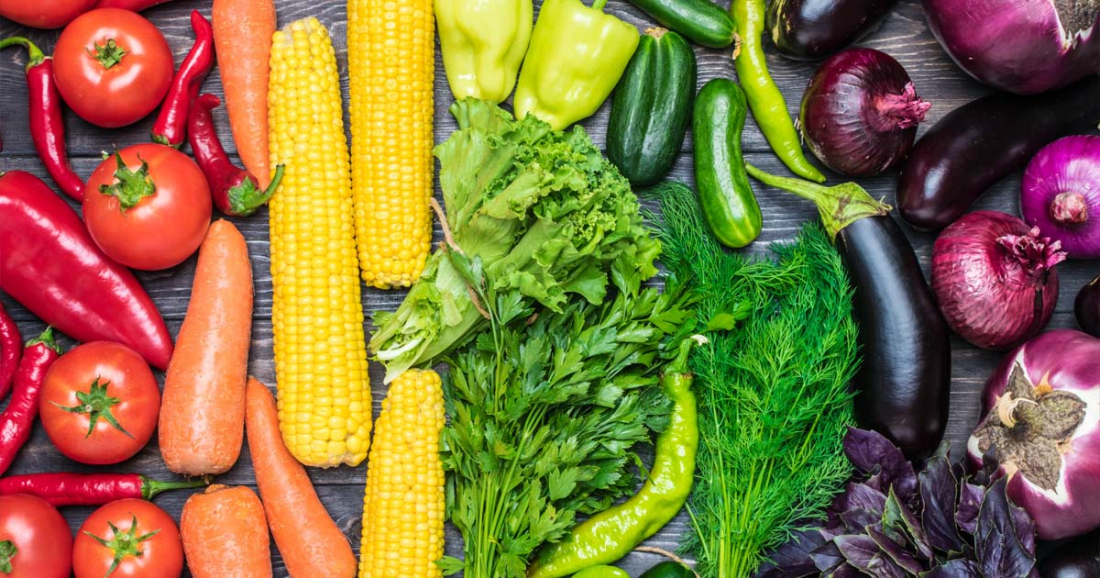
Each colour represents a different phytochemical and set of nutrients that can benefit our health. Below, we'll look at the vitamins, minerals, phytonutrients and health benefits that different coloured foods provide. However, it is important to mention that when it comes to vitamins and minerals, the levels will vary slightly for each food.
Red - important for heart health and for the prevention of prostate cancer
Red foods are a great source of antioxidants. The phytonutrients present are flavonoids or carotenoids. In addition, tomatoes contain large amounts of lycopene, the consumption of which is particularly important for men, as it is an effective prevention against the development of prostate cancer. Interestingly, lycopene is much better absorbed when tomatoes undergo cooking, so such tomato soup or some good bolognese sauce is an ideal way to provide the body with enough lycopene. In addition, lycopene can positively affect blood pressure and cholesterol levels. In other red foods, we also find anthocyanins, which have strong antioxidant properties, that is, they have strong anti-inflammatory effects, so they can be an effective prevention against many diseases and are also important for heart health. In addition, red foods have been shown to have an anti-aging effect.
The red food group is one of the largest ever, so you really have a lot to choose from. In particular, you should not miss red peppers, tomatoes, strawberries, raspberries, red apples, beetroot, beans, red rice, pomegranate, watermelon and more in your diet.
Orange - for good eyesight and strong immunity
Remember when you were a kid and your parents told you that you had to eat a lot of carrots to see well? Well, there's something to that! Orange foods are rich in carotenoids, especially beta-carotene, lycopene, lutein and many others. From carotenoids, the body makes vitamin A, which is important for proper vision, but also for cell growth, plaque development and optimal sperm production (called spermatogenesis). Studies also show that due to their antioxidant effect, they help prevent various cancers and eye diseases. But even with beta-carotene, of which orange foods are a rich source, we shouldn't overdo it. Studies suggest that high doses of vitamin A or beta-carotene can cause cancer, especially in smokers.
Beta-carotene 'overdose', which results in orange skin discolouration, has also been observed. It's also important to remember that, as with lycopene, beta-carotene is much better absorbed when cooked, so for example carrots should be cooked first to release the beneficial substances - plus they should be supplemented with fat, so roasted sweet potato fries with a little avocado oil are an ideal way to ensure that the nutrients they contain are used by the body to the maximum extent possible.
For orange foods, focus on carrots, pumpkin, sweet potatoes, nectarines, apricots, oranges, papaya or even mangoes.
Yellow - foods with anti-cancer and anti-inflammatory effects
Yellow foods stand out for their high lutein content. Although lutein is a carotenoid, it is not converted into Vitamin A in the body. In return, it is a very effective antioxidant and is crucial for eye health. Thanks to its anti-cancer and anti-inflammatory properties, yellow foods are a useful support in the treatment of people suffering from Alzheimer's disease, cancer or even diabetes. One such unwritten queen among yellow foods is turmeric, or rather curcumin, the yellow dye it contains. Curcumin has strong anti-inflammatory properties, thus supporting the immune system, but also helping to protect the body from all sorts of harmful substances.
When it comes to yellow foods, bet on yellow peppers, pineapple, yellow melon, bananas, citrus fruits, turmeric or even corn in your diet.
Green - for cancer prevention and proper digestive function
The colour green is given to foods by the colouring agent chlorophyll, which acts as a powerful antioxidant and has been speculated in recent years to play a role in preventing the development of cancer. In addition to chlorophyll, green foods also contain polyphenols, which also have a strong antioxidant effect. Green foods also usually contain a lot of fibre, which is important for the proper functioning of the digestive system. In addition, green foods have a positive effect on cholesterol levels. Leafy vegetables are also a rich source of vitamin K, which is also very important for health.
For a green colour, reach for a variety of salads, spinach, broccoli, kale, apples, cucumber, zucchini, avocado, leeks, lime or even asparagus.
Blue and purple - for a healthy heart
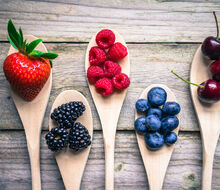
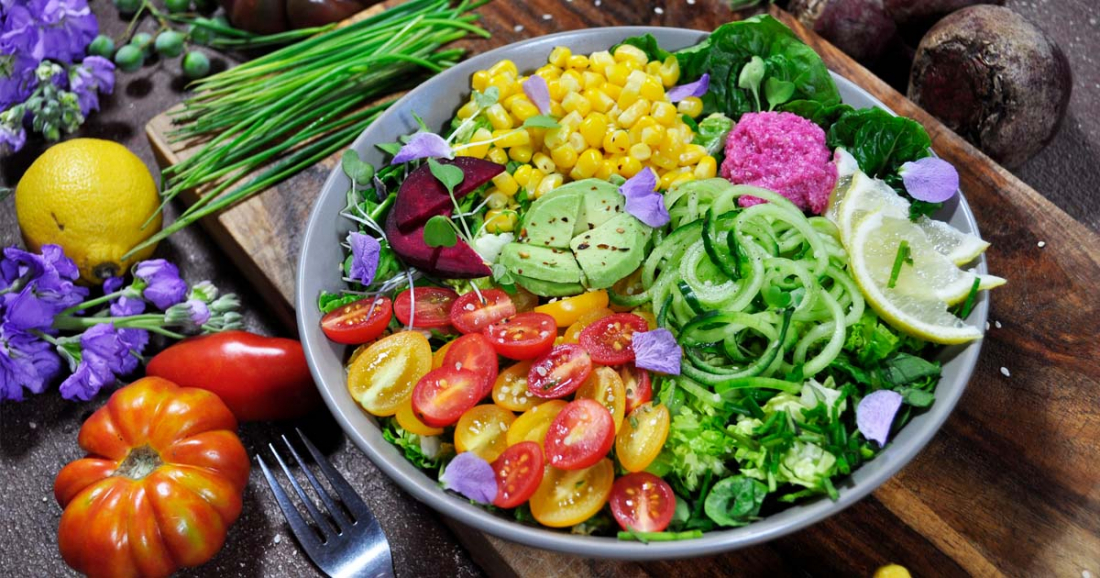
Only a handful of foods stand out with their blue and purple colour - blueberries are definitely among the most famous. The purple or blue colour is caused by anthocyanins, antioxidants that belong to the flavonoid group. These have been studied over the years in connection with prevention against the development of heart disease and anti-cancer activity. Adding blue and purple foods to your diet can help improve your heart health and reduce your risk of developing certain types of cancer. In addition, phenolic acids are found in blackcurrants, which are important, for example, for metabolic activity, relieving digestive problems, but can also relieve fatigue and promote regenerative processes.
Where to look for blue and purple? Throw blueberries, currants, blackberries, aubergines, purple potatoes or carrots, plums, figs, red cabbage or even dark grapes into your diet.
White and brown - strong bones and natural antibiotic
Anthocyanins (flavanols and flavones) are present in many brown/white foods in particular. One of the most important substances found in brown or white foods is allicin, which is considered a powerful natural antibiotic. One of the foods that is really rich in this substance is garlic - that's why our grandmothers relied on its power and knew well that it would cure many a cold. Allicin also has the ability to lower high cholesterol and helps protect blood vessels from atherosclerosis (blood vessel corrosion). White foods also promote bone strength, and may even be beneficial in alleviating the symptoms of menopause.
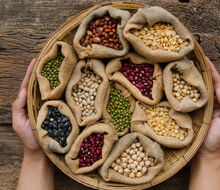
Brown and white foods: flax, lentils, cauliflower, mushrooms, white radishes, turnips, garlic, onions, chickpeas, legumes, nuts, seeds.
Most of us eat the same foods over and over again, so it can sometimes be a challenge to have all the colours of the "rainbow" palette in our diet. It's just that ensuring maximum variety in your diet isn't a chore at all. Just follow a few simple tips and you don't have to stress about anything.
- Pick your favourites from each colour group and incorporate them into your diet. Each colour group has a good list of foods, so I'm sure at least one from each group will be one of your favourites and you'll enjoy it. Always chop up some vegetables for your main meals, add a handful of fruit to your breakfast or jazz up your diet with a good fruit smoothie with yogurt or kefir.
- Use different variations of each food. Many fruits or vegetables come in several different colours - for example, peppers can be bought in green, yellow, orange, red and white. Cabbage, carrots, grapes, melon or apples also come in several colours. If you take a liking to a certain food, sometimes you can get it in several colours, and that's just a great way to add more colour to your diet in a completely casual way.
- Use point one when planning your weekly shop - make a list and put together a menu that includes the whole rainbow spectrum every day, but don't forget to be varied here too! For example, when making a vegetable salad, use field greens and cucumber one week and reach for arugula and green peppers the next. There are no limits to your imagination and there are plenty of options today!
- Don't be afraid of frozen foods. Another easy way to add plenty of colour to your diet is to always have some mixed vegetables in the freezer to add to rice or couscous, or perhaps frozen berries that you can use to make homemade ice cream or as a garnish for your morning porridge.
Recommended

Nebbia Dámská vystužená sportovní podprsenka INTENSE Iconic 844

Nebbia SPORTY HERO crop top s dlouhým rukávem 585

Nebbia Top-style body CLUB D’OR 641

Nebbia Washed-off mikina na zip GYM BRO 362
It's not nearly as complicated as it sounds, if you're trying to eat a varied diet, then you're probably no stranger to the concept of rainbow eating. You just need to think a bit and know how to put together a menu that includes all the colours. For example, have an omelette with spinach, bread and tomatoes or peppers for breakfast, pack a yoghurt with blueberries and nuts for a snack, and for lunch make a salmon with roasted sweet potatoes, For an afternoon snack, make hummus with cucumber, celery and carrot fries, and for dinner, serve chicken steak with grilled vegetables and your favourite side dish, or a vegetable salad with grilled cheese and a rye baguette. There you go - suddenly we have all the colours of the rainbow on our menu and it didn't even cost much work.
What to take away from the article?
Eating the rainbow isn't as nonsensical as it may seem at first glance. In fact, it expresses the concept of a varied diet, through which we treat our bodies to foods of different colours that provide our bodies with different types of antioxidants, vitamins, minerals and other important substances. These are important for health in many ways, but we can also guarantee that you will really enjoy this simple diet! Variety in our diet is not only important for the different nutrient content, but it is also an important prerequisite for us to make our diet sustainable in the long term. And it's not a chore at all to have a colourful diet!
Sources:
Stahl, W., & Sies, H. (2007). Carotenoids and flavonoids contribute to nutritional protection against skin damage from sunlight. Molecular biotechnology, 37(1), 26-30. https://doi.org/10.1007/s12033-007-0051-z
Panche, A. N., Diwan, A. D., & Chandra, S. R. (2016). Flavonoids: an overview. Journal of nutritional science, 5, e47. https://doi.org/10.1017/jns.2016.41
Krinsky, N. I., & Johnson, E. J. (2005). Carotenoid actions and their relationship to health and disease. Molecular aspects of medicine, 26(6), 459-516. https://doi.org/10.1016/j.mam.2005.10.001
Pulido-Moran, M., Moreno-Fernandez, J., Ramirez-Tortosa, C., & Ramirez-Tortosa, M. (2016). Curcumin and Health. Molecules (Basel, Switzerland), 21(3), 264. https://doi.org/10.3390/molecules21030264
Rodríguez-García, C., Sánchez-Quesada, C., Toledo, E., Delgado-Rodríguez, M., & Gaforio, J. J. (2019). Naturally Lignan-Rich Foods: A Dietary Tool for Health Promotion. Molecules (Basel, Switzerland), 24(5), 917. https://doi.org/10.3390/molecules24050917
https://www.thieme-connect.de/products/ejournals/abstract/10.1055/s-2006-961504
No posts have been made yet.








