





The despised omega-3 fatty acid DHA is finally ready for the spotlight!
 Author: Šárka Randáčková
 Of the two dominant omega-3 fatty acids, EPA has always received more attention. DHA has never received as much fame, money and attributed cardiovascular benefits.
It's always been treated as a supporting character. Like she's Gafrunkel, Robin, Dr. Watson, etc. Her only purpose was to glorify a more famous hero.
But what didn't happen. Scientists may finally be starting to recognize the star quality of DHA. Or so it seems to me when I read the latest review of DHA published in Food Science & Nutrition.
DHA is finally ready for the spotlight
Here's a list of just a few of the things scientists believe DHA plays a vital role in.
Developing super-smart kids who hopefully won't use their abilities to do evil
DHA is deposited at a fantastic rate in the grey cortex of babies' brains in the last trimester of pregnancy. In fact, in them, 97% of omega-3s make up this organ.
Pregnant women who consumed DHA gave birth to babies with improved coordination, problem-solving ability, attention, motor skills, and ability to adapt to their surroundings.

Supplementation of the children themselves with DHA also worked. The six-year-olds processed information faster after it compared to the placebo group. Plus, many of them lost their hair and swore to destroy Superman.
Improving memory with an ingredient from jellyfish
The peak of mental capacity usually comes in middle age, with episodic memory usually experiencing a decline after the age of 20. I would also like to add that episodic memory usually experiences a decline after the age of twenty.
However, something can be done about it.
You know those annoying ads for memory enhancers? They're right about one thing. A jellyfish ingredient can aid memory and cognitive performance in adults. But it's not the ingredient we're talking about here. The active ingredient for human memory, according to them, is the protein apoaequorin.
Jellyfish, however, contain a lot of DHA and other substances that seem to improve memory. Too bad no seafood restaurant serves them.
An analysis of 15 studies in which more than the Japanese average of 580 mg of DHA per day was supplemented showed improvements in episodic memory in adults between 18-90 years of age.
Another study showed that people between 18 and 35 years of age who took 1160 mg of DHA and 170 mg of EPA daily for 6 months had improved episodic and working memory compared to a placebo group.
Sweep of triglycerides in the coronary artery
Studies on the effects of both DHA and EPA on coronary disease are numerous, but only recently have researchers begun to distinguish them from each other.
A new study compared the results of two daily doses of EPA (1800 mg and 600 mg) versus one dose of DHA, regular olive oil, and a placebo. After six weeks, the DHA group showed a significant reduction in triglyceride levels. No such results were obtained with olive oil or EPA. EPA, however, reduced levels of lipoprotein phospholipase A2, an indicator of inflammation.
Thus, although both omega-3s showed heart health benefits, it seems that DHA might be more effective for lipid factors.
Honey, did you feed the bacteria in your gut?
Although not usually thought of in this way, DHA has prebiotic effects (food for desirable microorganisms).
A study examining the effects of 4 g of a combination of DHA and EPA and 2 g of DHA alone found that both forms of DHA increased the population of several beneficial bacteria species, including Bifidobacterium, Roseburia, and Lactobacillus.
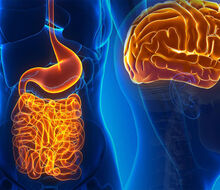
These bacteria then form butyrate, an essential component of the gut microbiota that plays a role in reducing cell inflammation, differentiation and apoptosis.
Why put out a fire with a glass when you have a fire hose at home?
Fish oil is often touted for its anti-inflammatory effects. However, it seems that DHA actually does most of its work.
A 34-week Tufts University study of 21 subjects comparing the effects of DHA and EPA found the following.:
- DHA reduced the genetic expression of 4 types of inflammatory proteins, while EPA reduced only one.
- DHA reduces the secretion of 3 types of inflammatory proteins in white blood cells, while EPA reduces only one.
- DHA reduces the level of one inflammatory protein, while EPA does not.
Stefania Lamon-Fava, one of the Tufts University cardiovascular scientists summarized it as follows:
These results suggest that DHA is the more potent of the two markers of inflammation in the body,...

It is difficult to supply DHA through diet alone
According to a global study, only 24% of the population can provide their bodies with enough omega-3 fatty acids by simply eating seafood. 67% then eat less than 100 mg per day, which is sad.
Even sadder is to look at DHA itself. Fish oil contains 18% EPA and 12% DHA, but there's another catch for men. Estrogen plays a role in plasma DHA levels. The more estrogen you have, the more DHA is biologically synthesized. The more testosterone you have, the worse the synthesis.
As an example, in a study of cognitive improvement with DHA, it was twice as strong in girls than in boys (ages 6 to 16).
You know where I'm going with this. If you're a healthy guy, you almost certainly have too low a DHA level, and the fish oil supplements you need (with more DHA than EPA) are a rarity.
I have to admit that no one really knows how much DHA/EPA we really need. Different health organizations recommend different daily levels. Some divide it by age, others by gender.
I'll give you an example. Many countries recommend around 200 mg per day for pregnant or breastfeeding women. Japan 1800 mg.
Knowing this, there is a difference in how much DHA/omega-3 you need for everyday life and how much you need for therapeutic effects. That's why most studies investigating health benefits use amounts well in excess of the recommended daily allowance.
Recommended
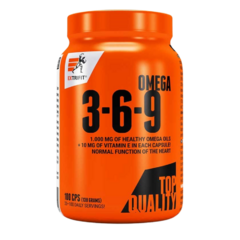
Extrifit Omega 3-6-9
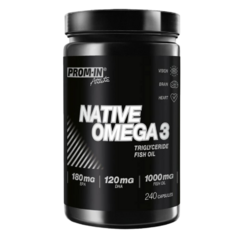
Prom-in Native Omega 3
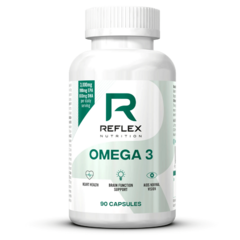
Reflex Omega 3
Czech Virus Omega 3 MAX
What affects DHA levels in the body
Besides hormone levels, there's something else that most people don't think much about: It seems that you have to take fish oil with some sort of fat-rich meal to get all those cardiovascular, anti-inflammatory, and cognitive benefits.
A German study (Rauch et al.) showed "no significant" health benefits of omega-3 fatty acids when taken with a relatively low-fat breakfast. Another study (Lawson and Hughes) found that the absorption of DHA and EPA was three times higher when volunteers consumed them with a fat-rich meal (44 g of fat), compared to a group that consumed them with a low-fat meal (8 g of fat).
Here's another one. Kling et al. found that plasma concentrations of DHA and EPA were five times higher when they were given with a fatty meal.
So the conclusion is clear. Take your daily DHA/fish oil tablets with the fattest meal of the day, which for most of you will be dinner.
Give DHA the attention it deserves
DHA is no supporting character for EPA. It's at least an equal partner. And based on what I've read, however, I would safely venture to say that it's time for DHA to start looking for a Batman suit and EPA to start looking for green shorts.
Source: wwww.t-nation.com - DHA Thumps Its Mighty Chest
By TC Luoma
Author: Šárka Randáčková No posts have been made yet.








