





Simple habits to help you on your journey to a slimmer body
 Author:
 Summer is slowly coming to an end - the end of barbecues, sunbathing and other summer fun. Did you manage to gain some pounds during the summer, can't tighten your belt and want to get back to your old ways? Or are you just getting started with a healthy lifestyle? Then join us for some tips to help you get back to healthy eating and get you in shape!
1. No excessive calorie restriction or unnecessary restriction.
Often, in an effort to achieve quick fat reduction results, people stick to completely pointless diets or set very significant calorie deficits. Yes, a caloric deficit is an essential factor for successful reduction, but we must always keep in mind that it must be reasonable! Our body needs enough energy to function and by radically denying it, we may achieve rapid weight loss, but sooner or later the body will ask for what it lacks and make it clear to you. It is much better, therefore, to choose a deficit so that the body does not starve. You don't have to cut out carbs, drink weight loss shakes, or apply detoxification cures. Eat healthy food in amounts that reflect your needs and are in line with your goals - this is truly the best way to reduce fat.
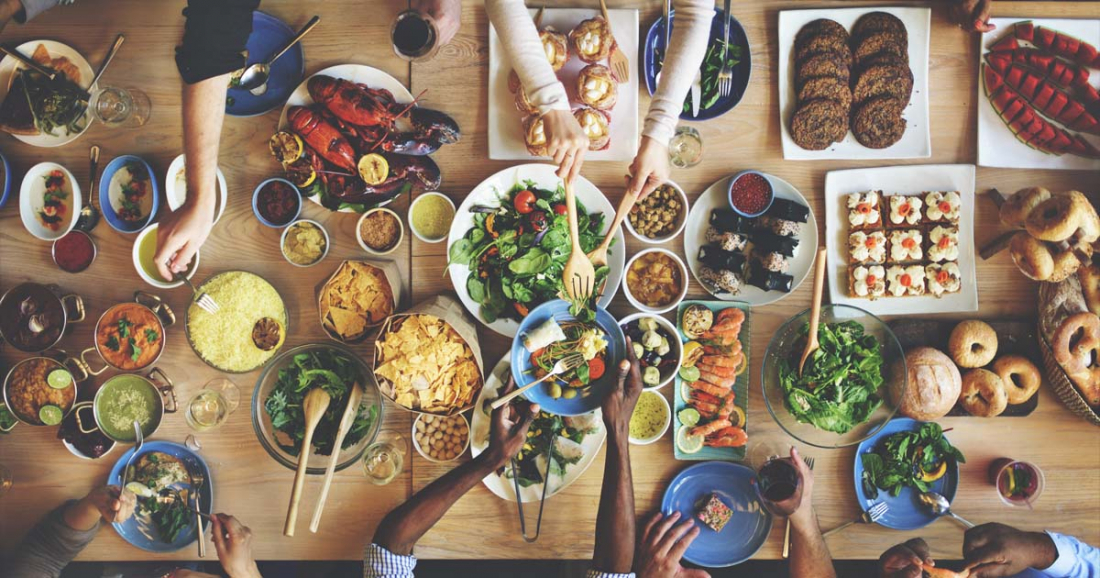
People very often underestimate their intake because there's still a kind of well-worn myth that if you're losing weight, you need to eat less. However, this rule sounds a little different - if you want to lose weight, you have to eat RIGHT. Many people believe that they don't lose weight because they eat too much, so they keep lowering their caloric intake to the limit of their basal metabolic rate, or heaven forbid even below it. The moment you calculate your actual intake, you'll find that this value is seriously far from what it should be. There may be a reduction, but it certainly won't be from fat stores alone - the body will also reach into its own muscle or, conversely, begin to store all the energy it takes in to build up an energy reserve to provide for basic life functions. In addition, the effect of eating too little is to reduce the metabolic rate, which is another stage of the body's adaptation to reduced calorie intake. If you do not know how much to eat, do not be afraid to consult a professional who can help you set an adequate calorie intake.

2. Eat regularly and practice mindful eating.
Eating regularly is a great foundation for successful weight loss. I'm not at all going to tell you that you have to eat 5 times a day at absolutely strictly precise intervals. It's much more important to create a regimen that you'll be able to apply long-term and that works for you. If we establish regular eating habits, it will be easier for us to control WHAT we eat and HOW MUCH we eat. The moment we eat regularly, we don't feel the need to overeat, slap five over nine, eat all sorts of junk food, or organize evening raids on the fridge.
The second thing we need to remind ourselves of in the context of regular eating habits is the practice of minful eating, which you have probably read about many times on our website. It's not just what and how much we eat that's important, but also how much we pay attention to our plate and what we do during the meal. A lot of us tend to use our lunch time to answer emails, browse social networks or read the news on our lists, which makes us lose control over how much we eat and often overeat because we fail to listen to our bodies and satiety signals. The moment we fully focus on the contents of our plate, noticing the colors, flavors, textures, chewing carefully and savoring, we gain better control over what our body is telling us and can easily avoid overeating and consuming too many calories, which is NOT only very desirable when reducing.
3. Pay attention to the quality of the food you eat.
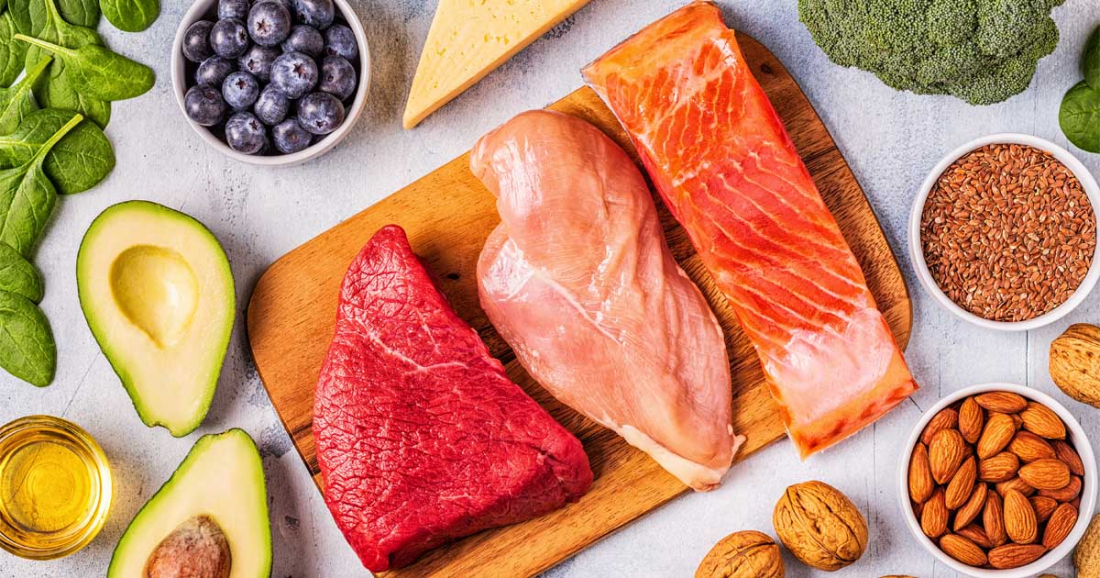
A lot of people focus solely on quantity in their quest to lose weight. How many calories they should eat, how much protein they need, how much carbs this and that has, and if that bar here will fit in their macros. But in doing so, they completely fail to pay attention to the QUALITY in which we ingest our food, because that is often more important than the quantity itself. We should strive to ingest nutrients in the highest quality possible, because that is the only way to ensure that our bodies have enough energy to function optimally. Focus on eating real foods that have not undergone multiple technological processing, limit products with added sugar, less nutritionally valuable foods like fasfood, sweetened drinks, semi-finished products and cold cuts. Eat food that is real food, because such food is the foundation for optimal health, athletic performance and body changes.
4. Don't underestimate preparation.
As summer ends and many of us return to school or full-time work, we need to not underestimate food preparation. Of course, even here I'm not advising you to turn down invitations to work lunches and eat exclusively your boxed food! I just want to point out that those who are prepared are not surprised! If you prepare your meals regularly, you are firmly in control of your intake and know exactly what the food you eat is made of. This regular lunch solution of a baguette or a sandwich from a vending machine is not optimal for weight loss (or for health) - neither is the daily pizza from the Italian restaurant where you have lunch with your colleagues, so what can we say... That's why regular preparation of snacks and lunches is a very important part of any successful reduction. Don't know what kind of goodies to prepare? Check out our recipes and get inspired by the healthy treats we prepare for you regularly!
5. Make sure you have adequate fluid intake and don't drink your calories.
Not just food, but drinking is an important part of the healthy eating puzzle. You know the saying "hunger is thirst in disguise"? There is something to it after all! Translated, it means that if we drink enough, we have much better control over our feelings of hunger and cravings. I certainly don't mean that instead of eating well, you should drink hectolitres of water and neglect your food. Hydration is also important for the body's natural detoxification and optimal nutrient distribution. Hydration is equally important during sports.
Beware of sugary sodas, which can be a subtle pest to your line because they contain a lot of sugar. Juices and smoothies should also be watched out for in this regard. It is ideal to take plain water, or you can flavour it with a slice of cucumber, lemon and mint, ginger or fresh fruit. You can also include unsweetened mineral water, tea and definitely coffee for a change - just beware of giant whole milk lattes or sweetened coffee variants.
6. Adequate sleep as one of your top priorities.
We've mentioned the hugely important role of getting enough sleep many times here. But you can never have enough of such reminders, so we'll reiterate its essence one more time. Sleep is an absolutely essential component for life, reduction, and athletic performance. If we focus on reduction - lack of sleep is a big indicator of weight gain. This is because those who don't get enough sleep are hungrier, consume more calories, and also often skip workouts because they don't have enough energy for them.
Lack of sleep leads to problems regulating hunger hormones and also affects metabolic rate, which can result in calorie storage. The essence of sleep can certainly not be ignored - again, it is not just the quantity of sleep that is important, but also the quality. To make matters worse, sleep also affects our psyche and motivation, so if we don't get enough sleep, not only will we be grumpy, but we're also more likely to lose motivation to continue on our journey towards our dream body. The optimal amount of hours we should sleep will be individual to each of us, but we should definitely not sleep less than 6 hours per day in the long term.
7. Take regular exercise.
If we have discussed eating, sleeping and drinking, we must not forget about regular physical activity. Not only because we burn calories when we move, but being active is a big and essential prerequisite for a long and healthy life. Movement should be a natural part of our lives and we should engage in some form of it - at least the basic form, walking - every day. If you find the remark about walking irrelevant, believe me, it is not. Unfortunately, due to the demands of our time, many of us spend most of our days behind a computer and we are getting less and less attention to this natural form of exercise. Of course, it's not just the demands, but also the excuses we love to find to not move. However, a healthy body needs movement and if we are trying to cut down, physical activity should be a regular part of our regime! Moreover, if you go for a walk in the countryside, you will kill two birds with one stone, because you will get a breath of fresh air, which is another important prerequisite for health.

It doesn't really matter what activity you choose - the important thing is that you enjoy the exercise, are able to do it regularly, it helps you to relax after the stress of the day and gives you the results you want. Someone enjoys football, someone else enjoys running or swimming, and then there's us who love the smell of iron. All types of exercise are great and it is also very important to vary the activities and load the body from different angles and directions.

8. Mental well-being as the key to success.
When discussing the essential components of the fat loss journey, there must be (at least) one more, and that is psychological well-being. The psyche has an absolutely crucial influence on weight loss and if we don't feel good mentally, our weight loss can't go as smoothly as we would like. If we are under frequent, undue or prolonged stress, the internal balance is disturbed. Stress also causes an increase in cortisol levels, which is known as the stress hormone. Long-term high levels of cortisol can block efforts to reduce and build muscle mass and can raise blood pressure. Cortisol also affects our appetite, the amount of energy we take in and the body's ability to burn or use fat as an energy source.
Recommended

Nebbia Intense Mini Top GOLD Mesh 830
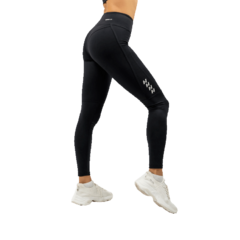
Nebbia Tvarující legíny s vysokým pasem AGILE 464

When stressed, we often tend to seek comfort in food, so we eat more or choose more calorie-dense foods, which can have a negative impact on our fat stores. And again, a note on motivation. If we are stressed often or for long periods of time, it is much easier to lose motivation and focus on other things that keep us busy. There are studies that show a connection between stress and overeating, or emotional eating, which can lead to weight gain.
What to take away from the article
Summer is usually the time of year when we indulge in all sorts of snacks in large quantities, eat mountains of ice cream, drink a little more alcohol, and often don't pick up a few pounds over the summer as a result. Did you manage to do it this year? No need to mourn! Today we've put together some very simple basic tips to get you back on track quickly after the summer and get your line pointed in the right direction again. We told ourselves that it's not just the quantity of food we eat that matters, but also the quality, that we shouldn't neglect our drinking regime, get regular exercise, get enough sleep and stress as little as possible. You may be thinking that these are basic tips that you know well - yes, they are. But sometimes you need to be reminded of them. And if you're just catching on to a lifestyle change, then you can take away at least the essential basics from our advice.
Sources:
https://www.health.harvard.edu/newsletter_article/why-stress-causes-people-to-overeat
Spiegel, K., Tasali, E., Penev, P., & Van Cauter, E. (2004). Brief communication: Sleep curtailment in healthy young men is associated with decreased leptin levels, elevated ghrelin levels, and increased hunger and appetite. Annals of internal medicine, 141(11), 846-850. https://doi.org/10.7326/0003-4819-141-11-200412070-00008
Matousek, R. H., Dobkin, P. L., & Pruessner, J. (2010). Cortisol as a marker for improvement in mindfulness-based stress reduction. Complementary therapies in clinical practice, 16(1), 13-19. https://doi.org/10.1016/j.ctcp.2009.06.004
Patel, S. R., & Hu, F. B. (2008). Short sleep duration and weight gain: a systematic review. Obesity (Silver Spring, Md.), 16(3), 643-653. https://doi.org/10.1038/oby.2007.118
No posts have been made yet.








