





Prevention is essential! Or - why take joint nutrition
 Author:
 Joint nutrition is often promoted in the media as a supplement for the elderly, so most athletes and active people overlook it, thinking it is not important for them. But the opposite is true. If we are active or have a physically demanding job, joint nutrition should not be missing from our supplement shelf. It is not at all true that it should only be used by old people and those who are already in pain or need to speed up their recovery from injuries. Joint nutrition is a very effective way to prevent joint pain and degeneration and should not be forgotten, especially if sport is a regular part of our programme.

A theoretical window on joints
I don't want to bore you with a long theory about what joints are and how they work, so we'll take it at a hop. The skeleton is the support of the human body. The bones themselves are not mobile and this function is provided by the joints. A joint can therefore be described as a movable connection between two bones. The joint is enclosed by the joint capsule, which is reinforced by ligaments. On the inside, it is filled with a synovial layer that produces synovial fluid - called joint sebum. This fluid is essential for the joint to function. The synovial fluid nourishes the articular cartilage, ensures a firm adhesion of the surfaces to each other and reduces friction. Lack of this fluid damages the articular cartilage, impairing its nutrition and regeneration. This leads to a reduction in joint function and resistance and subsequently to the development of osteoarthritis.
Cartilage is very strong, yet relatively flexible and acts as a kind of shock absorber. The regenerative capacity of cartilage is generally quite low, partly because it is mostly non-vascular and therefore has very little metabolic activity. The function of cartilage can be likened to that of a sponge - when pressure is applied, water is expelled from the cartilage, while at rest the water is drawn back into the tissue along with a certain amount of substances contained in the joint sebum. When absorbed, nutrients enter the cartilage and when displaced, metabolic wastes are carried out of the cartilage. For proper nourishment of the cartilage, it is essential that the synovial fluid contains all the necessary nutrients.
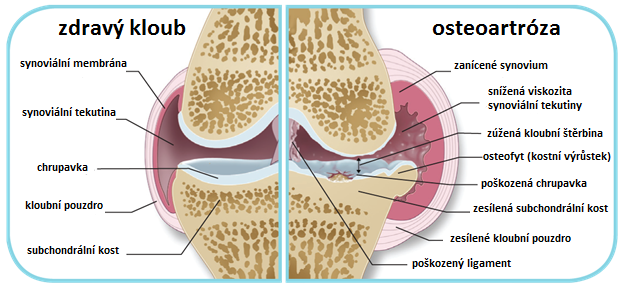
Image source:http://kloubus.blog.cz/1909/co-to-je-kloub
When our joints start to ache, a number of factors can be to blame, the most common being degenerative joint disease called arthritis. Cartilage is under a lot of strain throughout life - especially for active athletes or physically hard-working individuals. Age also has a major influence on the wear and tear on our joints, and logically, joints have the highest mobility during childhood. Joints should be in their best condition, with good mobility and strong ligaments, between the ages of 25 and 30. After 30, the first signs of joint wear and tear may occur, and the first pains may appear. We have already come across above that joint cartilage is unfortunately not able to fully regenerate and therefore loses elasticity with age and movement is restricted.
There are a number of factors that affect the condition of our joints. Apart from genetics and serious diseases, we can prevent many of them. Movement is an absolutely essential factor for health, vitality and a healthy weight. However, in order to prevent pain, we need to approach it sensibly, use appropriate loads, ensure the most precise technique for performing strength exercises, get good quality shoes, load the body with different types of movement and compensate, get enough rest and ensure adequate nutrition for the body. Also, people who are obese or very overweight can very often experience joint pain because their joints are permanently under a higher load than is healthy, so we must also mention optimal body weight, which is also very important for joint health.
How to choose an effective joint nutrition?
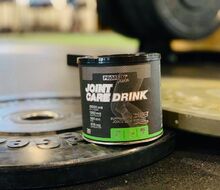
Joint nutrition in the form of a supplement is another way to ensure your joints receive adequate nutrition. Of course, it should be noted that it does not cure itself, but it is very effective in preventing pain and supporting treatment for minor injuries. The media tells us that supplements for healthy joints are mainly for the elderly, but this is not the case at all. For prevention, we should take joint supplements LONG TERM. As for the active ingredients, in joint nutrition we should find:
Glucosamine Sulfate
Glucosamine is a monosaccharide found in chitin, glycoproteins and glycosaminoglycans. It is one of the basic components of articular cartilage. Glucosamine sulfate reduces collagen degradation in joints and the symptoms of osteoarthritis. It helps to bind water, thus improving cartilage elasticity and joint mobility. According to studies, the most effective daily dosage is 1,500 mg - 2,000 mg.
Chondroitin Sulfate
Chondroitin sulfate is a polysaccharide classified as a glucosaminoglycan. Like glucosamine, it is a natural component of cartilage, helps reduce the degree of degeneration, relieves pain and promotes cartilage elasticity. Chondroitin is also found in other connective tissues in the body. The effects of chondroitin are gradual with a lag time of about 4-6 weeks, so it is highly recommended to take it long term. Chondroitin and glucosamine form synergists and their effect is strongest when taken together. The optimal dose of chondroitin should be between 800 mg - 1200 mg per day.

MSM - Methylsulfonylmethane
MSM or methylsulfonylmethane is the organic and most bio-absorbable form of sulfur. In our body, it softens the internal connective and cartilage tissues, which are then much more flexible and resilient. MSM is a powerful antioxidant, it significantly supports joint health, increases joint flexibility and mobility, reduces inflammation and reduces joint pain, therefore it is recommended for people suffering from arthritis and other joint diseases. In addition, it also works to help boost immunity. Very often, this substance is given alone, as it can help speed up recovery in acute conditions. The optimal daily dose of MSM ranges from 500 mg - 1000 mg. In case of severe pain or injuries, the dose can be increased up to 3000 mg per day.
Collagen
We have already come across in the introduction that collagen is an essential substance for healthy joints. It is a water-insoluble protein that makes up to 30% of all proteins in the mammalian body. The production of collagen begins to decline after the age of 25, and after the age of 40, the decline is rapid. It is therefore advantageous to supplement the amount of collagen, ideally in the form of collagen peptides (hydrolysed collagen), which are the most absorbable form of collagen. Collagen, especially type II collagen, helps maintain the flexibility and strength of every joint and has many other beneficial effects on other parts of our body, such as nails, skin and hair.

Vitamin C
If we mentioned collagen, we must not forget vitamin C, which is essential for the actual formation of collagen. Vitamin C also acts as a powerful antioxidant. The antioxidant property of vitamin C contributes to the improvement of the condition of the joints by reducing oxidative damage resulting from the action of free radicals.
Hyaluronic Acid
Hyaluronic acid is an important element that gives elasticity to tissues. Hyaluronic acid is an essential functional component of joint sebum, making it thick and sticky (viscous). It is these properties that are essential for normal joint function. It acts as a lubricant and shock absorber. Studies have shown that oral use of hyaluronic acid can reduce the symptoms of osteoarthritis, the problem is that few joint supplements contain sufficient amounts of it. The optimal dose is between 150 - 200 mg. Hyaluronic acid is also widely used in the cosmetic industry.

Other substances beneficial for joint health
In addition to all the substances mentioned, we can reap the benefits of several other supplements. One of the very effective supplements for the treatment and prevention of joint pain is the plant boswellia serrata. Its anti-inflammatory, soothing and calming effects are a balm for aching joints. Another beneficial substance that can affect the health of our joints is curcumin. Adequate intake of calcium, vitamin D, magnesium, zinc and other minerals is also important for healthy bones and joints.

Fish oil
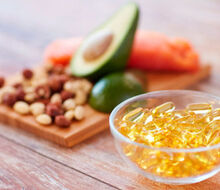
We've talked many times about the fact that omega-3 fatty acids are a real nutritional treasure. In the almost endless list of their amazing effects, there is also a positive influence on the health of bones, joints and articular cartilage. Omega-3 fatty acids have anti-inflammatory effects and can reduce joint pain. A sufficient supply of omega-3 fatty acids is also crucial for other bodily functions and health in general, so a supplement containing them should also be taken regularly.
When and what form of joint nutrition to take?
There is a good selection of supplements available on the market today, even in the category of joint nutrition. Of course, even here, we can find really good quality products, but unfortunately also products that do not contain some of the active ingredients or do not provide enough of them. Joint nutrition can be taken in bulk, capsule or tablet form. It is generally acknowledged that taking the bulk form of all supplements, including joint nutrition, is slightly more convenient, but if you prefer the tablet or capsule form because of the ease of dosing, that's fine.
More important than the form of the supplement is the content of the active ingredients. As for the best time of day to take joint nutrition, it basically doesn't matter. Taking it on an empty stomach seems to be ideal, so that the active substances can travel to their target stations during the day, but taking joint nutrition in the evening is also not a mistake.
What to take away from the article?
Prevention should be the basis of musculoskeletal care. In today's article, in addition to the usual principles we should follow to ensure that our joints serve us well for a long time, we have said that prevention should also be supported by regular use of joint nutrition. However, it should be noted that even the best joint nutrition will not help when the joint system is damaged by inappropriate movement patterns or excessive stress.
In this article we have discussed all the components that are crucial for optimal joint nutrition and should be included in the supplement. Definitely do not underestimate the choice of a suitable product, a poor quality product will not support prevention very much. If you are suffering from discomfort and pain, do not expect to be saved and cured by taking joint nutrition. It can help, but even joint nutrition can't work miracles.
Recommended
Prom-in Joint Blend
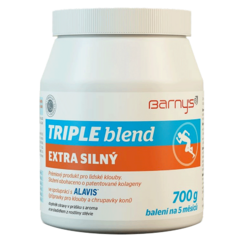
Barnys Triple Blend Extra Silný
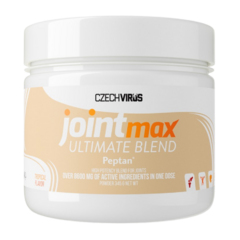
Czech Virus Joint MAX Ultimate Blend
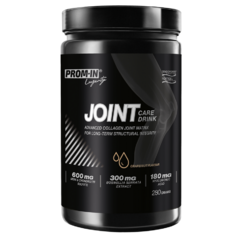
Prom-in Joint Care Drink
Sources:
Vijitha De Silva, Ashraf El-Metwally, Edzard Ernst, George Lewith, Gary J. Macfarlane, on behalf of the Arthritis Research UK working group on complementary and alternative medicines, Evidence for the efficacy of complementary and alternative medicines in the management of osteoarthritis: a systematic review, Rheumatology, Volume 50, Issue 5, May 2011, Pages 911-920,
https://examine.com/supplements/glucosamine/
Reginster JY, Deroisy R, Rovati LC, et al. Long-term effects of glucosamine sulphate on osteoarthritis progression: a randomised, placebo-controlled clinical trial. Lancet. 2001;357(9252):251-256. doi:10.1016/S0140-6736(00)03610-2
Singh JA, Noorbaloochi S, MacDonald R, Maxwell LJ. Chondroitin for osteoarthritis. Cochrane Database Syst Rev. 2015;1:CD005614. Published 2015 Jan 28. doi:10.1002/14651858.CD005614.pub2
Reginster JY, Deroisy R, Rovati LC, et al. Long-term effects of glucosamine sulphate on osteoarthritis progression: a randomised, placebo-controlled clinical trial. Lancet. 2001;357(9252):251-256. doi:10.1016/S0140-6736(00)03610-2
Debbi, E. M., Agar, G., Fichman, G., Ziv, Y. B., Kardosh, R., Halperin, N., Elbaz, A., Beer, Y., & Debi, R. (2011). Efficacy of methylsulfonylmethane supplementation on osteoarthritis of the knee: a randomized controlled trial. BMC complementary and alternative medicine, 11, 50. https://doi.org/10.1186/1472-6882-11-50
Paul, C., Leser, S., & Oesser, S. (2019). Significant Amounts of Functional Collagen Peptides Can Be Incorporated in the Diet While Maintaining Indispensable Amino Acid Balance. Nutrients, 11(5), 1079. https://doi.org/10.3390/nu11051079
Gammone, M., Riccioni, G., Parrinello, G., & D'Orazio, N. (2018). Omega-3 Polyunsaturated Fatty Acids: Benefits and Endpoints in Sport.Nutrients, 11(1), 46. doi: 10.3390/nu11010046
Oe, M., Tashiro, T., Yoshida, H., Nishiyama, H., Masuda, Y., Maruyama, K., Koikeda, T., Maruya, R., & Fukui, N. (2016). Oral hyaluronan relieves knee pain: a review.Nutrition journal, 15, 11. https://doi.org/10.1186/s12937-016-0128-2
https://www.klouby-vazy.cz/jak-spravne-vybrat-ucinnou-kloubni-vyzivu
No posts have been made yet.








