Mineral water is good to drink only occasionally!
 Author:
 Without water, our body could hardly manage even a few hours and everything from proper metabolism to optimal functioning of our organs to such things as work productivity revolves around a proper drinking regime. But have you ever wondered what kind of water is actually worth buying at the supermarket? And how big are the differences between them? In our article today, we will try to present this issue in as much detail as possible so that you can better understand which bottled water to choose and which to avoid.
Content of the article
- What types of bottled water can you get?
- Which mineral waters are the best and which are the worst?
- Should I get my nutrients from mineral waters?
- What to take away from today's article?
What kinds of bottled waters can you get?
Although most supermarkets don't separate bottled waters into distinct sections, in reality each water is a little different. Most people have no idea that there is, for example, baby water. It has the strictest ever legislative standards in terms of, for example, the content of potentially problematic ingredients (nitrates, micro-organisms, etc.) and also contains less sodium. Although the word 'infant' appears in the name, it is of course suitable for everyone and can be drunk regularly.
In addition to infant water, there is also so-called spring water, which comes from an underground source but, unlike infant water, can be further treated to remove some undesirable components - but nothing can be added to it except carbon dioxide (bubbles). Mineral water is also a special type of spring water, which has an increased micronutrient content. This content is due to where the water comes from and the minerals are not added artificially. In most cases, you should also see on the label whether the water is heavily, moderately or lightly mineralised - for regular drinking, it is a good idea to use only lightly mineralised waters (with a mineral content of up to 500 mg per litre), and to include the others only once in a while.
Drinking waters are quite specific. As the name implies, this water is drinkable, but it does not have to come from any underground source and can be bottled from the tap. So if you don't want to drink water somewhere on a camping holiday and buy bottled drinking water instead, you may not know the difference in theory.
If you buy drinking water, you can easily fill it up from the tap and it may not make any difference.
What are the best and worst mineral waters?
If we were to devote our article today to all of these types of water, it would be incredibly long and, for many of you, impenetrable. So let's just focus on the spring waters we encounter most often - for the most popular ones, we've even got a quick comparison of how they stack up in terms of both mineral content and unwanted substances. In this case, we've drawn information mainly from independent tests from the A Enough! show and results published by accredited laboratories. We looked at the following waters:
Magnesia
One of the most popular magnesium minerals, which you can find in virtually every supermarket or convenience store, is Magnesia. And as you might expect, this is the only choice we can recommend. According to the official manufacturer's data, you can find it in one liter of water:
- 170 mg of magnesium
- 37.4 mg of calcium
- 6.17 mg of sodium
At the same time, it should be highlighted that independent laboratory testing from the above links has not come up with any increased presence of problematic substances or microorganisms. This water will therefore reliably replenish minerals without ingesting anything harmful - and as you will see in a moment, this is certainly not true of every water you buy in the supermarket.
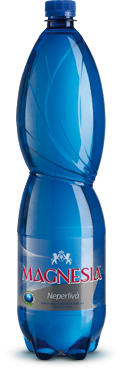
Magnesia is undoubtedly one of the best mineral waters available on the market.
Gemerka
Similarly positive is the lesser-known mineral water called Gemerka, which, like Magnesia, has a blue plastic bottle. It comes from the Slovak Karst and in one liter of their still mineral water you will find:
- 433 mg of calcium
- 131 mg of magnesium
- 105 mg of sodium
It is the 3:1 ratio of calcium to magnesium that is touted on the manufacturer's website as optimal, although many studies work more with a 2:1 ratio in favour of calcium. Still, there is nothing in the water that shouldn't be there, and that's why we can only recommend it.
Good water
Good Water fared slightly worse in independent testing. According to the official website, it contains significantly less minerals than the two previous waters - specifically, in one litre you will find:
- 8.6 mg of magnesium
- 10.7 mg of potassium
- 11.3 mg of sodium
The big advantage of this water is its low price, but the tests mentioned above revealed a problem with increased levels of organotrophic bacteria. Of course, this is not a serious problem, as these bacteria are present in some quantity in all water. The increased concentration may be due to improper storage or bottling, for example - but it should be noted that Good Water at 22 degrees did contain an excess of these bacteria, but on the other hand, to pose a health risk, there would have to be many times more. Worse still, independent tests by A Dost! in 2020 highlighted the presence of a certain amount of harmful perfluoroalkylated compounds.
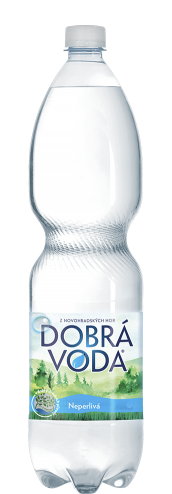
Good water may be popular, but it doesn't come out too well in independent tests.
Zaječická bitters
Although Zaječická bitters is presented on the official website as a detoxifier, we must of course object to the whole concept of detoxification. In this case, we refer you to a great video by Lukáš Roubík, which we also mentioned in our separate article. As far as the composition is concerned, Zaječická bitters has incredible
- 5033 mg of magnesium!!
- 301 mg of calcium
- 1755 mg of sodium
However, due to such a high mineral content, it is not meant to be drunk daily in any large concentrations. As they write on the retailer's website, from 0.2 litres onwards it has a laxative effect. Unfortunately, laboratory tests have revealed extreme amounts of nitrites and nitrates in it, as well as organotrophic bacteria. These substances are not downright harmful in small quantities, but their intake should certainly not be completely high - after all, they are found in many foods these days, from sausages to fruit and vegetables to drinking water.

Bílina sour
Bílinská kyselka is another highly mineralized water that has the following characteristics:
- 41.9 mg of magnesium
- 133.7 mg of calcium
- 1792 mg of sodium
As in the case of Zaječická bitter, this is not a water that is intended for daily drinking in high doses - it is a so-called medicinal water, which is recommended for respiratory diseases, digestive problems and kidney diseases. Independent analyses are unfortunately lacking in this case and the analyses carried out by the company do not admit any problems, so we cannot really take a detailed look at this mineral water. However, the information available suggests that it can be very good for occasional drinking and mineral supplementation (or as a supplement for specific ailments).
Vincent
You can also very often see Vincentka in supermarkets. Unfortunately, none of the independent tests mentioned above have reviewed it, so we have to rely only on the company's own analyses . These state that one litre of water contains:
- 2330 mg of sodium
- 16.9 mg of magnesium
- 125 mg of potassium
In terms of micro-organisms, pesticides and other potentially harmful compounds, Vincentka meets all the limits. Once again, however, we must add that these are not independent tests, but tests carried out by the company itself.
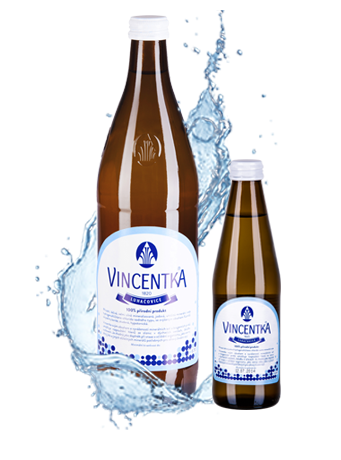
The analyses of the substances contained in Vincentka also do not indicate that the water contains anything undesirable.
Should I get my nutrients from mineral water?
Mineral waters are undoubtedly a great source of many minerals. As you may have noticed, many of them contain a hefty serving of magnesium, which we wrote a whole separate article about. In it we mentioned, for example, that it is important for our performance, mood, sleep and metabolism of other indispensable compounds. Of course, calcium and potassium can be similarly beneficial.
The main stumbling block for many people can be the high sodium content. The US FDA recommends keeping sodium intake to 2300 mg per day, which is amply covered by a single teaspoon of table salt. Meanwhile, the aforementioned Zajecka bitters alone contain up to 1,755 mg of this nutrient, which can be problematic for people with hypertension or other diseases.
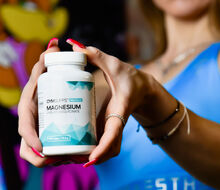
You can also often read about the poor utilization of nutrients from minerals. But this is a complete myth and it is just the opposite - the ions that mineral waters contain have been proven to be very well absorbed. So you can indeed use them as an occasional source of nutrients, although of course they cannot replace a varied and balanced diet.
What to take away from today's article?
The main thing you should take away from today's article is that while mineral waters are a great source of various micronutrients, they are definitely not that simple and many of them contain substances you wouldn't really expect to find in them. So while they are certainly not a bad source of beneficial minerals in themselves, we would recommend drinking them only occasionally and not on a daily basis. In terms of regular mineral supplementation, it is much better to rely on a varied and balanced diet, enriched in the case of athletes with a good quality multivitamin.
Recommended
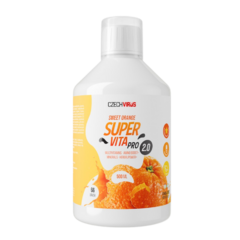
Czech Virus SuperVita PRO 2.0
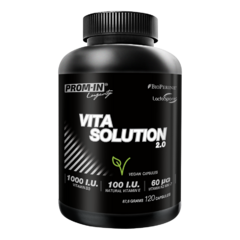
Prom-in Vita Solution 2.0
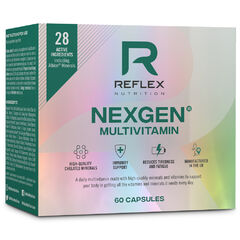
Reflex Nexgen
Sources: https://www.stream.cz/adost/tyto-balene-vody-jsou-nejhorsi-a-tyto-nejlepsi-vysledky-velkych-nezavislych-testu-a-dost-64090377, https://www.arecenze.cz/balene-vody/
No posts have been made yet.