





Is diabetes really hereditary or can it be contracted?
 Author:
 Diabetes is one of the widespread and, unfortunately, incurable diseases that are prevalent in today's population. And while some people feel that diabetes is genetically determined and nothing can happen to them, other people are afraid of it for no reason at all. As is usually the case, the truth lies somewhere between these extremes. So, in today's article, we'll take a look at diabetes, what's behind it and how to avoid it.
Article content:
- Diabetes and insulin
- How is diabetes divided?
- How do I know diabetes?
- What should I do if I suspect I have diabetes?
- What should I do to avoid having diabetes?
- What can I take away from today's article?
Diabetes and insulin
To even be able to define diabetes, you must first understand the behavior of insulin. This is a peptide hormone secreted by the islets of Langerhans in the pancreas. It is secreted in our body quite naturally and in two ways - continuously (continuously during the day) and secondly after a meal, especially one that is rich in carbohydrates. The primary role of insulin is to lower blood sugar levels by allowing it to reach the cells directly. In other words, the more glucose we have in our blood (for example, as a result of a very sweet meal), the greater the insulin secretion must be. The opposite (the so-called antagonist) of insulin is a hormone called glucagon. This, in turn, increases blood sugar levels, which can be seen, for example, during long hard workouts when glycogen is broken down into glucose molecules that can be used as an energy source.
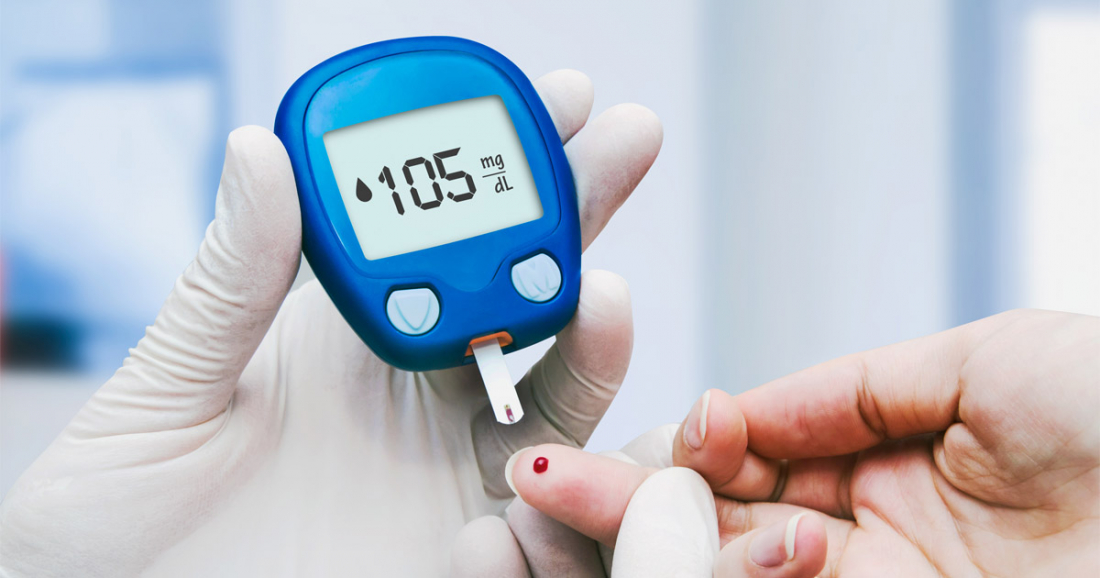
Blood sugar levels can be determined by simply pricking your finger.

How is diabetes divided?
This mechanism, like other mechanisms that take place in our body every minute, is almost ingenious. But the problem arises when the pancreas does secrete insulin, but does not secrete it in the quantities needed. Eventually it does secrete enough, but the cells are no longer resistant to it and everything stops working as it should. This is where diabetes comes in, which can be further divided into:
Type 1 diabetes
Type 1 diabetes is a less common type of diabetes and results in what is known as absolute insulin deficiency, which lasts for life. Simply put, the mechanism of the disease is that our own immune system destroys our B cells where insulin is produced. The development of this disease is not fully understood, genetics probably plays a role, but various environmental factors may also be involved and some scientists even believe that the composition of the gut microbiota plays a role, although this is not well confirmed. Only about 7% of people with diabetes develop the disease and it usually develops in adolescence, although it is possible to develop the disease at any age.

Type 2 diabetes
Type 2 diabetes is inherently more common and is a so-called relative insulin deficiency. Our body produces it, but the cells would require even more of it because they are resistant to it. What is also interesting about this disease is that it used to occur mainly in middle-aged individuals, but nowadays it is more and more common in the younger generation - one of the reasons for this is lack of exercise and a sedentary lifestyle. Obesity is also a very common cause of diabetes as such, and the onset of this disease can be prevented (or delayed) by a healthy lifestyle with a balanced diet and plenty of sporting activities. Of course, restricting excessive amounts of fats and simple sugars is also a solution.

Obesity is one of the factors that may be behind the development of diabetes.
How do I know if I have diabetes?
Diabetes has a number of different manifestations, which unfortunately may not occur automatically in everyone and some of the effects are even contradictory. In the case of diabetes, it is important to look for:
- Weight change - some people with diabetes may experience constant hunger in the early stages of the disease, which leads to weight gain, but other patients may lose weight. It is important to watch for any fluctuations that are not justified.
- Thirst and frequent urination - both types of diabetes are characterised by thirst and associated frequent urination. Urinary tract infections and dehydration are not uncommon.
- Blurred vision - the retina of the eye is very sensitive to glucose fluctuations, so you will often recognise diabetes through blurred vision. This may not be permanent at all, but rather comes in certain waves.
There may also be less common problems such as burning of the lower limbs, impaired wound healing, constant fatigue, malaise and in extreme cases mental confusion. Type 1 diabetes is an autoimmune disease, so lifestyle and other factors do not play a role. It is in type 2 diabetes that lifestyle plays a primary role, and if you are stressed, overweight and have an excess of simple carbohydrates in your diet, you are much more likely to develop diabetes.

What to do if I suspect diabetes?
If you suspect you have diabetes, it's definitely a good idea to see a doctor who will arrange for you to have your blood sugar levels tested - they will be interested in both fasting and intermittent readings, and whole sets of tests will be repeated multiple times to really guarantee the result.

A healthy diet is one of the most important pillars of type 2 diabetes prevention
What can I do to avoid diabetes?
The good news is that many occurrences of type 2 diabetes can be prevented if you have the right regimen. The key to everything is to get rid of excess weight and obesity if you happen to suffer from it. Of course, an active lifestyle and a healthy diet are also linked to this. These three factors are quite sufficient as prevention. So if you are active, go to the gym or otherwise do sports at least two to three times a week and try to have a balanced diet at least as far as possible, you have absolutely nothing to worry about with diabetes or prediabetes. Still, we recommend doing so with your carbohydrate intake.
Recommended

Nebbia Washed-off volné baggy tepláky s kapsami GYM BRO 373

Nebbia Kraťasy FIRST PICK 379

Prom-in Adaptotest

Nebbia Crop mikina s dlouhým rukávem a kapucí GYM TIME 259
What to take away from today's article?
The main thing you should take away from today's article is that we distinguish between type 1 and type 2 diabetes. While the former is autoimmune and cannot be influenced in any way, the latter is quite often caused by a poor diet, lack of exercise and, last but not least, overweight or obesity, which is of course linked to the above factors. But there is no reason to stress, if you get enough exercise and try to keep your weight and diet within the norm, you are of course not at risk of diabetes.
No posts have been made yet.








