





Good fats/bad fats
 Author:
 Until recently a very simple question. Bad ones are saturated, good ones are unsaturated. Eat egg whites, don't eat red meat. Is it that simple?
Approximately 90% of dietary fat is in the form of triglycerides made up of fatty acids and glycerol. Fatty acids consist of a chain of carbon atoms with a methyl group at one end and an acid group at the other end. Each carbon atom in the chain binds a certain number of hydrogen atoms - the exact number of hydrogen atoms depends on whether the fat is saturated or unsaturated. Saturated fatty acids contain the maximum possible number of hydrogen atoms, while unsaturated fatty acids lack some hydrogen atoms because they are replaced by double bonds between carbon atoms.
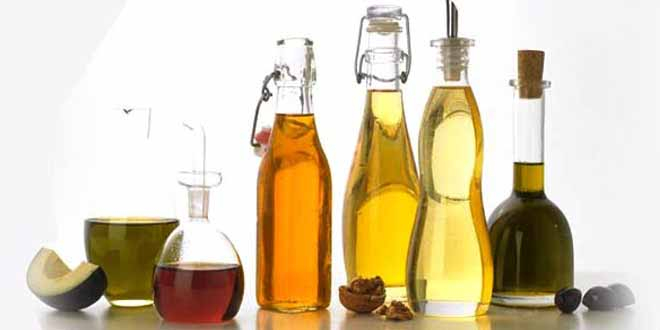
If there is one double bond in one molecule, the fat is referred to as "monounsaturated" and if there are two or more double bonds, it is referred to as "polyunsaturated". Omega-3 and omega-6 fatty acids are both polyunsaturated fats, the difference being the position of the first double bond. In omega-3 fatty acids, the first double bond is on the 3rd carbon atom, while in omega-6 it is on the 6th carbon atom, counting from the methyl end (referred to as omega).
It turns out that there are good justifications for saturated fat intake in certain situations and not in certain situations. And anyway, there are monounsaturated and polyunsaturated fatty acids, which sometimes don't have the best properties. The choice depends on your goals, your blood cholesterol levels, the percentage of fat in your tissues, and your innate disposition to gain fat.
A quick example: stearic acid, one of the saturated ones, is half the fat in beef. So beef is bad? Not so fast! Stearic acid, unlike other saturated fatty acids, lowers LDL cholesterol (the bad one).
On the other hand, it has the unpleasant property of activating fat storage relatively more than other fatty acids.
And what about healthy olive oil. It is one of the unsaturated fatty acids, the good fats. It is full of proven good properties, just look at the table below. However, it breaks down very quickly and for this reason it is one of the fats that likes to be stored.
All fats, including saturated fats, are a concentrated form of energy for us. Fats are essential to the body as they are a source of fat-soluble vitamins - A, D, E and K and when stored as fat stores, they protect our vital organs.
Here are some of the advantages and disadvantages of fats:
|
Fatty acid |
Source (example) |
Advantage |
Disadvantage |
|
Lauric (lauric) (C12 saturated fatty acid) |
Coconut oil |
Utilization vs storage ratio. Increases HDL cholesterol. Accelerates metabolism probably by activating thyroid hormones |
Increases LDL (bad) cholesterol |
|
Palmitic (C16 saturated fatty acid) |
Palm oil |
Does not impair blood clotting like other saturated fats. Increases HDL cholesterol |
Increases LDL cholesterol. Decreases insulin sensitivity |
|
Stearic (C18 saturated fatty acid) |
Beef |
Does not raise LDL cholesterol like other saturated fats |
Activates lipogenesis genes - fat storage |
|
Oleic (C18 unsaturated fatty acid) |
Olive oil, canola oil, peanuts |
Reduces blood pressure, improves glycemia (blood sugar concentration) |
Tends to be stored in fat stores because of the rate of breakdown |
|
Linoleic (C18, omega 6 polyunsaturated fatty acid) |
Corn, safflower oil (safflower dye), cottonseed oil |
Reduces LDL cholesterol |
Compared to others, exacerbates inflammatory processes |
|
Conjugated linoleic acid (C18, two types of unsaturated acids) |
Beef and dairy products |
Reduce lipogenesis (storage), may have an effect on increasing muscle mass formation |
May cause insulin resistance in obese people |
|
DHA and EPA (Omega 3 unsaturated fatty acids) |
Fatty cold-water fish |
Contribute to fat reduction, reduce inflammatory conditions, cardiac arrhythmias, reduce blood clotting |
In larger doses excessive antithrombotic properties |
And now something to think about. Does the "normal" population differ in relation to fat from the training population? Could it be that some of the negatives of fats are mitigated by intense and frequent training because of different physical adaptations and different metabolism?
What is needed is to sort fats by their known effects on the body, not by the outdated lecture of good fats and bad fats. Instead, one would need to look at the fat content of a particular diet according to the individuality of its holder.
For example, although the usual diet has little impact on raising cholesterol in most of the population, it may be that because of a family's genetic predisposition, you may want to avoid palm and coconut oil and beef fat will not be a problem.
On the other hand, if you don't have a genetic predisposition, but are concerned about prostate problems and want to lose some fat as well, then coconut oil with its high lauric acid content is for you.
Heat treatment
The health benefits of olive oil due to its high monounsaturated fatty acid content and high antioxidant content are well known. Studies have shown that olive oil offers protection against heart disease by, among other things, controlling LDL cholesterol and increasing HDL cholesterol.
But the more you expose olive oil to heat, the less you get of its antioxidant properties. So if you use olive oil for cooking, won't you destroy its properties? Not completely, if it goes through a simple heating in your non-commercial kitchen. But you will definitely change its properties at the same time.
If you want to enjoy the positive properties of olive oil, always use it cold.
Cholesterol for muscle mass?
In research by Dr. Riechmann of the Texas Institute on a group of people over 60 years of age doing weight training, one group ingested foods higher in cholesterol, the other did not. The first training group gained more muscle mass than the group with the lower cholesterol diet.
Cholesterol is usually considered the enemy, but in the context of the average person, not in relation to hard-training strength athletes. Perhaps in the future we will see dietary supplements with cholesterol combined with structured triglycerides. Initial studies are being conducted with people under 60 years of age. If "dietary" cholesterol has no effect on increasing blood cholesterol, then what about cholesterol that has an effect on increasing muscle mass? The exact biochemical processes at the cellular level are not yet known.
Latest news on CLA
Just to refresh your memory. Conjugated linoleic acid, i.e. its t10,c12 isomers, has become a big hit of late because of its fat-busting properties. CLA prevents fat deposition and has anti-lipogenic effects. These effects have been demonstrated in rats.
There are now two studies that summarize the findings of other research involving the effects of CLA on humans.
The first study says that there is a low reduction effect from a dose of 3 grams of CLA per day. This translates to a few blanket to a kilo over three months.
At the same time, the second study shows a weak effect of net muscle mass gain. At 3 grams of CLA per day, approximately 300g of muscle mass in strength-trained athletes. It was proven by research from 1998 and again in 2010.
So it does not have as strong effects on humans as it had on research rats, however its effects are proven.
Fish oil and symptoms of overtraining
Fish oil is already known for its positive properties in the direction of heart disease prevention, psychological well-being, reduction of inflammatory processes and even fat reduction. Fat reduction demonstrated in a control group of women.
Recommended

Nebbia Dámský top s dlouhým rukávem INTENSE Sheer 847
Beauty Booster 100cps 1+1
Prom-in Adaptotest
Excelent Protein Bar 85g 4+1
The most interesting feature for very frequent training athletes seems to be the mitigation of the effects of the overtrained state on mental well-being. It turns out that symptoms of overtraining, such as a decline in psyche and loss of motivation, can be alleviated by the application of fish oil.
Omega-3 and omega-6
The human body is capable of making all the fatty acids it needs except for two - linolenic acid (LA), which is an omega-6 fatty acid, and alpha-linoleic acid (ALA), an omega-3 fatty acid. This is why they are referred to as "essential fatty acids". They are very important in growth, for regulating blood pressure and inflammatory processes.
Both of these fatty acids are found in vegetable oils (rapeseed oil, walnut oil). They also serve to synthesize other important fatty acids such as arachidonic acid converted from linolenic acid (omega-6) and icosapentaenoic acid (EPA) and docosahexaenoic acid (DHA) converted from alpha-linoleic acid (omega-3). Natural sources of EPA and DHA are oily fish (salmon, mackerel, herring) and arachidonic acid is found in meat and egg yolks.
In researching heart disease, one of the major causes over the last 150 years has been shown to be an increase in omega-6 intake and a decrease in omega-3 fatty acid intake. The correct ratio of the two fatty acids has not yet been defined. A research report on the subject states that simply increasing the amount of alpha-linoleic acid, icosapentaenoic acid and docosahexaenoic acid in the diet will have the desired effect of increasing the levels of these fatty acids in body tissues and that reducing the intake of linolenic acid and arachidonic acid is not necessary.
Conclusion
You may have slightly changed your mind about the fat you are ingesting. Perhaps you have stopped being afraid of whole eggs and supplement your diet with egg whites from time to time. Perhaps you will no longer fear red meat and supplement your usual diet of chicken or turkey. Use olive oil, it doesn't just have to be extra virgin olive oil. But you should not eat more than 50 grams of fat in one meal. Some studies show that fat doses of more than 50g per serving cause fat to be stored in reserves instead of being used for energy.
No posts have been made yet.








