





Everything you wanted to know about carbohydrates but were afraid to ask
 Author:
 In the last article we took a closer look at proteins, which are the most important nutrients for building muscle in the eyes of bodybuilding enthusiasts. Today we will sweeten our lives a little bit, because we are going to see perhaps an even more complicated nutrient (in terms of adequate intake), and that is carbohydrates.
Carbohydrates (glycides, formerly also carbohydrates, carbs) are the most abundant organic compound on earth. We rank them, like proteins, among the essential nutrients. However, they are mainly derived from plant sources (formation during photosynthesis).
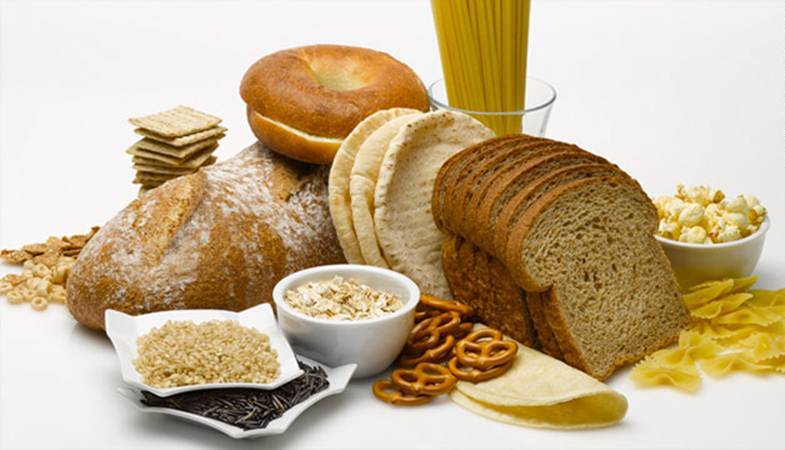
The importance of carbohydrates
- Energy source- The most important role of carbohydrates is their energy function. They serve both as a ready source of energy (glucose) and as an energy reserve in case of sudden need of the body (muscle and liver glycogen).
- Structural component- Carbohydrates are part of membranes, nucleic acids...(Cellulose, chitin, ribose...)
- Distinctive function-(For our purposes, insignificant, so I won't bother you with it)
The division of carbohydrates
The basic division of carbohydrates is by the number of monosaccharide units in the chain. We divide them into:
Simple- Monosaccharides- These simplest carbohydrates are the basic building blocks of more complex carbohydrates. They are divided into aldoses and ketoses according to their functional group. Their most characteristic properties are good water solubility and sweet taste.
- Glucose - found in grape sugar, fruit, honey
- Fructose - a fruit sugar that is present in almost every fruit. This carbohydrate's greatest asset is that it does not directly raise insulin levels in the blood.
- Galactose - part of the disaccharide lactose (lactose = milk sugar composed of glucose and galactose)
- Ribose - a component of the nucleic acids RNA and DNA (carriers of genetic information)
Complex- Oligosaccharides- 2-10 monosaccharide units are found in their chain. Their name is derived from the number of individual sugar units (di-, tri-, ... deca-). The most important are disaccharides composed of just two monosaccharide units (the same or different).
- Sucrose - cane sugar, beet sugar Glucose + fructose
- Lactose - milk sugar Glucose + galactose
- Maltose - malt sugar Glucose + glucose
Polysaccharides-Have more than 10 monosaccharide units linked by a glycosidic bond, but more commonly hundreds to thousands. These carbohydrates do not taste sweet and are not water soluble. They can be further subdivided according to function:
- storage-The storage polysaccharide of plants is starch (composed of amylose and amylopectin-their ratio varies with botanical species). (Note: In Jerusalem artichoke, sunflower, chicory tubers, this storage polysaccharide is inulin) In animals, glycogen serves as a storage polysaccharide. Its supply reaches values of about 100g in the liver and 300-400g in the muscles (note: Our brain needs about 150g of glucose/ 24 hours to function properly). If it is not supplied by diet, it reaches for glycogen stores and synthesizes glucose). It is formed from carbohydrates ingested in the diet.
- Building- Cellulose found in plants, indigestible to humans. Another building carbohydrate is chitin in the bodies of arthropods and fungi. Perhaps the last representative is the most interesting to humans, and that is chondroitin sulfate, which is involved in the construction of connective tissues (cartilage, ligaments).
A special kind of carbohydrate is fibre. As such, it is indigestible for humans, but this does not mean that its intake is unimportant. We can divide it according to its solubility, into insoluble and soluble. Soluble fibre is found in nature as part of hemicelluloses, plant mucilage, clovatins, etc. Its main advantage is its ability to bind water, which causes food to swell in the digestive tract and consequently increases the intestinal contents. This effect results in the regulation of digestion and absorption of nutrients. At the same time, it dilutes toxic substances in the intestine and prevents their absorption (especially heavy metals). After passing into the colon, it becomes food for the bacteria present there and thus has a positive effect on the microflora of the colon.
Recommended

Nebbia Leginové šortky s vysokým pasem AGILE 475

Nebbia Tvarující legíny s vysokým pasem GLUTE PUMP 247

BiotechUSA Zero Bar

Nebbia AW Mikina na zips 720
The second type of fibre is insoluble fibre. This fibre passes unchanged through the small and large intestine, increasing satiety, stool volume and regulating the passage of digestive material through the intestine.
Summing up all the positives, we can say that fibre helps in the fight against cardiovascular disease, obesity, cholesterol and blood lipid levels. It is also an important prevention against constipation, tooth decay, gallstones and the 'popular' colon tumour. Its recommended intake is 30-35g!!!.
Just like insufficient intake, excess fiber in the diet causes unpleasant health problems or feelings. There is a risk of inadequate absorption of certain minerals (Ca, Fe, Zn), bloating and indigestion, and decreased absorption of specific medications. It is therefore advisable to pay sufficient attention to fibre from a young age to avoid problems later in life (especially the aforementioned colon cancer).
Carbohydrate intake
As has been mentioned several times, adequate carbohydrate intake is essential for maintaining health and energy balance, as well as for building muscle and overall internal stability.
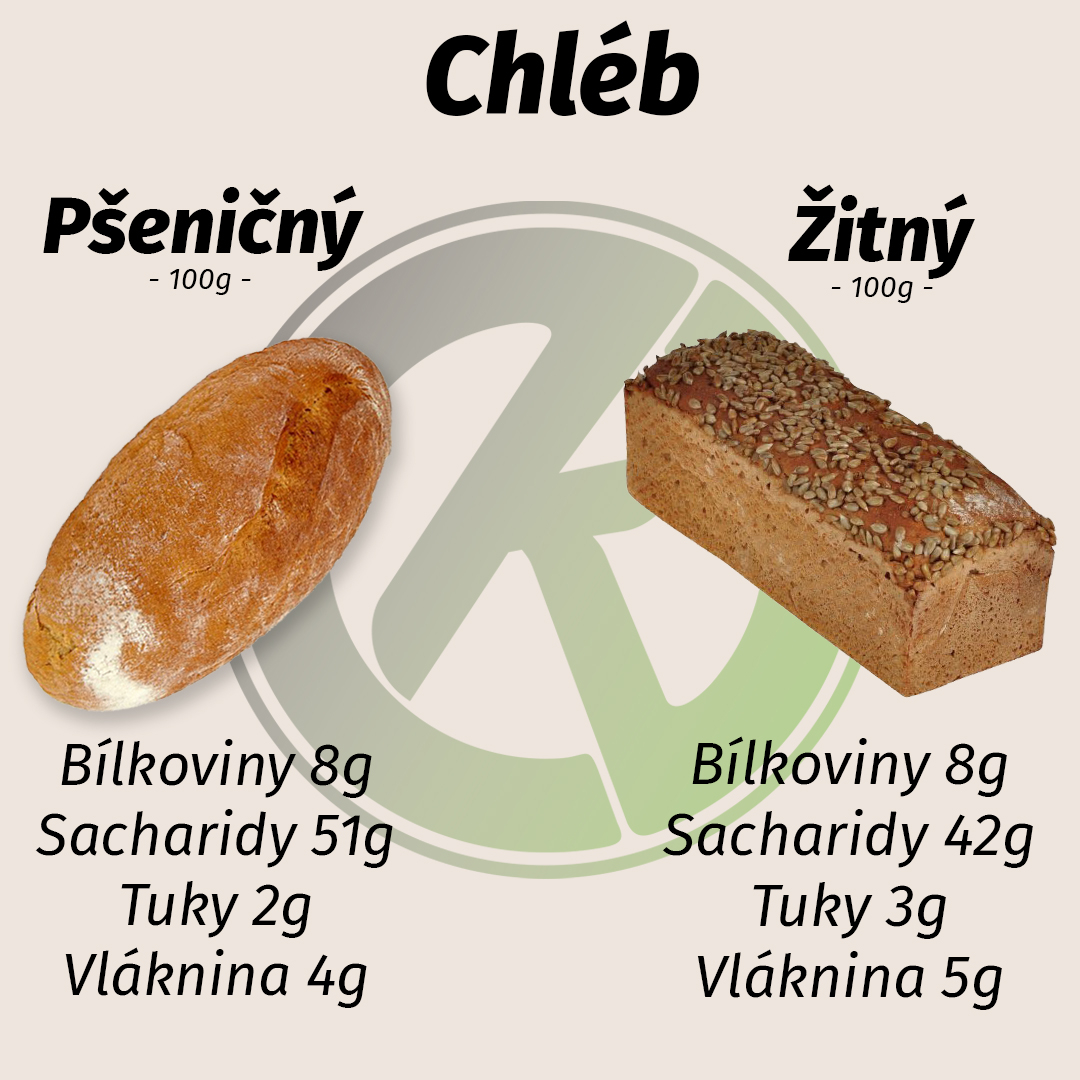
In the case of determining optimal carbohydrate intake, this is perhaps more complicated than with protein. A lot depends here on age, somatotype, physical activity and environmental influences. On average, carbohydrates should comprise 50-60% of your daily energy intake (10% of which should be simple sugars). Whether that's 200g or even 1200g of carbs per day (I've personally known people like that too), I'll leave up to you. In general, 4-10g/kg is recommended for active people. For a better calculation, I'll add that 1g of carbs contains 17kJ of energy.
Glycemic index
When we talk about carbohydrates, we cannot forget about the glycemic index. It is given by the ratio of the area under the glycemic curve of the food under study to the area under the glycemic curve of glucose (reference value is equal to 100)-quoting from a sports nutrition textbook. Simply put, it is the ability of a food to increase glycemia= blood glucose levels (the higher the GI of the food, the more the glycemic value will increase= the simpler the carbohydrate). This is used for example in diabetics.
The main factors influencing the GI of foods are the proportion of simple carbohydrates in the food (increases GI), the ratio of amylose to amylopectin in starches, the presence of fat (decreases GI), the presence of fibre (decreases GI), the way the food is processed (generally the more processed, the higher the GI), the acidity of the food.
- GI low to 55
- GI medium > 55 - 70
- GI high >70
Of course, it is not only the type of carbohydrate that contributes to blood sugar fluctuations, but also the amount of carbohydrate eaten, which is expressed by the term Glycemic Load (GL). Often neglected variable, but in carbohydrate intake and determining the amount of carbohydrates in a serving, it is not negligible.
You calculate the Glycemic Load by multiplying the GI of the food consumed by the amount of carbohydrate per serving found on the label or energy tables and dividing by 100. Thus, the overall glycemic response to eating a food is determined by both the quality of the carbohydrate (or its simplicity) and its quantity. Glycemic load values below 10 are defined as low, 11-19 as medium, and above 20 as high.
How do the personalities of our sport view carbohydrate intake in volume and diet?
Petr Vaniš - currently representing the Czech Republic in the NABBA federation, formerly IFBB - Mr. Universe 2008, World Champion 2007, European Champion 2006, double absolute winner of Vitalmax Open 2007,2008, Night of Champion Amstrdam 2003, Czech Champion 1998 and 1999
"I don't count carbs in the bulking phase, I cycle carbs from 1000g in the rhythmic phase. To 100g. per day. I get carbohydrates mainly from pasta and rice or potatoes, in the bulking phase I also allow myself biscuits and wholemeal bread."
Marek Vomáčka - successful representative of the Czech Republic in natural bodybuilding (formerly in sports and classical), professional of the WNSO federation "When I train I take from 100g to 1000g per day. Sources are rice, racia, vegetables and sometimes a little fruit."
Zdenek Sedmik - one of the most successful Czech power triathletes and strongman "I don't race, but my carbohydrate intake is about 700 - 900 g"
Radek Lonc-World Champion 2007 (NABBA Federation) "I eat carbohydrates in volume around 500g/day, and in diet 200-300g/day. I eat a lot of rice or potatoes. Outside the diet I also indulge in pastries."
Carbs, that was the topic of our second article on nutrition basics. I hope your mind hasn't become even more confused about carbohydrate intake. And if it has, you'll just have to bear with us as we go over the basics, and finally look at diets and how to build them. Next time you can look forward to fats, but we'll come back to carbohydrates in a special article on digestion and macronutrient absorption.
References used:
- Manual of Prevention in Medical Practice II. Nutrition. NUTRITION II.
- TROJAN, S. et al.:Medical physiology. Prague, Grada Publishing, 1996, 2nd ed. 496s.
- ROKYTA, R. et al.: Physiology for undergraduate studies in medicine, natural sciences and physical education. Prague, ISV nakladatelství, 2000, 1st ed. 360s.
- WILHELM, Z. et al. Brno, MU, 2003, 3rd ed. 115s.
- WHITNEY, E.N., ROLFES, S.R.: Understanding nutrition. Wadsworth, 2002, 700+ pp.
- Biochemistry
- PÁNEK, J. et al.: Fundamentals of nutrition. Prague, Svoboda servis, 2002, 1st ed. 205s.
- Blatná, J. et al.:Nutrition at the beginning of the 21st century or about nutrition currently and with a guarantee. Prague, Society for Nutrition - NutriVIT Foundation,2005, 1st ed. 79s.
No posts have been made yet.








