How much glutamine do we need and where do we ideally get it from?
 Author:
 Glutamine, a supplement that probably every exerciser has heard of, but few know how many benefits its sufficient intake - whether in the form of diet or supplements - actually offers. Glutamine can support athletic performance, muscle growth and recovery, and fat burning, but it is also essential for strong immunity, optimal functioning of the digestive system, and can even support mental performance. But the list of benefits of glutamine is far from over... let's take a closer look at this essential amino acid today and tell you what it can actually offer us.
Contents:
- What is glutamine?
- What is glutamine?
- How deficiency occurs and how to prevent it
- How much glutamine do we actually need and where do we ideally get it from?
- Is glutamine a safe supplement?
- What to take away from the article?
Theoretical window - what is glutamine?
With the chemical formula C5H10N2O3, glutamine is one of the 20 naturally occurring amino acids. It is also the most abundant amino acid found in the bloodstream, where it makes up 30 to 35% of the nitrogen. Glutamine is referred to as a conditional essential amino acid. This means that although our body can make some of this amino acid on its own, it is not in the quantities it needs to meet our daily needs, especially when we play sports regularly. That's why it is essential to take glutamine separately - through diet and supplements.

The good news is that glutamine is found in many of the common foods we consume on a daily basis. Of course, animal products such as meat, fish, eggs, dairy products and broths are rich sources of glutamine, but it can also be found in broccoli, corn, asparagus, spirulina and rice. Of course, supplementation is also a convenient way to replenish it.
About 90% of glutamine is produced in the muscles, from where it is then transported by the blood to the kidneys, liver and small intestine. Glutamine, like other amino acids, is involved in the regulation, synthesis and breakdown of proteins. Like many other amino acids, glutamine occurs in two different forms: L-glutamine and D-glutamine. They are almost identical but have slightly different molecular arrangements. The form found in foods and supplements is L-glutamine.

Benefits that glutamine offers for training and health
Okay, enough with the theory - let's take a look together at the ways in which glutamine can benefit our bodies, whether it's in training or building a strong immunity.
It improves the health of our digestive tract
L-glutamine benefits overall health by supporting proper gut function and helping to optimise digestive processes. Glutamine can be very beneficial for individuals who suffer from chronic digestive problems, irritable bowel syndrome, inflammatory bowel diseases such as Crohn's disease or ulcerative colitis and more. Glutamine, for example, promotes mucus production, which makes it easier for food to pass through the digestive tract, which is beneficial for people suffering from irritable bowel syndrome.

Leaky gut syndrome is a disease that afflicts a larger and larger percentage of the population and is essentially the leading cause of today's autoimmune diseases. Leaky gut can contribute to thyroid problems, the development of arthritis, skin problems such as psoriasis and can lead to the development of other serious health problems. Glutamine is very important for maintaining the integrity of the intestinal lining and nourishing the lining of the intestine. Because of this, glutamine can help restore the permeability of the intestines and thus plays a large role in the treatment as well as the prevention of this worldwide widespread problem.
It is also known that glutamine plays an important role in maintaining a healthy gut microbiota and therefore a strong immunity. Research suggests that it is useful in reducing colonisation of the gut and preventing bacterial overgrowth of pathogens. This can reduce the risk of developing a variety of problems from constipation, to infections, to unwanted weight gain. Plus, it offers a healthier, natural alternative to antibiotics for treating stomach ulcers. Because of its beneficial effects on the gut flora, glutamine is a great support for a strong immune system because, as you know, our gut is where most of it is found.

Great support for regenerative processes
One of the most well-known, and highly valued, properties of glutamine in sports is the fact that it helps muscles recover better after hard workouts. During intense training, the body becomes stressed and the muscles and tendons require more glutamine than the body produces, or often more than we can take in through diet. After intense training, cellular glutamine levels can drop by up to 50 percent and plasma levels by 30 percent. According to the results of studies, the consumption of glutamine during intense training is up to 5 times higher than during the normal resting state of the body.

Glutamine supplementation allows faster recovery from intense (not only) strength training because it improves muscle hydration. This aids the muscle recovery process and also helps to reduce wound healing time. Taking glutamine in supplement form is not only for bodybuilders, but nowadays it is part of the supplementation plan in almost all sports. Glutamine is also a specific amino acid that acts as an important support for our immune system, which is very important to mention during hard and intense workouts. This is because the body is exposed to a lot of stress during hard workouts and is much more susceptible to infections. Regular glutamine supplementation can be a great help in this regard and can help us reduce the risk of developing diseases.
Glutamine for better sports performance and muscle growth
Glutamine is an amino acid, and we know well that amino acids are essential elements of proteins. We already know that glutamine plays a big role in recovery processes, so we'll follow up by saying that it's an important support for muscle building and, of course, better athletic performance. Glutamine can even help increase the release of growth hormone in the body. Growth hormone plays a very important role in muscle building, so if we can boost its release, it's a great benefit to our muscles - especially when our goal is to grow them.
Glutamine also promotes glycogen storage and rids the body of excess ammonia - a substance that is only tolerable for our bodies in small amounts. Glutamine has the ability to transform ammonia into amino acids that are beneficial to our bodies and muscles, which ultimately leads to improved athletic performance, and it may even be a prevention against muscle catabolism after training. Glutamine is also an important precursor for arginine synthesis.
On our online store you can choose from countless glutamines, which you can also buy at a better price after registration!
Recommended
An essential factor for strong immunity
We've touched on the fact that glutamine plays an important role for our immune system several times today, but it's definitely worth the point alone. In fact, one of the most important functions of glutamine is precisely its role in the immune system. It is a critical source of fuel for immune cells, especially white blood cells and for cells found within the gut biome. However, glutamine levels in the blood can decrease due to serious injuries, burns, surgeries, or the effects of strenuous training. If the body's need for glutamine is greater than the amount the body is able to produce, the body's protein stores may be broken down to increase levels of this amino acid. At that point, the body reaches into its own muscle, and that's something we really don't want. Glutamine is a common part of supportive treatment for post-surgical conditions or severe burns in some countries.
Supports metabolism and heart health
Research has shown that human growth hormone (HGH) levels can rise by nearly 400 percent after glutamine supplementation. This hormonal response leads to an increase in resting metabolic rate and improves the afterburn effect or EPOC after exercise. This afterburn effect is essential for fat burning, weight loss and muscle building. There is evidence to support that glutamine helps burn fat and build muscle by helping to regulate insulin levels and stabilize blood glucose levels. This suggests, among other things, that glutamine may be a great aid in the treatment of type II diabetes.

In addition to all of the above, glutamine also benefits the cardiovascular system. It serves as a substrate for the synthesis of DNA, ATP, proteins and lipids. In addition, glutamine has also been shown to have strong antioxidant and anti-inflammatory effects that can reduce risk factors for cardiovascular disease, such as hypertension, hyperlipidaemia, glucose intolerance, obesity and diabetes.
It contributes to the proper functioning of our brain and nervous system
To make matters worse, glutamine is also important for the proper functioning of our brain, cognitive function, nervous system, mood and good memory. Glutamine easily passes through the blood-brain barrier where it is transformed into glutamic acid, which is absolutely essential for the proper functioning of the brain. It affects memory, concentration, mood and the nervous system. Glutamine can also serve as a preventive and supportive treatment for Alzheimer's disease, and there are even studies that say glutamine can prevent the signs of brain ageing.
How deficiency occurs and how to prevent it
The body synthesizes L-glutamine from glutamic acid or glutamate. If the body is unable to produce sufficient amounts, it needs to draw it directly from the diet or supplements. In normal situations, we can get into a glutamine deficiency, for example when we are under a lot of stress, during hard workouts with less than perfect recovery, or when we are suffering from an illness. The deficiency manifests itself as a decrease in immune function, a rapid deterioration of recovery processes and often a loss of muscle mass. The most common cause of glutamine deficiency is low protein in the diet, excessive physical stress or stress. As already mentioned, deficiency can also occur easily during the fight against illness of various nature, in immune system disorders, digestive problems, but also during chemotherapy and other supportive treatments.
How much glutamine do we actually need and where do we ideally get it from?
In the diet we are able to take in around 3 - 6 g of glutamine per day, depending on what foods we eat and in what quantities. Unless we are a fan of a particular dietary direction or follow a drastic diet, this amount will satisfy most of us. Vegetarians or vegans who do not consume enough animal protein, the most abundant source of glutamine, may have a problem. However, this can easily be solved with a supplement.
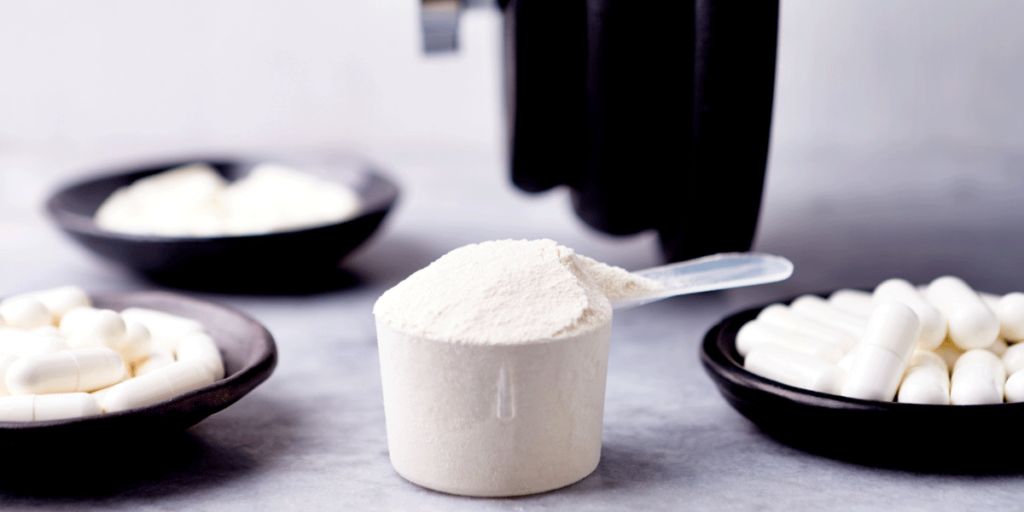
As far as supplementation is concerned, the optimal dose depends on physical disposition, training intensity and dietary habits, but usually a dose of 2-5 g twice a day is recommended for recreational athletes, and up to 10 g twice a day for bodybuilders. To maximize its effects for promoting muscle recovery and growth, bodybuilders usually take it together with BCAAs (especially leucine) or together with creatine. If you are taking glutamine in larger doses over the long term, it is a good idea to supplement with B complex vitamins as well. This is especially true for vitamin B12, which controls the accumulation of glutamine in the body.
Is glutamine a safe supplement?
Glutamine is one of the safest supplements we can come across and side effects associated with its use are rather a rarity. However, individuals with a history of kidney disease, liver disease, Reye's syndrome or cancer should beware and should not take glutamine without consulting a doctor. In rare cases, an allergic reaction may occur, so if you experience symptoms such as nausea, vomiting, hives, dizziness, or pain after taking glutamine, it is best not to take the supplement.
What can I take away from this article?
Glutamine is one of the 20 naturally occurring amino acids and is the most abundant amino acid in the bloodstream. Glutamine is a so-called conditional essential amino acid - our bodies can make it on their own, but not in quite the quantities needed to meet daily needs (especially in athletes), so it must be constantly replenished through food or supplements. A sufficient supply of glutamine is important for proper regeneration, muscle growth, weight loss, but also for optimal functioning of the digestive system, strong immunity and proper functioning of our brain. The main food sources include meat, fish, bone broth, spirulina, cottage cheese and vegetables such as broccoli or asparagus. However, it can also be taken in supplement form.
Sources:
Photo introduction: Vendula Hallová (Facebook)
Lacey, J. M., & Wilmore, D. W. (1990). Is glutamine a conditionally essential amino acid?. Nutrition Reviews, 48(8), 297-309. https://doi.org/10.1111/j.1753-4887.1990.tb02967.x
Michael Gleeson, Dosage and Efficacy of Glutamine Supplementation in Human Exercise and Sport Training, The Journal of Nutrition, Volume 138, Issue 10, October 2008, Pages 2045S-2049S, https://doi.org/10.1093/jn/138.10.2045S
Chang, W. K.., Yang, K. D., & Shaio, M. F. (1999). Effect of glutamine on Th1 and Th2 cytokine responses of human peripheral blood mononuclear cells. Clinical immunology (Orlando, Fla.), 93(3), 294-301. https://doi.org/10.1006/clim.1999.4788
Perna, S., Alalwan, T. A., Alaali, Z., Alnashaba, T., Gasparri, C., Infantino, V., Hammad, L., Riva, A., Petrangolini, G., Allegrini, P., & Rondanelli, M. (2019). The Role of Glutamine in the Complex Interaction between Gut Microbiota and Health: A Narrative Review. International journal of molecular sciences, 20(20), 5232. https://doi.org/10.3390/ijms20205232
Kim, M. H., & Kim, H. (2017). The Roles of Glutamine in the Intestine and Its Implication in Intestinal Diseases. International journal of molecular sciences, 18(5), 1051. https://doi.org/10.3390/ijms18051051
Soomro, I., Sun, Y., Li, Z., Diggs, L., Hatzivassiliou, G., Thomas, A. G., Rais, R., Parker, S. J., Slusher, B. S., Kimmelman, A. C., Somlo, S., & Skolnik, E. Y. (2018). glutamine metabolism via glutaminase 1 in autosomal-dominant polycystic kidney disease. Nephrology, dialysis, transplantation : official publication of the European Dialysis and Transplant Association - European Renal Association, 33(8), 1343-1353. https://doi.org/10.1093/ndt/gfx349
Huffman, F. G., & Walgren, M. E. (2003). L-glutamine supplementation improves nelfinavir-associated diarrhea in HIV-infected individuals. HIV Clinical Trials, 4(5), 324-329. https://doi.org/10.1310/BFDT-J2GH-27L7-905G
Douglas W. Wilmore, The Effect of Glutamine Supplementation in Patients Following Elective Surgery and Accidental Injury, The Journal of Nutrition, Volume 131, Issue 9, September 2001, Pages 2543S-2549S, https://doi.org/10.1093/jn/131.9.2543S
Chu, C. C., Hou, Y. C., Pai, M. H., Chao, C. J., & Yeh, S. L. (2012). Pretreatment with alanyl-glutamine suppresses T-helper-cell-associated cytokine expression and reduces inflammatory responses in mice with acute DSS-induced colitis. The Journal of nutritional biochemistry, 23(9), 1092-1099.
Welbourne T. C. (1995). Increased plasma bicarbonate and growth hormone after an oral glutamine load. The American journal of clinical nutrition, 61(5), 1058-1061. https://doi.org/10.1093/ajcn/61.4.1058
http://fblt.cz/skripta/regulacni-mechanismy-2-nervova-regulace/5-neurotransmisni-systemy/
https://www.brainpedia.cz/kyselina-glutamova
No posts have been made yet.