





Is glutamine supplementation beneficial for our muscles?
 Author:
 Glutamine has become a very popular supplement for people trying to build muscle mass. As you know, I like to look at the facts, and the advertising of jacked up dudes holding glutamine in their hands leaves me cold. Well right off the bat I'll tell you that I take glutamine too, but for a completely different reason than building muscle mass. Mainly for immunity.
Glutamine supplementation does not affect body composition, but it can speed up recovery from strength training and reduce the incidence of infections in hard training endurance athletes.
Glutamine is the most abundant amino acid in our bodies. Our body can synthesize glutamine, so it is not an essential amino acid(EAA). Our need can eventually outpace the rate of synthesis, so supplementing glutamine can be beneficial. Historically, however, glutamine has only been considered conditionally necessary in seriously injured or ill people with burns and other people where physical stress is exceptionally high and catabolism (breakdown of body tissues) becomes a problem.
Only recently has the effect of glutamine on stress and catabolism caused by strenuous exercise begun to be investigated. Some of these studies have examined the effect of glutamine on body composition, others on recovery, and still others on the immune system.
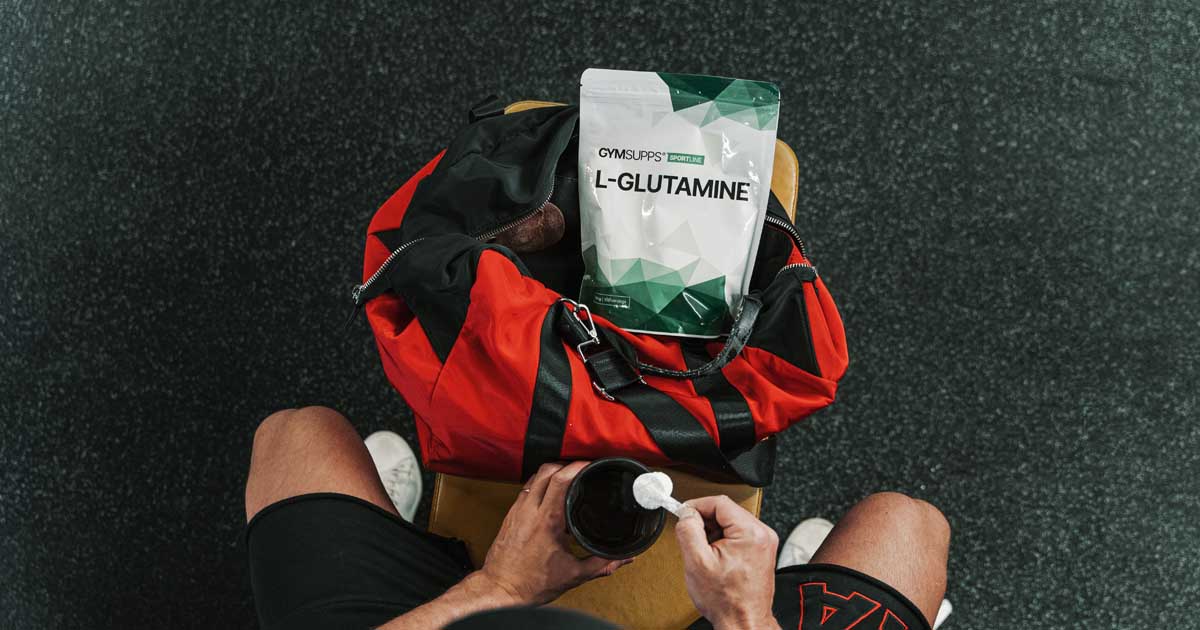
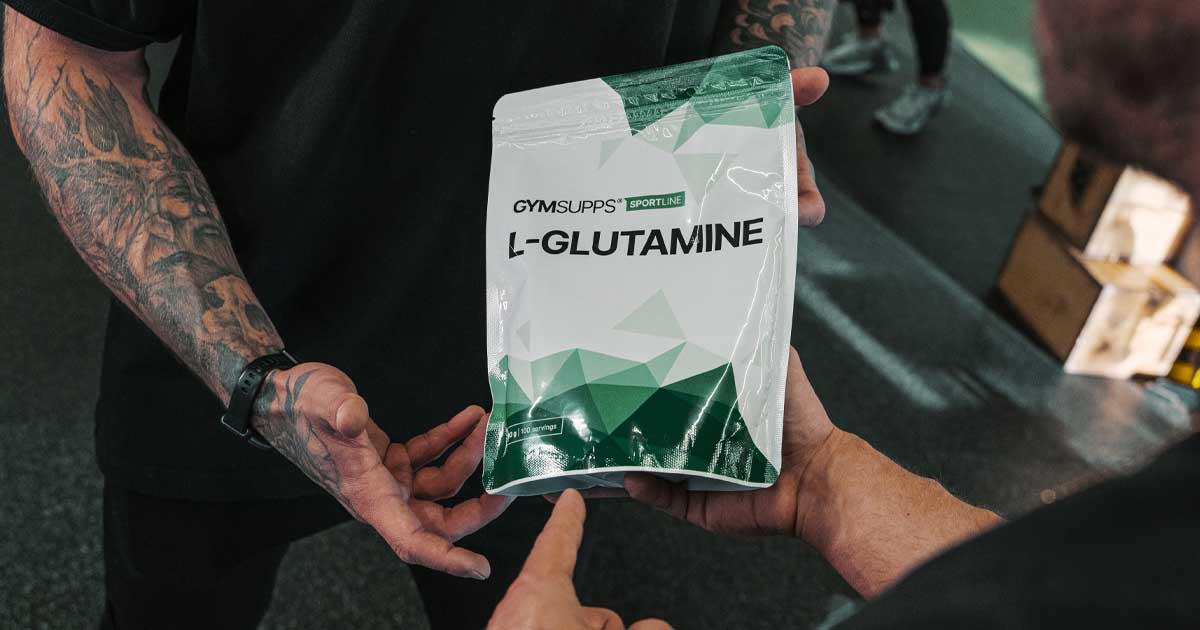
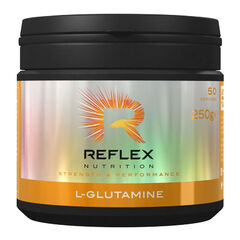
L-Glutamine from GymSupps is an important amino acid that supports muscle recovery after training!
Body composition
The benefits of glutamine in the seriously injured or ill have led some researchers to investigate whether glutamine could be a useful supplement for athletes who train hard, as it is also a catabolic process. The researchers tested their hypothesis through a study involving 6 trained men who consumed glutamine or glycine (0.3 grams per kilogram of body weight) one hour before exercise. Glutamine was not beneficial for exercise.
Another group of researchers tested glutamine (0.9 g/kg) versus placebo in 31 men and women who performed strength training over six weeks. Even such a high daily dose of glutamine did not affect strength or lean muscle mass more than placebo (strength and LBM increased in both groups).
Of course, neither study exposed its participants to high levels of stress, such as in the case of burns. Another study examined 18 collegiate wrestlers with this question in mind comparing placebo vs glutamine (0.35 g/kg) during an intense twelve day diet. Both groups lost 2 kg, with no significant differences between the groups in terms of changes in lean muscle mass or fat percentage.
A 2018 meta-analysis of five studies also concluded no effect of glutamine on body composition. Although glutamine does play a role in muscle synthesis (it's an independent activator of mTOR), it appears that dietary glutamine intake is sufficient and supplementing with additional glutamine no longer provides additional benefits.
CONCLUSION: Glutamine supplementation has no effect on muscle mass or fat loss, even during aggressive dieting.
It does not affect muscle regeneration, nor does it affect muscle recovery
So glutamine supplementation has no effect on body composition, but it could make recovery from heavy workouts easier?
To answer this question, researchers gave placebo or glutamine (0.3 g/kg) to fifteen recreationally active men immediately after exercise (100 jumps and lunges) over four days. They reported that glutamine significantly reduced muscle soreness and improved strength recovery compared to placebo.
However, a study with seventeen untrained young men reported that taking glutamine (0.1 g/kg) three times a week for 4 weeks had no effect on muscle soreness, range of motion, or EMG activity up to 48 hours after strength exercise (pre-kicking with 75% 1RM). Importantly, this latter study used untrained men, used a different dosing schedule, and a different exercise protocol, which could explain the discrepancy between the two studies.
A recent study examined the effects of glutamine with leucine in 23 trained men. The men were divided into three groups and took either leucine (0.087 g/kg), leucine with glutamine (0.087 g/kg + 0.3 g/kg) or placebo 30 minutes before and after exercise (100 jumps and lunges) and again later at 24, 48 and 72 hours. Leucine resulted in better strength recovery after 72 hours. Leucine with glutamine led to better recovery after 24, 48 and 72 hours. However, muscle soreness did not differ between groups.
It is also important to note that these three studies were only conducted in men. The other study examined 8 men and 8 women, all recreationally active, and dosed placebo or glutamine (0.3 g/kg) one hour before and after exercise that strained the muscles (80 eccentric contractions in 125% of 1RM) and again before the investigative tests performed 24, 48, and 72 hours later. Strength recovery was slightly improved in men but not in women, although there was a significant reduction in muscle soreness in both sexes.
CONCLUSION: In recreationally active men, glutamine supplementation around exercise appears to enhance strength recovery and may reduce muscle soreness. However, only one study lasted more than 72 hours, which precludes drawing conclusions about the effects of chronic supplementation. Similarly, only one study included women, which precludes drawing conclusions about the effects of supplementation in women.
Disease
Glutamine is the main fuel of immune system cells. Plasma glutamine levels are reduced after prolonged endurance exercise, and this reduction correlates with an increased risk of infection.
A study conducted in endurance athletes (marathons and ultramarathons) reported that taking 5 grams of glutamine immediately after an athletic event and 2 hours later significantly reduced the incidence of infections in the following week. Specifically, 19% of the glutamine group reported getting sick compared to half of the placebo group.
No other study has examined the effects of glutamine on infection in athletes, but other studies have examined various aspects of the immune system, such as white blood cell function and salivary IgA concentrations, and none have found a relationship between exercise-induced reductions in plasma glutamine levels and changes in the immune system.
More recent evidence has revealed benefits in the form of glutamine's effect on the intestinal barrier. Prolonged endurance exercise is known to cause leaky gut, a condition where heat stress and reduced blood flow to the gastrointestinal tract cause damage to intestinal cells that loosens the tight junctions between cells, allowing absorption of things that should not pass through the intestinal barrier.
CONCLUSION: Glutamine is an important source of energy for intestinal cells and the immune system. Supplementation may reduce exercise-induced intestinal tract dysfunction and may reduce the risk of disease from prolonged endurance exercise.
Summary
There is no evidence that glutamine supplementation helps build muscle or improve body composition. On the other hand, there is evidence that glutamine supplementation improves strength recovery. It may also help to maintain the integrity of the gastrointestinal tract during prolonged endurance exercise, thereby reducing the risk of later disease.
So if your goal is to build muscle, don't waste your money on glutamine. Other supplements are likely to help in this regard better, perhaps creatine. Of course, you should ensure you get enough protein in your diet from your regular diet.
Source: Examine.com
No posts have been made yet.








