Beef proteins | How to recognize poor quality? And what are the benefits?
 Author:
 Beef proteins are currently nowhere near the popularity of whey, casein, or multi-ingredient proteins. But it wasn't always like that, just a few years ago they were really popular. So what's the real story with them? How are they made and for whom can they make sense? We'll look at all that in today's article.
Argentinian steak powder? Don't be naive.
Let's look at it rationally. According to data available from the American Meat Science Organization , meat can contain up to 75% water, depending on the type and specific cut. What does that mean for beef protein production? And if you try to look up the price of an organic beef tenderloin, you'll find that a kilo can cost as much as 700 CZK with about 60% water content. Using simple elementary school maths, you will find that if 400g of beef tenderloin powder costs 700 CZK, a two-kilogram pack of protein would cost the producer approximately 3500 CZK, if you neglect the cost of production. In practice, however, the cost to most manufacturers is a third of that. What does this imply? That you certainly cannot live under the illusion that beef protein is made from only the highest quality meat.
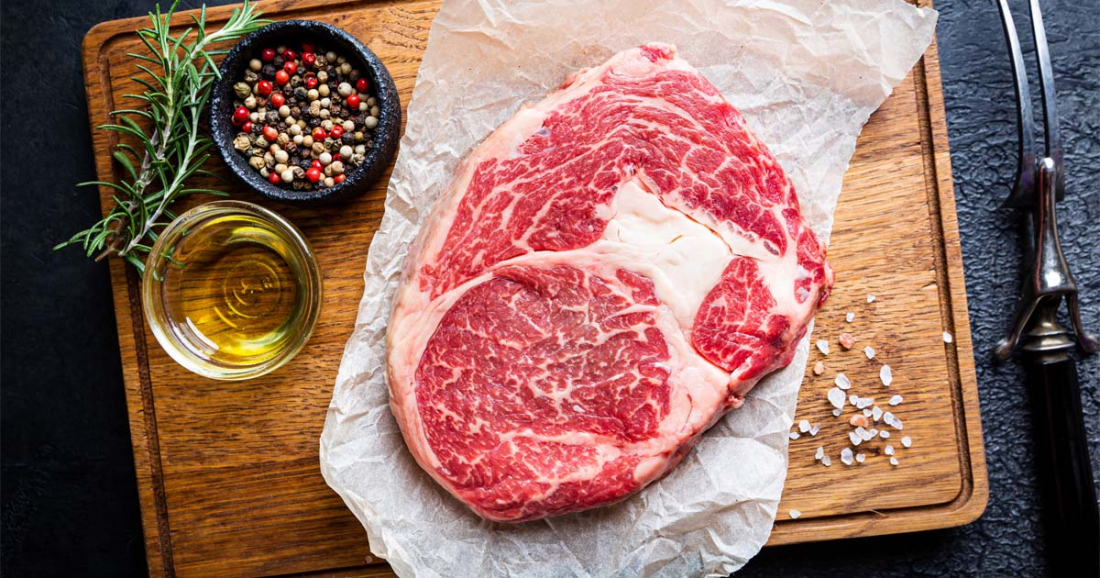
A quality and tender rib-eye steak in beef protein? Don't count on it.
How is beef protein made?
In the case of whey protein, the production process is relatively simple - the whey flows through ceramic filters with small strainers, where even at very low temperatures, all unwanted components are removed and later a pure and perfectly usable protein is formed. For beef protein it is a bit more complicated, and for the sake of simplicity we will simplify the process. The collagen, or the individual pieces of meat (depending on what the manufacturer chooses), are boiled to create a thick broth. The fat and possibly other unwanted ingredients still need to be removed before moving on to the so-called spray drying. The mixture is then subjected to various jets and, while maintaining optimum moisture, pressure and temperature, it is removed from the water by centrifugal force.
What are the disadvantages of beef proteins?
Beef protein is often referred to in certain negative connotations. It is therefore a good idea to first clarify what the disadvantages of beef protein really and undeniably are. In our experience, these are mainly:
- Very bad taste - Even though there are those among our customers who really like Anabolic Monster Beef according to the reviews, for us the whole category has a clear NO in terms of taste. And no wonder, it is not easy to flavour beef powder. In practice, the proteins are loaded with sweeteners, so they feel very artificial and if you focus on the beef notes, you'll definitely pick them up too.
- Worse usability - If you buy a beef protein that contains a lot of collagen, the usability is not likely to be as high as with conventional beef or whey protein. This is primarily because collagen (even the hydrolyzed kind) does not contain the full spectrum of amino acids. However, some manufacturers use beef separate, the meat left on the bones after deboning, as a source of protein. In this case, the usability is better.
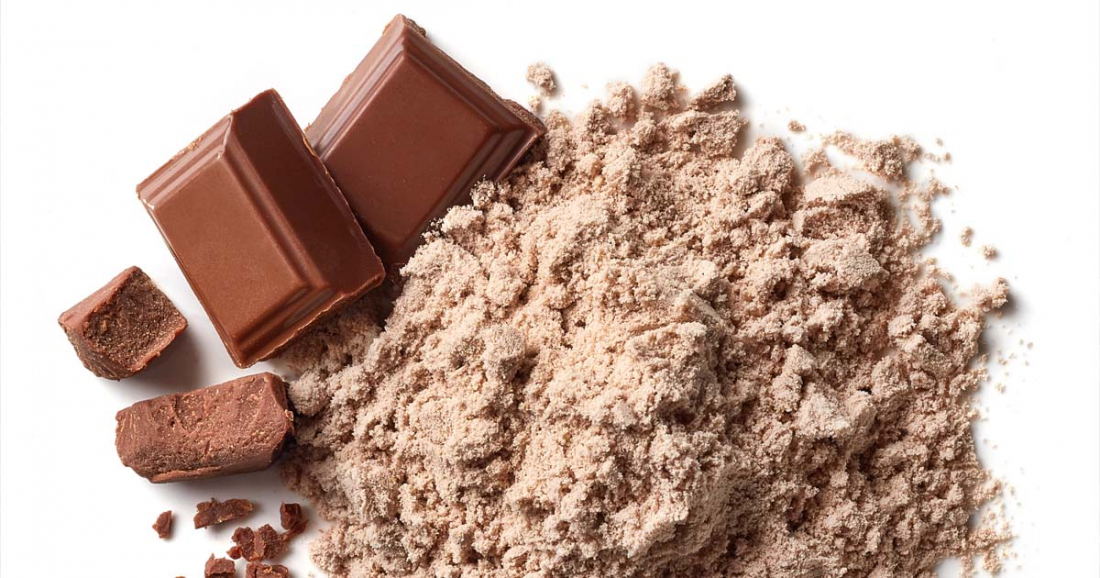
If you mix animal protein with chocolate or other flavours, as you might suspect, the result will not be very good. Beef proteins are often sweet and artificial.
What are the benefits of beef protein?
On the other hand, it's important to know that the issue of beef proteins is not black and white either, and they have their benefits as well:
- High protein content - If you look at the composition of beef proteins in more detail, you will find that they often contain more than 90% protein. This compares to some whey isolates or hydrolysates, but otherwise, beef proteins find it very hard to find a competitor in this regard.
- Zero lactose - In our articles we often repeat that whey proteins are the best and most practical choice. However, if you are very lactose intolerant and can't even ingest whey isolate, you won't be left with many options. But besides vegetable proteins, you can choose beef. And in that case, they are far from a bad choice.
Recommended
Amix HydroBeef Peptide Protein
Extrifit BeefMass
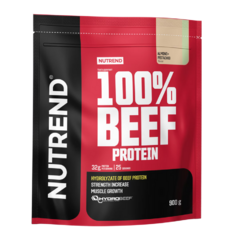
Nutrend 100% Beef Protein
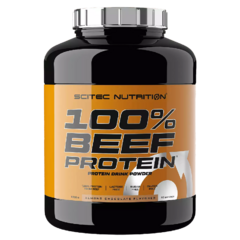
Scitec 100% Beef Protein
Collagen or meat? Is it difficult to tell?
In connection with beef proteins, the content of hydrolysed collagen, which, unlike beef, does not have the full spectrum of amino acids, is a very often discussed problem. As a lay consumer, you may wonder how to tell. In some cases, all you have to do is look at the amino spectrum of beef and collagen before you buy it. On closer inspection, you will find that:
- Collagen has a higher glycine and proline content than meat. Glycine in pure collagen can be shown to be up to 33%.
- Since collagen does not have the full spectrum of amino acids, tryptophan and cysteine are missing in a pure collagen product.
However, the above points are only applied in the two (very extreme) cases that the manufacturer either uses primarily good beef or pure collagen. In the latter case, a glance at the ingredients will also suffice, where "hydrolysed collagen protein" will most likely be listed first. However, if the product contains a combination of collagen and meat and the manufacturer itself makes no mention, you can probably only guess at the ratio. It's also important to know that every meat contains some amount of collagen, so you can never get beef protein without any collagen.
What to take away from today's article?
What you should take away from today's article is that you definitely don't use any premium meat to make beef protein - that protein would have to cost three or four times as much. In practice, most manufacturers use, for example, meat separate, which of course contains a certain amount of collagen, but that's natural and it doesn't matter. However, in some usually very cheap-looking products you may find collagen dominating - and in that case you will notice that tryptophan and cysteine are missing from the amino acid spectrum. And is beef protein even worth it? Depends. Unless you have any health restrictions (such as lactose intolerance), whey protein is more likely to be recommended . But if you 're willing to survive the not-so-good taste, ultimately beef protein isn't a bad choice. In that case, we can recommend either Extrifit PeptiBeef or Anabolic Monster Beef from Amix.
No posts have been made yet.