The most important natural antioxidants and their effects
 Author:
 Antioxidants are molecules that can help our bodies fight harmful free radicals, substances that are often associated with the development of various serious diseases. The good news is that these beneficial substances can be found in virtually all of the foods we consume in a day, and of course they can also be drawn from supplements. Let's talk a little more about antioxidants today - how they actually work, where to look for them and how to increase their intake in our diet.
Article content:
- Theoretical window - what are antioxidants?
- What are the types of antioxidants?
- What are the effects of antioxidants?
- Where to look for antioxidants
- How to increase antioxidant intake?
- What to take away from the article?
Theoretical window - what are antioxidants?
In order to understand the function and importance of antioxidants, we need to delve a little into physics and biology. The basic unit of the entire universe is atoms, which can be divided into protons (positive atoms), neutrons (atoms with a neutral charge) and electrons (atoms with a negative charge) according to their charge. The atoms combine to form molecules of different sizes and other formations that make up, for example, our cells. The human body is made up of proteins, fats and deoxyribonucleic acids (DNA), which are essentially huge molecules made up of hundreds to thousands of atoms joined together.
The body of living creatures maintains a stable internal environment through chemical reactions that we collectively refer to as metabolism. During the course of each reaction, different molecules are split or grouped together. To be stable, a molecule must have a certain number of electrons. If it loses an electron, a molecule is formed that is referred to as a FREE RADICAL. Free radicals are electrically charged molecules that are unstable and can react with other molecules to "steal" their electron, possibly damaging them as a result.
The body itself generates free radicals in response to environmental aspects such as tobacco smoke, ultraviolet rays and air pollution, but they are also a natural by-product of standard cellular processes. For example, our immune cells produce free radicals to fight bacteria and viruses. Some free radical production also occurs during exercise.
And now, finally, comes the moment of glory for antioxidants. The way it normally works is that if a free radical is produced in the body, an antioxidant molecule will join the reaction and "give" the free radical its free electron, effectively neutralizing it and preventing the free radical from doing any major harm in the body. Without antioxidants, free radicals could cause a chain reaction in which more healthy cells could be attacked, causing very serious, even fatal, damage.
The problem therefore arises when the antioxidants in the body fail to neutralise the free radicals. This situation can lead to a condition known as oxidative stress. A number of different factors can encourage the development of oxidative stress - from the environment we live in, to our lifestyle, to our hormonal status, to the level of stress we face in our lives. Long-term oxidative stress can damage DNA and other important molecules in our bodies, leading to the development of various serious diseases such as diabetes, heart disease, Alzheimer's disease, and various types of cancer. In the most tragic scenario, cell death can even occur. At the same time, oxidative stress has been shown to accelerate the aging process.

As already mentioned, the formation of free radicals and oxidative stress can be caused by many different factors. Among the most important are:
- The state of the air and the environment in which we live
- Cigarette smoking
- Alcohol consumption
- High blood sugar levels
- Inappropriate diet composition
- Excessive intake of polyunsaturated fatty acids
- Lack of sleep
- Prolonged increased stress load
- Inadequate exposure to sunlight
- Bacterial, fungal or viral infections
- Excessive intake of iron, magnesium, copper or zinc
- Excess or deficiency of oxygen in the body
- Prolonged extreme physical stress not compensated by sufficient rest
- Excessive or insufficient intake of antioxidants
What are the types of antioxidants?
After a long theoretical window where we explained what antioxidants actually are and what role they play in relation to free radicals, let's talk about what types of antioxidants we actually have.
The term antioxidant can refer to any substance that inhibits oxidation. Thus, antioxidants are primarily used to remove potentially harmful oxidizing agents (otherwise known as free radicals) in the body, but they also find their use as preservatives, which are often used to increase the shelf life of certain foods. The term 'antioxidant' does not actually refer to any one particular compound, but rather to the activity of certain compounds. There are many different types of antioxidants. To avoid speaking in the abstract, let's look at some examples - some of the most important natural antioxidants we take in from our diet include vitamin C, vitamin E, selenium, carotenoids, anthocyanins, flavonoids and many others.
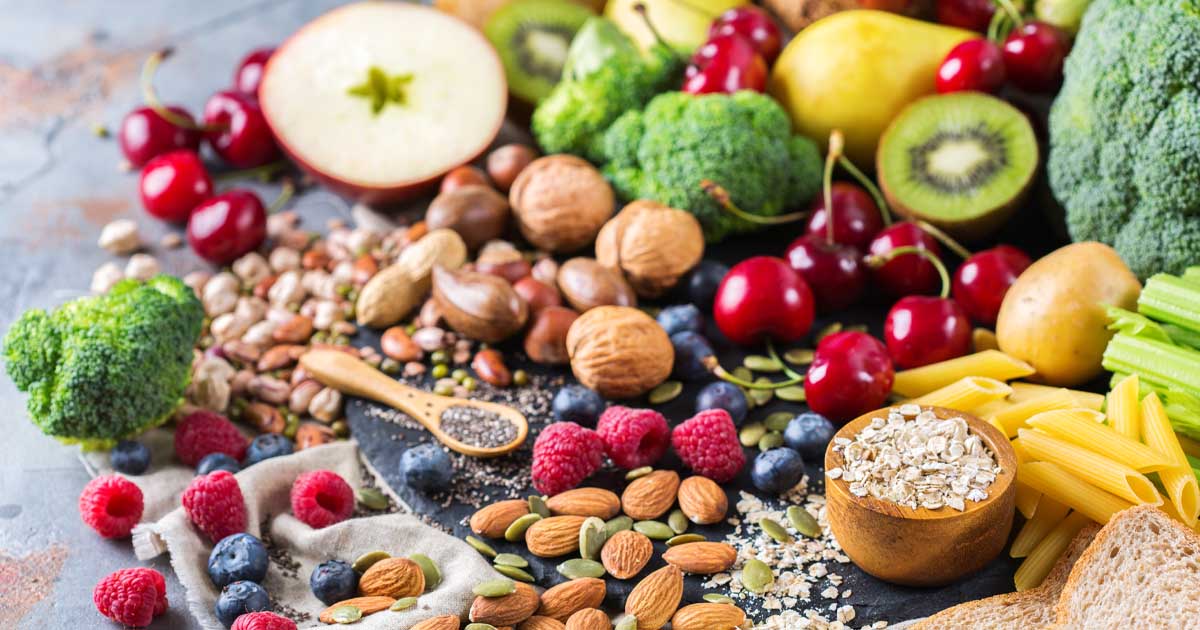
Antioxidants can be divided into two main groups - water-soluble antioxidants and fat-soluble antioxidants. Water-soluble antioxidants act both inside and outside cells, while fat-soluble antioxidants act primarily in cell membranes. We take in antioxidants mainly through our diet, but some antioxidants can even be made by the body itself, such as glutathione.
What are the effects of antioxidants?
The primary function of antioxidants is to neutralise free radicals, which provides important protection against the development of serious diseases such as diabetes, cardiovascular disease, stroke and even cancer. Antioxidants are also very effective in fighting the signs of aging, helping to maintain the elasticity and vitality of our skin, and providing it with protection from sunlight. Antioxidants play an absolutely vital role in the health of our eyes. The antioxidants beta carotene, vitamin C, vitamin E, lutein and zeaxanthin are very important in this respect. It has also been shown that antioxidants can protect the brain, prevent cognitive decline and may even play a role in protecting against the development of Alzheimer's disease.
Where to look for antioxidants?
As mentioned, antioxidants are not some miracle compounds that are difficult to source. On the contrary - they are substances that occur naturally in many different foods that we commonly consume, or at least should. If we want to look at the foods that are richest in antioxidants, we can use the so-called ORAC ranking. ORAC is a method of measuring the in vitro antioxidant capacity of various foods and supplements - in other words, the ORAC value represents the rate at which an antioxidant, or group of antioxidants in a particular food, can neutralise a free radical.
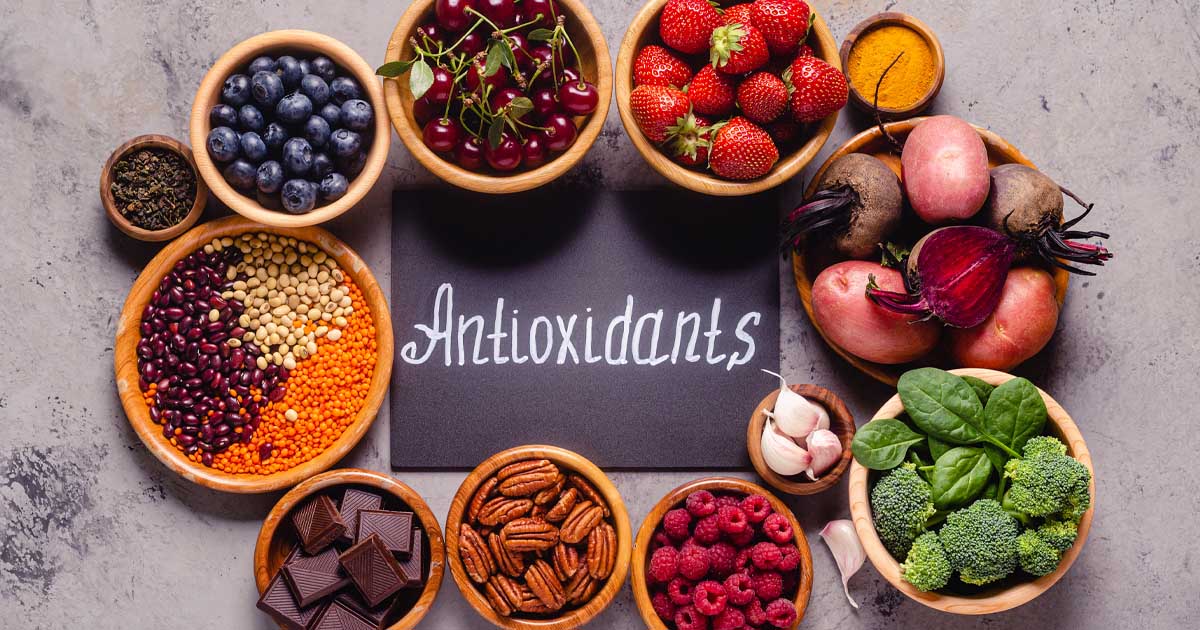
Some of the foods with the highest antioxidant capacity include: acai, goji, blueberries, cranberries, strawberries, blackberries, dark chocolate, beans, pecans, broccoli, pumpkin seeds, carrots, tomatoes, cilantro, elderberries, sweet potatoes, pomegranate, wild salmon, and many more. Various herbs such as turmeric, cinnamon, basil, cumin, oregano, ginger, thyme and parsley are also great sources of antioxidants. Antioxidants are found in virtually every food we eat. For example, from one of our recent articles, you already know about astaxanthin, which is considered the most powerful antioxidant ever and is found mainly in seafood, algae and fish. Other powerful antioxidants commonly found in foods include chlorophyll, vitamin C, quercetin, resveratrol, and selenium.
How can I increase my antioxidant intake?
Since we have just been told that virtually all of the foods we consume during the day are sources of antioxidants, it is logical to deduce that the best way to take in these beneficial substances is to have as varied a diet as possible based on eating fresh, ideally minimally processed, foods. It is also important to mention that the effectiveness of antioxidants can be affected by cooking. There are antioxidants that are very susceptible to heat, such as vitamin C, but there are also antioxidants that benefit from heat treatment, such as beta carotene or lycopene.
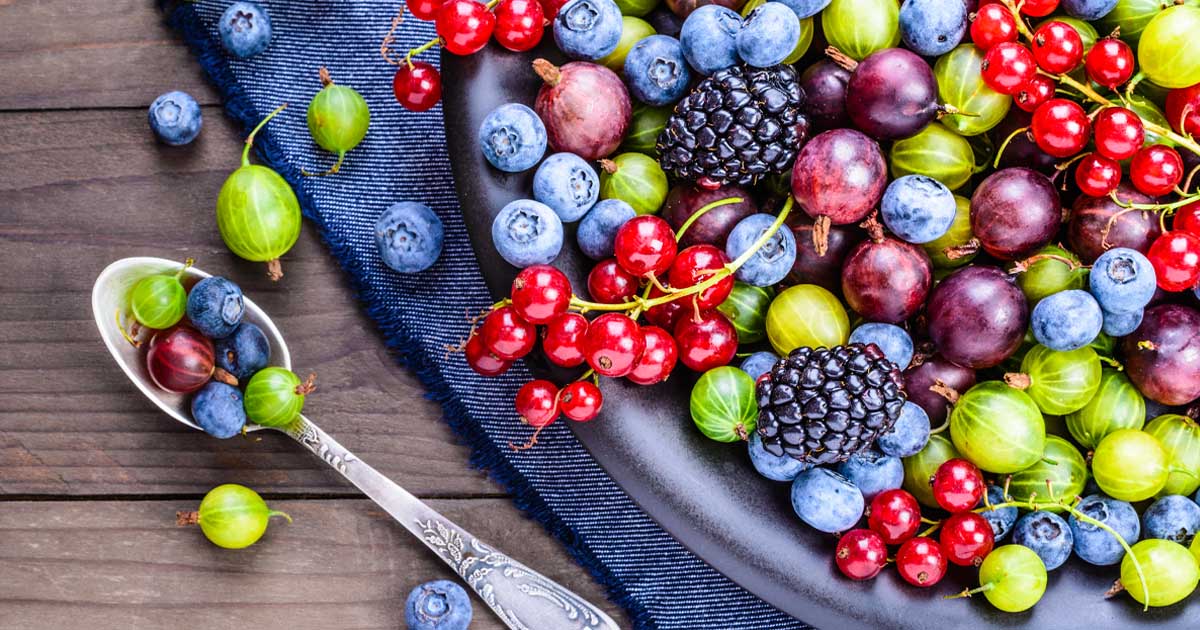
The question arises as to whether antioxidants need to be supplemented. The primary source of these very beneficial substances should, of course, be our diet. Moreover, studies show that antioxidants taken from the diet, i.e. natural, have a much stronger effect than those taken in supplement form. It is also true that there are hundreds (if not thousands) of different substances in food that work synergistically together. Therefore, by consuming one food, we logically get a greater amount of beneficial substances than by supplementing with one particular one. In addition, some antioxidants are already somehow "naturally" taken in supplement form without us realising it - for example, when taking a multivitamin supplement.
In addition, of course, you can focus on supplementing with other antioxidants. But in this case, more is not necessarily better. Taking high doses of antioxidants, for example, can interfere with post-workout recovery processes, may even reduce the benefits of exercise in preventing cardiovascular disease according to some studies, and may negatively affect the process of balancing various hormone levels. So before you start supplementing, make sure you really need it.
What to take away from the article?
Antioxidants are substances that our body absolutely needs in order to function properly, be healthy and vital. This is because they help to protect the body from the negative effects of free radicals, which can lead to the development of diseases such as diabetes, heart disease, or cancer when they are overproduced. Antioxidants also help protect the body from the aging process and are essential for our eyesight. The good news is that these beneficial substances can be found in virtually all the foods we consume in a day. Our diet is therefore the best way to supply these beneficial substances to the body.
Recommended
Amix Oxxy-DTOX Antioxidant
Viridian Antioxidant Formula
Sources:
- https://superfoodly.com/orac-values/
- Rahal, A., Kumar, A., Singh, V., Yadav, B., Tiwari, R., Chakraborty, S., & Dhama, K. (2014). Oxidative stress, prooxidants, and antioxidants: the interplay. BioMed research international, 2014, 761264. https://doi.org/10.1155/2014/761264
- Hampton, M. B., Kettle, A. J., & Winterbourn, C. C. (1998). Inside the neutrophil phagosome: oxidants, myeloperoxidase, and bacterial killing. Blood, 92(9), 3007-3017.
- Singh, A. K., Pandey, P., Tewari, M., Pandey, H. P., Gambhir, I. S., & Shukla, H. S. (2016). free radicals hasten head and neck cancer risk: A study of total oxidant, total antioxidant, DNA damage, and histological grade. Journal of postgraduate medicine, 62(2), 96-101. https://doi.org/10.4103/0022-3859.180555
- Chen, M. C., Hsu, S. L., Lin, H., & Yang, T. Y. (2014). retinoic acid and cancer treatment. BioMedicine, 4(4), 22. https://doi.org/10.7603/s40681-014-0022-1
- Pham-Huy, L. A., He, H., & Pham-Huy, C. (2008). free radicals, antioxidants in disease and health. International journal of biomedical science : IJBS, 4(2), 89-96.
- Lobo, V., Patil, A., Phatak, A., & Chandra, N. (2010). Free radicals, antioxidants and functional foods: Impact on human health. Pharmacognosy reviews, 4(8), 118-126. https://doi.org/10.4103/0973-7847.70902
- Devore, E. E., Grodstein, F., van Rooij, F. J., Hofman, A., Stampfer, M. J., Witteman, J. C., & Breteler, M. M. (2010). Dietary antioxidants and long-term risk of dementia. Archives of neurology, 67(7), 81
- Fielding, J. M., Rowley, K. G., Cooper, P., & O' Dea, K. (2005). Increases in plasma lycopene concentration after consumption of tomatoes cooked with olive oil. Asia Pacific journal of clinical nutrition, 14(2), 131-136.
- Ghavami, A., Coward, W. A., & Bluck, L. J. (2012). The effect of food preparation on the bioavailability of carotenoids from carrots using intrinsic labelling. The British journal of nutrition, 107(9), 1350-1366. https://doi.org/10.1017/S000711451100451X
- Omenn, G. S., Goodman, G. E., Thornquist, M. D., Balmes, J., Cullen, M. R., Glass, A., Keogh, J. P., Meyskens, F. L., Jr, Valanis, B., Williams, J. H., Jr, Barnhart, S., Cherniack, M. G., Brodkin, C. A., & Hammar, S. (1996). Risk factors for lung cancer and for intervention effects in CARET, the Beta-Carotene and Retinol Efficacy Trial. Journal of the National Cancer Institute, 88(21), 1550-1559. https://doi.org/10.1093/jnci/88.21.1550
- Close, G. L., Ashton, T., Cable, T., Doran, D., Holloway, C., McArdle, F., & MacLaren, D. P. (2006). Ascorbic acid supplementation does not attenuate post-exercise muscle soreness following muscle-damaging exercise but may delay the recovery process. The British journal of nutrition, 95(5), 976-981. https://doi.org/10.1079/bjn20061732
No posts have been made yet.