Radiant power from the waters: an overview of the effects of spirulina on health and well-being
 Author:
 Spirulina is a blue-green algae with a very interesting nutritional profile, thanks to which it offers a comprehensive list of benefits for human health. Nevertheless, it can be said that it is somewhat underrated in the world of health food, which is of course a pity. Spirulina is grown all over the world from Mexico, to Africa, to Hawaii and is known for its intense flavor and distinctive color, but it is its supercharged nutritional profile that is most interesting. Most of us are familiar with spirulina from various "greens" mixes, but we bet few people know the actual health benefits it can have. So let's remedy that and introduce this blue-green superfood in a little more depth.
Article content:
- Introduction to spirulina - a traditional theoretical window to get you started
- Nutritional profile
- Spirulina vs. Chlorella
- Effect on health
- Supplements, recommended dosage and safety
- When and how to take spirulina?
- What to take away from this article?
Introduction to spirulina - a traditional theoretical window to get you started
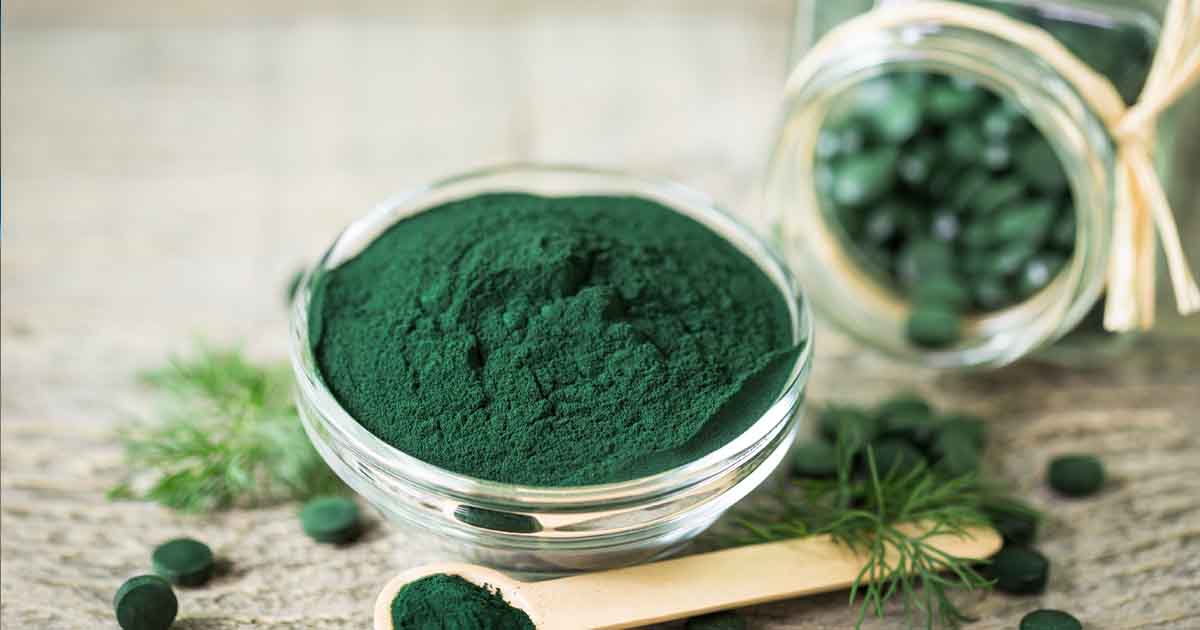
Spirulina is a species of blue-green algae that is able to grow in fresh and salt water and is consumed by humans, but also serves as food for other animals. There are currently two known species of spirulina - Arthrospira platensis and Arthrospira maxima. Both types are widely cultivated around the world and are used for the production of nutritional supplements in powder, tablet and capsule form. Spirulina is also used as a substance for the production of fish feed.
Nutritional profile
Spirulina is interesting not only because of its distinctive colour, but above all because of its nutritional profile. Thanks to its very impressive nutrient content, it is even promoted by various medical organisations as a food suitable for consumption and cultivation in parts of the world that are struggling to feed their populations. It is also worth noting that spirulina is one of the few plant sources of protein that contains the full spectrum of amino acids and can therefore be said to be a complete source of protein. Many nutritionists even refer to spirulina as one of the most nutritious foods on the planet. And actually, no wonder - judge for yourself by looking at its nutritional values:
One tablespoon (7g) of this blue-green algae contains the following macronutrients:
- Calories: 20 kcal
- Carbohydrates: 1.7 g
- Fiber: 0.3 g
- Carbohydrates: 0.2 g
- Protein: 4 g
- Fat: 0.5 g
The micronutrient content, i.e. vitamins, minerals and antioxidants, is also worth mentioning. Spirulina is a great source of copper, magnesium, iron, sodium, potassium and manganese. It is rich in B complex vitamins, especially niacin (vitamin B3), riboflavin (vitamin B2) and thiamine (vitamin B1). In addition to B complex vitamins, it also contains vitamins C, D and E.
Spirulina vs. Chlorella
Probably the biggest "opponent" of spirulina, is another algae, chlorella. Despite the fact that these plants are quite different - in appearance, taste, nutritional profile and properties - scientists have even confused them in the past. Let's take a closer look at the differences. To begin with, the two plants look different in appearance- spirulina is a multicellular plant that is spiral-shaped, blue-green in colour and can grow up to 10 times larger than chlorella, which is a unicellular organism with a deep green colour, spherical structure and a spherical core.
The conditions under which both plants can be consumed, or consumed in a way that is easily digestible by the human body, are also very important. Chlorella is a source of indigestible cellulose, which must first undergo mechanical processing in order to be absorbed by the human body. The mechanical processing process can be quite costly, which is the main reason why chlorella is usually much more expensive than spirulina. Spirulina, on the other hand, contains completely digestible cellulose and the body can process it without much difficulty.
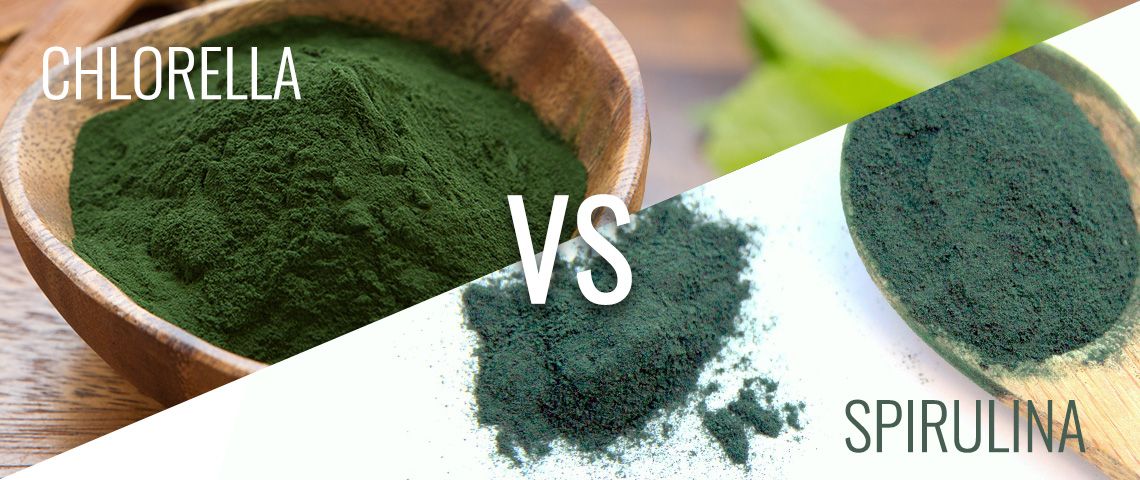
Of course, there is also a difference in the nutrient content. Spirulina contains more essential amino acids, iron, protein, B vitamins, vitamin C, E and D. This is not to say that chlorella doesn't have its benefits! It is definitely worth consuming both plants and it is good that they are often combined in products.
A list of the benefits that regular consumption of spirulina brings
Enough about the theory, let's get to the most interesting part - what can regular consumption or supplementation of this blue-green algae actually bring to our body?
Effect on health
Lowers blood pressure
Spirulina is a source of phycocyanin, a pigment that is a powerful antioxidant and, according to research, has antihypertensive effects - in other words, it is a substance that lowers blood pressure. Japanese scientists say this is because substances in spirulina can reverse endothelial dysfunction in metabolic syndrome. This is a promising finding because metabolic syndrome is associated with a higher risk of developing heart disease, stroke and diabetes, the most prevalent causes of death worldwide.
Helps regulate cholesterol and triglyceride levels
The substances in spirulina can also regulate cholesterol levelsquite effectively, which is beneficial both for the prevention of atherosclerosis and for the health of the cardiovascular system as a whole. In addition to its positive effect on cholesterol levels, spirulina can also lower triglyceride levels, which is also very beneficial for our heart health.
Protects the brain and promotes memory
In animal studies, spirulina has also been shown to have neuroprotective properties, which is a promising basis for testing in the treatment of neurodegenerative diseases (such as Parkinson's disease) in humans. Research results suggest that Spirulina platensis may prevent memory loss by reducing the accumulation of Aβ protein, reducing oxidative damage, and most importantly, increasing catalase activity. However, further investigation is needed to show whether these effects also apply to the human population.
It has anti-ageing properties and helps in the treatment of skin problems
Due to its high antioxidant content, spirulina is also a valuable anti-aging aid. Spirulina fights free radicals and can therefore prevent skin damage that causes wrinkles and other signs of aging. Spirulina also contains many important amino acids, including glycine and proline, which help keep skin firm and vital. It also stimulates the production of collagen, which is essential for the health and fresh appearance of our skin. This blue-green range has strong antibacterial and anti-inflammatory properties, so it is thought that it may be a mainstay in the treatment of skin problems such as psoriasis, eczema, or acne. However, more research is needed to clarify how much effective help it can actually provide in dealing with these difficulties.

Antioxidant and detoxifying properties
Spirulina is a fantastic source of antioxidants that can protect against oxidative damage. Antioxidants are substances that have been touted in many different ways in recent years because they have very positive effects for human health. In fact, they can protect the body from the action of free radicals, which are substances that cause many serious diseases. The most important ingredient in this respect is the now-mentioned phycocyanin. Phycocyanin helps to fight free radicals, can block the production of molecules that promote inflammation, and has impressive antioxidant and anti-inflammatory effects. In addition, studies say that spirulina is very effective in removing harmful heavy metals from the body, and is often part of a "detoxification treatment" in countries where there is a risk of intoxication due to drinking poor quality water.
Spirulina and immunity
Thanks to its antioxidant and anti-inflammatory properties, spirulina also supports our body's defences. Spirulina helps produce antibodies that fight infection and stimulates the production of other cells that improve immunity and help ward off milder respiratory diseases as well as serious chronic diseases such as cancer. Spirulina can also relieve symptoms of allergic rhinitis and help provide relief for sinus pain. Another great benefit is that spirulina helps regulate the amount of yeast in the digestive tract. The intestines are the "headquarters" of our immune system, and when things don't work as they should, various serious health problems can occur. Spirulina helps maintain a healthy microbiome, which is the basis for strong immunity and mental well-being.
.png)
Positive effect on sports performance
Of course, we must not forget to mention that spirulina is a great help for athletes. It has antioxidant properties that prevent oxidative damage, which can be beneficial for relieving muscle pain, but also in preventing injuries. There are also studies that say that consuming or supplementing spirulina can have a positive effect on increasing strength and prolonging endurance. In addition, a 2020 study showed that spirulina supplementation can improve oxygen uptake during cycling. Therefore, researchers refer to it as an ergogenic aid for improving overall athletic performance.

Potential benefits for fat reduction
In terms of fat reduction, don't expect great miracles from spirulina. First and foremost, it's important to follow a healthy diet, get regular exercise and get enough sleep. On the other hand, it is good to say that spirulina is a fairly good source of fiber, which is known to help prolong the feeling of satiety. It is also rich in B vitamins, which have quite a significant effect on energy metabolism. In addition, it helps keep our gut biome in good shape, which is important for optimal digestion of nutrients and making us feel good.
Supplements, recommended dosage and safety
An important question to ask yourself is how much spirulina per day to actually take? Although no standardized recommended daily dose has been established yet, most research notes positive effects when taking doses between 1 - 8 g per day. Spirulina is very often found in supplements along with chlorella, green barley and possibly some other ingredient. When supplementing such a product , follow the dosage recommended by the manufacturer, which can be found on the packaging of the supplement. If you want to buy spirulina, buy only products from verified sellers who guarantee quality and can guarantee that the spirulina in the supplement does not come from contaminated waters.
Spirulina is a safe food and supplement. Overdosing is basically impossible. However, at high doses, negative side effects such as bloating, abdominal pain, or other digestive problems can occur. If you are starting out, we recommend starting with lower doses and increasing as needed. It is also often recommended to take spirulina, or some greens complex, in multiple doses per day to avoid digestive discomfort. Pregnant women are not recommended to consume it at all. Individuals suffering from any autoimmune disease should also consult a physician for supplementation.
Recommended
When and how to take spirulina?
There is no specific recommendation here either . Spirulina seems to provide the same benefits whether you consume it on an empty stomach, incorporated into a meal (e.g. a smoothie or porridge) or after a meal. The time of day doesn't matter either, so it's entirely up to you when spirulina fits into your diet. On its own, it's not exactly a flavour miracle, so we recommend incorporating it into a dish. Ideally, it should be added to porridge, yoghurt, spread or a smoothie. To preserve the maximum content of beneficial substances, it is not recommended to subject spirulina to heat treatment (baking, cooking, etc.).
What to take away from this article?
Spirulina is a blue-green algae that is such a little nutritional treasure. In addition to containing all the essential amino acids, which makes it a complete source of protein, it also contains many vitamins, minerals and antioxidants. It is thanks to its packed nutritional content that consuming spirulina brings a really long list of benefits. From regulating cholesterol levels, to supporting the immune system, to improving athletic performance. Moreover, spirulina is completely safe and its use carries rather rare risks. Its taste is not exactly a pleasant experience, but it can be conveniently disguised by incorporating it into various dishes, such as smoothies, yogurts or porridges. When buying a supplement, make sure that the manufacturer guarantees that the spirulina in the product comes from uncontaminated waters.
Sources:
- Grosshagauer, S., Kraemer, K., & Somoza, V. (2020). The True Value of Spirulina. Journal of agricultural and food chemistry, 68(14), 4109-4115. https://doi.org/10.1021/acs.jafc.9b08251
- Wu, Q., Liu, L., Miron, A., Klimova, B., Wan, D., & Kuca, K. (2016). The antioxidant, immunomodulatory, and anti-inflammatory activities of Spirulina: an overview. Archives of toxicology, 90(8), 1817-1840. https://doi.org/10.1007/s00204-016-1744-5
- Neyrinck, A. M., Taminiau, B., Walgrave, H., Daube, G., Cani, P. D., Bindels, L. B., & Delzenne, N. M. (2017). Spirulina Protects against Hepatic Inflammation in Aging: An Effect Related to the Modulation of the Gut Microbiota. Nutrients, 9(6), 633. https://doi.org/10.3390/nu9060633
- Farooq, S. M., Boppana, N. B., Devarajan, A., Sekaran, S. D., Shankar, E.. M., Li, C., Gopal, K., Bakar, S. A., Karthik, H. S., & Ebrahim, A. S. (2014). C-phycocyanin confers protection against oxalate-mediated oxidative stress and mitochondrial dysfunctions in MDCK cells. PloS one, 9(4), e93056. https://doi.org/10.1371/journal.pone.0093056
- Lafarga, T., Fernández-Sevilla, J. M., González-López, C., & Acién-Fernández, F. G. (2020). Spirulina for the food and functional food industries. Food research international (Ottawa, Ont.), 137, 109356. https://doi.org/10.1016/j.foodres.2020.109356
- Soltani, M., Khosravi, A. R., Asadi, F., & Shokri, H. (2012). Evaluation of protective efficacy of Spirulina platensis in Balb/C mice with candidiasis. Journal de mycologie medicale, 22(4), 329-334. https://doi.org/10.1016/j.mycmed.2012.10.001
- Ichimura, M., Kato, S., Tsuneyama, K., Matsutake, S., Kamogawa, M., Hirao, E., Miyata, A., Mori, S., Yamaguchi, N., Suruga, K., & Omagari, K. (2013). Phycocyanin prevents hypertension and low serum adiponectin level in a rat model of metabolic syndrome. Nutrition research (New York, N.Y.), 33(5), 397-405. https://doi.org/10.1016/j.nutres.2013.03.006
- Cheong, S. H., Kim, M. Y., Sok, D. E., Hwang, S. Y., Kim, J. H., Kim, H. R., Lee, J. H., Kim, Y. B., & Kim, M. R. (2010). Spirulina prevents atherosclerosis by reducing hypercholesterolemia in rabbits fed a high-cholesterol diet. Journal of nutritional science and vitaminology, 56(1), 34-40. https://doi.org/10.3177/jnsv.56.34
- Ge, Y., Kang, Y.. K., Dong, L., Liu, L. H., & An, G. Y. (2019). The efficacy of dietary Spirulina as an adjunct to chemotherapy to improve immune function and reduce myelosuppression in patients with malignant tumors. Translational cancer research, 8(4), 1065-1073. https://doi.org/10.21037/tcr.2019.06.13
- Gurney, T., & Spendiff, O. (2022). Algae Supplementation for Exercise Performance: Current Perspectives and Future Directions for Spirulina and Chlorella. Frontiers in nutrition, 9, 865741. https://doi.org/10.3389/fnut.2022.865741
- Gurney, T., & Spendiff, O. (2020). Spirulina supplementation improves oxygen uptake in arm cycling exercise. European journal of applied physiology, 120(12), 2657-2664. https://doi.org/10.1007/s00421-020-04487-2
- Hwang, J. H., Lee, I. T., Jeng, K. C., Wang, M. F., Hou, R. C., Wu, S. M., & Chan, Y. C. (2011). Spirulina prevents memory dysfunction, reduces oxidative stress damage and augments antioxidant activity in senescence-accelerated mice. Journal of nutritional science and vitaminology, 57(2), 186-191. https://doi.org/10.3177/jnsv.57.186
- Pabon, M. M., Jernberg, J. N., Morganti, J., Contreras, J., Hudson, C. E., Klein, R. L., & Bickford, P. C. (2012). A spirulina-enhanced diet provides neuroprotection in an α-synuclein model of Parkinson's disease. PloS one, 7(9), e45256. https://doi.org/10.1371/journal.pone.0045256
No posts have been made yet.