





Is the BMI index a relevant indicator for assessing weight and health in general?
 Author:
 The BMI index is a number that we often encounter not only when we are trying to lose weight, but also during various health check-ups. But the question is - is this number really so crucial that it is given the importance it is often looked upon with? What does this number actually tell us about our health? Currently, the BMI index is criticized and considered outdated. Let's take a look together at what the interpretation of the BMI index actually is, what the advantages and disadvantages of monitoring it are, and we'll also talk about how indicative this indicator is in terms of health and weight management.
Theoretical window - what is the BMI index?
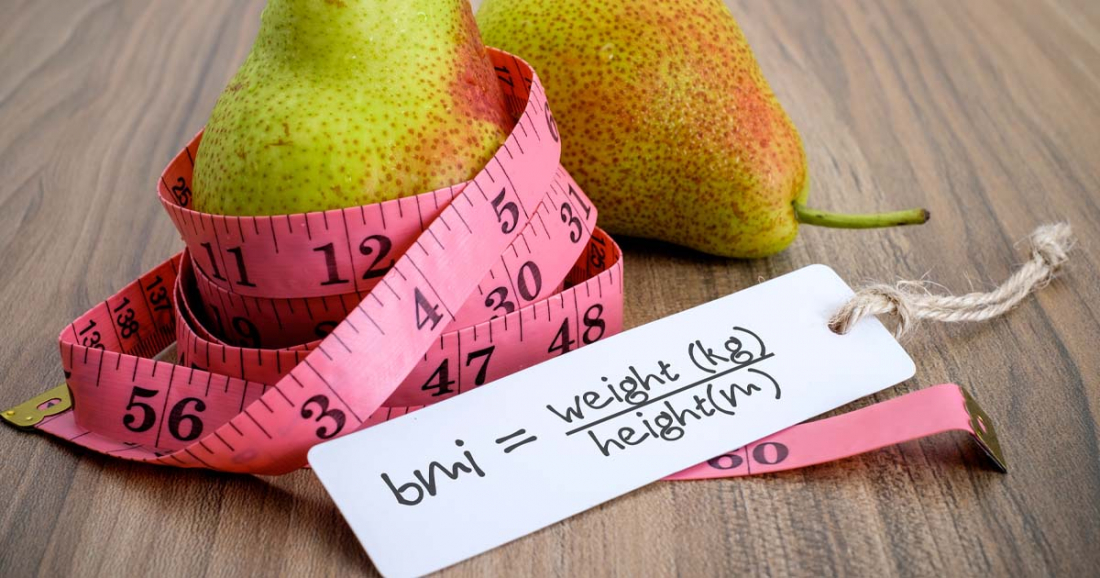
Body mass index (BMI) is a number that represents body fat and is calculated based on the ratio of height to weight. The formula looks like this:
BMI = weight in kg/(height in m)2
It was invented by mathematician, statistician and sociologist Adolphe Quelelet in 1832 as a tool to define the boundary between overweight and obesity. This index can be used indiscriminately for women and men and is applicable to all ages. Interestingly, Quetelet stated that the BMI was not so much useful in studying individuals, but rather in providing an overview of the overall health of the population. Yet it is widely used just to assess the health of individuals. Among physicians and some health authorities, BMI is considered one of the key indicators in determining whether someone is at risk for obesity, which is a common cause of developing other negative health complications, including heart disease. In addition to BMI, cholesterol and waist circumference measurements are also used to assess obesity risk.
BMI scale
As mentioned above, BMI or body mass index is calculated by a formula that takes into account the ratio between our weight and height. If you want to find out your BMI in seconds, you can find countless calculators on the internet where you simply enter your current weight and height or simply plug the numbers into a formula (see above). Once you know your BMI"score" from the calculator, you can use it to see how you compare to other adults of the same height. The rating scale then looks like this:
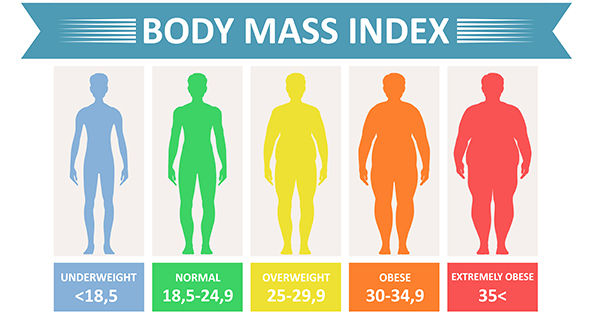
If you come out of the "normal" range at the doctor's office, you will probably be advised to make adjustments to your diet and lifestyle as a whole. You may fall into the "overweight or obese" category, which has a high risk of developing diabetes and heart disease, or you may fall into the malnourished category, which also has many health complications, such as loss of periods, chronic fatigue or frequent infections.

There is also research that supports the idea that higher BMI values are associated with an increased risk of premature death. However, this claim can be considered incomplete because it certainly won't always be true, but we'll get to that in a moment.
Well, wait a minute, but is the number representing the BMI Index in any way meaningful?
While the BMI Index does show some simple overview of some weight norms, it doesn't take into account any of the major factors such as genetics, muscle to fat ratio, bone density, age, gender, and much more. It is therefore perfectly logical that if you take two men of approximately the same size and similar weight, one of whom will be a lanky athlete and the other a beer lover with a typical beer belly, their similar BMI cannot be taken as a general indicator of health. In fact, if a high BMI comes out for a person with a beer belly button who is clearly low in muscle mass and much higher in fat mass, the BMI may indeed be an alarming indicator that action is needed to change things. On the other hand, for an athlete and low adipose tissue proportion, where muscle is dominant, the BMI doesn't really say anything significant.

But not to cast aspersions on it - the BMI index is useful, for example, for people who are underweight, for whom monitoring the BMI ratio can be quite important. However, if we were to take the BMI index as a reliable indicator of health or a number to alarm us that we are at risk of obesity, this is certainly not possible.
The major shortcomings of the indicator
It does not take muscle mass into account
Probably the biggest criticism of the BMI is that it does not take into account individual body composition, i.e. the ratio of body fat to fat-free mass, but simply takes weight as a whole - see example above. If we take two men of 180 cm and 95 Kg, one of whom will be an athlete with more muscle mass and the other will be a fast food lover, we cannot say that the BMI rank, which in this case would be 29.32, that both men are obese and at risk of diabetes or heart disease. If only the BMI is considered, we may misclassify a person as "obese" or "overweight" despite a low body fat percentage. Therefore, it is important not to look only at the BMI index as a number that neglects the essential factors and works only with weight, which, incidentally, is itself a rather questionable factor in assessing progress and health, but it is also good to take into account, for example, the ratio of muscle, fat and bone mass of a person.
It does not take into account gender and age
The BMI index also does not take into account the sex of the person being measured. Which means that according to this index, we are all the same - men and women. But of course this is not true. Women have a genetically higher percentage of fat than men and need more of it for their bodies to function properly - for example, if a woman has too low a percentage of fat, she would be in danger of limiting the function of her reproductive organs, etc. Another factor that should also play a role is age. This is because it is well known that as age increases, the percentage of muscle mass decreases, which can result in a decrease in BMI. Therefore, a lower BMI does not necessarily mean that we are healthier. Further differences are then brought about by periods of hormonal change - puberty or menopause, for example, when hormone levels change and therefore, in women, often the way body fat is stored.

It fails to take into account where our fat is stored
Another very important factor that suggests that the BMI should not be taken as the only guideline is the fact that it does not take into account where fat is stored and therefore does not take into account the fact that certain areas where body fat is located (for example around the waist) are more harmful than others (on the thighs, etc.).) According to research, people who have fat stored in the abdomen and waist area are much more at risk of negative health complications than people who have fat stored in their thighs, buttocks and hips. Many recent studies point out that BMI does not take into account where fat is stored on the body, which can misclassify a person as sick or at risk for disease. Thus, more important than any BMI index is, for example, waist circumference or percentage of visceral fat.
What should I look for instead?
We already know that the BMI index may not be a doubly relevant indicator for assessing healthy weight and health in general. So what factors should we focus on instead?
The ratio of muscle to adipose tissue
This ratio is very difficult to measure accurately, so please don't take your smart scale results completely as the holy grail. Tanita or inbody scales are a bit more accurate, but even with these it is not possible to claim that the result is an exact replica of reality. Much more accurate, for example, are callipers - this method works by having an expert measure the thickness of the skin on different parts of the body, and then plugging the values into a formula. As a result, you can see what percentage of fat you have in your body.

Waist circumference
As mentioned earlier, waist circumference indicates how much fat we accumulate in this area. Beware, even here it may not be true that the smaller the number, the healthier we are. It is important to mention that measuring waist circumference only makes sense if your BMI is under 35 kg/m2. All people with a BMI above 35 kg/m2 have a significantly high health risk that depends only on their BMI. Research suggests that if you accumulate most of your fat in this area, you have a significantly higher risk of developing heart disease and type 2 diabetes.
Amount of visceral fat
Building on the previous point, we'll mention that another important factor that is critical to health is the amount of visceral or abdominal fat. Excess fat around the abdomen can be a sign of dangerous visceral fat, which is a strong risk factor for many diseases. Visceral fat is technically an "excessive accumulation of intra-abdominal adipose tissue" - in other words, deep fat that is deposited deeper under the skin than "subcutaneous" abdominal fat and which can wrap around vital organs, including the liver, pancreas and kidneys.
Health indicators related to metabolic diseases
In addition to watching your weight, also make a trip to the doctor at least once or twice a year to have your cholesterol, blood pressure and triglyceride levels measured. All of these values are much more important to your health than what your current BMI is. Especially if you have a genetic history of any of these complications, definitely don't neglect regular check-ups.
Recommended

Viridian 100% Organic Nopal


Puhdistamo L-Theanine Natural

Advice for the end? Minimize factors that may contribute to obesity
Before you start tracking all sorts of indicators, try to start with something like minimising factors that may contribute to the development of obesity, or a range of other health complications. These include a sedentary lifestyle, lack of exercise, a diet based on eating ultra-processed foods, lack of sleep, smoking, frequent alcohol consumption, stress, etc.

So focus on making sure that your diet contains food of the highest possible quality and freshest possible form, and that the quantity reflects your needs, because neither extreme is good. Make sure you have variety and give your body nutrients from a variety of sources. Get plenty of air, try to get enough quality sleep and minimise stress. Lastly, regular physical activity is an integral part of health and should be on the daily agenda at any age. In fact, movement can be very effective in preventing a number of diseases, including obesity or muscle loss, and last but not least, it is also an important mental health fighter.
What to take away from the article?
The BMI index classifies people into groups based on their height and weight. The BMI table is then used to assess, for example, the risk of developing obesity and overall health. However, the BMI index has a number of major flaws - it does not take into account body composition and muscle mass ratio, ethnicity, genetics, age, gender or where fat is stored. There are a number of more reliable indicators, which is why we should never take the BMI as the only guideline for assessing health and weight.
Sources:
Zierle-Ghosh A, Jan A. Physiology, Body Mass Index. [Updated 2021 Jul 22]. In: StatPearls [Internet]. Treasure Island (FL): StatPearls Publishing; 2021 Jan-. Available from: https://www.ncbi.nlm.nih.gov/books/NBK535456/
Richmond, T. K., Thurston, I., Sonneville, K., Milliren, C. E., Walls, C. E., & Austin, S. B. (2015). Racial/ethnic differences in accuracy of body mass index reporting in a diverse cohort of young adults. International journal of obesity (2005), 39(3), 546-548. https://doi.org/10.1038/ijo.2014.147
Nuttall, Frank Q. MD, PhD Body Mass Index, Nutrition Today: May/June 2015 - Volume 50 - Issue 3 - p 117-128 doi: 10.1097/NT.0000000000000092
Perrin, E. M., Flower, K. B., & Ammerman, A. S. (2004). Body mass index charts: useful yet underused. The Journal of Pediatrics, 144(4), 455-460. https://doi.org/10.1016/j.jpeds.2004.01.047
Berrington de Gonzalez A, Hartge P, Cerhan JR, et al. Body-mass index and mortality among 1.46 million white adults. N Engl J Med. 2010;363(23):2211-221921121834
Hall, D. M., & Cole, T. J. (2006). What use is the BMI?. Archives of disease in childhood, 91(4), 283-286. https://doi.org/10.1136/adc.2005.077339
Dutheil, F., Lac, G., Lesourd, B., Chapier, R., Walther, G., Vinet, A., Sapin, V., Verney, J., Ouchchane, L., Duclos, M., Obert, P., & Courteix, D. (2013). Different modalities of exercise to reduce visceral fat mass and cardiovascular risk in metabolic syndrome: the RESOLVE randomized trial. International journal of cardiology, 168(4), 3634-3642. https://doi.org/10.1016/j.ijcard.2013.05.012
Ortega, F. B., Sui, X., Lavie, C. J., & Blair, S. N. (2016). Body Mass Index, the Most Widely Used But Also Widely Criticized Index: Would a Criterion Standard Measure of Total Body Fat Be a Better Predictor of Cardiovascular Disease Mortality?. Mayo Clinic proceedings, 91(4), 443-455. https://doi.org/10.1016/j.mayocp.2016.01.008
No posts have been made yet.








