Do proteins damage the microbiome and does aspartame cause cancer?
 Author:
 Whey protein is an essential supplement for many athletes, without which they cannot imagine their daily regime. And despite the fact that this supplement has a number of significant health benefits, which, by the way, we have discussed in detail in a separate article, from time to time reports emerge about the possible negatives that drinking protein shakes can bring, not only after training. But are they based on the truth? Is there anything to worry about? And does it actually make sense to choose protein and other supplements without sweeteners? That will be the main topic of this article.
Article content:
- What is the microbiome?
- Do proteins damage the microbiome?
- Artificial sweeteners and the microbiome, that's what it's all about!
- Should sweeteners be avoided?
- Does aspartame cause cancer?
What is the microbiome?
Although we have discussed the microbiome in detail, for example in our article entitled You are what you eat and your microbiome is proof of this, a little reminder is definitely in order. The gut microbiome refers to the community of microbes that live in our gut.
According to expert estimates, we have between 10 and 100 trillion symbiotic cells, which together can weigh up to two kilograms. It's also important to know that the composition of the microbiome is not the same all the time, but can change over time - largely determined not only by diet, but also by the amount of exercise, stress or even sleep.
And if by chance the microbiome is not working as it should, according to scientific publications, this can potentially lead to weight gain, play a role in the development of irritable bowel syndrome, for example, and even some research points to a possible link with cardiovascular health. At the same time, it's also definitely worth noting that the composition of the microbiome changes with age, and there is certainly no such thing as a single correct microbiome structure.
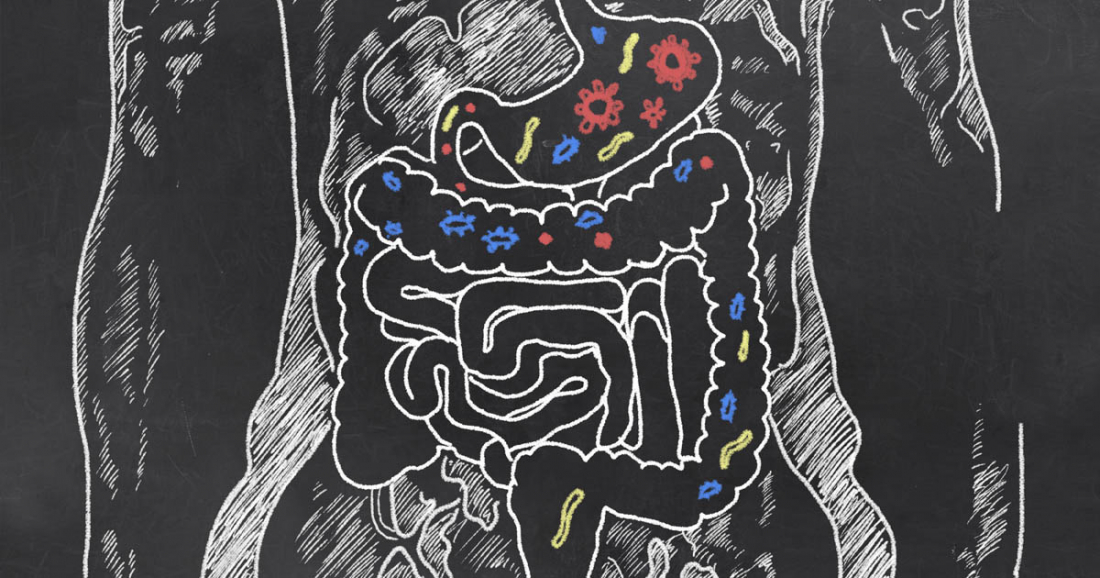
The cells in our gut can weigh up to two kilograms and the composition of the microbiome can change over time.
Do proteins damage the microbiome?
As you can probably guess without reading our comprehensive article, a healthy microbiome, in short, should be very important not only for athletes. It is quite problematic that although many websites specifically focused on healthy living try to present scientifically based facts, popular and widely visited media outlets from time to time publish completely unsubstantiated drivel that can put many people in doubt.
A typical example of this is an article published this year on Newsweek, which warns that protein supplements can negatively affect our microbiome. However, as the experts from the Institute of Modern Nutrition point out in their comprehensive article, this is actually a mistranslation, as in the original article the experts blame the negative effects on the microbiome on the artificial sweeteners that appear in the proteins, not the protein itself.

Artificial sweeteners and the microbiome, that's what it's all about!
Now that it's obvious that protein supplements as such won't really destroy your microbiome, we should take a look at artificial sweeteners, which can be a potentially controversial ingredient not only in protein, but in all sports nutrition. Although there are a number of different studies on this topic, the one really often cited is by Jotham Suez et. al. A total of 120 participants in this research were divided into 6 groups of 20, with 4 groups receiving one of the sweeteners studied (aspartame, saccharin, stevia or sucralose), the fifth group receiving glucose and the sixth group receiving nothing. Subsequently, the microbiome was transplanted into mice, among other things, where changes in the microbiome were discovered.
Although the nature and interpretation of this study is quite complex (for those interested in the full analysis, it is again worth referring to the comprehensive article by the experts at the Institute of Modern Nutrition), it is worth pointing out at least a few facts. First of all, the study recruited participants who had previously avoided artificial sweeteners, which may mean that, at least subconsciously, they may have considered them dangerous. And if you believe that a particular food can have a negative effect on your body, it may be your psyche rather than the actual harmfulness that influences the results. Or, of course, it may not, but the interpretation and relevance of the study may be slightly affected.
It is also worth pointing out that these studies often refer to "changes in the composition of the gut microbiome", but our microbiome should be thought of as a constantly evolving organism whose composition can be demonstrably determined by genes, environment, medication or dietary composition. Thus, a change in composition does not necessarily mean that our microbiome has somehow become corrupted.

Although many sports supplements also contain artificial sweeteners, it is easy to find supplements without them.
Should sweeteners be avoided?
Artificial sweeteners need to be looked at in a broader context, as there is also a lot of research that shows that at the currently prescribed doses, calorie-free or non-calorie sweeteners are perfectly safe. Swapping sugar-sweetened drinks for those with artificial sweeteners, for example, may be a better option for many obese people as they will reduce their overall calorie intake with their help. Of course, this doesn't mean that artificial sweeteners are some kind of miracle substances that need to be consumed regularly. When it comes to drinks, by far the best is of course plain water, which is naturally free of both calories and artificial sweeteners.
However, many people may find that for occasional refreshment, drinks with artificial sweeteners will be a much better option than those with sugar. It's the same with supplements, and not just proteins, which often contain artificial sweeteners. If you want to pay extra for a completely pure product, of course you can choose on the market - Reflex Natural Whey, for example, is completely free of artificial sweeteners, while CFM Clean from Prom-In is sweetened exclusively with steviol glycosides. For us, however, this is definitely not necessary and just look at how many recreational and professional athletes use supplements with sweeteners on a daily basis for years and none of them talk about microbiome problems.
Does aspartame cause cancer?
At the end of this article, it is still worth pointing out the recent information that aspartame is a potential cancer-causing substance. The Czech media, such as CT24, reported that the WHO has listed aspartame as a potential carcinogen. It should be added, however, that in the same category (in the classification system marked 2B) are items such as firefighter's work, carpenters' or joiners' work, aloe vera or pickled vegetables.
You can see the complete list on the WHO website (you will find representatives from category 2B from about page 51 onwards). Although it's not a good idea to downplay it, as long as you're taking artificial sweeteners in reasonable amounts, you don't need to be alarmed by this move by the WHO either.
Recommended
Extrifit Long 80 Multiprotein

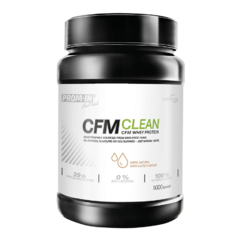
Prom-in CFM Clean
No posts have been made yet.