





Tips on how to prevent post-workout muscle pain and how to get rid of it as quickly as possible
 Author:
 Almost every workout has a greater or lesser side effect in the form of pain in the loaded muscles, especially if you are starting or intensifying the movement. This pain usually comes the day after the workout, and it lets the body know that we've hurt it. On the one hand, we love this condition because it makes us feel like we did something for ourselves and that the workout was really worth it! On the other hand, a state where it hurts to breathe slowly is not a comfortable state to be in...
First of all, it's important to note that muscle pain has virtually nothing to do with muscle growth. Although a very common phrase is that "what hurts, grows", the two processes don't actually have much in common. In fact, muscle growth is all about rebuilding damaged actin and myosin fibers that have been damaged by training. Muscle soreness results from the build-up of lactic acid in the muscles, which is produced when there is a lack of oxygen supply during sporting activity. In short and clear: it is definitely not necessary that your muscles must hurt in order to grow.
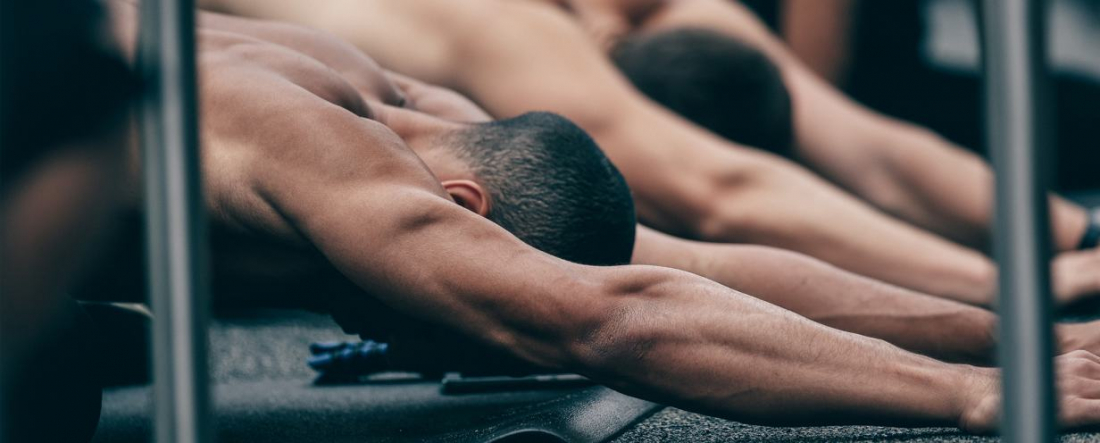
But we must remember that not all pain is entirely bad. In fact, even with post-workout muscle soreness, there are recovery processes going on, and at the end of those processes is muscle growth and strength (assuming adequate nutrition, of course.) In order to see muscles grow and get stronger, we need to load them, and thus disrupt their structure. Strength training or high-intensity training causes microscopic tears in the muscle fibres, which is the stimulus for the start of the regenerative processes, and thus for muscle growth and strengthening.
Especially if you are starting out with exercise or changing your training composition, this pain can be very common at first, as the body needs to adapt to the new movements and added load, whether we are talking about intensity or volume of training. After adapting to the changes or new movement, the pain after the workout will be much less pronounced, you just have to hang in there! Therefore, to make this pain as bearable as possible and not discourage you from exercising altogether, try some of the following tips to ensure that post-workout muscle soreness is more bearable.
DON'T UNDERESTIMATE WARMING UP AND STRETCHING!
While reading this tip, many of you will be shaking your head and saying something like "gosh, useless! Daaaaal..", stretching does indeed have a significant effect on muscle soreness arising after a workout. Even something as rudimentary as a 10 minute warm up on the bike or treadmill before a workout can help you very significantly reduce the degree of muscle soreness arising from your workout.

It's a good idea to incorporate what is known as dynamic stretching before your workout, which is a great way to prepare your muscles for the load and should be part of every workout. This form of warm-up helps to activate the muscles you are about to exercise and can also help increase range of motion, balance and coordination of movements. There are many ways that dynamic stretching can be used. Examples include lunges with no weight, dynamic squats with your own weight, or you can also use the foam roller that we have introduced in previous articles.
Another thing that is very important and should be recommended by every good trainer is to perform so-called warm-up sets, which consist in doing 2-3 sets of exercises with a lower weight before you go to your max or classic training weight, to activate the muscles and prepare them for the load. This will allow your joints to perform the exercises in the heavy variations at their maximum range, while improving blood flow and ensuring better nutrient delivery to the areas being exercised. It's just important that you don't get too tired during the warm-up sets, i.e. that they are really just a warm-up, not serving as the main part of the workout.
What can such a warm-up set look like in practice? If we have 30 kilos as a "training weight" for shoulder presses, for example, a warm-up can look like this:
- 1.Set - 50% of your training weight, i.e. 15 Kg.
- 2.Series - 65% of your training weight, i.e. 20Kg.
- 3.Series - 80% of your training weight, i.e. 25 Kg.
On the other hand, it is not recommended to do static stretching before training, or during warm-up series, as research suggests that it can reduce performance and have a negative effect on the weight you then lift during classic training series. So, we do static stretching after the end of training, which is a great time for it. Post-workout stretching helps you "calm down" your body and nervous system after the excitement caused by strength training. Plus, it can help develop flexibility. Perform each exercise in a slightly uncomfortable position, in short, so that you feel the tension in the stretched muscles.
TRAINING THROUGH PAIN? SURPRISINGLY YES!
This advice may sound a bit illogical to you, but if you have pain in some muscles after a workout, it is indeed ADVANTAGEABLE to go exercise again, but with much less intensity, of course. As we've already covered, muscle soreness is caused by a build-up of lactic acid, which builds up in the muscles due to the lack of oxygen during the training load. The extent of this acid build-up is then determined primarily by the type of training and your body's adaptation to the load it is subjected to. Despite the fact that your muscles are sore, you should eat try to do lighter workouts, because the activity can relax the muscles, and even though your performance will probably not be the same as in a situation where you are not in pain, the muscle will get a stimulus to grow further, or at least it will be blooded, which could make the pain go away.
SLEEP, SLEEP, SLEEP!
The absolute basis for good recovery is, of course, sleep, both in sufficient quality and quantity. We have discussed in previous articles how this factor is extremely important and that we all have different "optimal" times that we need. Sleep affects a lot of processes in the body - weight loss, recovery processes to muscle building.


SUPPLEMENTS AND OTHER SUPPLEMENTS
Let's start by saying that dietary supplements are not miracle pills that you take and the pain is gone. Unfortunately, it really doesn't work like that, but supplements can help to ease muscle pain or make it go away faster. What supplements are suitable for this purpose? The ideal choice is to include casein or whey protein. Both types will help jumpstart and speed up the recovery processes and rebuild damaged muscles. In addition, we can also use BCAAs, as branched chain amino acids have also been shown to have the ability to reduce muscle soreness resulting from intense training.
Recommended

Nebbia Fitness bolero s dlouhým rukávem TRUE HERO 257
Beta Alanine 300g 1+1
Czech Virus Sleep Ritual
Nebbia Sportovní volné tepláky GYM TIME 281
We can't forget about a quality multivitamin and fish oil either. Studies have shown that fish oil supplementation can actually help reduce muscle soreness after intense exercise. They are also very important for building and maintaining muscle mass. You can read more about fish oil here(link) and a small guide on how to choose the right multivitamin here(link). We can also use magnesium to relieve cramps and tension in the muscles, or HMB, which is a metabolite of leucine and is thought to prevent the breakdown of protein in the muscles. In short, HMB promotes muscle growth, contributes to better recovery, has a positive effect on the immune system and cholesterol levels, and aids in weight reduction.
DON'T FORGET THE BASICS!
Of course, we must not forget the basics such as sufficient calorie intake, ideally of all macronutrients, but make sure that your protein intake in particular is sufficient. Protein, in fact, is further broken down into amino acids and is the basic building block of our muscles. If you train hard but do not take in enough protein, this will also result in, among other things, impaired recovery.

Another such necessity is sufficient hydration. Because water is the basic building block of our body. It is important for the absorption of nutrients, excretes excess products of metabolism, and so on. In short, water is important for many processes in the body and for life itself. In post-workout recovery, you can also make use of common relaxation techniques such as sauna, massage, stretching exercises such as yoga or use the aforementioned foam roller.
WHAT CAN I TAKE AWAY FROM THIS ARTICLE?
Especially if you are just starting out with exercise (especially strength training), or if you are changing the intensity or composition of your workout, it is very likely that some of that muscle soreness will come up. Try some of the techniques we discussed above to reduce the intensity of the pain, increase your flexibility, allow your muscles to work better and make it easier for them to adapt to the new load more quickly, or reduce the time needed for recovery. None of the techniques or supplements we've recommended are miracles, yet they are worth investing at least your time in.
Support your performance with quality supplementation!
In our shop you can choose from a lot of proteins, gainers, amino acids(bcaa, glutamine, ...), vitamins and minerals, creatines,fat burners and much more. So don't hesitate and step it up a notch!
Sources:
https://www.ncbi.nlm.nih.gov/pubmed/17535144
https://www.ncbi.nlm.nih.gov/pubmed/23486850
https://www.ncbi.nlm.nih.gov/pubmed/17342883
https://www.ncbi.nlm.nih.gov/pubmed/7810616
https://www.ncbi.nlm.nih.gov/pubmed/19451765
https://www.ncbi.nlm.nih.gov/pubmed/24150614
https://www.ncbi.nlm.nih.gov/pubmed/21501117
No posts have been made yet.








