





Taping - a handy technique for supporting the regeneration of strained muscles and aching joints
 Author:
 Strapping tapes have been around for a long time, but only in the last few years have they become very popular and well-liked. Very often these colourful bands are used by top athletes as an aid for various joint pains, strained muscles and minor injuries so that they can continue their training sessions comfortably. Kinesiology tapes have a wide range of uses - they can be used by athletes of all levels suffering from some type of soft tissue injury, whether it's a younger athlete dealing with an acute injury affecting tendons or muscles, or an older person trying to play sports despite degenerative joint pain.
Some studies suggest that the use of kinesio tapes (when applied correctly, of course) has positive physiological effects on the skin, lymphatic and circulatory systems, fascia, muscles, ligaments, tendons and joints. Tape is most often applied for shoulder, elbow and knee pain, as well as for strained tendons and muscle pain. Tape can also be used for back pain, scoliosis of the spine, or to relieve the symptoms of upper or lower crossed syndrome. Let's take a closer look at this method of kinesiology taping.
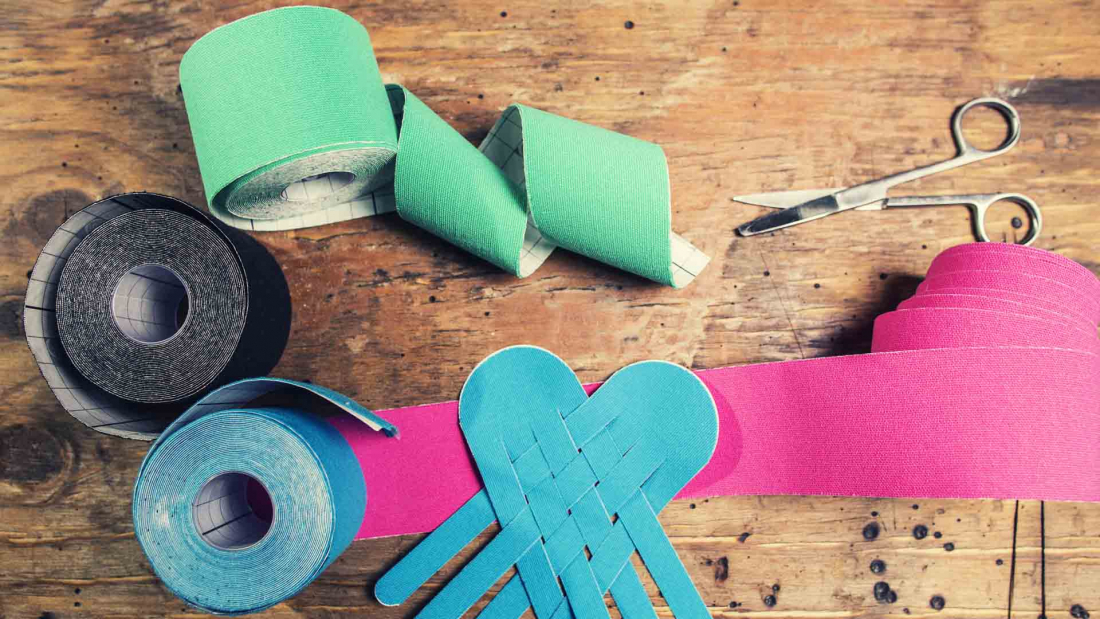
Theoretical window - what is taping?
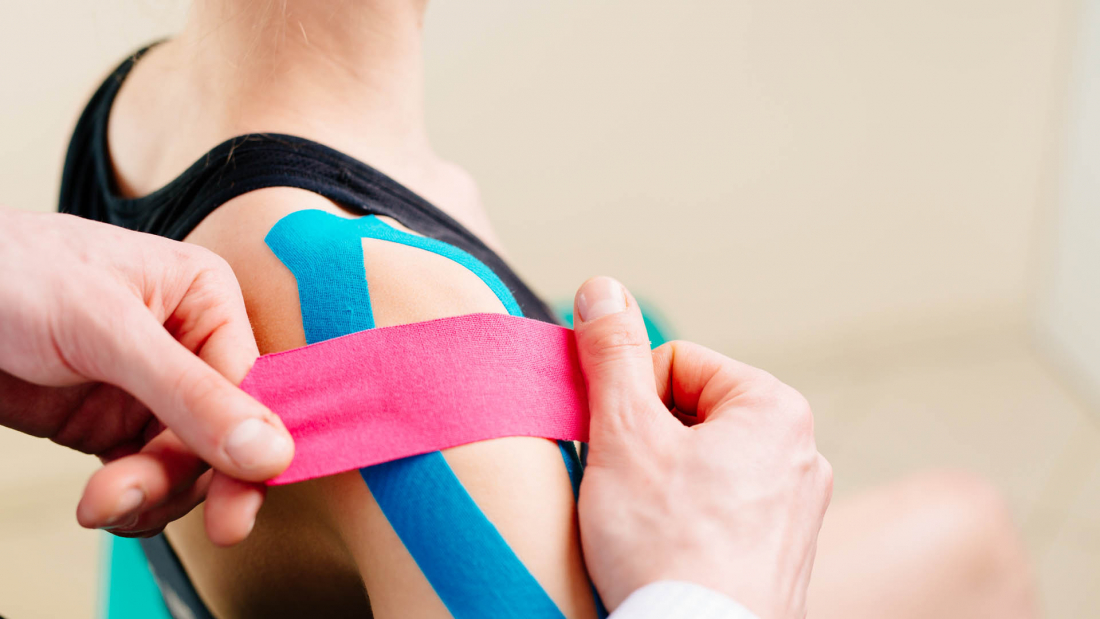
Kinesiology taping is basically used as an auxiliary physiotherapy technique that helps stabilize an injured or strained area of the body, thus allowing for faster recovery without completely restricting the range of motion of the area in question. Kinesiology tape is most commonly applied to the knees, shoulders, calves, shins, elbows, frequently strained muscles and wrists. The tape may be applied around the injured joint, muscle or tendon to reduce swelling and prevent further complications or further development of the injury.
Colored tapes are most commonly used among athletes or people who are very active - mainly because tapes can help relieve pain from muscle or joint injuries caused by overuse or intense training. But the use of tapes certainly doesn't end there! In fact, it can also be used by people who aren't as active - for example, older people who struggle with common joint pains caused by ageing. For these people, taping can help reduce pain and relieve discomfort during normal daily activities associated with degenerative joint disease.

How do kinesiology tapes actually work?
As mentioned in the introduction, tapes are not new at all, and when applied correctly can provide significant benefits. The kinesiology taping method was introduced in 1979 by Japanese chiropractor Dr. Kenzo Kase, who was looking for an alternative to traditional, stiffer athletic tapes. The purpose of using the original athletic tapes was to treat injuries by immobilizing areas of damaged tissue, such as painful joints or pulled tendons, while reducing range of motion in an effort to prevent further injury development. The kinesiology tape was developed to resemble the skin as closely as possible in structure and properties.
The method is based on the stimulation of muscles and other body structures through the application of elastic tapes, which, when applied correctly, induce reflex changes that eliminate pain and return the body to its optimal state. They are always applied to the stretched injured segment, thereby stretching the soft tissues and skin. After the movement segment is returned to its original position, the tape also shrinks and a 'wrinkling' of the segment can be observed. This wrinkling causes a kind of lifting of the skin, subcutaneous tissue and the fascia of the muscle, which increases the space between these layers and the muscle. By creating more space, the pressure of lymphatic and blood circulation, a number of other electrochemical changes and a reduction in pressure on the receptors are reduced. As a result, the individual wearing the tape then experiences pain relief.
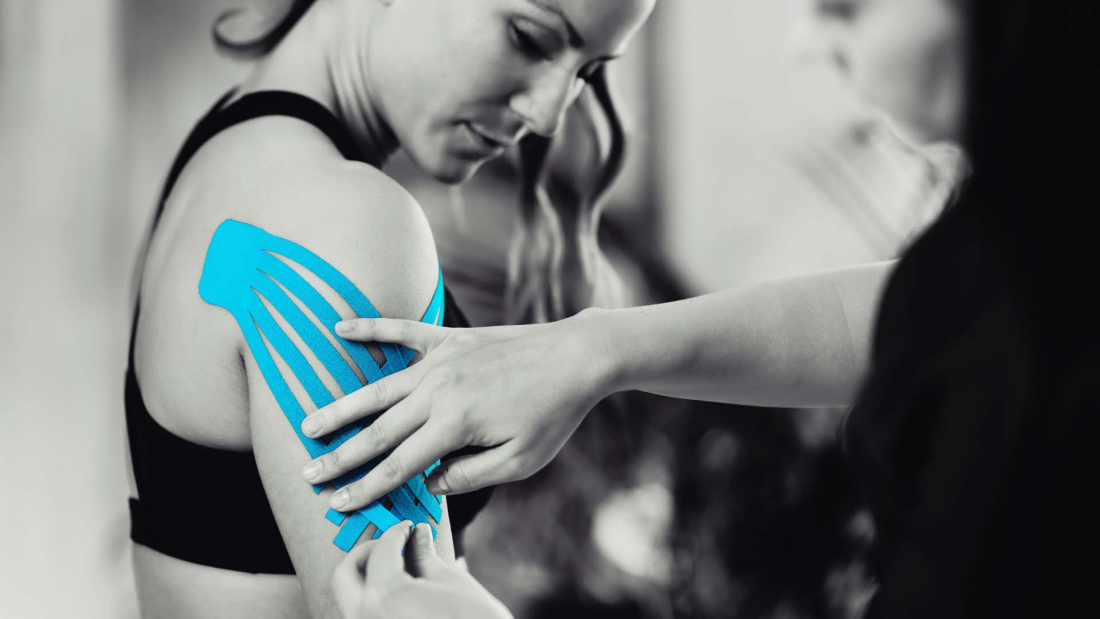
Kinesiology tapes act not only on muscles but also on nerve fibres. This means that the tape can also affect the relevant internal organs, so this method is not limited to movement problems, but can help with relieving spasms or muscle tension. Kinesiology tape improves blood circulation and increases metabolism, and because of this it can help relieve pain.

Most athletic bands are only designed to be used for short periods of time to prevent the joint from becoming too stiff. Due to its properties, kinesiology tape can be used for longer periods of time as it does not significantly restrict mobility or circulation. Kinesio tapes are air and moisture permeable. Underneath the tape is a highly hypoallergenic acrylic adhesive that does not irritate the skin (except in exceptional cases). The properties of the tape allow it to be worn for several days (depending on the body part and the strain on the tape). It should also be said that many studies confirm the positive effects of taping, but on the other hand, there are a fair number who find the tapes ineffective, but people feel better with their application due to the placebo effect. This is why taping is considered pseudoscience by some sources.
The main benefits of using kinesiology tapes
They help relieve pain in injuries
As already mentioned, kinesiology tape is very similar in structure to human skin, it is thin, soft and flexible. Kinesio tapes are made of a very thin elastic fabric that is usually 100% cotton, which allows the skin to breathe more easily compared to other types of tape. Compared to traditional tape, kinesio tape allows more movement and is less rigid. In addition, it reduces swelling by agitating the lymphatic fluid. The tape is made of a unique material that bonds to the skin using body heat. Compared to other tapes, the tape is made of a material that is elastic and more flexible, allowing it to adhere to the patient's skin and gently "pull" it without causing any additional pain. The application of the tape stimulates blood flow to the affected area throughout the day, thus promoting better regeneration and accelerating healing.
The kinesiology tape does not restrict movement or blood circulation at all
Severe restriction of movement of damaged tissues can lead to swelling and stiffness becoming worse, which is why flexible tapes are more effective than rigid fixation. The kinesiology tape stretches longitudinally but not transversely, allowing it to stay in place and properly adhere to the affected area where the muscle or joint has been injured.
Kinesiology tapes can help relieve back pain
A 2016 study published in the Journal of Bodywork and Movement Therapies reports that kinesiology can be very helpful in reducing back pain when combined with other forms of therapy - such as manual massage. Studies suggest that the use of kinesiology tape helped patients by improving range of motion (ROM), muscular endurance, and motor control. However, not all studies support this assumption, but most research agrees that when kinesiology taping is used in conjunction with another physiotherapy method - massage, exercise, stretching - it can help with pain relief.
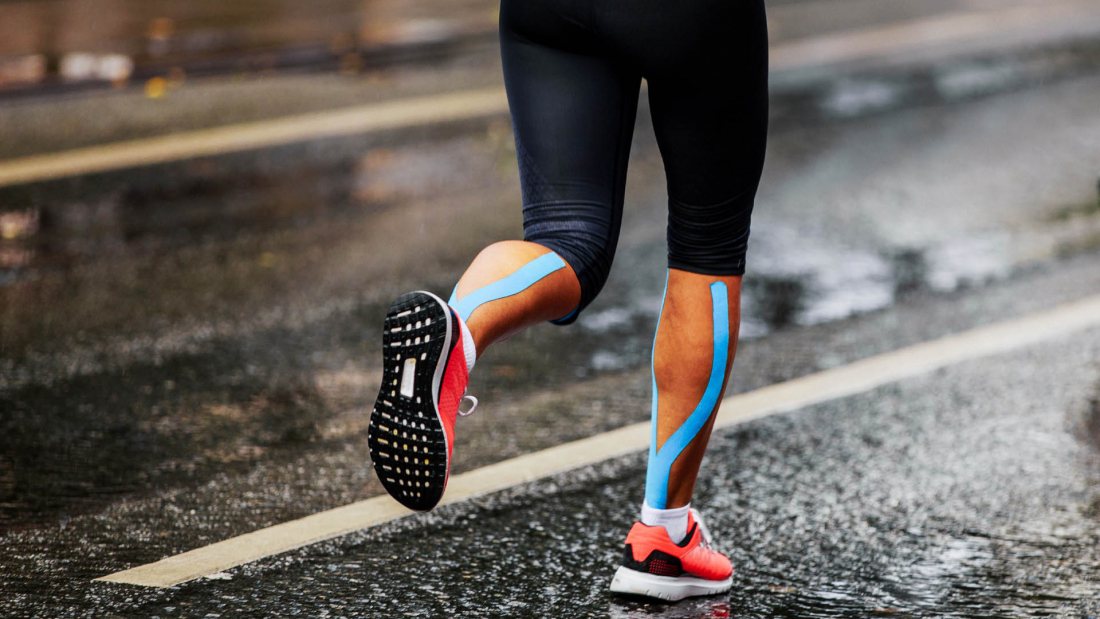
Tape, an effective helper for all endurance athletes - especially for runners, cyclists, tennis players and others.
Taping can be useful for knee pain, pulled muscles, ankle pain, tennis elbow and other unpleasant complications associated with overuse or improper movement patterns. The results of studies show that kinesiology tape can help with stabilization and balance of joints after injuries, plus it makes physical activity easier for those suffering from degenerative joint disease. The application of kinesiology tape may be useful for reducing pain in knee osteoarthritis and may increase range of motion.
How to apply the tape correctly?
As mentioned in the introduction, for kinesio tapes to be truly effective, they must be applied correctly, so finding a professional to apply the tapes correctly seems to be the best option. And by expert, we mean a real expert. On the other hand, if applied incorrectly, it can cause harm, as the tapes also affect the blood circulation and lymphatic system. Bandages are sold in a variety of colour combinations. However, colour is usually of no particular significance and does not affect stiffness. Most types of tape are waterproof or even waterproof, which allows for long term use (3-7 days max).
Here are a few essential principles that should be followed before applying the tapes.
- Apply the bandages 30-60 minutes before starting any physical activity or showering, so that it sticks well to the skin.
- Clean the skin of dirt, grease and hair first. The tape is applied directly to the skin. Make sure that the skin is dry so that the tape sticks well.
- The edges of the tape should be cut in an arc so that the tape does not fray or peel off.
- Before applying the tape, flatten and stretch it, but do not stretch the ends of the tape. The ends, called 'anchors', should be loose, without tension.
- To optimally activate the adhesive, which is activated by body heat, rub the tape gently between your hands before application.
Recommended
Nebbia Tvarující legíny s vysokým pasem AGILE 464
Nebbia Legíny s vysokým pasem ICONIC 209

Nebbia Top Halter CLUB D’OR 640

Nebbia Fitness šortky s vysokým pasem GLUTE PUMP 240
Who all can benefit from the advantages of the use of tapeworms and for whom they are not suitable?
Bandages are suitable for:
- Individuals whose work involves performing repetitive manual tasks that can cause pain due to inflammation and overexertion. Workers, mechanics, couriers, etc.
- People who have sedentary jobs and spend many hours hunched over a desk at a computer, or for those who live a sedentary lifestyle which contributes to back or neck pain.
- Athletes or those who recreationally engage in physical activity to a greater extent - especially then for runners, cyclists, golfers or tennis players.
- Individuals who have difficulty sleeping and suffer from headaches or back pain as a result.
- The elderly population who suffer from joint pain due to arthritis, osteoarthritis or other health complications associated with degenerative joint and tendon disease.
- And, of course, anyone can benefit - old or young - who have suffered a muscle, tendon or joint injury and have long-term pain as a result.
On the other hand, taping may not be advisable in pregnancy (especially then in the tummy area), precisely because it interferes with metabolism and affects circulation. In pregnancy, they can be used to relieve back pain, but definitely consult your doctor before application. Taping is also not a substitute for treatment for serious injuries - always consult a doctor, physiotherapist or other qualified person about application. Care should also be taken by individuals suffering from skin problems or eczema. Taping should not be used on open wounds. Change the tape regularly to avoid skin irritation and other discomforts.

What to take away from the article?
Taping is nothing new and when applied correctly, this method can be a very effective support for faster recovery after injuries, when muscles are strained, or for long-term musculoskeletal problems. It can be used not only by active people and top athletes, but also by older people with the first signs of degenerative joint problems. The tapes are flexible, which means that they do not restrict movement at all. They can speed up the regeneration of the affected areas by stabilising them and ensuring greater blood supply. Of course, taping has its principles and it is essential that the tapes are applied correctly as they interfere with the flow of body fluids and can exacerbate problems if not handled correctly.
Sources:
https://kinesiotaping.com/every-day-use/
https://kinesiotaping.com/about/what-is-the-kinesio-taping-method/
Nelson N. L. (2016). Kinesio taping for chronic low back pain: A systematic review. Journal of bodywork and movement therapies, 20(3), 672-681. https://doi.org/10.1016/j.jbmt.2016.04.018
Williams, S., Whatman, C., Hume, P. A., & Sheerin, K. (2012). Kinesio taping in treatment and prevention of sports injuries: a meta-analysis of the evidence for its effectiveness. Sports medicine (Auckland, N.Z.), 42(2), 153-164. https://doi.org/10.2165/11594960-000000000-00000
Zhang S, Fu W, Pan J, Wang L, Xia R, Liu Y. Acute effects of Kinesio taping on muscle strength and fatigue in the forearm of tennis players. J Sci Med Sport. 2016;19(6):459-464. doi:10.1016/j.jsams.2015.07.012
Williams S, Whatman C, Hume PA, Sheerin K. Kinesio taping in treatment and prevention of sports injuries: a meta-analysis of the evidence for its effectiveness. Sports Med. 2012;42(2):153-164. doi:10.2165/11594960-000000000-00000
Chang HY, Wang CH, Chou KY, Cheng SC. Could forearm Kinesio Taping improve strength, force sense, and pain in baseball pitchers with medial epicondylitis. Clin J Sports Med. 2012;22(4):327-333. doi:10.1097/JSM.0b013e318254d7cd
Cavaleri, R., Thapa, T., Beckenkamp, P.R. et al. The influence of kinesiology tape colour on performance and corticomotor activity in healthy adults: a randomised crossover controlled trial. BMC Sports Sci Med Rehabil 10, 17 (2018). https://doi.org/10.1186/s13102-018-0106-4
https://kinesiotaping.com/wp-content/uploads/2015/11/anandkumar2014.pdf
Kaplan, Ş., Alpayci, M., Karaman, E., Çetin, O., Özkan, Y., İlter, S., Şah, V., & Şahin, H. G. (2016). Short-Term Effects of Kinesio Taping in Women with Pregnancy-Related Low Back Pain: A Randomized Controlled Clinical Trial. Medical science monitor : international medical journal of experimental and clinical research, 22, 1297-1301. https://doi.org/10.12659/msm.898353.
No posts have been made yet.








