Shoulder training through Mountain dog training
 Author:
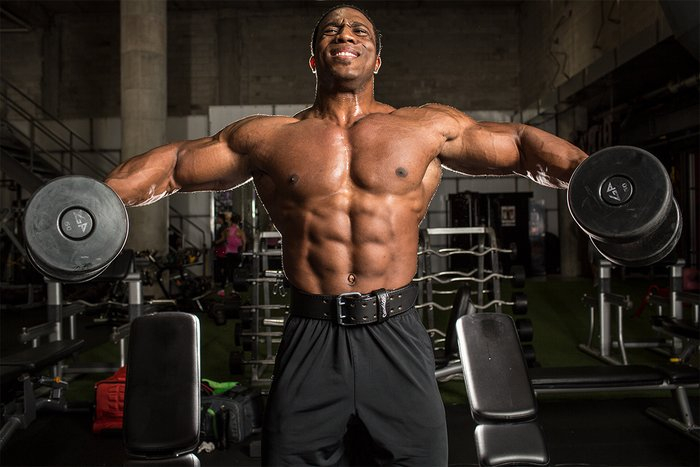
 Shoulders make the look!
I've tried it, and I have to say that if you resemble Larry King in your shoulder development, your shoulder workouts require a proper dose of pain tolerance, passion, and a healthy dose of creativity. This may not be the most elegant piece of prose ever written, but it sums up my approach to training stubborn shoulders. Let me first describe a bit about my own struggle with this muscle part.
Genetically, my shoulders are ridiculous and my naturally large neck doesn't help much. I've always looked funny with that big neck, followed by knotty, spade-shaped shoulders. On top of that, I have short collarbones and a wide pelvis. So you can imagine we're talking about someone who has a big problem looking broad in the shoulders and narrow in the waist. As with my back, I've spent many years with my shoulders trying out the traditional training protocols described in "Muscle and Fiction." You know the drill: a bunch of overhead presses - that'll do size - and a bunch of pull-ups - that'll do width.

I practiced several variations of overhead presses regularly, and used enough weighted pull-ups to reach competition width even a few times, but it didn't work. My lower body grew well, and I did decently in competitions only because of my legs and my ability to tighten up my form. However, when I got to the national competition and saw the incredible roundness and width in my opponents' shoulders, I was amazed. I had to figure out how to manage to look the same.
One particular moment changed my whole approach to shoulder training. It wasn't training from a magazine, studying anatomy or reading volume philosophies from the Eastern Bloc. I was training at Gold's Gym here in Columbus and Nick, one of my old friends, joined me for chest and shoulder training. If you've read any of my articles, Nick is the guy who was able to compete in triathlon and bodybuilding in one day. Suffice it to say, he was simply a beast: huge and chiseled. When I was preparing for a national competition and he saw me, he said exactly this: "Johnny, man, where are your shoulders?"
I didn't know what to say. You're pretty fragile before a competition, and this didn't make me feel better twice. Nick then asked me about reps and weights in shoulder training. I was boasting 20 kilo figure eights for deadlifting 45 kilo one-arm shoulder presses, which obviously didn't impress him much because he told me it was useless.
It was a tough time
Nick told me to take the 7 kilo one-arms and go to the positive incline bench to start practicing positive incline push-ups and back shoulders. Back shoulders? I didn't really know what they were because I hadn't trained them much. Occasionally I'd put a series of pull-ups on them that I'd read about in a magazine.
Warmed up with some push-ups on a positively inclined bench. When we were warmed up, he barked out his instructions: high fives on the push-ups, then turn face down on the incline bench and do 60 reps with 7-pound one-armed dumbbells. Yes, 60 reps!
I thought he was joking; all the books say to grow up between 8 and 12 reps, and this only hits the slow twine, and will make me a marathoner. But I humbled myself anyway and did the series anyway, it was awful. My back shoulders have never hurt so much in my life. Then I added some weight to the positive pressures, got up to 125 pounds. I did another five, but noticed that it suddenly seemed heavy, and then I did another 60 reps of pull-ups.

The first set of 60 reps was extremely painful, but this one was even worse - it must have taken me at least five minutes to complete. After the break, we went to the bench again. This time the 143 kilos practically crushed me. Nick laughed at how weak my back shoulders were, and that they no longer functioned as stabilization. Still, he had me do one last set of 60 reps. After those three sets, my back shoulders were incredibly swollen and pumped. Nick was just getting started. He asked if we wanted to do something heavier. I enthusiastically replied that I did, and he told me to get the 25 pound one-arms.
I figured that would be easy, since pushing with those one-arms meant baby weight for me. "Heavy weight, lots of reps," he yelled - the same thing Tom Platz tried to get into us during his seminar years ago. He told us to forget the traditional high weight, low reps/low weight, high reps scheme, and instead go heavy weight and high reps for absolute intensity.
We did the "swing." It was standing upright pressing with a very limited range of motion and heavy weight. You just bow your head and swing it until you reach the desired number of reps, which for us was 35 reps. Nick did it easily and laughed at how I struggled even though I got through all three sets. That was the end of the workout and the next day I experienced probably the worst shoulder pain of my life. Just the fact that they hurt fascinated me because I always had trouble getting them to hurt. Since then, I've been using this class when I talk about high reps from different angles for shoulder training.
Over the years, various other things have directed me in my shoulder training, many of which may be very far from what you are used to. Remember, this has worked for me, and I'm not saying overhead presses and traditional rep ranges are useless; I'm simply saying that sometimes you have to be resourceful to capitalize on your potential.
First, let's look at the main concepts in my shoulder training:
- Train your back shoulders: this is my first piece of advice. Unless you are extremely genetically gifted, back training alone will not be enough to do the job. Back shoulders are essential if you are standing from the side: If you have good ones, you will look 3D from the side, which can separate you from everyone else.
- Train your back shoulders with high reps (most of the time): over the years I have found that they respond very well to high reps. It will burn. And you'll have to be mentally tough, but if you can do it, they will grow. Try the rep scheme below for a month, and you'll know what I mean.
Four weeks will usually look like this for your chosen back shoulder exercise (the exercise may change from week to week):
Week 1 - 4 sets of 35 reps
Week 2 - 4 sets of 20-25 reps
Week 3 - 4 sets of 12-15 reps
Week 4 - 4 sets and traditional inverted pyramid: 35 reps, 25 reps, 15-20 reps, and then 8-12 reps. I add weight during this each series.
- Once a month, use a large weight as a shock for a high rep count: how do you do this for the back shoulders? I use the following once a month out of competition and twice in pre-competition training.
Finish your shoulder workout with a devastating hang and swing exercise: it's similar to the standing swing described above, only in this version you're lying face down on a positively inclined bench and the one-armed arms are hanging freely. Take the heavy one-handers and jerkers. The rep scheme looks like this:
- Do 60 reps of hang and swing with heavy one-handers and partial range of motion.
- Drop that and take a half lighter weight. Do another 30 reps of hang and swing.
- Again, take half the weight off and give yourself 10 reps, but this time pull it all the way up to full range of motion and squeeze your back shoulders hard for 2 seconds on each rep.
Lost? Watch the video.
Training the lateral shoulders
There are great, safe and productive intensification techniques you can use for your lateral shoulders.
Use heavy eccentric weights on a machine for your lateral shoulders: this is a great exercise. The proper way to do it is to perform the positive/concentric portion of the movement yourself, and then your training partner pushes you down during the eccentric/negative portion of the movement while you try your best to resist.
I love them because, unlike most negative executions, they are safe and seem to really hit the fibers of the lateral arms deeply.
Watch the video.
Use heavy weights for high reps: This brings me back to swing, standing upright pressing, where we use very heavy weight. Your arms should only be slightly bent when doing this. A set of 25-35 reps would be ideal.
Check out the video (it's the second exercise in it).
Practice crash sets: many of you are probably already doing this, so I won't waste any time on it. You can of course do it on a machine or with one-armed dumbbells.
You can also do a combination of front and side shoulder workouts
I don't usually do much isolation work on the front shoulders, but I prefer to focus on exercises that target both the front and side shoulders.
- Practice the positively inclined bench press every week: if you remember my chest article, you know that I like to use it for shoulder width. I find that if I stop practicing it, my shoulders lose width and volume from the side. It's obvious. I like classic pyramids and usually stop the weights a few inches above my chest to save my rotator cuff. I like my shoulders and chest in one workout, so this exercise fits in well.
- Give yourself a six-pack: this is one of those functional combination exercises. You do a seated pull-up and swing your arms around in front of you during the contraction. Then you lift it straight up over your head and do the whole movement backwards as well. You put your arms back in front of you, swing them to the side, and then lower them back down. This whole thing is considered one repetition.
I use 4 pound one-handers for this, so don't think you can load a heavy weight. I usually do sets of 10 reps.
Check out the video.
Use overhead presses infrequently: heavy overhead presses every week were incredibly destructive to my joints, which is why I will never do them again. I'll occasionally do some for fun because I think they can be effective, but it's too easy to overdo it. Remember, a big part of my philosophy is to stay well. There are three styles I'm particularly fond of:
1. Overhead and overhead pushes: as the name suggests, you put the axis just behind the level of the head and push overhead, with the second push being in front of the head. The whole thing is one repetition. Do it standing up. Use a rep range of 8 to 12. Watch the video - this is another exercise that does the job fairly unobtrusively (editor's note: similar to the Bradford press).
Watch the video
2. Super-wide push-ups in front of the head: This is a standing military press where your hands are at the ends of the axle and you lower the axle all the way to your chest.
It might be a little uncomfortable at first because your shoulders won't be used to that range of motion, but once you're more stretched out, you might enjoy it. It's a tough exercise, and you don't need a lot of weight for it. I do sets of 12 to 15 reps with 30 to 36 pounds.
Check out the video.
3. Cage Presses: This is an overhead cage/stand squat press. The difference is that you rest your axis against the cage and push up. This will offer extra resistance but a solid range of motion.
At the top, lean forward and clench your shoulders. I was once taught this by the Westside Barbell triathletes and I still love it. It's also great for trapeze.
Check out the video
Training volume
I keep the volume lower on the shoulders than I do on most of the body. With these intensifying techniques and the relatively small size of the deltoid muscles, I don't think you need as many sets as you do for the legs. As with all other body parts, I like to add volume to the shoulders gradually and train hard for about six weeks before dropping off. The intensity doesn't change, but the difference in volume represents a kind of internal periodization.
In terms of volume, my twelve-week program for shoulders looks like this:
- Phase 1 - Weeks 1-3: Use medium volume. Total number of sets is 6-8. Concentrate on two, maybe three exercises, one of which will always be for the back shoulders. Use the intensification techniques described above.
- Phase 2 - Weeks 4-9: Use high volume. Now start adding volume each week. Your body will adapt to the intensity from the first phase and we will keep it off balance by adding total volume and load for the next 6 weeks.
Sets will typically be 9-12, we will add more intensity each week. Again, we use 2 to 3 exercises. It's going to be a really heavy 6 weeks.
- Phase 3 - Weeks 10-12: Use low to moderate volume, almost exclusively high intensity series, after proper warm up of course. The sets will be around 4-6. The overall volume will drop in this phase, but the sets you will work out will be the hardest you will ever do. During this phase I recommend using only two exercises.
- Deload - 2 Weeks: As with any heavy program, deload will help you in the long run as you recover from the cumulative nervous system fatigue that comes with heavy work. However, everyone is different - I've seen people who needed deload after six weeks, and others who have trained for over 30 weeks full out and still improved. I generally recommend two lighter weeks after 12 weeks of brutal work.
Sample workouts
This is a classic shoulder workout from phase 1 of my program (8 sets total). Remember, I train the chest first with a positively inclined bench for shoulder development.
- Heavy Deadlifts (partial reps): Grab a pair of very heavy one-armed dumbbells and let your arms hang to the side. Do only small swing reps. Give yourself 4 sets of 35 reps. With each rep, tilt your head back and keep your arms straight. Make sure to start lifting the weight with the middle head of your deltoid muscles.
- Back shoulders on machine (inverted peck deck): 3 sets, 35 reps. Get the weight as far back as possible with a slightly exaggerated range of motion.
- Lying on your stomach on a positive bench: 1 devastating set. Take heavy one-handed pull-ups, load the snatches, and give 60 reps. Drop it, take half the weight and do 30 reps. Finally, take half the weight off again and give 10 reps full range of motion, holding each one up for two seconds. Good night, shoulders!
This is the classic shoulder workout from phase 2 of my program (12 sets total). I consider this a high volume of work for such a small area as the shoulders.
- Overhead and overhead big axis press: 4 sets, 12 reps. Put the axis in front of you and push it up so that it's barely over your head, put it behind your head, immediately push it back up and lower it in front of your head again. That's one repetition. Don't go crazy with the weight, lest you crack your skull when you're tired.
- Rear Shoulders with Counter Pulleys: Stand in front of a tower with counter pulleys and pull from the top position. Stand straight and hold the contraction for 2 seconds in each repetition. Do 4 sets of 25 reps.
- Hex: If you happen to have some left in your shoulders, do 4 sets of 10 reps.
Summary
Genetically, I've never had a knack for shoulders. Instead, I had to experiment, get creative, not pay attention to pain tolerance, and only then did I start fitting well into my suits. It doesn't mean you have to go through the same thorny path.
Remember, there will always be genetic freaks that grow from de facto anything. However, I think you'll find my advice useful, unless you're one of those bastards. I hope some of the techniques described help you as much as they helped me.
Check out the other parts of the series dedicated to Mountain Dog training:
- Huge Arms Thanks to Mountain Dog Training
- Mountain dog style chest destruction
- Mountain dog training
- Huge and strong legs thanks to Mountain dog training
By John Meadows, CSCS;
Recommended
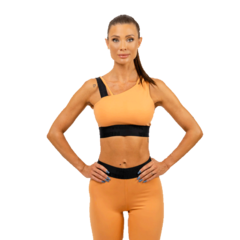
Nebbia Asymetrická sportovní podprsenka ELITE 469
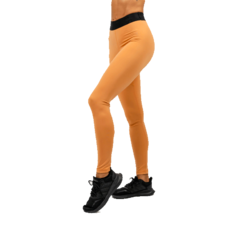
Nebbia Legíny s vysokým pasem ELITE 465
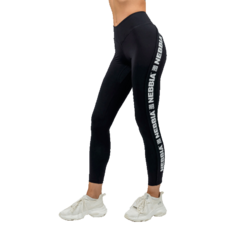
Nebbia Legíny s vysokým pasem ICONIC 209
No posts have been made yet.