





Complete Guide to Powerlifter Equipment - Hooks, Snatches & Magnesium | Grip Types
 Author:
 Do you know which equipment is the most commonly used after tape and bandages? If you're guessing that it's the accessories that support a proper grip, you're absolutely right. This is because for many powerlifters, forearm and grip strength is severely neglected, and because of a weak grip, they can't perform deadlifts, axle pulls, or hunches with the kind of load their back muscles would require. But what equipment is definitely worth buying and what, on the other hand, is not highly recommended? And how often should we use them? That's exactly what our article today will be about, which is a loose continuation of our miniseries "The Complete Guide to Powerlifter Equipment."
Why even think about hooks and rips?
Since our series of articles introducing the basic equipment of powerlifters targets both beginners and more advanced athletes, it would be good to clarify why to think about using snatches and hooks in training at all.
The reason for this is simple, and we have already hinted at part of it in the introduction to this article. In order for a muscle to grow and make strength progress, it must be loaded effectively and evenly in training. And the stumbling block is that our body works synergistically and the different muscle groups must work together to move and perform a variety of movements. As you might guess, the larger parts (represented by the back, chest and leg muscles) are naturally much stronger, so it's not uncommon to be limited in many movements by the smaller muscle groups.
Imagine that you are going to perform a deadlift in training. While you will be able to do the first few warm-up sets without a problem, with heavier weights there is a major problem - you will not be able to hold the dumbbell in your hands, even though the chosen weight is not an obstacle for your legs and back muscles. In this case, you usually have two options - either change your grip (which we'll dissect at the end of the article) or start using some of the supplements that we'll cover in today's article.
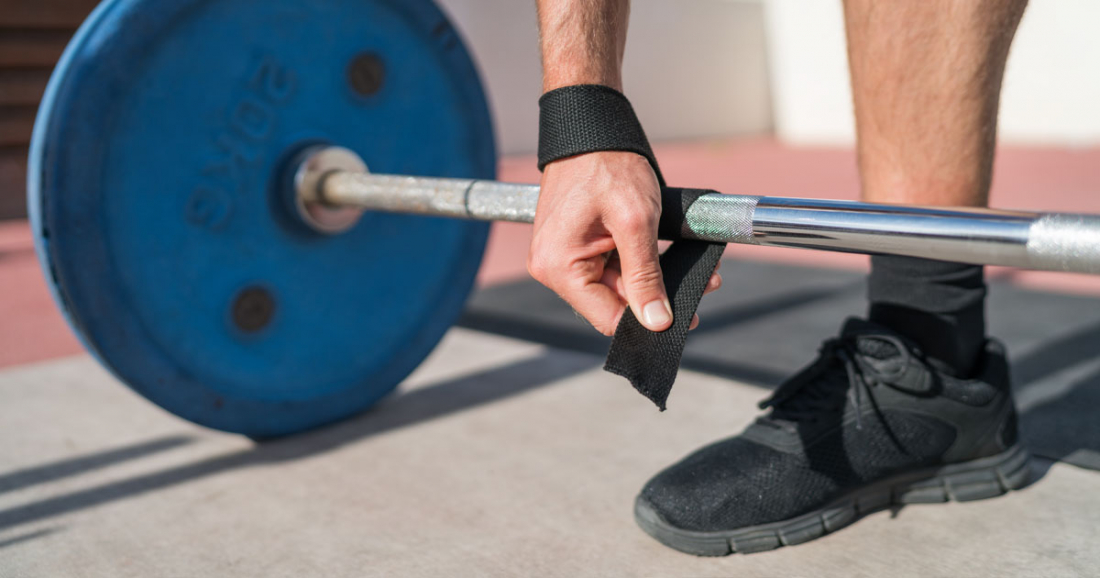
When the arms can't hold the weight that the back and legs require to train, jerks, hooks, or magnesium come into play.
Jerks
Jerks are probably the most widely used and most effective grip improvement aid. It is an accessory made of either textile or leather and its use is really very simple - by threading the end of the ripper through the eye, you create a loop into which you stick your hand and wrap the remaining end around the dumbbell. This way you limit the involvement of your forearms and can concentrate fully on exercising your back properly.
In relation to snatches, you should also know that they are most commonly used by Olympic weightlifters in addition to powerlifters and strongmen, but their snatches are a bit different because they have no eyelets to thread through and, thanks to the closed loop, they can be immediately attached to the bar and lifted. However, besides being a bit more challenging to use (you can't wrap them as tightly around your wrist and axle, which makes them less usable among laypeople), they usually don't have to be bought in stores, but can be made at home to your exact needs, so we won't mention them.
The snatches used by the rest of the strength-oriented athletes need to be wrapped around the axle, which has several undeniable advantages - among others, the fact that different sized axles do not pose a problem for the snatches and always adapt well to the size of the axle. Once the pick is on, it's very easy to wrap around the axle and you can perform any exercise from deadlift to hang on the trapeze with relative safety.
You can choose de facto any kind of ripper and the quality will always be similar. From my own experience, I recommend MadMax's non-slip jerks, which I'm currently using for the second year and they hold up without any problems.
The following video, which we recommend watching, describes how the actual tying of the tearers should look very well:
Hooks
Hooks may not be nearly as popular as snatches, but you can still see them in gyms from time to time. Their use works more or less on the same principle - the only difference is that you only wrap the hooks around your wrists. Since they have a metal hook in addition to the cloth part, you only need to hook them behind the barbell and no more wrapping is needed.
The unquestionable advantage is therefore the speed of preparation for the exercise. Once you have the hooks on your wrists, you can just walk up to the barbell and grab it just as you would without the hooks. In the case of snatches, you have to bend to the axle, wrap them thoroughly and finally tighten them.
On the other hand, there are a number of disadvantages to using hooks - the main one being that they restrict contact with the barbell even more than snatches, and they are not very comfortable to use (at least for most athletes). Likewise, you need to be aware that hooks are adapted to axes of a certain diameter, and using them on thinner or thicker barbells poses a big problem in terms of stability or the ability to put the hooks on correctly.
Snap hooks adapt to any axle size, which makes them a definitely more versatile accessory, but on the other hand there are a number of powerlifters who prefer hooks. In that case, the Power System V2 is a safe bet. The choice is yours, after all the mechanism of use is very similar for both accessories.
Magnesium
Although both hooks and jerks have a great place in the powerlifter's repertoire, they run into a rather fundamental problem - they are not allowed to be used in competition. Thus, in the training of those athletes who are preparing for powerlifting competitions, the largest portion of training without the use of snatches and hooks should be represented. In this case, it is advisable to use at least magnesium, which will dry the hands and prevent the dumbbells from slipping during the movement.
Although magnesium comes in cube and liquid gel forms, just the gel is much better. It works on an alcohol base that wears off very quickly, and thus the chalk will stick to the fingers very effectively and will not leave marks on the axle itself. One or two drops at the beginning of the training and if necessary during the training are enough, but the whole package for 99 CZK will definitely last you a few weeks.
Recommended
MadMax Bandáž neopren na koleno
Big Zone Bandáže na zápěstí
Don't forget to strengthen your grip
For the sake of completeness of our article today, it is extremely important to add that you must never forget to strengthen your grip in your training. If you have a weaker grip and start using snatches or hooks, the result will be that your grip will fall further and further behind compared to your back. In addition to the fact that both snatches and hooks should only be used for the hardest series of exercises, you must also not neglect forearm training and grip training in general. However, we have primarily addressed this topic in a separate article, which we definitely recommend reading. For the purposes of today's article, it's only fitting to briefly summarize that it's a good idea to use deadlifts as much as possible at lower weights overhand or to try wider diameter axes in your training.
What if I don't want to use any equipment?
While we have indeed highly recommended the belt and bandages in our articles, snatches and hooks are definitely not equipment you must have. Since they are not allowed in competition, many powerlifters are of the opinion that they are not even needed in training.
The truth is that they can help when occasionally engaged, but they don't do much harm to everything, and if you don't use them at all, you won't get extremely fatigued. But you definitely need to focus on grip training and know what grip suits you best - there are basically three types:
Overhand grip
The overhand grip is the most classic grip and involves both hands gripping the axle from the outside, with the fingers and thumb pointing towards the body. This design is natural, safe and does not create any imbalances. The problem is that extreme forearm involvement is required, which will quickly prevent you from lifting heavy weights and you will be forced to look for another type of grip.
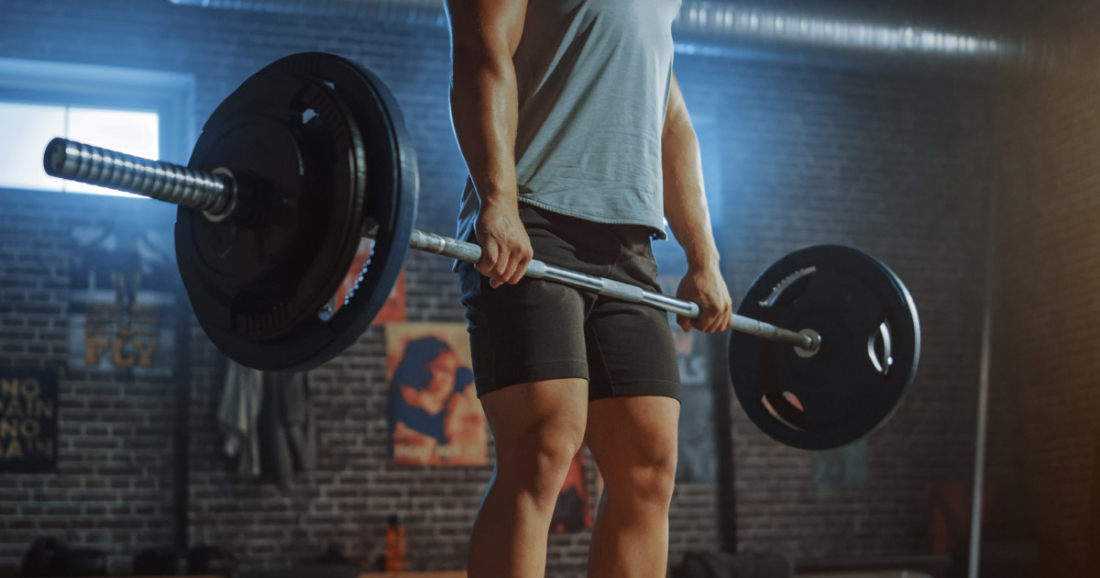
Overhand grips are natural and safe, but most athletes can't lift heavier weights with them.
Alternating grip
The execution of the alternating grip involves one hand gripping the axle with the overhand grip and the other with the underhand grip. While this tweak will definitely reduce forearm involvement and make your grip seamless, there are some negatives to this method. First, the problem is that the different grip on the dumbbell targets slightly different muscle groups, and if you don't alternate your grip regularly, you could be setting yourself up for muscle imbalances that cause a host of health complications. The second problem, perhaps even more serious, is that the biceps tendon gets a lot of work in the hand that surrounds the dumbbell under the grip, and realistically, with heavier weights, there is a risk of tearing it off, which is very painful and will put you out of commission for months. Fortunately, though, there is a third grip.
The locking grip
The locking grip is very similar to the overhand grip to some extent, with both hands gripping the axle from the same side. The only difference is that you fit your thumb between the axle and your other fingers, which you press with your fingers to create an imaginary lock that holds the axle. The locking grip is very effective, does not create imbalances and is also safe. The only problem is that the thumbs get really worked up and with heavier weights the pain is really unreal. But within a few weeks you will get used to it and you will see that you will never want to do another grip.
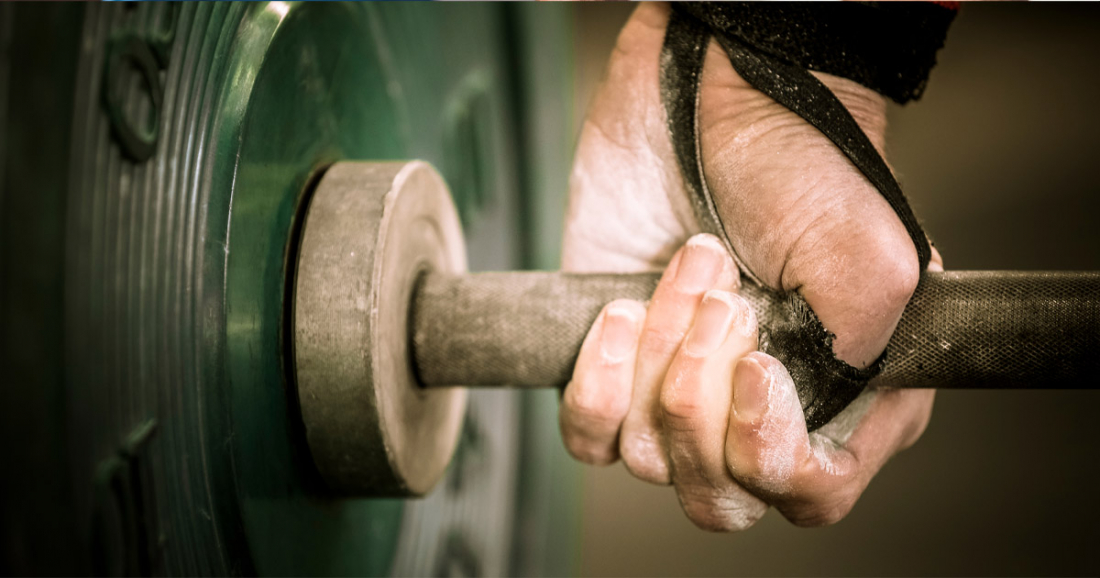
With the lockout grip, the thumb really takes a beating - it's no wonder many weightlifters use a variety of additional equipment to ease the pain.
What to take away from today's article?
As is customary with our powerlifter equipment article series, we'll conclude with a bullet point recap of the most important points you should definitely take away from today's article:
- Jerks and hooks are primarily used in training so that you don't get limited by your forearm and grip, which is always a bit weak compared to, say, your back muscles or hamstrings.
- The snatches are a bit more laborious to put on correctly, but they can be used on any size axle.
- Hooks are easier to use, but they limit the contact with the barbell quite substantially and also only work on certain types of axes.
- Since neither snatches nor hooks can be used in competition, the ideal solution for raw triathletes is magnesium and choosing the correct grip.
- Although you will most often see an alternating grip, this can cause imbalances and you also risk injuring your biceps tendon, so a locking grip seems to be a better alternative.
Well, that's all for today's article. In the next one, which will also be the last article of our lifter equipment series, we'll look at the right jersey and the appropriate footwear to use when training or competing.
No posts have been made yet.








