





The Complete Guide to Powerlifter Equipment #2 Bandages & Sleeves
 Author:
 Whenever someone tries to beat their max in the gym, they use bandages to do it. This, at first glance, maybe not so obvious helper is worth more than some of you might think. However, few people know how to distinguish them at first glance and very often it happens that especially novice athletes use them completely incorrectly. And since our previous article in the series "The Complete Guide to Powerlifter Equipment" was focused on belts, today we come to bandages as the second most popular helper of every powerlifter.
Article content:
What are they for and why use them?
Although the question of what the things on the knees and elbows are used for will first occur to most ignorant athletes, in reality there are huge differences between the different types of equipment and for the best understanding of today's article we should therefore break down the use of the sleeves and bandages separately.
Sleeves
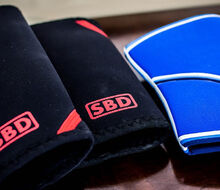
You can recognize sleeves at a glance by the fact that they are a solid piece of fabric that does not need to be wound or tightened in any way. Simply put them on so that they surround the entire joint and you don't have to move them for the entire workout. Most of the time it is made of neoprene, or more rarely a lightweight fabric, and since it doesn't stretch the joints or restrict blood flow too much, you don't mind using it for the entire workout. The covers have two basic functions that make them worth considering using:
- Wearing them will raise the temperature around the joints. This will reduce the viscosity of the synovial fluid, which can result in improved range of motion for particular exercises. At the same time, many athletes feel that with bandages they are able to improve their technique as they become more aware of the position of their joints and are able to fix them better.
- Some bandages exert a slight compression on the joints, reducing the amount of strain on tendons, ligaments and tendons. Properly chosen sleeves should, of course, be lightly compressive, but they certainly should not restrict you even when worn for extended periods of time.
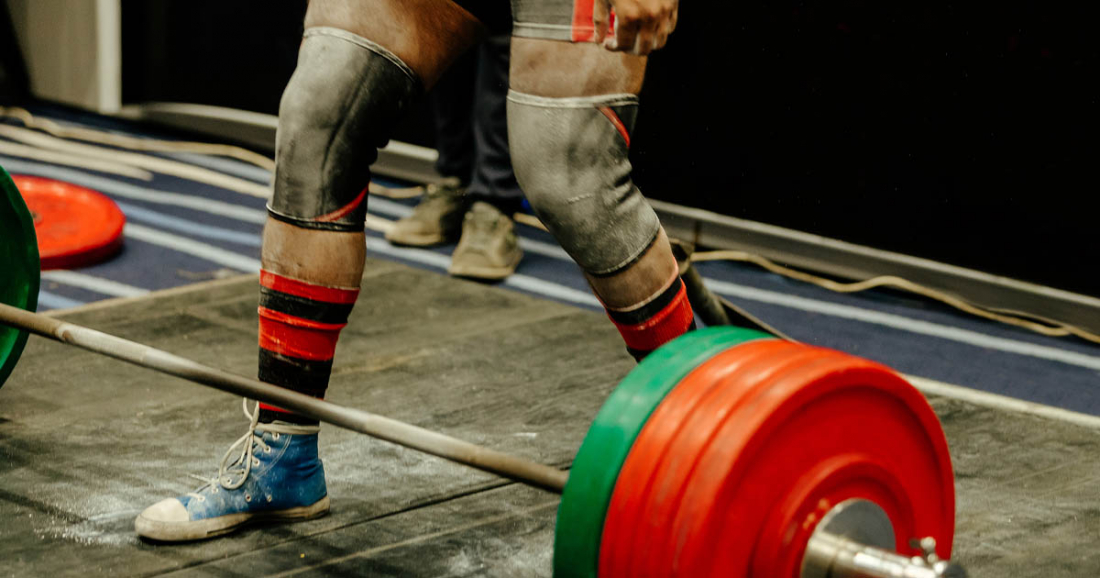
The sleeves can be used for squats, deadlifts and benchpress and you don't have to take them off for the entire workout.
Bandages
Since we ended the previous paragraph with compression, we should start this one with the same topic. What distinguishes bandages from neoprene sleeves is the degree of compression of the joint. Properly chosen bandages are able to get the joint into really high compression, resulting in increased performance. To better illustrate this, you can imagine that the bandages are able to somehow store the kinetic energy gained during the squat downward movement and pass it on to you when you are trying to get back up from the bottom.
Unlike leg warmers, however, they are not worn for the entire workout, but only for the most difficult sets, as they directly affect performance and restrict blood flow through the limbs. At the same time, they can slightly alter the technique of the exercises performed, thus limiting the involvement of certain muscle groups (e.g. the gluteals during squats).However, when you are trying to reach a new high and want to improve your performance as much as possible, they are a great help.
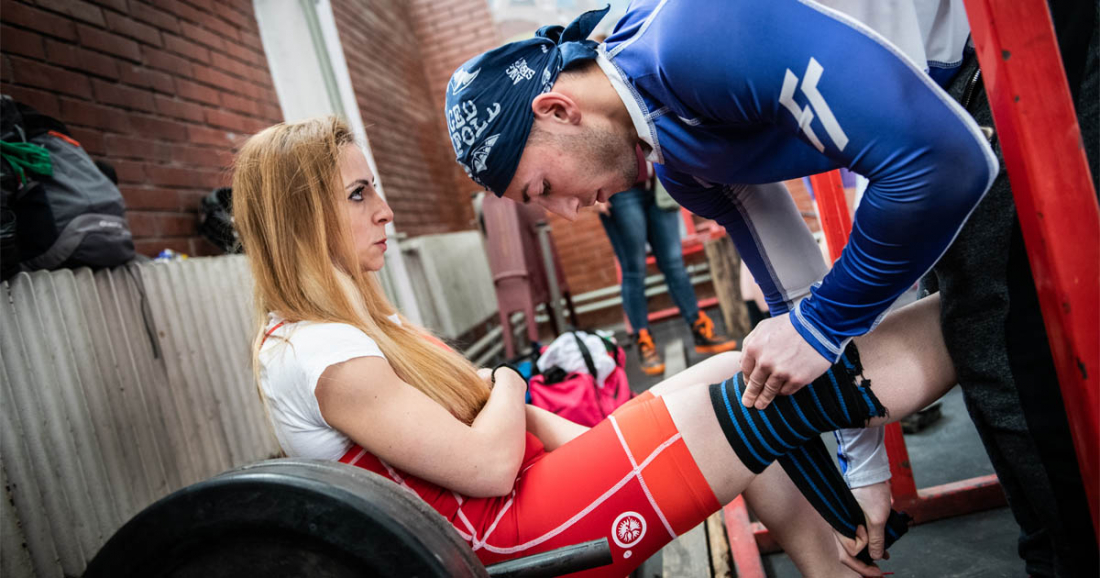
Bandages can improve performance by up to 20% due to their high compression.
Which bandages and sleeves are the most common?
While the band discussed in the last article exists in only a few variations and its use is always more or less the same, sleeves and bandages are used on a variety of joints and their uses vary greatly. So let's take a look at the different equipment that we definitely recommend using in strength training:
Wrist bands
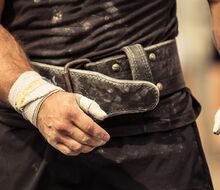
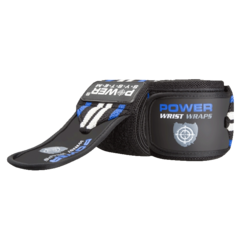
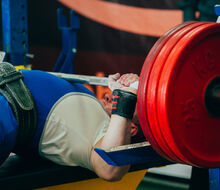
If we start from the upper limbs, the first suitable equipment is wrist bands. These are used not only by powerlifters, but also by weightlifters, strongmen and all athletes who put a lot of pressure on these joints in their training. The mechanism of action of these bandages is identical to what we have mentioned above - they help relieve the pressure exerted on the tendons, ligaments and tendons, ensure stabilization of the joint in the correct position and relieve any light pain (although in such a case you need to address the cause, not mask the consequences). Wrist bands are particularly suited to heavy sets of benchpresses, shoulder presses or overhead presses. A great value for money option is Big Zone's wrist bands, which will definitely last a few years if treated gently.
Elbow pads
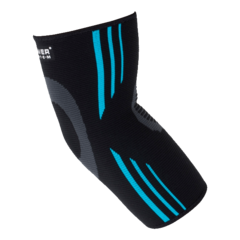
Elbow sleeves are a good accessory for all athletes who also use wrist bands - they are primarily suitable for various pressure exercises that put enormous strain on the upper limbs. The advantage of elbow sleeves is that you can wear them for the whole training and they will not restrict you in any way. Instead, they will keep the joint warm and prevent the tendons from wearing out. If you have a chest, shoulder or triceps workout on the agenda, elbow sleeves are a great help. For example, you can choose neoprene ones from MadMax.
Recommended
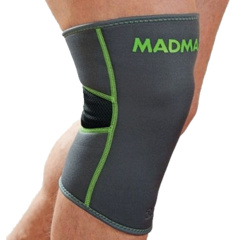
MadMax Bandáž neopren na koleno
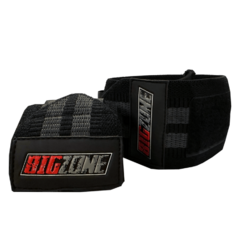
Big Zone Bandáže na zápěstí
Knee bands and sleeves
Since the knees take quite a beating during heavy squats, leg presses and lunges, it is possible to use both bandages and sleeves. While sleeves are a great solution for training with a higher number of reps, bandages should only be a matter of the heaviest reps in preparation for competitions. It's good to remember that even leg warmers provide some level of compression, and thus are definitely sufficient for training purposes. Performing more than five repetitions with tightly bandaged two-meter bandages is pointless, and only quality warm-ups that keep the joint warm throughout the workout will do a much better job.
When you think about choosing quality neoprene knee warmers, you have a variety of options - from my own experience, I can recommend a neoprene one from MadMax. Be careful with bandages, though, and definitely avoid the velcro ones - these tend to come undone very often at heavier weights, putting you at risk of not completing the squat and even possible injury. Bandages should always be about 2 metres long and should be tightened by under-drawing (such as with MadMax elastic bandages), as demonstrated in the following video:
How often should I use bandages and sleeves?
Although this information has already been covered in today's article, it is worth repeating for completeness. While bandages can be worn for the entire workout, bandages are only for the most difficult sets. It is also important to know that both bandages and bandages are not designed to eliminate pain in any way. For example, if you have problems with your knees due to poor technique, wearing bandages or sleeves will definitely not solve it. Although they can help keep the joint warm and therefore relieve pain, you need to look at why the knee hurts in the first place. In this particular case, of course, there could be a number of problems - from poor weight distribution between the triangular support of the leg to a sub-optimal centre of gravity position. If you don't know the answer yourself, a good solution is to see either a physiotherapist or a quality sports doctor.
What should you take away from today's article?
- The main thing you should take away from today's article on bandages and sleeves is that:
- If you're stressing your musculoskeletal system with heavy exercises (whether you're a powerlifter, bodybuilder or strongman), investing in bandages and sleeves is definitely the way to go.
- While bandages are used to keep the joint warm and can be worn throughout the workout, properly wound bandages increase strength through greater compression of the joint and are only appropriate to use for the heaviest sets of certain complex exercises.
- If you have any problems with your musculoskeletal system, it is definitely a good idea to see a physiotherapist or sports doctor, as bandages and sleeves may alleviate the pain a little, but they certainly won't solve your problem.
No posts have been made yet.








