





A balanced neuromuscular system offers you much more power!
 Author: Šárka Randáčková
 The classical exerciser thinks in terms of strength only about the muscles, but if you really want to lift heavier weights, you have to consider the neuromuscular system first and foremost!
The neuromuscular system is the combination of the central nervous system and the muscular system used to perform a particular movement. Without it, optimal strength is impossible. We already know the muscle part of the equation. Larger muscles are capable of producing greater force. But let's focus on that magic phrase "are capable of".
We don't focus on the nerve part of the equation as often. We're depriving ourselves of half the potential.
Have you ever wondered how a 100 kg person can squat 300 or 350 kg? He has no more muscle than a 150 kg monster. Such a person is simply unable to force the muscles he has to produce maximum force. He uses force efficiently. It comes not only from his muscles, but from his nervous system.
The ability of the neurological system to produce force is influenced by 4 main factors:
- The involvement of motor units
- Synchronization of motor units
- Neuromuscular inhibition
- Frequency of contraction of motor units
Can these factors be trained? Let's find out.

First a little anatomy
A muscle is made up of thousands, if not millions, of muscle fibres. Each individual fibre is innervated by a motor neuron, which often controls more than one fibre (usually 10-1000).
A motor neuron and all the fibres it controls are collectively referred to as a motor unit. When the unit is instructed to contract, all its fibres contract.
And here's the problem: A rectus femoris like this controls roughly 1000 different motor units, and its maximal contraction requires that they all engage at once. And that's not easy.
Factor 1: engaging the motor units
The human body has two basic types of muscle fibers (yes, we could break this down even further, but that wouldn't help us in this discussion).
- Type 1 fibers are slow, aerobic, lower power producing.
- Type 2 fibers are fast, anaerobic, producing higher power.
So logically, the more fast fibers you have, the stronger you get, right? You'll run faster, jump farther, and lift more. But there's a catch.
In 1965, a group of scientists led by Elwood Henneman found that type 1 fibers have a lower threshold of engagement than type 2 fibers. This means that the body uses them first in any muscle engagement.
It takes time to engage, so generating maximal force quickly is tricky. However, it can be worked on. Step number one is to teach the body to engage these fibers. This takes load and time under tension.
The electromyographic data below shows the slow progression of motor unit wiring during contraction.
Here you can see that it can take up to one second from the onset of contraction to strong motor unit wiring. Maximum engagement during isometric contraction occurs after as long as three seconds.
We cannot afford to wait three seconds for maximal performance in most sports (power triathlon is an exception).
So can we learn to engage type 2 fibres faster? The answer is yes... and also no.
Ideally, we want to reverse the engagement of the muscle fibers and use the fast ones first. But there is no evidence that this is possible. It seems to be like trying to walk before you learn to crawl.
Recommended

Nebbia Sportovní racer back podprsenka AGILE 471

Czech Virus Testo Virus Part 2
Nebbia Tvarující legíny s vysokým pasem AGILE 464

Czech Virus Protein Pancakes
However, there is evidence that dynamic light weight training could increase the involvement of type 2 fibres by lowering the threshold for their activation.
Is this why the best triathletes in the world come from Westside Barbell? He trains there using two approaches. Maximum effort and momentum. One is about maximal effort, where it takes you more than 4 seconds to complete a rep. That should be good enough for maximal motor unit engagement according to the chart above.
Dynamic workouts are about maximal speed of execution, which should lower the threshold of fast fiber engagement and deliver maximal performance sooner.
Conclusion:
You need a heavy load in your workouts. I'm talking about 90% of max or more. And likewise, you need to train dynamically with 40-60%.

Factor 2: synchronisation of motor units
For maximum contraction, all motor units need to start at the same time. Most muscles of the body are controlled by more than one motor unit, so for maximum performance we need to arrange for them to work simultaneously.
There is a lot of evidence about the effect of training on this synchronization. However, the literature no longer specifies what kind of training is best for this.
However, most of us would agree that learning a new movement requires a slow and steady pace. As we improve, the deviations from perfect technique become smaller, which means our synchronization improves.
Another example is posing. The goal is to show the muscles in their best form. For it, you have to be able to engage all the motor units controlling a given muscle at the same time. How do bodybuilders learn this? Slowly, in a controlled manner and with very frequent repetition.
Do you think this ability will help you with strength? It does.
So try training like a bodybuilder sometimes, i.e. slowly, in a controlled manner, and you must feel what it is like to experience a controlled contraction in each of your muscles.
Factor 3: neuromuscular inhibition
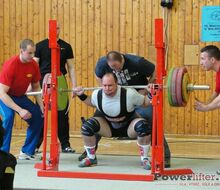
This means a reduction in the involvement of motor units during contraction. Why does this happen? Unfortunately, only God knows. Science speculates that it is a form of feedback from our joints, muscles and receptors in tendons such as Golgi. But the exact mechanism is unknown.
Of course, we don't care about inhibition at maximal exercise. But I have some good news for you. Heavy training seems to reduce inhibition. However, the literature is not very extensive here either.
So we are fairly certain that the body is trying to protect itself from injury by this mechanism. So we have to teach it to ignore this instinct and let us lift heavy weights.
What's the best way to do that?
Holding heavy weights. If you can squat 200 kilos, load up 230, lift it off the rack and stand for a while. This will teach your neurological system that heavy weights will be your daily bread. It will then, in return, not sabotage your efforts to max out on the squat.
Factor 4: frequency of contraction of motor units
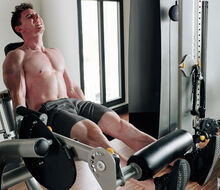
The last neurological factor refers to how often and how quickly the signal to contract reaches a given motor unit. The faster it is, the more power a given muscle can deliver.
Evidence suggests that more or less any kind of barbell training improves this ability. The question is what kind of training is best.
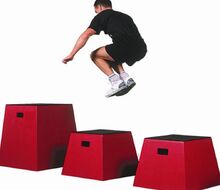
Here, logically, the fastest execution will produce the best results. Anything that will force us to accelerate quickly will be good for developing the frequency of contraction.
I'm talking about weightlifting exercises, lighter weights lifted dynamically, and plyometrics. Even good sprint training will help a lot.
Conclusion
If you have read this far, you will have noticed a prevailing trend in this article. Almost all of these neurological factors require either slow training with very high weight or dynamic training with low weight.
These are completely opposite ends of the training spectrum, but both are essential. So if you're after maximal strength, I recommend avoiding that classic training cliché of 8 reps with 80% of the max.
Source: www.t-nation.com - Maximal Strength Revealed: The 4 Factors
Author.
Author: Šárka Randáčková No posts have been made yet.








