





Get the most out of your workout with progressive overload!
 Author: Šárka Randáčková
 If you train hard enough with weights, your muscles have to adapt by getting stronger. This primarily happens by increasing the cross section of their muscle fibers. Over time, the muscles will gain volume.
A heavy series represents an overload for the body, to which it adapts positively, and after recovery it is a little bigger and stronger than in the previous workout. However, since this is happening continuously, your workouts need to get harder and harder all the time. Otherwise, you won't improve.
There are many ways to make your workouts harder, but there are two main methods used in so-called progressive overload:
- Adding weight to the axle.
- Adding reps with the same weight.
It works for everyone, right?
Everyone's a little different. Some people have more potential for strength and size. Other people adapt quickly to the weight. Some people are a little bit slower. But physiologically, all bodies follow the same rules.
We all react the same way to progressive overload. The speed and extent of progress may vary, but adaptation works for everyone equally.
If you keep your workouts heavy and add weights to your axis, you will gradually get stronger and grow. This is simple physiology. This mechanism has very few exceptions.
So why do some people get stuck so quickly while others make progress almost indefinitely?
Seven ways to mess up progressive overload
1. Adding weight too quickly
Weight is added gradually. You have to work your way up to increasing it. A typical example is when someone decides to add 2.5-5 pounds every week. They can do that for about 3-5 weeks and then inevitably hit a wall. They may even get worse.
After training you will improve maybe 1-2%, for experienced athletes it could easily be as little as 0.5%. In such a situation, even adding just 2.5 kilos can be too much. Either you won't be able to lift straight away, or you'll be stuck a week later.
That's why I don't like artificial rules. The worst is when you even plan weeks in advance how you're going to add weight.
Only add when you've made progress. How to do it?

Use the time-tested model of double adding.
It works every time. But people often don't have the patience for it. It respects the body's natural ability to improve. The body simply makes progress much slower than enough people are willing to admit.
This is how it works.
Choose a number of sets (3-6). Start with a weight near your max for the top of the range (so max at 6RM in this example) and use that weight for all 4-5 working sets. Aim to complete all sets at the top of the rep range (i.e. 6 reps).
If you take 120kg for example and don't complete the max reps but only 6,6,5,4 for example, in the next workout the weight still remains 120kg.
In the next workout, progress will be made because you will put in one extra repetition, i.e. 6,6,5,5, but the weight will remain the same again.
Once you have mastered the full 6,6,6,6 reps with good technique, you add on 125 kilos of weight and again try to get to 4 sets and a full 6 reps in each set.
Remember, it's not about how many reps you can do in the first set, it's about mastering that number in all sets.
It's always better to add more conservatively and slower as you adapt. The other way around is the problem.
That's why most people fail at progressive overload. They think they can trick the system and get to the goal before the physiology allows it.
Recommended
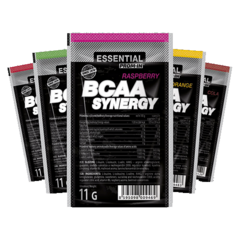
BCAA Synergy 11g 4+1
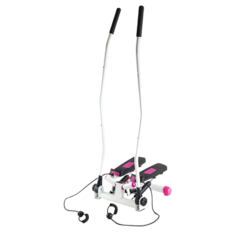
HMS Twist Stepper s úchopy S 3085

Czech Virus Algastin Natural Astaxanthin

Nebbia Legíny s vysokým pasem ICONIC 209
2. Adding too much weight
Again, emotions are to blame for this. You want to lift a lot and right away.
I repeat, after heavy training and recovery, you can improve by 0.5-2%. However, some exercisers add 10 pounds to their bench in every workout. If you were really only improving by 0.5% each workout, it should take you weeks to add that much weight.
Some even conclude that the workout isn't working if they don't get the results they unrealistically expected.
Nothing will kill long-term progress as quickly as adding weight too frantically. Impatience is your worst enemy.
Ask someone who can handle 150 pounds on the squat, 100 on the bench and 175 on the deadlift if it would be okay for them to handle 300, 220 and 350 in 10 years. They'll probably tell you that they definitely would.
The problem is that they'll act like they can do it in one year. And in 10 years, they won't even come close to those numbers.
There's no such thing as adding too slowly. But too fast can stop you in your tracks.
3. You're ruining technique so you can add weight
This one even sets quite a few exercisers back.
If you add weight too quickly, you get to a point where your body just can't handle it anymore. So you resort to a solution that will simply help you get to those coveted numbers. Moving, jerking, twisting out of position - anything that helps you complete the rep.
Not only do you risk training burnout, but you develop poor motor habits and lose technical efficiency. The more such reps you perform, the worse your overall technique and performance will be.
Not to mention the increased risk of injury.
That's why you should only add weight if you can complete your reps with good technique. Anything else just increases the likelihood of injury and stagnation, or even deterioration.

4. You have reached your genetic maximum
Once someone has reached the maximum strength or muscle mass they can carry, further progress will be impossible despite good training.
You are not there yet.
Let's move on.
5. Your diet sucks
In order to handle more weight, you need to recover from the previous workout, but also add some muscle. This requires protein and energy. Protein people understand, but the energy is kind of eluding them.
The standard average of calories needed for growth is between 2500 and 3500 for every pound of muscle you want to build. That is, of course, an excess of calories. You could argue that you can use stored energy (fat) to do this, but that's a pretty inefficient process. It is very difficult to lose weight and build muscle at the same time.
Excess energy (especially for carbs) increases mTOR, IGF-1 and insulin levels. It also lowers cortisol levels.
You don't exactly have to cram 5000 calories into yourself, but excess is necessary. If you're at maintenance levels, or even in a deficit, don't be surprised if your progress isn't satisfactory.
A daily surplus of 500 calories is something I consider the minimum for effective muscle building. Some will need a little more, depending on how efficiently they can use those calories.
Some experts say that every pound of muscle gained will cost you 1-3 pounds of fat gained. However, it is much easier to lose a pound of fat than it is to gain a pound of muscle. So one to one is not a bad deal at all.
I'm not saying you necessarily need to get fat to build muscle and strength, but if you don't eat enough, prepare for sub-optimal progress.
Plus, if your muscles are full of glycogen, you'll be stronger, not only from an energy perspective, but also from a leverage perspective. So using muscle glycogen, which you need to have plenty of, is also effective from a strength perspective.
6. You are not recovering
Training has both local and systemic consequences. You don't just fatigue the exercised muscles, you also fatigue your nervous system.
The result? A heavy leg workout on Monday can negatively affect your Tuesday upper body workout. It can be even worse if you have a strength component in your workout.
If you spend the entire workout pumping on machines, the systemic load won't be as high. However, if you're focusing on adding in core exercises, it's very easy to kill your progress with systemic fatigue.
When I train performance or strength athletes, I don't put heavy workouts into consecutive days. In fact, we don't even have a light session before a heavy workout. We want to go into them as rested as possible.

With those athletes I use one of these splits:
- Monday/Wednesday/Friday and one light workout on Saturday
- Training day / day off
Remember, 3-4 days off per week is not a sign of slacking off, but a tool to train hard the rest of the week without burning out.
7. Exercising too much unnecessary volume of work
People who reap success with progressive overload have one thing in common. They stick to the basics, train them hard, and add a minimum of nonsense.
Those who fail in weeks 4-6 usually do so because of too much work volume on non-essential exercises.
Progressive overload on 4-6 work sets, 2 core exercises, and in 3-4 workouts per week is too much work to build overall volume and strength. That is, if you have your recovery and diet well managed.
Yes, a few well-chosen isolation exercises can push you further, but only choose exercises that focus on muscles neglected by the main exercises. For example, if you have short arms and dominant triceps, you might benefit from some isolated chest work.
But such work will not be the key to your success. Most progress will come through progressive overload of the core exercises.
Each of the proponents of progressive overload (Wendler, Trudel, Blakley, Hepburn, Starr, Rippetoe) has their own system for doing it. But they have one thing in common. The workouts contain a minimum of exercises.
Most of the time it's a total of 4 exercises in one unit. Three main ones with progressive overload and one assistance.
If you train hard and gradually add load, it will be almost impossible not to improve. However, it is quite easy to train too much.
High volume work can work when you don't rely on neurologically very demanding complex exercises. If you train most of your exercises light and isolated with higher repetitions, the extra work won't do your workouts much harm.
However, if you want to systematically improve at heavy exercises, it's better to be over-recovered than under-recovered.
My recommendation
If you want progressive overload to work for you:
- Use the double-add model.
- Add weight in small increments. Even the smallest additions, however, which you can sustain for a year, can yield better results than an aggressive method that gets stuck in a few weeks.
- Don't sacrifice technique so you can add weight to the axle. You only add weight when all reps have been trained with solid technique.
- Plan your program as one day on/one day off training.
- Eat an excess of 350-500 calories each day, most of which will be from added carbs or supplementation around training.
- Sleep at least 8 hours a day, drink plenty of water and salt your food.
Source: www.t-nation.com - Progressive Overload Works, Unless You Do This
Author.
Author: Šárka Randáčková No posts have been made yet.








