





5 dangerous exercises that can cause injury!
 Author:
 No exercise is completely risk-free, but some exercises are riskier than others. If you don't consider the risk-benefit ratio, you're ignoring a crucial aspect of proper training: making every effort to avoid injury.
There are high risks of injury with the exercises listed below, and these risks far outweigh the benefits, even when performed correctly. Despite their popularity, none of these exercises are necessary to improve your physique or performance in most sports. Sure, a few of them are necessary to train if you're a powerlifter or strongman competitor, but you're probably not. We'll leave the names of the exercises in their original versions and let's take a look at them.
1. The Heavy Mixed-Grip Deadlift
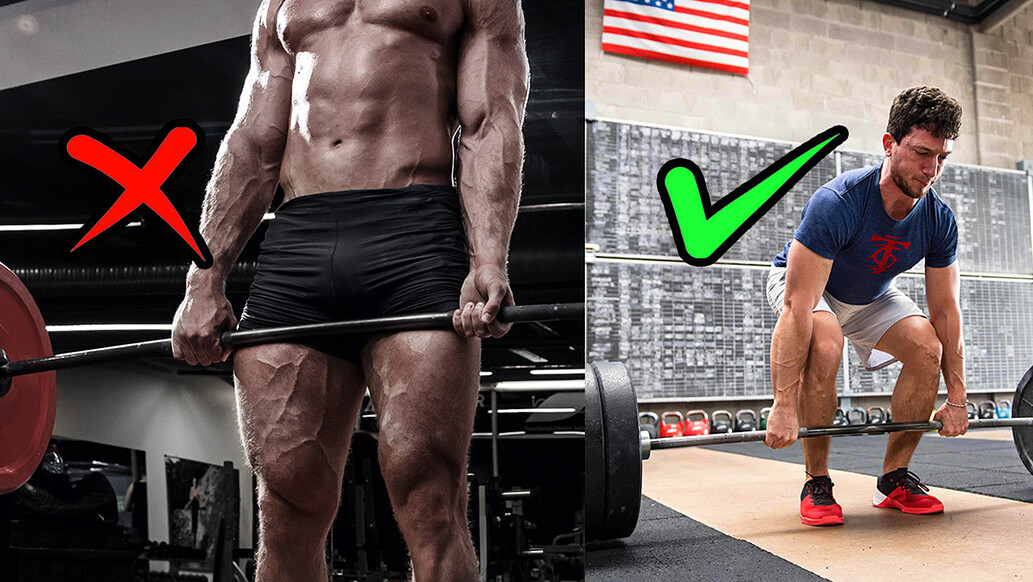
Don't use the alternating-grip deadlift when doing sets of up to 6 reps or heavier. The likelihood of biceps injury on the underhand side is too high.
This was verified in a 2021 research paper on deadlifts and biceps tendon ruptures. The researchers conducted a YouTube search using the terms " biceps tendon rupture" and "biceps tendon injury" combined with the terms "competition", "deadlift" and "powerlifting". The videos were assessed for accuracy by three surgeons.
Of the videos reviewed, 35 injuries were deemed appropriate for evaluation and 25 were observed during deadlifts. Only one deadlift injury had both forearms in supination. The remaining 24 injuries had a mixed grip, with ALL biceps ruptures occurring on the side under the arm (in supination). This is not a large sample, but when 24 of the 25 injuries occurred in a mixed grip, the pattern is quite predictable. The likelihood that weightlifters who use a mixed grip during heavy deadlifts will have a chance of injury is high.
What to do instead?
Use a normal grip. If grip strength is a limiting factor, use snatches or hooks. If you are training for a powerlifting meet, you can justify performing deadlifts with a mixed grip for 1 to 3 reps, unless you plan to lift that way in competition. Just be aware of the risks and alternate supinated hands when training.
2. The Preacher Curl with Full Elbow Extension
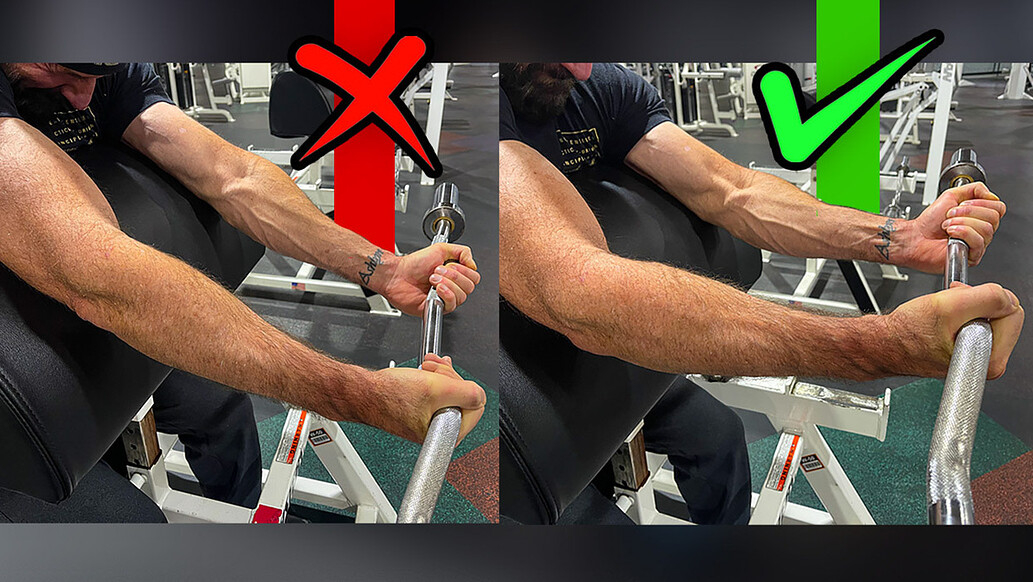
I'm a big fan of these lifts because they strengthen the biceps in the extended strength zone. However, I never allow people to fully straighten their elbows at the end of a rep, no matter how light the load. The risk of biceps injury is too high
What to do instead?
Don't lower the trapeze bar or dumbbells all the way down. Maintain an angle of about 15 degrees at the elbow on each repetition. Make sure you have the weight under control, and stop before the elbow is fully straightened even if it means lightening the load. Also, when using medium and lighter weights, don't go to complete failure. Accumulated fatigue can also cause you to lose control of the eccentric or trigger portion of the rep.
3. The Tire Flip
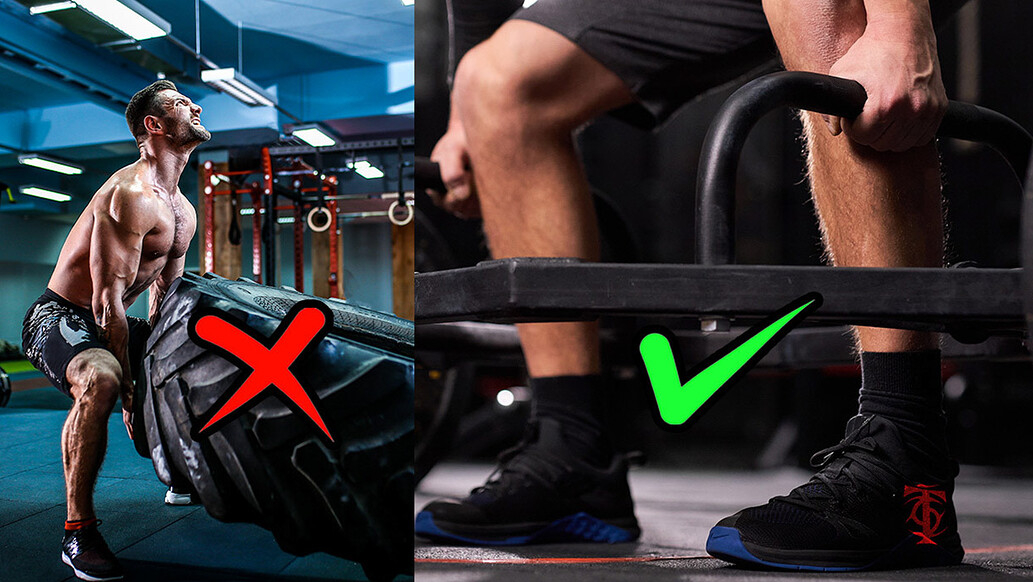
Tire flips, once reserved for strongman competitions, have started to appear in Australian circuit training classes and other "functional fitness" gyms. But that's not good.
A study of strongmen found that tire flips are the most dangerous of all disciplines:
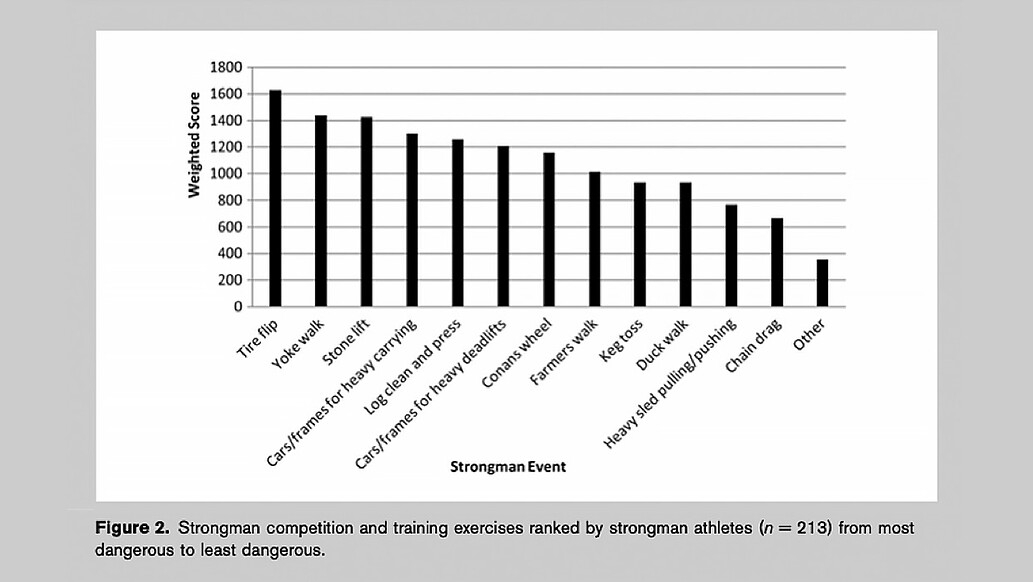
Experienced strongmen had the highest rate of injury just performing tire flips. If it's risky for them, it's even riskier for ordinary exercisers like us.
What to do instead?
Tire flips are such a clumsy deadlift. So if you're not racing, just stick to standard deadlifts.
4. The Yoke Walk
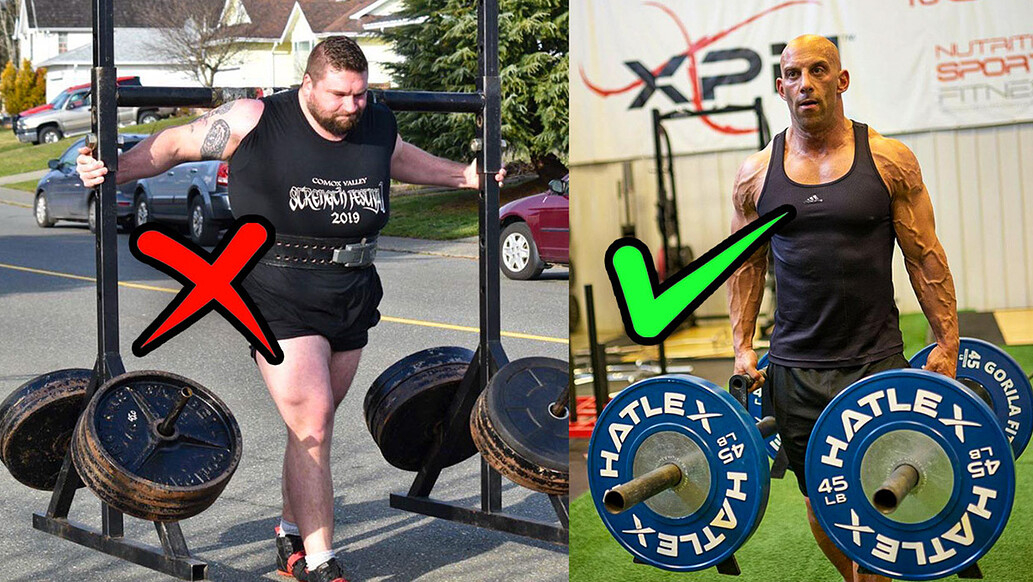
The above chart also shows that the Yoke Walk is the second most dangerous strongman discipline. Again, this exercise is becoming more popular with average exercisers and even some coaches. For average exercisers, it makes no sense. Because this exercise simply has no contribution to any field or combat sport. And as a general conditioning exercise, it's a completely unnecessary risk.
What to do instead?
The appeal of strongman competitions? They look tough and create a training challenge. But if you're looking for a way to spice up your workout while walking with weights, there are much less risky options, such as standard variations of the farmer's walk, advanced weight-bearing exercises, and sled work.
5. The Hihg Box Jump
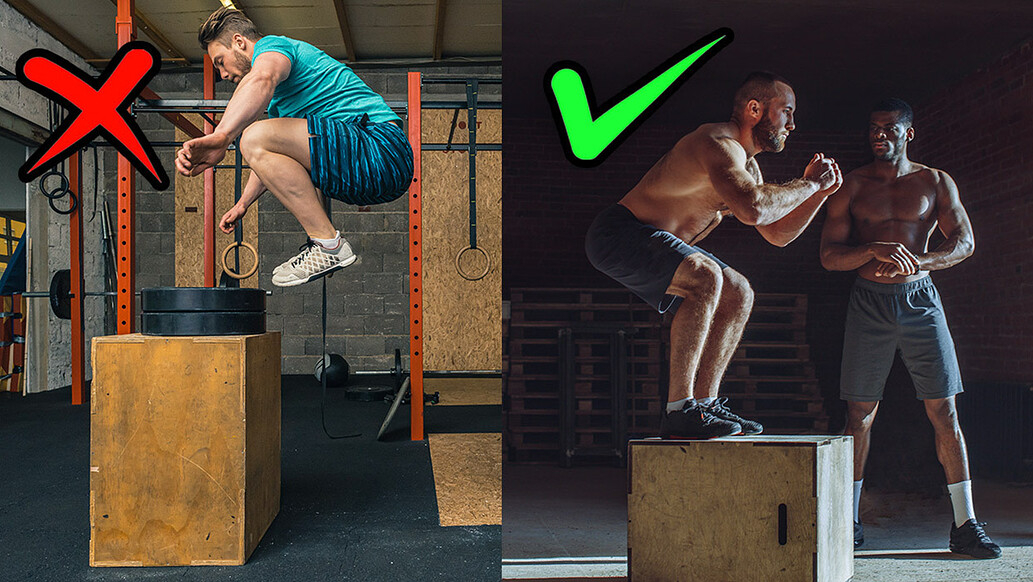
I definitely recommend the box jumps. They are one of the best ways to safely train leg strength. What I don't recommend, however, are HIGH box jumps. They are incredibly risky and do not increase your ability to jump higher. Add to that the risk of falling and subsequent various hand or leg injuries on a bad landing.
Try this. Stand next to a tall box at the same height as your waist. Now lift one leg off the ground and bend at the hip as high as you can. The distance between the bottom of your foot and the top of the box is the actual height you would have to jump to in order to reach the top of this box. The rest is just bending at the hip.
What to do instead?
Use a box that is no higher than knee height. Jump up as high as you can without allowing your knees and hips to bend (flex) more than 20 degrees on impact. It's safer because there is little risk of missing or falling, and it's more effective anyway.
[ Source: T-nation.com, by Nick_Tumminello ]
Recommended
HMS Magnetický veslovací trenažér ZM1856

Beta Alanine 300g 1+1
Intense Legíny GOLD Nebbia print 827

Amix Isoprime CFM
No posts have been made yet.








